Microsoft Issues Record-Breaking July Patch Tuesday Addressing 570 Vulnerabilities as AI Accelerates Security Landscape

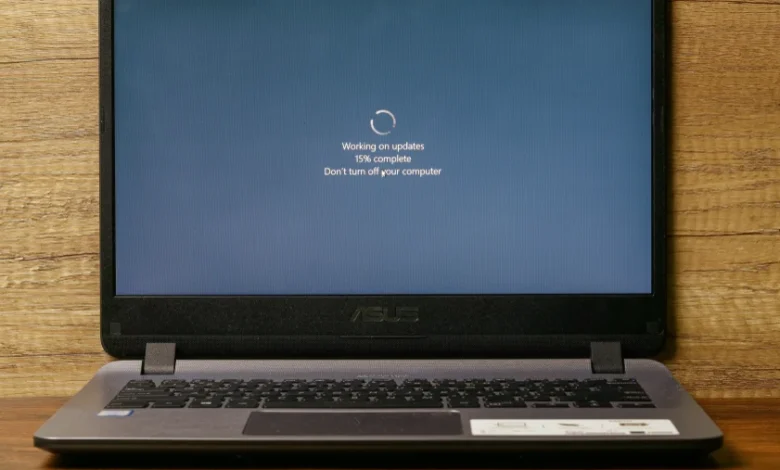
Microsoft Corp. released a monumental suite of software updates today, addressing an unprecedented 570 security vulnerabilities across its Windows operating systems and associated software ecosystem. This release represents a nearly threefold increase over the previous record set only last month, signaling a transformative shift in how software flaws are identified and remediated. The company has officially attributed this surge in vulnerability discovery to the integration of artificial intelligence (AI) within its security research pipelines, a development that marks a new era in the ongoing arms race between cybersecurity defenders and global threat actors.
Of the 570 bugs addressed in the July 2026 Patch Tuesday cycle, nearly 60 have been classified with a "Critical" severity rating. This designation indicates that the vulnerabilities could allow for remote code execution, enabling attackers to gain full control over a target system with minimal or no interaction from the user. Furthermore, the update includes fixes for three "zero-day" vulnerabilities—flaws that were known to the public or being actively exploited before a patch was available. Two of these zero-days are currently being leveraged in real-world attacks, necessitating immediate action from IT administrators and individual users alike.
The Role of Artificial Intelligence in Vulnerability Discovery
The sheer volume of patches released this month has sent shockwaves through the cybersecurity community. Microsoft Executive Vice President Pavan Davuluri addressed the escalation in a detailed blog post, explaining that the company has overhauled its vulnerability management protocols to keep pace with AI-driven discovery tools. Davuluri noted that the traditional cadence of security releases is being fundamentally altered by the speed at which machine learning models can scan millions of lines of code to identify potential weaknesses.
"The pace of vulnerability discovery is changing with advances in AI making it possible to find more issues, faster, across more code, with new mechanisms that can accelerate both discovery and analysis," Davuluri stated. He warned Windows users to expect a consistently higher volume of security updates in future releases as these automated tools become more sophisticated.
This AI-driven approach allows Microsoft’s internal security teams to perform "fuzzing" and static analysis at a scale previously impossible for human researchers. By training models on decades of known exploit patterns, Microsoft can now predict where vulnerabilities are likely to exist in legacy code and new feature sets alike. However, this technological leap is a double-edged sword, as attackers are simultaneously employing similar AI models to reverse-engineer patches and develop functional exploits in record time.
Analysis of Critical Zero-Day and High-Risk Flaws
Among the most pressing issues addressed in the July update are two zero-day vulnerabilities involving elevation of privilege. These flaws, identified as CVE-2026-56155 and CVE-2026-56164, affect Active Directory Federation Services and Microsoft SharePoint, respectively. Elevation of privilege (EoP) bugs are particularly dangerous in corporate environments because they allow an attacker who has gained a limited foothold on a network to escalate their permissions, eventually reaching administrative or "domain admin" status.
CVE-2026-56164, the SharePoint vulnerability, is of particular concern because it was added to the Cybersecurity and Infrastructure Security Agency’s (CISA) Known Exploited Vulnerabilities (KEV) list on July 1, more than a week before the official patch was released. This highlights a growing gap between the discovery of exploitation in the wild and the deployment of official fixes.
Another significant fix involves CVE-2026-50661, a security feature bypass in Windows BitLocker. This vulnerability could allow an attacker with physical access to a device to bypass encryption and access sensitive data. While Microsoft stated that it is not aware of active exploitation of this specific bug, the public disclosure of the flaw’s mechanics increases the risk for organizations with high-mobility workforces where laptop theft is a constant threat.
The Microsoft Copilot Security Breach
Perhaps the most modern threat addressed in this cycle is CVE-2026-48561, a remote code execution (RCE) flaw within Microsoft Copilot. With a CVSS (Common Vulnerability Scoring System) score of 9.6 out of 10, this is one of the highest-rated threats in recent years. Jack Bicer, Director of Vulnerability Research at Action1, noted that the flaw allows an unauthorized attacker to execute code over a network by exploiting the integration between Microsoft Edge for Android and the Copilot AI assistant.
According to Microsoft’s advisory, an attacker could host a malicious website that, when visited by a user on an Android device, triggers the browser to send specially crafted prompts to Copilot. These prompts can force the AI to execute unauthorized commands or leak sensitive user data. This vulnerability underscores the emerging "prompt injection" threat landscape, where the very tools designed to increase productivity become new vectors for sophisticated cyberattacks.
Challenges to the Exploitability Index
The massive influx of patches has sparked a debate regarding Microsoft’s "Exploitability Index," a metric the company uses to predict how likely it is that a bug will be successfully exploited. Satnam Narang, a senior staff research engineer at Tenable, argues that the current system is failing to account for the speed of AI.
Narang pointed to the SharePoint zero-day, which Microsoft initially labeled as "Exploitation Less Likely," despite the fact that it was already being used by threat actors and tracked by CISA. He cited research from Anthropic’s Red Team, which demonstrated that their "Mythos" AI model could produce proof-of-concept exploits for 13 out of 14 vulnerabilities that humans had deemed "unlikely" to be exploited.
"Our way of looking at Patch Tuesday has changed because the exploitability index is centered around humans, not AI tools," Narang said. "As these tools continue to improve, defense needs to improve alongside it. We can no longer rely on human intuition to determine which bugs are low-priority."
A Broader Industry Trend: The "New Normal" for Patching
Microsoft is not the only software giant struggling to manage the accelerating discovery of vulnerabilities. The July 2026 cycle revealed a broader industry trend toward more frequent and higher-volume updates. Adobe announced today that it is moving to a bi-monthly security bulletin schedule, publishing updates on the second and fourth Tuesday of every month. Adobe also cited AI-assisted discovery as the primary reason for this change.
In June 2026, Google released a staggering 900 security fixes for its various platforms, while Cisco, Mozilla, and Oracle have all reported a significant uptick in the frequency of their security advisories. Chris Goettl, Vice President of Product Management at Ivanti, observed that the traditional "Patch Tuesday" model is being stretched to its breaking point.
"Organizations are facing a ‘patch fatigue’ crisis," Goettl noted. "When you have 570 fixes in a single day, the risk of a patch breaking a business-critical application increases exponentially. IT teams are now forced to choose between the risk of exploitation and the risk of system instability."
Timeline of Events Leading to the July Release
- June 11, 2026: Microsoft releases a then-record-breaking Patch Tuesday update, addressing over 200 vulnerabilities.
- July 1, 2026: CISA issues an alert regarding the active exploitation of a SharePoint flaw (CVE-2026-56164), urging immediate mitigation.
- July 5, 2026: Security researchers at Action1 and Tenable report a surge in AI-generated proof-of-concept exploits appearing on dark web forums.
- July 9, 2026 (Morning): Microsoft Executive VP Pavan Davuluri publishes a blog post detailing the role of AI in the company’s new vulnerability management strategy.
- July 9, 2026 (Afternoon): Microsoft officially deploys the July Patch Tuesday updates, totaling 570 fixes across the Windows ecosystem.
Recommendations for Organizations and End Users
Given the unprecedented volume of patches, cybersecurity experts are advising a strategic approach to deployment. While the critical nature of the zero-day flaws suggests a need for speed, the sheer number of changes to the operating system increases the likelihood of "regressions"—updates that inadvertently cause software crashes or hardware incompatibilities.
For enterprise environments, experts recommend:
- Prioritizing the KEV List: Focus first on the vulnerabilities listed in CISA’s Known Exploited Vulnerabilities catalog, specifically the SharePoint and Active Directory flaws.
- Staged Deployment: Roll out updates to a small "pilot" group of devices to monitor for stability issues before a full-scale deployment.
- Enhanced Backups: Ensure that full system backups are completed before applying the July updates, as the complexity of this release increases the risk of boot failures.
- AI Governance: For organizations using Microsoft Copilot, review the security settings for Edge on mobile devices to mitigate the risk of prompt-injection attacks.
For individual users, the advice is simpler but no less urgent: ensure that Windows Update is active and set to install automatically, but be prepared for longer-than-usual restart times.
The Future of Cybersecurity in the AI Era
The events of this Patch Tuesday suggest that the cybersecurity landscape has reached a permanent inflection point. As AI becomes a standard tool for both software development and vulnerability research, the volume of discovered flaws will likely continue to climb. This necessitates a shift from reactive patching to a "Secure by Design" philosophy, where security is baked into the initial coding process rather than addressed through monthly updates.
The 570 patches released today are a testament to Microsoft’s commitment to transparency and security, but they also serve as a stark reminder of the inherent fragility of modern software. In a world where AI can find a thousand needles in a haystack in seconds, the traditional methods of manual defense are no longer sufficient. The record-breaking numbers seen today are likely not an anomaly, but the beginning of a new, high-velocity standard for digital security.
Related posts: