How One Retired Couple’s Low-Mileage Urban Lifestyle Results in a Shocking $7 Monthly Electric Vehicle Fuel Bill


The financial calculus of modern transportation is undergoing a profound transformation as more motorists transition from internal combustion engines to electric vehicles. For prospective buyers, estimating the monthly overhead of charging a battery remains one of the most persistent inquiries. While fuel expenses fluctuate wildly depending on regional energy markets, driving habits, and vehicle classes, a recent case study shared within the automotive community has highlighted the extreme end of low-cost EV operation. After tracking their energy consumption across two months of ownership, a retired couple driving a Hyundai Ioniq 5 calculated their monthly fueling expenditure to be approximately $7, illustrating the dramatic potential for savings among drivers who heavily integrate alternative transportation modes into their daily routines.
The narrative of this exceptionally low fueling cost stems from a broader lifestyle shift executed by Reddit user Suitable-Truth-350 and their spouse. Following their retirement, the couple made the deliberate decision to relocate from a car-dependent rural and suburban region to a densely populated, highly walkable metropolitan center serviced by robust light-rail infrastructure. Their primary objective upon making the move was to minimize personal vehicle dependency as much as possible, relying instead on pedestrian transit and public rail for the vast majority of their daily errands and local mobility requirements.
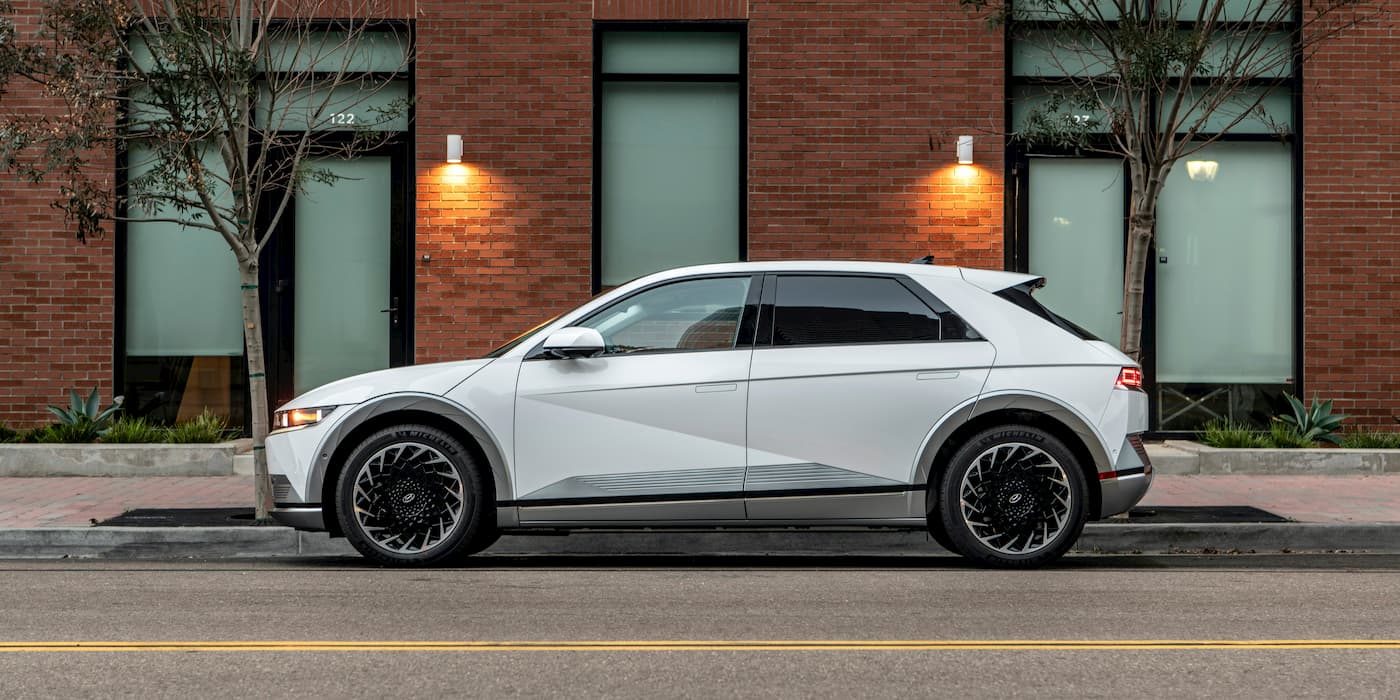
In August, the household took delivery of a new Hyundai Ioniq 5, an all-electric crossover that has garnered widespread praise for its rapid charging capabilities and driving dynamics. Despite acquiring the vehicle, the couple’s core habit of walking for daily necessities remained unchanged. The automobile was relegated strictly to specific, occasional excursions—such as visiting friends residing in nearby rural areas, conducting major shopping trips, and navigating the greater Chicagoland metropolitan landscape. Because these driving intervals were sparse and localized, the vehicle’s high-capacity battery required virtually no supplemental energy replenishment during the initial weeks of ownership.
The Chronology and Logistics of Minimalist EV Usage

The vehicle’s first major charging milestone occurred after two full months of intermittent operation. When the household finally connected the Ioniq 5 to a public fast-charging station, the logistical process proved remarkably swift and straightforward. According to the owner’s account, the charging session required less than 30 minutes to elevate the battery’s state of charge back to 80 percent. The total financial expenditure for this comprehensive top-off amounted to $13. When distributed across the two-month period that preceded the charge, the average cost of powering the vehicle equated to roughly $6.50 to $7 per month.
Beyond the financial metrics, the owners reported high levels of satisfaction regarding the mechanical and operational characteristics of the vehicle. Transitioning from a traditional gasoline-powered automobile, the couple highlighted the immediate torque delivery, responsive pickup, and overall mechanical smoothness of the electric powertrain. Their initial ownership experience reinforced a sentiment shared by many first-time EV adopters: the driving experience of an electric vehicle vastly outperforms legacy internal combustion engine platforms, rendering the prospect of returning to gasoline obsolete.
Broader Industry Data and Driving Habits in the United States
While a $7 monthly fuel bill represents an extreme outlier driven by intentional urban lifestyle choices, the underlying data regarding average American driving patterns suggests that low energy expenditures are far more common than many consumers realize. Comprehensive data compiled in the American Driving Survey published by the AAA Foundation for Traffic Research indicates that the average motorist in the United States covers fewer than 29 miles per day. This daily distance falls well within the battery capacity of virtually every new and pre-owned electric vehicle currently available on the commercial market.
Furthermore, the AAA survey data reveals distinct patterns regarding long-distance travel habits among the general population. Only 30 percent of Americans reported undertaking at least one extended road trip during the peak summer travel season, with the average length of a one-way trip registering approximately 235 miles. While such distances historically sparked concerns regarding battery range limitations, advancements in battery chemistry, vehicle efficiency, and the density of public charging infrastructure have systematically dismantled these barriers.
Even entry-level electric vehicles with relatively modest EPA-estimated range ratings—such as the Fiat 500e—are technically equipped to handle a 235-mile journey with minimal disruption. Completing such a trip typically requires no more than a single, routine charging stop lasting roughly 30 minutes, a timeframe that aligns closely with standard highway rest stops for meals or driver fatigue management.
Infrastructure Expansion and Charging Network Reliability
The feasibility of long-distance EV travel is increasingly supported by rapid investments in the North American charging ecosystem. Throughout 2026 and 2027, the public charging network has experienced significant expansion, featuring hardware that is faster, more reliable, and more widely distributed than in previous years. High-power DC fast-charging installations continue to open on a weekly basis, supported by collaborative industry initiatives and standardized hardware integration such as the widespread adoption of the North American Charging Standard.
Data tracking holiday travel periods, such as annual Thanksgiving traffic analyses, consistently demonstrates a year-over-year surge in total charging sessions, accompanied by declining wait times and improved station uptime. These infrastructure improvements mean that modern EV drivers spend progressively less time waiting for vehicles to charge, transforming rapid public charging into a seamless, highly predictable experience rather than a logistical hurdle.
Economic Analysis and Fuel Cost Comparisons

When evaluating the overarching economics of electric vehicle ownership, analysts emphasize that while most motorists will naturally exceed the $7 monthly expenditure reported by urban minimalists, the cost savings relative to fossil fuels remain substantial. Amid persistent economic conditions in 2026 where premium gasoline frequently commands prices near $4 per gallon and diesel fuel hovers around $6 per gallon, powering an electric vehicle via residential or public charging infrastructure consistently yields a lower per-mile operational cost than a comparable internal combustion vehicle.
For consumers weighing the transition to electric mobility, financial calculations generally depend on access to home charging, local utility rate structures, and annual mileage accumulation. However, empirical fleet data indicates that electricity remains significantly insulated from the geopolitical and supply-chain volatility that routinely drives up petroleum prices. As a result, even moderate driving habits yield predictable and manageable energy budgets.
Implications for Residential Energy and Grid Integration
The intersection of electric vehicle adoption and residential energy management has also elevated the importance of home energy optimization, particularly solar photovoltaic integration. Industry experts frequently advise prospective EV owners to evaluate household energy generation to offset the minor increases in residential electricity demand associated with overnight vehicle charging.
Advisory services such as EnergySage provide consumers with standardized platforms to compare pre-vetted local solar contractors. By utilizing competitive bidding frameworks, homeowners frequently secure system installations that reduce capital expenses by 20 to 30 percent compared to direct procurement. Integrating rooftop solar generation with home vehicle chargers effectively insulates drivers from municipal utility rate fluctuations, driving the marginal cost of vehicle operation even closer to zero.

Conclusion and Future Outlook
The experience of retired urban dwellers adopting alternative transportation models underscores the vast flexibility of the modern automotive market. Whether a motorist covers hundreds of miles per week across rural expanses or relies on public transit for daily commutes while reserving an EV for weekend getaways, electric vehicles offer scalable operational costs tailored to diverse lifestyles. As public charging networks mature, battery technologies advance, and consumer familiarity expands, the traditional anxieties surrounding fuel costs and vehicle range are steadily being replaced by documented accounts of unprecedented economic efficiency and driving satisfaction.