OpenAI Unveils Transformative Codex Update, Enhancing AI-Driven Development with Advanced Capabilities

OpenAI has released a significant update to its AI-powered coding assistant, Codex, introducing a suite of powerful new features designed to revolutionize the software development workflow. This comprehensive upgrade includes direct background computer use on macOS, an integrated in-app browser, advanced image generation capabilities, persistent memory for contextual recall, significantly expanded automations, and an impressive addition of over 90 new plugins. This rollout marks a pivotal moment for OpenAI’s developer tools, positioning Codex as an increasingly autonomous and integrated partner in the software creation process.
The update is currently being deployed to users of the Codex desktop application signed into ChatGPT on macOS. While initial availability for computer use is focused on macOS, OpenAI has indicated that support for EU and UK users, alongside personalized options tailored for Enterprise and Education accounts, are slated for release in the near future. This phased rollout underscores OpenAI’s strategic approach to integrating advanced AI functionalities into diverse operational environments, balancing innovation with careful deployment.
The Evolution of Codex: A Brief History
OpenAI Codex, initially unveiled as a sophisticated AI model capable of translating natural language into code, has steadily evolved from a powerful code-completion tool into a more comprehensive development assistant. Born from the foundational research that also powers systems like GitHub Copilot, Codex’s journey began with a focus on improving developer efficiency by automating repetitive coding tasks and offering intelligent suggestions across various programming languages. Its integration with the broader ChatGPT ecosystem has further cemented its role, allowing developers to interact with the AI in a conversational manner to generate, debug, and optimize code.
Prior to this latest release, OpenAI had already introduced significant enhancements, such as "pay-as-you-go" Codex seats for business and enterprise teams, providing flexible access to its advanced capabilities. The introduction of the ChatGPT Library, designed to store uploaded files in one centralized location, also paved the way for more integrated and context-aware AI interactions. These incremental updates have consistently pushed the boundaries of AI’s utility in software engineering, laying the groundwork for the more autonomous and expansive functionalities seen in the current release. This trajectory highlights OpenAI’s ambition to create AI systems that not only assist but actively participate in the development lifecycle, transforming the role of human-AI collaboration.
Unpacking the Core Innovations: Computer Use and In-App Browser
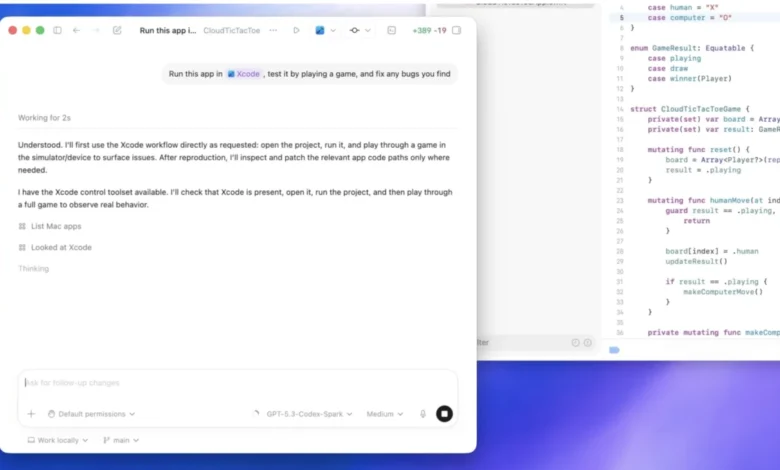
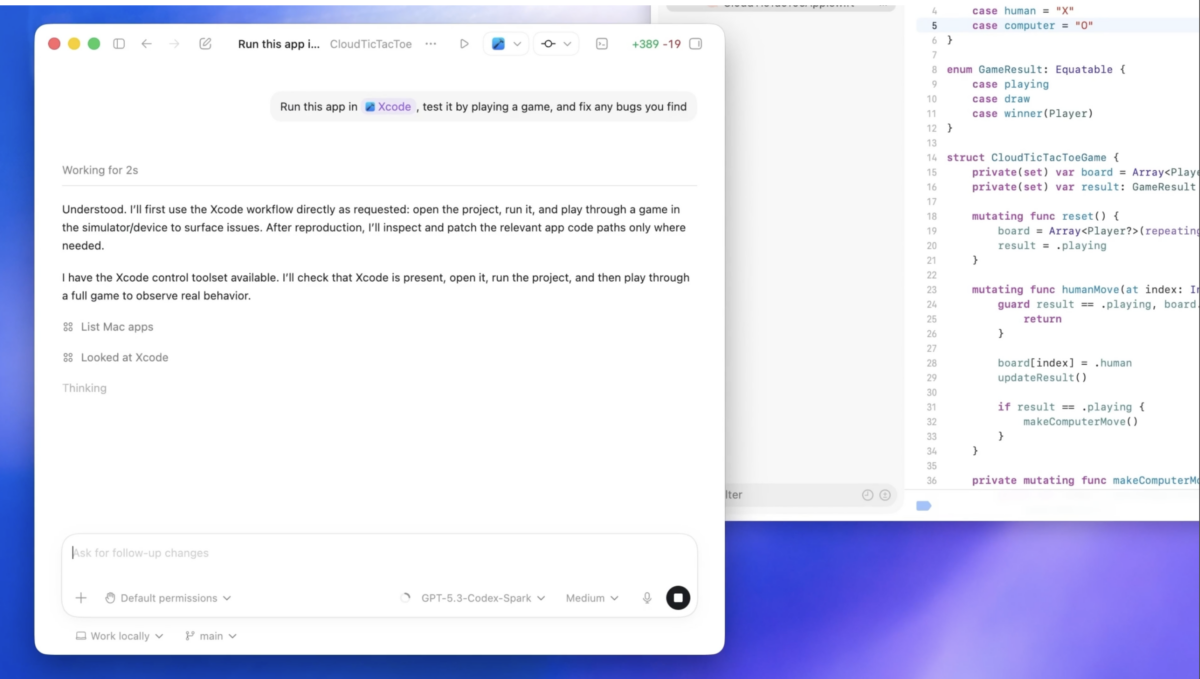
Among the most groundbreaking features introduced in this update is Codex’s new ability to operate applications directly on a Mac. This capability allows the AI to "see," "click," and "type" using its own virtual cursor, effectively interacting with software environments without requiring explicit API integrations. This represents a significant leap from traditional AI tools that often rely on structured APIs for interaction. By simulating human-computer interaction, Codex can now tackle a broader range of tasks, particularly those involving legacy systems or applications that lack modern API interfaces.
Seamless Mac Integration:
The implications of this "computer use" feature are profound. OpenAI highlights its utility for critical development processes such as testing and iterating on frontend changes, evaluating applications for usability and functionality, and working seamlessly with tools that do not offer an API. For instance, a developer could instruct Codex to navigate a complex user interface, perform a series of actions, and report on the outcomes, thereby automating tedious manual testing cycles. The ability for multiple AI agents to run simultaneously in the background without disrupting the user’s ongoing work further amplifies productivity, allowing developers to offload parallel tasks to AI assistants. This multi-agent capability could significantly reduce context switching for human developers, a known drain on efficiency in complex projects. Industry reports frequently cite that developers spend a substantial portion of their time on debugging and testing; a recent survey by SlashData suggested that developers spend up to 50% of their time on maintenance and debugging, areas ripe for AI augmentation.
The Intelligent In-App Browser:
Complementing the direct computer interaction, the Codex app now features a built-in browser. This integrated tool allows users to comment directly on web pages, providing precise, contextual instructions to the AI agent. This feature is particularly aimed at frontend and game development on localhost, enabling developers to iteratively design and refine web interfaces or game elements with real-time AI feedback and execution. For example, a developer could highlight a specific UI element in the browser and instruct Codex to "change this button’s color to #FF0000 and move it 10 pixels to the right," with Codex executing the necessary code modifications and presenting the updated visual.
OpenAI has also articulated plans to expand browser control beyond local web applications over time, suggesting a future where Codex could assist with broader web-based tasks, from content scraping and data extraction to automated web application testing and deployment. This expansion points towards a future where AI agents could autonomously interact with the entire web, transforming how developers build, test, and maintain web-based software.
Advancements in Creative and Cognitive AI: Image Generation and Enhanced Memory
The update extends Codex’s capabilities into the realm of creative design and cognitive recall, offering powerful new tools for visual development and contextual understanding.
Visualizing with AI: gpt-image-1.5:
Codex now boasts the ability to generate and refine images using gpt-image-1.5, OpenAI’s advanced image generation model. This feature seamlessly integrates visual creation with code, allowing developers to incorporate screenshots and code snippets into their design prompts. The practical applications are vast, enabling the creation of product concept visuals, the design of frontend mockups, and the development of game assets—all within a unified workflow. Imagine a game developer requesting Codex to "generate a sprite for a fantasy character based on this concept art and integrate it into the game’s asset pipeline," or a UI/UX designer asking for "three variations of a login screen mockup, inspired by this existing screenshot, with the code to implement them." This convergence of visual and textual AI marks a significant step towards multimodal AI assistants that can understand and act upon diverse data types. The market for AI-powered design tools is projected to grow substantially, with reports indicating a CAGR of over 25% in the coming years, underscoring the demand for such integrated creative capabilities.
Contextual Recall: The Power of Memory Preview:
A crucial enhancement for sustained productivity is the introduction of a "memory preview" feature. This allows Codex to remember context from previous sessions, including personal preferences, specific corrections made by the user, and information that took significant time to gather. The primary objective of this memory function is to expedite repeated tasks, making setup quicker and improving the quality of output without requiring detailed custom instructions for every interaction. For instance, if a developer consistently prefers a certain coding style or a specific set of libraries, Codex will recall these preferences across sessions. If a complex debugging process yielded a specific solution that took hours to find, Codex will remember this solution, making it available for similar issues in the future. This persistent memory transforms Codex from a stateless assistant into a more personalized and intelligent partner, akin to a human collaborator who learns and adapts over time. This aligns with the broader AI trend towards "long-term memory" and contextual understanding, essential for complex, multi-stage tasks.
Revolutionizing Workflow: Expanded Automations and Proactive Assistance
The update significantly expands Codex’s automation capabilities, pushing the boundaries of what AI can manage autonomously within a development environment.
Automating the Development Lifecycle:
Automations have been enhanced to allow for the reuse of existing conversation threads, meaning complex instruction sets or workflows previously established can be quickly redeployed. More impressively, Codex can now schedule future work independently and automatically resume long-running tasks, even those spanning multiple days or weeks. This capability is invaluable for managing continuous integration/continuous deployment (CI/CD) pipelines, monitoring project health, and handling ongoing maintenance tasks. OpenAI reports that teams are already leveraging these automations to manage open pull requests, follow up on tasks across various platforms, and monitor activity across popular collaboration tools like Slack, Gmail, and Notion. For example, Codex could be configured to automatically review new pull requests, provide initial feedback, and then schedule a follow-up reminder if no action is taken within a set timeframe, all without direct human intervention after the initial setup. This level of autonomous task management significantly reduces the administrative overhead for development teams, allowing them to focus on higher-value creative and strategic work.
Intelligent Task Suggestion:
A forward-looking aspect of the expanded automations is Codex’s new ability to proactively suggest work based on the project’s context, connected plugins, and its accumulated memory. This includes identifying open comments in Google Docs that require attention, pulling relevant information from various connected tools (such as project management software or code repositories), and providing a prioritized list of actionable items. This transforms Codex from a reactive tool into a proactive assistant, anticipating developer needs and streamlining project management. It acts as an intelligent layer over the entire development ecosystem, ensuring that critical tasks are not overlooked and that developers always have a clear, prioritized view of their responsibilities. Such proactive AI assistance is a key driver in the evolving paradigm of human-AI teaming, where AI not only executes but also contributes to planning and strategy.
Streamlining the Developer Experience: Workflow Improvements and a Vast Plugin Ecosystem
Beyond the core AI capabilities, OpenAI has also focused on tangible improvements to the developer’s daily workflow and significantly expanded the range of integrations through a burgeoning plugin ecosystem.
Enhanced IDE-like Features:
The Codex app now offers several features that enhance its utility as a primary development interface. Users can now respond directly to GitHub review comments from within the app, centralizing communication and code changes. The ability to run multiple terminal tabs concurrently provides a more flexible and powerful command-line interface, mirroring the functionality of advanced Integrated Development Environments (IDEs). Furthermore, the alpha version of the app allows connection to remote devboxes via SSH, enabling developers to work on remote development environments with the full power of Codex. The sidebar has been upgraded to allow direct opening of files with detailed previews for various document types, including PDFs, spreadsheets, slides, and standard text documents, streamlining access to project resources. A new summary pane provides an at-a-glance overview of agent plans, sources used, and artifacts generated, improving transparency and control over AI-driven tasks. These features collectively aim to make Codex a more self-contained and comprehensive environment for development work.
The Expanding Codex Plugin Alliance:
A critical component of this update is the massive expansion of the plugin ecosystem, with more than 90 additional plugins now available. These plugins significantly broaden Codex’s support for various skills, application integrations, and MCP (Microsoft Certified Professional) servers. The new additions include powerful tools for project management, CI/CD, and specialized development tasks, such as Atlassian Rovo for Jira management, CircleCI for continuous integration, CodeRabbit for intelligent code reviews, GitLab Issues for issue tracking, Microsoft Suite for integration with popular office applications, Neon by Databricks for data engineering, Remotion for video production with React, Render for web service deployment, and Superpowers for creative development. This extensive plugin library transforms Codex into a highly extensible platform, capable of integrating into virtually any existing developer workflow and tooling stack. The ability to connect to a diverse range of third-party services amplifies Codex’s utility, allowing it to act as a central orchestrator for complex development projects. This open ecosystem approach is a proven strategy for fostering rapid innovation and adoption within the tech industry, as seen with platforms like Salesforce AppExchange or the vast plugin ecosystem of popular IDEs.
Market Context and Industry Implications
This comprehensive update to OpenAI Codex arrives at a time of unprecedented growth and innovation in the AI-powered developer tools market. Analysts project this market to exceed $20 billion by 2028, driven by the relentless demand for increased efficiency, faster development cycles, and the automation of mundane tasks. Tools like GitHub Copilot, Amazon CodeWhisperer, and Google’s suite of AI development aids have already demonstrated the tangible benefits of AI in coding, reporting significant boosts in developer productivity and satisfaction.
Boosting Developer Productivity:
The features introduced in this Codex update, particularly direct computer interaction, expanded automations, and persistent memory, are poised to deliver substantial productivity gains. Early adopters of similar AI-driven development tools have reported up to a 30% reduction in the time spent on routine coding tasks and an increase in code quality. Codex’s ability to handle tasks across multiple platforms, manage long-running processes, and proactively suggest work could further elevate these figures, allowing human developers to reallocate their cognitive resources to more complex problem-solving, architectural design, and creative innovation. This shift could redefine developer roles, moving them from rote execution to higher-level orchestration and strategic thinking.
OpenAI’s Strategic Positioning:
With this update, OpenAI solidifies its position as a frontrunner in the AI development tools arena. By offering a more autonomous and integrated AI assistant, Codex differentiates itself from tools primarily focused on code completion. The ability to interact with applications without APIs, generate multimodal content, and manage entire workflows positions OpenAI as a key player in the race to build truly intelligent agents that can understand and operate within complex digital environments. This move intensifies the competition with tech giants like Microsoft (with GitHub Copilot and broader Azure AI services), Google (with Gemini and Vertex AI), and Meta, all vying for dominance in the AI-driven software development ecosystem.
OpenAI’s Vision and Future Outlook
While no direct statements from OpenAI executives were provided in the initial announcement, the nature of these updates strongly suggests a clear vision for the future of software development. It can be logically inferred that OpenAI aims to democratize access to advanced development capabilities, enabling a broader range of individuals to create software by lowering the technical barriers. A hypothetical statement from an OpenAI Product Lead might emphasize: "Our vision for Codex is to empower every developer, from seasoned professionals to aspiring creators, by augmenting their abilities with intelligent, autonomous AI. We believe that by reducing friction in the development process and allowing AI to handle repetitive and time-consuming tasks, we can unlock unprecedented levels of human creativity and innovation. This update is a significant step towards a future where AI acts not just as an assistant, but as a true collaborative partner, learning and adapting to individual needs and project complexities."
This vision aligns with the broader goal of Artificial General Intelligence (AGI) – creating AI that can understand, learn, and apply intelligence across a wide range of tasks, including complex problem-solving inherent in software engineering.
The Road Ahead: Challenges and Opportunities
While the potential benefits of this Codex update are immense, several challenges and opportunities lie on the horizon.
Security and Responsible AI Deployment:
The ability of Codex to directly interact with a computer’s operating system and applications, even without explicit API integration, raises critical questions about security. Ensuring that AI agents operate within defined boundaries, do not inadvertently expose sensitive data, or introduce vulnerabilities will be paramount. OpenAI’s phased rollout and planned personalization options for Enterprise and Edu accounts suggest an awareness of these concerns, indicating a focus on implementing robust security protocols and customizable controls for different organizational needs. Responsible AI development and deployment will remain a key focus, especially as these systems gain more autonomy.
Geographical and Enterprise Expansion:
The immediate focus on macOS and the staggered rollout for EU and UK users, as well as Enterprise and Education accounts, highlights the complexity of deploying such advanced AI systems globally. Compliance with regional data privacy regulations (like GDPR in the EU) and the need for robust enterprise-grade security and management features are crucial for broader adoption. As Codex expands its reach, OpenAI will need to navigate diverse regulatory landscapes and cater to the specific demands of large organizations, which often require extensive customization, audit trails, and integration with existing IT infrastructure.
The Future of Human-AI Collaboration:
Ultimately, this update redefines the interface between human developers and AI. It moves beyond simple tool augmentation to a more symbiotic partnership where AI can take on significant operational responsibilities. This shift presents an exciting opportunity for developers to elevate their roles, focusing on conceptual design, strategic oversight, and complex problem-solving that still requires human intuition and creativity. The continuous evolution of Codex promises a future where AI not only writes code but actively participates in the entire software development lifecycle, from ideation and design to testing, deployment, and ongoing maintenance, profoundly transforming the landscape of software engineering for decades to come.