Apple iPhone 18 Pro Storage Performance Under Scrutiny Following QLC NAND Shift

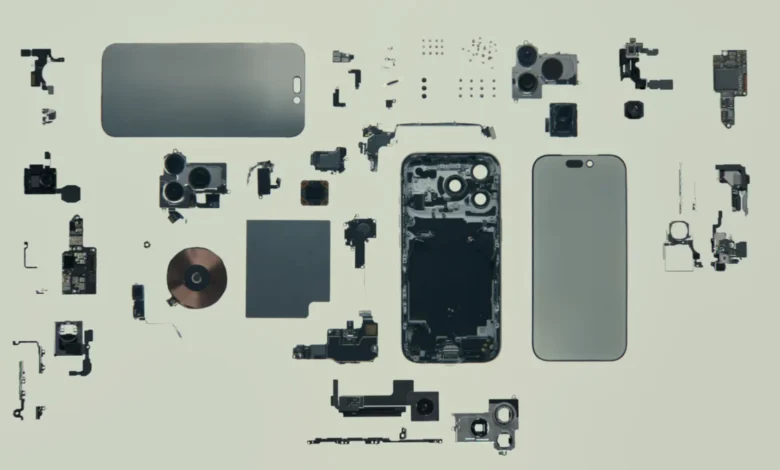
Apple’s newly released iPhone 18 Pro and iPhone 18 Pro Max have officially landed in the hands of consumers globally, but early teardowns and deep-dive technical analyses have revealed a significant hardware compromise within higher-capacity models. According to recent benchmark evaluations conducted by the prominent Bilibili hardware testing channel Homolab, the Cupertino-based tech giant has transitioned to Quad-Level Cell (QLC) NAND flash memory for its 1TB and higher storage variants. While this architectural shift successfully permits denser storage configurations within the constrained physical geometry of a smartphone chassis, extensive diagnostic testing indicates that these drives suffer from severe performance degradation during sustained, heavy data transfer workloads.
The findings have ignited a broader discussion within the consumer electronics and semiconductor industries regarding the ongoing trade-offs between maximizing gigabytes per square millimeter and maintaining sustained input/output operations per second (IOPS). As flagship mobile devices increasingly replace traditional computers for resource-intensive tasks such as 4K and 8K ProRes video capture, multi-gigabyte file transfers, and on-device machine learning model processing, the underlying endurance and sustained throughput of internal NAND storage have become critical performance bottlenecks.
Main Facts and Technical Breakdown
The core of the issue lies in the fundamental physics of modern NAND flash memory architecture. For years, premium smartphones—including previous generations of Apple’s iPhone Pro lineups—relied heavily on Triple-Level Cell (TLC) NAND flash memory. TLC architecture stores three bits of data per individual memory cell. In contrast, QLC NAND increases that density to four bits per cell.
This higher storage density yields distinct commercial and manufacturing advantages. By packing four bits into the same physical footprint previously occupied by three, semiconductor manufacturers can significantly lower production costs per gigabyte, streamline silicon wafer utilization, and offer colossal storage capacities—such as 1TB and 2TB—in sleek, ultra-thin handheld devices without increasing battery or display volume allocations.
However, writing four bits per cell requires much finer voltage control and precision than writing three or two bits. When a device attempts to write massive blocks of data continuously, the controller must execute complex error-correction algorithms and manage internal SLC caches—temporary, high-speed single-level cell buffers designed to absorb burst writes. Once these SLC caches are exhausted during heavy, sustained workloads, the NAND is forced to write directly to the slower QLC blocks.
Homolab’s stress-testing of the 1TB iPhone 18 Pro Max demonstrated this limitation in real-world scenarios. While the device easily matched previous-generation benchmarks during brief, standard bursts of read and write activity, continuous large-file transfers revealed a sharp, noticeable drop in sequential write speeds. For everyday tasks like launching applications, capturing standard photographs, or browsing the web, the average user is unlikely to notice any performance penalty. Conversely, professional videographers, content creators, and power users moving massive video libraries or handling extensive local data backups will encounter significantly extended transfer times once the SLC cache saturates.
Chronology of the Release and Discovery
The timeline leading to this technical discovery began quietly months prior to the retail launch, amid standard supply chain adjustments and semiconductor procurement shifts.
- Early 2026: Supply chain reports indicated that major flash memory suppliers, including SK Hynix, Micron, and Kioxia, were ramping up commercial production of advanced QLC NAND wafers optimized for mobile applications, aiming to meet rising consumer demand for affordable high-capacity storage tiers.
- Mid-September 2026: Apple officially unveiled the iPhone 18 Pro series during its annual autumn hardware keynote event, highlighting advancements in camera capabilities, thermal management, and energy-efficient silicon. Technical spec sheets emphasized the availability of massive 1TB and 2TB storage configurations tailored for professional workflows.
- September 2026 (Launch Week): Devices hit retail shelves globally on Friday, prompting immediate teardowns and stress tests by independent tech analysts, hardware reviewers, and content creators.
- Late September 2026: Bilibili tech channel Homolab published its comprehensive performance analysis of the iPhone 18 Pro Max 1TB variant. Using specialized diagnostic tools and sustained file-transfer stress tests, the channel documented the stark performance cliff observed when QLC NAND cache boundaries were exceeded, bringing the hardware change to public prominence.
Industry Context and Historical Background
The transition from TLC to QLC memory is not unprecedented in the broader consumer technology ecosystem. Personal computer builders and laptop manufacturers navigated this exact architectural crossroads several years ago.
When QLC solid-state drives (SSDs) first penetrated the consumer PC market in the late 2010s, they were met with similar skepticism. Early QLC SATA and NVMe drives offered budget-conscious consumers an inexpensive path to 1TB and 2TB capacities, but critics were quick to highlight their sluggish sustained write speeds and lower total bytes written (TBW) endurance ratings compared to their TLC counterparts. Over time, storage controller advancements, more sophisticated dynamic SLC caching algorithms, and improved error-correction code (ECC) engines successfully mitigated many of these early shortcomings, cementing QLC as a viable standard for secondary storage and cost-sensitive applications in desktop computing.
In the smartphone sector, however, space and thermal constraints are exponentially tighter. Mobile devices lack active cooling fans and large aluminum heatsinks, forcing system-on-chips (SoCs) and storage controllers to aggressively throttle performance when temperatures rise or when enduring heavy computational and I/O loads. Integrating QLC NAND into a smartphone requires delicate firmware optimization to ensure that thermal output and endurance metrics remain within acceptable consumer safety and longevity thresholds.
Broader Impact, Market Implications, and Outlook
Apple’s decision to adopt QLC NAND for the higher-end tiers of the iPhone 18 Pro series carries several multi-faceted implications for consumers, competitors, and the supply chain at large.
From a pricing and margin perspective, QLC allows Apple to maintain competitive profit margins on high-capacity models while keeping retail prices stable in an inflationary global economy. As flash memory manufacturing costs fluctuate, utilizing higher-density media for 1TB and 2TB tiers helps cushion component expenditure spikes.
However, the performance compromise may alienate a niche yet vocal segment of the user base: professional videographers and digital creators. The iPhone 18 Pro Max is heavily marketed as a cinematic production tool capable of shooting directly to external drives or internal storage in high-bitrate ProRes formats. For a professional capturing multi-gigabyte footage on location, sustained write performance is paramount. If internal storage bottlenecks occur during rapid data offloading or extensive proxy generation, workflow efficiency could be compromised.
Industry observers also note that consumer awareness regarding hardware specifications—beyond nominal gigabytes and megabixels—is steadily increasing. As users become more technically literate about the differences between TLC and QLC flash memory, tech brands may face increased scrutiny regarding component tiering within identical product families. To date, Apple has not officially detailed the exact NAND cell types used across different storage capacities in its technical specifications, adhering to its long-standing corporate policy of focusing on holistic user experience rather than component-level disclosures.
Moving forward, analysts anticipate that software updates and future firmware optimization will play a crucial role in mitigating the perceived performance drawbacks of QLC-based iPhones. By refining dynamic caching algorithms and improving background garbage collection routines, Apple can help ensure that everyday users experience seamless operation, even if synthetic benchmarks continue to expose the inherent physical limitations of four-bit-per-cell memory architecture.