OpenAI Unveils Codex Micro, Its First Consumer Hardware Product, Targeting Enhanced AI-Assisted Coding Workflows Amid Broader AI Hardware Expansion

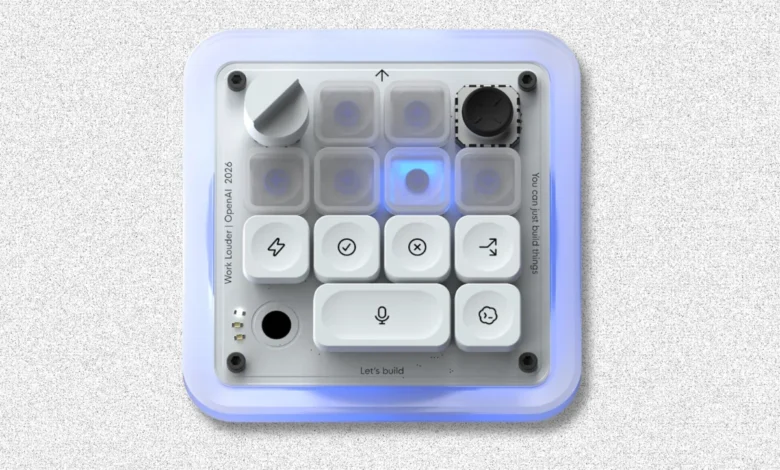
OpenAI has officially introduced the Codex Micro, marking its inaugural foray into consumer-facing hardware. This mechanical keypad, priced at $230, is meticulously designed to augment the capabilities of OpenAI’s proprietary Codex coding agent, providing developers with a tangible interface to streamline their AI-assisted programming workflows. The launch signals a significant strategic pivot for OpenAI, moving beyond purely software-driven AI services into the competitive realm of physical devices, even as the company navigates complex partnerships and legal challenges in its broader hardware ambitions.
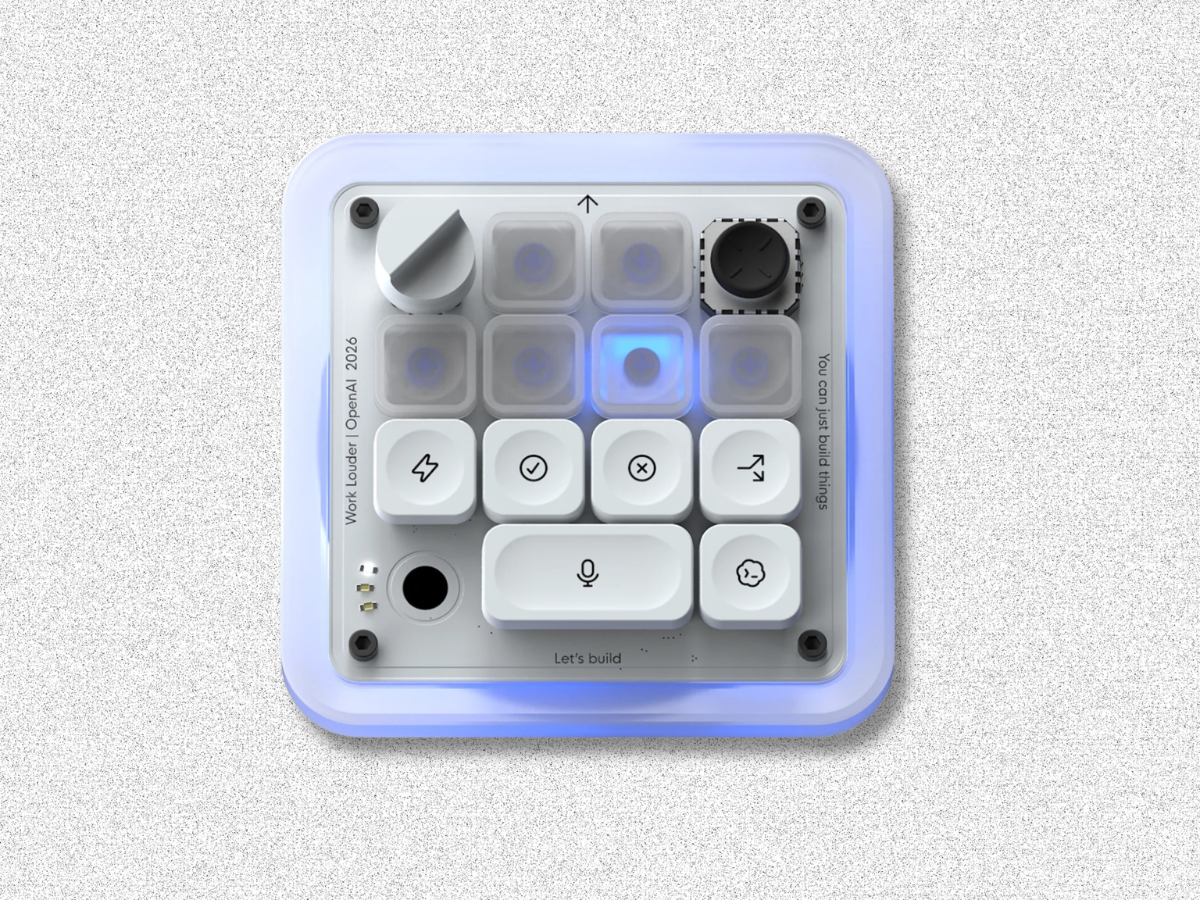
Developed in collaboration with the renowned team at Work Louder, known for their specialized mechanical input devices, the Codex Micro integrates a suite of tactile controls. The compact unit features 13 customizable mechanical switches, a sensitive touch sensor, a responsive rotary dial specifically engineered to adjust the AI’s reasoning levels in real-time, and an analog stick for additional control. Pre-orders for the Codex Micro are currently available through OpenAI’s official channels, with the initial batch of units slated for shipment later this month. OpenAI has characterized this accessory as a "limited-run product," suggesting a potentially experimental or niche release rather than a mass-market offering.
Crucially, the Codex Micro stands distinct from the highly anticipated screen-free AI device that OpenAI is reportedly co-developing with former Apple design chief Jony Ive and his firm LoveFrom. While the Ive collaboration points towards a broader vision of ambient, intuitive AI interaction, the Codex Micro is a purpose-built tool, narrowly focused on enhancing the productivity of professional coders and developers who regularly leverage OpenAI’s Codex agent in their daily tasks. This dual-track hardware strategy underscores OpenAI’s multifaceted approach to integrating artificial intelligence into various facets of human interaction and professional work.
Inside the Codex Micro: Precision Engineering for Developers
The design philosophy behind the Codex Micro centers on providing immediate, intuitive control over the nuanced functions of the Codex AI. Each of its components is engineered for customization and responsiveness, aiming to reduce context switching and accelerate development cycles. The 13 mechanical switches offer a crisp, tactile feedback, ideal for mapping frequently used commands, macros, or AI prompts. These can be reprogrammed by the user to suit individual coding styles and project requirements, offering a level of personalization often sought by professional developers.
Beyond the standard switches, the device incorporates a touch sensor, which can be assigned to various quick actions or gestures, adding another layer of interactive control. A prominent feature is the rotary dial, a critical innovation that allows users to directly adjust the "reasoning level" of the Codex AI. In traditional AI interaction, adjusting such parameters often involves navigating software menus or inputting specific commands. By externalizing this control to a physical dial, OpenAI aims to provide developers with instant, on-the-fly modulation of the AI’s computational depth, allowing for quick shifts between broad suggestions and highly detailed code generations without interrupting the flow of thought. This real-time adjustment capability is touted as a significant advantage for iterative development and debugging processes.
An analog stick further expands the input possibilities, offering proportional control that could be utilized for navigation within code, adjusting parameters in AI models, or even controlling integrated development environment (IDE) functions. Integrated RGB lighting serves a functional purpose beyond aesthetics; it acts as a dynamic notification system, providing visual cues for various AI states. For instance, different color patterns or pulsations could indicate when the AI has completed a task, requires further input, or has encountered an error. The package also includes multiple dozen extra keycaps, enabling further visual and tactile personalization to match a user’s ergonomic preferences or aesthetic choices.
Connectivity options for the Codex Micro are designed for versatility, supporting both Bluetooth for a clean, wireless desktop setup and USB-C for a reliable wired connection. This dual-mode functionality ensures compatibility with both Windows and Mac operating systems, catering to a broad spectrum of developer environments. The emphasis on robust connectivity and cross-platform support highlights OpenAI’s intention to make the device a seamless addition to diverse professional workflows.
The Codex Agent: A Foundation for AI-Assisted Coding
The utility of the Codex Micro is inextricably linked to the capabilities of the OpenAI Codex agent itself. OpenAI Codex, first introduced to a limited audience in 2021, is a descendant of the GPT-3 language model, specifically fine-tuned for programming tasks. It is capable of translating natural language into code across dozens of programming languages, completing code, suggesting functions, and even debugging. For developers, Codex has become an invaluable assistant, accelerating the coding process and allowing them to focus on higher-level architectural challenges rather than repetitive syntax.
The evolution of AI in coding has seen a rapid acceleration, moving from simple autocomplete tools to sophisticated generative models. Tools like GitHub Copilot, powered by OpenAI Codex, have demonstrated the transformative potential of AI in software development. The Codex Micro aims to elevate this interaction from purely software-based prompts to a more tactile, intuitive experience. By providing physical controls for parameters like reasoning levels, OpenAI is attempting to create a more direct neural link between the developer’s intent and the AI’s output, thereby reducing cognitive load and enhancing overall productivity. This is particularly relevant in complex coding scenarios where precise control over AI assistance can mean the difference between efficient problem-solving and frustrating trial-and-error.
OpenAI’s Strategic Entry into Hardware: Context and Chronology
OpenAI’s decision to launch a hardware product, even a specialized one like the Codex Micro, is a significant milestone in its organizational trajectory. Founded in 2015 as a non-profit research organization, OpenAI initially focused on fundamental AI research. Its transformation into a capped-profit entity and its subsequent release of groundbreaking models like GPT-3, DALL-E, and ChatGPT, propelled it into the global spotlight. The immense popularity of ChatGPT, in particular, demonstrated the public’s appetite for accessible AI, and also highlighted the potential for AI to be integrated into daily tools and devices.
The company’s hardware ambitions began to crystallize more publicly last year with the announcement of a high-profile partnership with Jony Ive. The collaboration with Ive’s design firm LoveFrom, backed by an investment from SoftBank, signaled OpenAI’s intent to develop a "screen-free AI device" that would rethink human-computer interaction in an ambient, multi-sensory manner, potentially incorporating multiple cameras and sensors for spatial awareness. This project is a long-term, ambitious endeavor, aiming to define a new category of AI hardware.
The Codex Micro, by contrast, appears to be a more immediate, tactical move. Its development with Work Louder, a company known for niche, high-quality mechanical keypads, suggests a targeted approach to address a specific pain point for its existing developer user base. This dual hardware strategy — a long-term, visionary project with Ive and a short-term, specialized productivity tool — allows OpenAI to explore different facets of the AI-hardware integration simultaneously.
The broader trend of AI companies expanding into hardware is a critical backdrop to this launch. Giants like Google have long integrated AI into their Pixel phones and smart home devices. Meta has invested heavily in VR/AR hardware with its Quest headsets and Ray-Ban smart glasses, envisioning an AI-powered metaverse. Even competitors like Anthropic are rumored to be exploring physical devices to create more tightly integrated AI ecosystems. For these companies, hardware offers a crucial avenue for differentiation, user experience control, and the creation of proprietary ecosystems that can solidify user loyalty and data streams.
Amidst these ambitious hardware initiatives, OpenAI is also navigating legal complexities. The company is reportedly facing a lawsuit from Apple, alleging that former Apple employees stole trade secrets to aid in the development of OpenAI’s hardware products. While the specifics of the lawsuit remain under wraps, the fact that the Codex Micro was developed with Work Louder, and not directly with Jony Ive’s team (who themselves are former Apple design leaders), likely places it outside the immediate scope of that particular dispute. However, it underscores the intense competition and intellectual property battles brewing in the nascent AI hardware sector.
Pricing, Limited Run, and Value Proposition for Developers
The Codex Micro’s $230 price point has generated discussion within the developer community. For a device with 13 mechanical switches, a touch sensor, a dial, and an analog stick, some question whether the cost is fully justified, especially when compared to general-purpose macro keypads or programmable stream decks available at varying price points. For instance, an Elgato Stream Deck Mini, offering six customizable LCD keys, can be found for around $80-$100, while larger versions with more keys can range up to $200-$250. These devices offer broad customization but lack the specific "reasoning level" dial directly tied to OpenAI’s AI models.
The value proposition of the Codex Micro, therefore, hinges significantly on individual user workflows and the frequency with which a developer interacts with OpenAI’s Codex agent. For a developer who relies heavily on Codex for code generation, completion, or debugging throughout their workday, the physical controls and, particularly, the reasoning dial, could translate into substantial time savings. Reducing the need to switch contexts between their IDE and AI settings, or to type out specific prompts repeatedly, can accumulate to significant productivity gains over hours, days, and weeks. A few seconds saved per interaction, multiplied by dozens or hundreds of interactions daily, can lead to meaningful efficiency improvements.
Conversely, for casual users or those who only occasionally leverage AI coding assistants, the $230 price tag may be difficult to justify. General-purpose macro keypads offer similar physical input customization at a lower price point, albeit without the specialized Codex integration. The utility of the Codex Micro is directly proportional to a user’s dependence on the Codex agent in their daily coding tasks, positioning it as a specialized productivity tool rather than a general-purpose peripheral.
OpenAI’s description of the Codex Micro as a "limited-run project" to TechCrunch further informs its market positioning. This suggests it might serve as an experimental product, allowing OpenAI to gauge market interest, collect user feedback on hardware integration, and test manufacturing and distribution channels, without committing to a full-scale, long-term product line. This limited availability implies that those interested should consider placing a pre-order promptly, as restocks or continued availability are not guaranteed.
Implications for OpenAI and the Future of AI Hardware
The launch of the Codex Micro carries several implications for OpenAI and the broader AI landscape. For OpenAI, it represents a concrete step in diversifying its offerings beyond purely software and API access. By providing tangible hardware, OpenAI aims to deepen user engagement and potentially create a more sticky ecosystem around its AI models. This move could also serve as a testbed for future, more ambitious hardware products, providing valuable insights into user preferences for physical AI interfaces.
For developers, the Codex Micro signifies a potential shift towards more integrated and intuitive AI assistance. As AI becomes more embedded in the coding process, specialized hardware like this could become common, transforming how developers interact with their tools. The concept of a physical dial to adjust an AI’s "reasoning level" is particularly intriguing, offering a glimpse into a future where abstract AI parameters are made tangible and directly controllable.
However, the limited-run nature also presents challenges. Potential buyers must weigh the $230 investment against the uncertainty of long-term software support, future compatibility, and the availability of replacement parts or accessories for a product that may not be a permanent fixture in OpenAI’s portfolio. The company has not yet announced details regarding international shipping, warranty terms, or sustained software updates, which are crucial considerations for any hardware purchase.
Ultimately, the Codex Micro is an intriguing, albeit specialized, first step for OpenAI into consumer hardware. It embodies the company’s ambition to create more intuitive and powerful interfaces for its cutting-edge AI, while simultaneously navigating the complexities of an increasingly competitive and legally charged AI hardware market. Its success will likely be measured not just in sales figures, but in the valuable lessons it provides OpenAI as it continues its journey to define the future of human-AI interaction. Interested parties are advised to monitor OpenAI’s official channels for further updates as the shipping date approaches, particularly concerning logistical details and any potential expansions of its availability.