The Evolving Landscape of Agentic AI: From Orchestrated Loops to Intelligent Swarms by Mid-2026

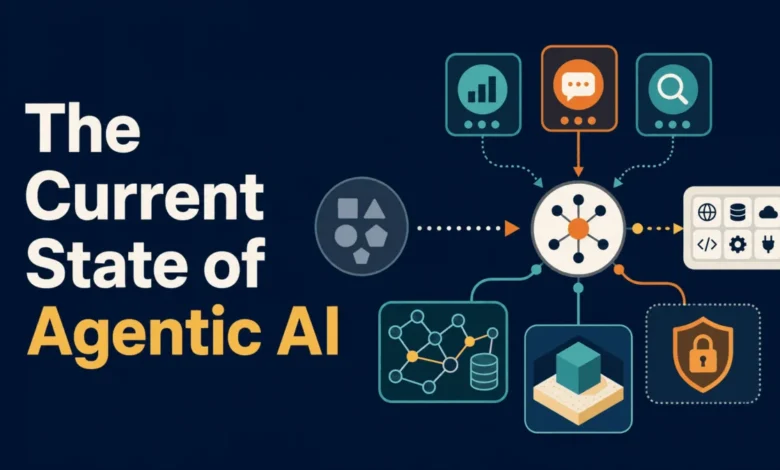
The field of agentic Artificial Intelligence has undergone a dramatic transformation by mid-2026, marking a significant departure from the rudimentary, brute-force orchestration methods that characterized its early development. What was once a landscape dominated by intricate, hand-crafted reasoning loops and monolithic language models attempting to juggle multiple complex tasks is now coalescing around more specialized, efficient, and scalable architectures. This evolution is driven by advancements in foundation models themselves, leading to a paradigm shift where AI engineers are increasingly focused on designing the infrastructure for sophisticated multi-agent systems, often referred to as "swarms," rather than meticulously prompting individual agents. Key to this new era are the native integration of advanced reasoning capabilities within models, the standardization of how these agents interact with external tools, and the rise of multi-agent architectures that decompose complex problems into manageable sub-tasks.
The Decline of Brute-Force Orchestration and the Rise of Native Reasoning
Just a year prior, in the early 2020s, the prevailing approach to building AI agents relied heavily on external orchestration. Engineers would meticulously craft complex ReAct (Reasoning and Acting) loops, employing brittle prompt chains to guide a single, large language model through planning, tool execution, and context management. This method, while functional, was often inefficient, prone to errors, and led to significant latency and token overhead. Systems like LangChain and LlamaIndex were instrumental in simulating reflection and step-by-step thinking, but they essentially acted as external scaffolding.
The mid-2026 landscape reveals a fundamental shift: foundation models now possess integrated "System 2" thinking capabilities. This means these models can natively generate hidden reasoning tokens, explore multiple solution branches internally, and self-correct before producing a final output. The need for external loops to simulate reflection is diminishing, as the models themselves are becoming more adept at internal deliberation. This advancement has profound implications for AI architecture. The burden on engineers to construct complex orchestration frameworks solely for agent planning has been significantly reduced. Instead, the focus has shifted to optimizing the layers responsible for routing tasks, managing system-wide state, and facilitating the execution of tasks within defined environments. The cognitive loop is now largely handled by the model itself, freeing up engineering resources to address more systemic challenges.
The Emergence of Agent Swarms: Specialization as a Core Principle
With the cognitive load of individual agents lightened, the question of how to best leverage their capabilities has led to a crucial realization: specialization is key. The era of the monolithic, all-encompassing agent is giving way to the concept of "agent swarms," a collection of smaller, highly specialized agents that collaborate through standardized communication protocols. This mirrors a broader trend observed in software engineering, where complex systems are often broken down into microservices for better manageability, scalability, and resilience.
Attaching an unwieldy number of tools to a single large language model, a practice common in earlier iterations, creates a significant bottleneck. Production teams are increasingly adopting the swarm architecture, where a complex task is decomposed and distributed among a network of specialized agents. For instance, instead of a single agent responsible for data retrieval, analysis, and reporting, a swarm might comprise:
- Data Fetcher Agent: Solely responsible for querying databases and retrieving raw data.
- Data Analyst Agent: Focused on processing and interpreting the retrieved data, performing statistical analysis, and generating insights.
- Report Generation Agent: Dedicated to synthesizing the findings into a coherent and user-friendly report.
- Research Agent: tasked with gathering external information or context to enrich the analysis.
While this might seem like a mere redistribution of complexity, the critical insight lies in the manageability of this distributed complexity. Each specialized agent can be developed, tested, and updated independently. This modularity allows for greater flexibility, easier debugging, and the ability to swap out or upgrade individual agents without disrupting the entire system. Furthermore, it enables the use of more cost-effective and performant smaller language models for specific, narrow tasks, reserving larger, more powerful models for critical decision-making or synthesis roles within the swarm.
Illustrative Swarm Pattern: Pseudo-Code Example
The following pseudo-code illustrates a basic swarm pattern, demonstrating how specialized agents can collaborate:
from swarm_framework import Agent, Swarm, TransferCommand

# Define the triage entry point agent
triage_agent = Agent(
    name="Triage",
    system_prompt="Route the request to the correct specialist agent.",
    tools=[transfer_to_sql, transfer_to_analyst]
)

# Define scoped specialist agents
sql_agent = Agent(
    name="Data Fetcher",
    system_prompt="You write and execute read-only PostgreSQL queries.",
    tools=[execute_read_query]
)

analysis_agent = Agent(
    name="Data Analyst",
    system_prompt="You analyze datasets using Python pandas and generate insights.",
    tools=[run_python_sandbox]
)

# Define the handoff routing logic
def transfer_to_analyst(context_variables):
    """Call this when raw data has been fetched and needs analysis."""
    return TransferCommand(target_agent=analysis_agent, context=context_variables)

# Add the handoff tool to the SQL agent
sql_agent.add_tool(transfer_to_analyst)

# Initialize and run the swarm
enterprise_swarm = Swarm(
    starting_agent=triage_agent,
    agents=[triage_agent, sql_agent, analysis_agent]
)

response = enterprise_swarm.run(
    user_input="How did our Q2 churn rate correlate with support ticket volume?"
)
In this pattern, individual agents are designed to be stateless per call, meaning they don’t retain information between separate invocations. However, the system as a whole maintains state through the passing of context. When the sql_agent successfully fetches data, it utilizes a TransferCommand to hand off control and the relevant data context to the analysis_agent. This architectural choice is crucial for maintaining lean context windows and optimizing resource utilization.
The Model Context Protocol (MCP): Standardizing Agency and Tool Integration
A significant hurdle in the earlier development of agentic AI was the integration of these systems with real-world data sources and APIs. Each new integration required writing custom schemas, managing HTTP requests, and handling arbitrary JSON parsing errors, essentially forcing engineers to reinvent the wheel repeatedly. By mid-2026, the landscape is increasingly shaped by the Model Context Protocol (MCP), an open standard that acts as a universal adapter between AI models and various data sources, whether local or remote.
MCP has revolutionized tool integration through standardization, moving away from the cumbersome pre-2025 paradigm:
| Old Paradigm (Pre-2025) | Current State (Mid-2026) |
|---|---|
| Hardcoded API keys into the agent’s environment | Agent connects to an isolated MCP server |
| Engineer writes custom JSON schemas for every tool | MCP server automatically exposes available tools and resources |
| Agent directly executes API calls inline | Execution happens on the MCP server, separating concerns |
This standardization significantly streamlines the process of connecting AI agents to external systems. Teams can now integrate pre-built MCP servers for platforms like GitHub, Slack, or PostgreSQL without needing to write extensive custom API wrappers. While robust credential management on the server side remains a critical consideration, the integration surface area has been dramatically reduced, accelerating development cycles and improving the robustness of agentic systems.
Continuous Learning and Memory Graphs: Building Persistent Intelligence
One of the most anticipated capabilities of agentic AI, as outlined in earlier roadmaps, was the ability for agents to learn from their own execution history. This promise is now being realized through the integration of "memory graphs." This approach distinguishes between the stateless nature of individual agent calls and the system-level persistence of memory. While individual agents remain stateless to maintain efficient context windows, the overall system accumulates persistent memory via graph databases, such as Neo4j or managed alternatives, which are directly injected into the agent’s context pipeline.
A specialized "Memory Agent" operates asynchronously in the background of a swarm. Its sole responsibility is to analyze the main swarm’s execution trajectory, extract salient facts, and update the central memory graph. This process allows the AI system to learn and adapt over time without the need for expensive fine-tuning of the underlying foundation models. The practical implementation of this involves:
- Trajectory Logging: The main swarm continuously logs its decision-making process, tool usage, and outcomes.
- Fact Extraction: The Memory Agent parses these logs to identify discrete, persistent facts or relationships.
- Graph Update: These extracted facts are then used to update nodes and edges in the memory graph database.
- Context Augmentation: Subsequent agent interactions can query the memory graph to retrieve relevant historical context, influencing future decisions.
This methodology shifts the focus from traditional prompt engineering to "context engineering," where the long-term intelligence and performance of the system are enhanced by intelligently managing and leveraging its accumulated knowledge.
Security Imperatives: Navigating the Swarm Attack Surface
The increasing sophistication and interconnectedness of multi-agent systems, particularly those utilizing universal protocols like MCP, have inevitably expanded the attack surface. The threat of "AIjacking," where indirect prompt injections can hijack automated workflows, has become a paramount concern for enterprise adoption. The swarm architecture, by its very nature, amplifies this risk.
When an agent capable of reading external data (e.g., emails) can transfer context and control to an agent with privileged access (e.g., database access), a malicious instruction embedded within an email can pivot laterally through the swarm. This mirrors traditional network intrusion patterns, where a vulnerability in one system can be exploited to gain access to others. The very handoff mechanisms that make swarms efficient also make them susceptible to cascading failures and unauthorized actions.
To counter these emerging threats, several defensive strategies are converging:
- Least Privilege Principle: Agents are granted only the minimal permissions necessary for their specific tasks, limiting the potential damage of a compromised agent.
- Input Sanitization and Validation: Robust mechanisms are employed to scrutinize and validate all inputs and context transfers between agents, identifying and neutralizing potentially malicious instructions.
- Behavioral Anomaly Detection: AI-powered monitoring systems track agent behavior, flagging deviations from expected patterns that might indicate a security breach or unauthorized activity.
While these defenses are still evolving and not yet universally standardized, they represent the critical frontier of production agentic security. Any organization deploying swarms into operational environments must consider at least one of these strategies as a foundational security requirement.
The Path Forward: Building Resilient and Specialized Swarms
Agentic AI has transitioned from a niche research curiosity to a burgeoning engineering discipline with tangible constraints, well-defined failure modes, and critical design decisions at every level of its architecture. The fundamental primitives, including tool calling, routing logic, and native reasoning capabilities, are maturing rapidly. The primary leverage for innovation now lies in the systems layer: the intelligent design of swarm topologies, the architectural implementation of memory systems for compounding knowledge, and the establishment of robust security boundaries to enable safe and scalable operation.
Leading teams in this space are not merely pursuing smarter individual agents. Instead, they are focused on constructing more resilient, specialized, and interconnected swarms. For newcomers to the field, the recommended approach is to adopt one of the established patterns, implement it at a small scale, and instrument it meticulously for monitoring and analysis. The architectural intuitions gained from building and managing a three-agent swarm are directly transferable to the development of much larger and more complex thirty-agent or even hundred-agent systems, paving the way for the next generation of intelligent automation.