Uber Launches Employee Robotaxi Testing in San Francisco with Lucid Gravity and Nuro Autonomous Technology

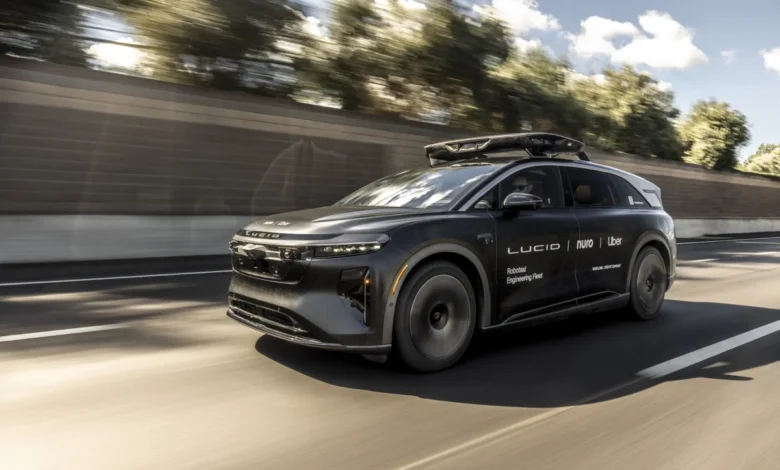
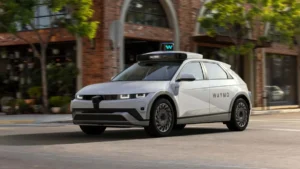
The streets of San Francisco have long served as a high-stakes laboratory for the future of urban mobility, but a new contender has officially entered the live testing phase. Uber Technologies Inc. has initiated a significant milestone in its journey toward autonomous ride-hailing, granting select employees the ability to summon a Lucid Gravity SUV equipped with Nuro’s self-driving system. This move, announced in mid-April 2026, marks the transition from closed-course validation to real-world operational testing, setting the stage for a broader public rollout slated for the end of the year.
While the vehicles are operating in autonomous mode, they are not yet fully pilotless. To ensure safety and comply with current California testing protocols, each vehicle is staffed by a human safety operator seated behind the wheel, ready to take control if the system encounters an edge case it cannot navigate. This phase is designed to stress-test the synergy between the premium hardware of the Lucid Gravity, the artificial intelligence "stack" provided by Nuro, and the user interface of the Uber app.
The Strategic Alliance: A Multibillion-Dollar Commitment
The current testing program is the tangible result of a massive strategic pivot Uber made in July 2025. After years of refining its approach to autonomous vehicles (AVs), Uber opted for a partnership-heavy model rather than developing the entire hardware and software stack in-house. This culminated in a multimillion-dollar investment strategy that reshaped the AV landscape.
Uber invested $300 million directly into Lucid Motors, the California-based luxury electric vehicle manufacturer. Alongside this capital injection, Uber committed to purchasing a minimum of 20,000 Lucid Gravity SUVs over a six-year period. The Gravity, Lucid’s flagship SUV, was chosen for its spacious interior, long-range battery architecture, and premium branding, positioning Uber’s future robotaxi service as a high-end alternative to existing competitors.
Simultaneously, Uber poured an undisclosed "multi-hundred-million dollar" sum into Nuro, a company originally known for its compact, driverless delivery pods. This investment facilitated Nuro’s expansion into passenger vehicle autonomy. Under this agreement, Nuro provides the "brains" of the operation—the software and sensor integration—while Uber provides the "network" and demand platform.
Technical Architecture: Sensors, Silicon, and the Gravity Platform
The vehicles currently navigating San Francisco’s hilly terrain are a far cry from standard consumer SUVs. The Lucid Gravity robotaxi, which made its official debut in January 2026, is outfitted with a sophisticated array of sensors designed to provide a 360-degree, high-fidelity view of the environment.
Key technical specifications of the sensor suite include:
- Solid-State Lidar: Multiple units provide precise depth perception and object detection, even in low-light or adverse weather conditions.
- High-Resolution Cameras: These provide the visual data necessary for traffic light recognition, sign reading, and pedestrian intent prediction.
- Radar Arrays: These sensors offer long-range detection and velocity tracking, ensuring the vehicle can maintain safe distances at higher speeds.
- Nvidia Drive AGX Thor: The heart of the autonomous system is the Nvidia Thor computer. This high-performance AI platform is capable of 2,000 teraflops of performance, allowing it to process massive amounts of sensor data in real-time and execute complex driving maneuvers with minimal latency.
The choice of the Lucid Gravity is also strategic from a hardware perspective. The vehicle’s 900-volt architecture allows for ultra-fast charging, a necessity for a robotaxi fleet that needs to maximize "up-time" to be profitable. Furthermore, the spacious cabin allows Uber to experiment with new "rider experiences," potentially turning the commute into a mobile office or entertainment lounge.
Chronology of the Uber-Lucid-Nuro Partnership
The path to the current testing phase has been marked by several key developmental milestones:
- July 2025: Uber, Lucid, and Nuro announce a tripartite partnership. Uber commits to the $300 million investment in Lucid and a substantial stake in Nuro.
- Late 2025: Nuro begins closed-course testing of the integrated autonomous system on the Lucid Gravity platform. These tests focused on basic navigation, emergency braking, and sensor calibration.
- January 2026: The finalized Lucid Gravity robotaxi is revealed to the public, showcasing the integrated sensor "pod" design that balances aesthetics with functional visibility.
- Early 2026: Nuro expands its engineering fleet to 100 vehicles. Public road testing begins in various U.S. cities, including San Jose and Phoenix, to gather diverse data sets.
- April 2026: The "Employee Pilot" launches in San Francisco. This represents the first time the system is integrated directly into the Uber rider app for real-world trip fulfillment.
- Late 2026 (Projected): Production of the modified Gravity vehicles is expected to ramp up, coinciding with the first public-facing commercial rides.
The "Pick-up and Drop-off" Challenge
One of the primary focuses of the current employee testing phase is solving the "last 50 feet" problem. In a blog post following the launch, Nuro emphasized that while highway driving is largely a solved problem, the intricacies of urban ride-hailing remain difficult.
San Francisco’s unique geography—characterized by narrow streets, double-parked delivery trucks, and high pedestrian density—makes the process of finding a safe and legal place to pull over exceptionally complex. Uber is using the data from employee rides to refine how the AI communicates with the rider. For instance, if the vehicle cannot reach the exact GPS pin due to a construction zone, the app must intelligently negotiate a "suggested meet point" with the passenger.
Furthermore, the employee test rides serve as a feedback loop for the "autonomy stack." Engineers are monitoring how the vehicle handles the "human element"—passengers who might take too long to enter the car, or the need to adjust climate and entertainment settings via the app before the journey begins.
Industry Context and Competitive Landscape
Uber’s foray into operating its own premium robotaxi fleet marks a departure from its previous "platform-only" rhetoric. For several years, Uber’s strategy was to act as the marketplace where other AV companies, such as Waymo or Aurora, could list their fleets. By investing heavily in its own dedicated hardware and software partnership, Uber is hedging its bets.
This move places Uber in direct competition with Waymo, which currently dominates the San Francisco autonomous landscape. However, by utilizing the Lucid Gravity, Uber is targeting a "Premium" or "Black" tier of service that Waymo’s current fleet of Jaguar I-PACEs and future Geely-built models may not fully address.
Industry analysts suggest that Uber’s move is also a response to Tesla’s long-promised "Cybercab" or Robotaxi network. By securing a supply of 20,000 high-end EVs and a proven autonomy partner in Nuro, Uber is ensuring it maintains control over its supply chain, rather than being beholden to the whims of a single external AV provider.
Economic and Operational Implications
The financial structure of the deal suggests a shift in how Uber views its balance sheet. According to regulatory filings, Uber intends to own and operate these vehicles, though likely through third-party fleet management partners. This "asset-right" model allows Uber to maintain high standards of vehicle maintenance and cleanliness while offloading the day-to-day logistical burdens of garage storage and charging.
For Lucid Motors, the deal is a vital lifeline. While the Gravity has received critical acclaim, the luxury EV market is increasingly crowded. A guaranteed order of 20,000 units provides the volume necessary to achieve better economies of scale at its Arizona manufacturing facility. For Nuro, the partnership represents a successful pivot from a "delivery-only" company to a major player in the passenger AV space, validating its "Nuro Driver" AI platform.
Looking Ahead: The Path to Public Launch
As the employee pilot continues throughout the spring and summer of 2026, the focus will shift toward regulatory approvals. Uber and Nuro must demonstrate to the California Public Utilities Commission (CPUC) and the Department of Motor Vehicles (DMV) that their system is not only safe but also does not interfere with emergency services—a point of contention for previous AV operators in the city.
If the San Francisco pilot meets its safety and performance benchmarks, Uber is expected to expand the service to other major hubs, such as Los Angeles and Phoenix, where Lucid already has a significant brand presence.
The integration of the Lucid Gravity into the Uber ecosystem represents more than just a new way to get across town; it is a statement of intent. Uber is no longer content to simply be the middleman of the gig economy. By controlling the vehicle, the software, and the user experience, the company is positioning itself to lead the transition into the autonomous era, turning the dream of a "premium, driverless future" into a tangible reality for the residents of San Francisco.
Related posts: