Desktop PC Successfully Powered by 192 AA Alkaline Batteries in a Groundbreaking Experiment

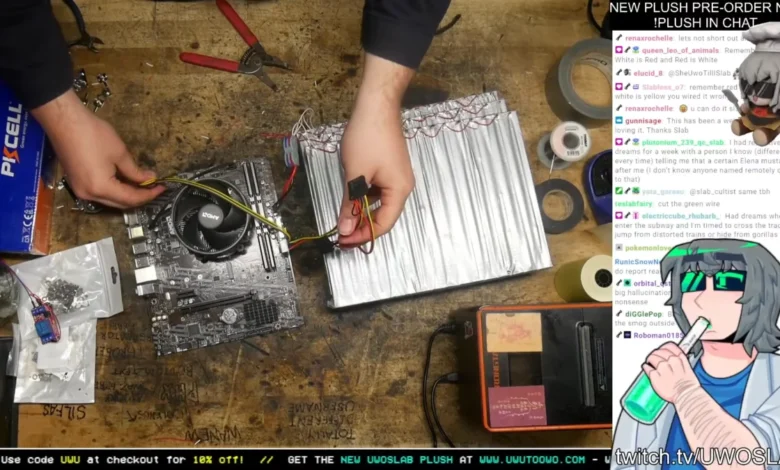
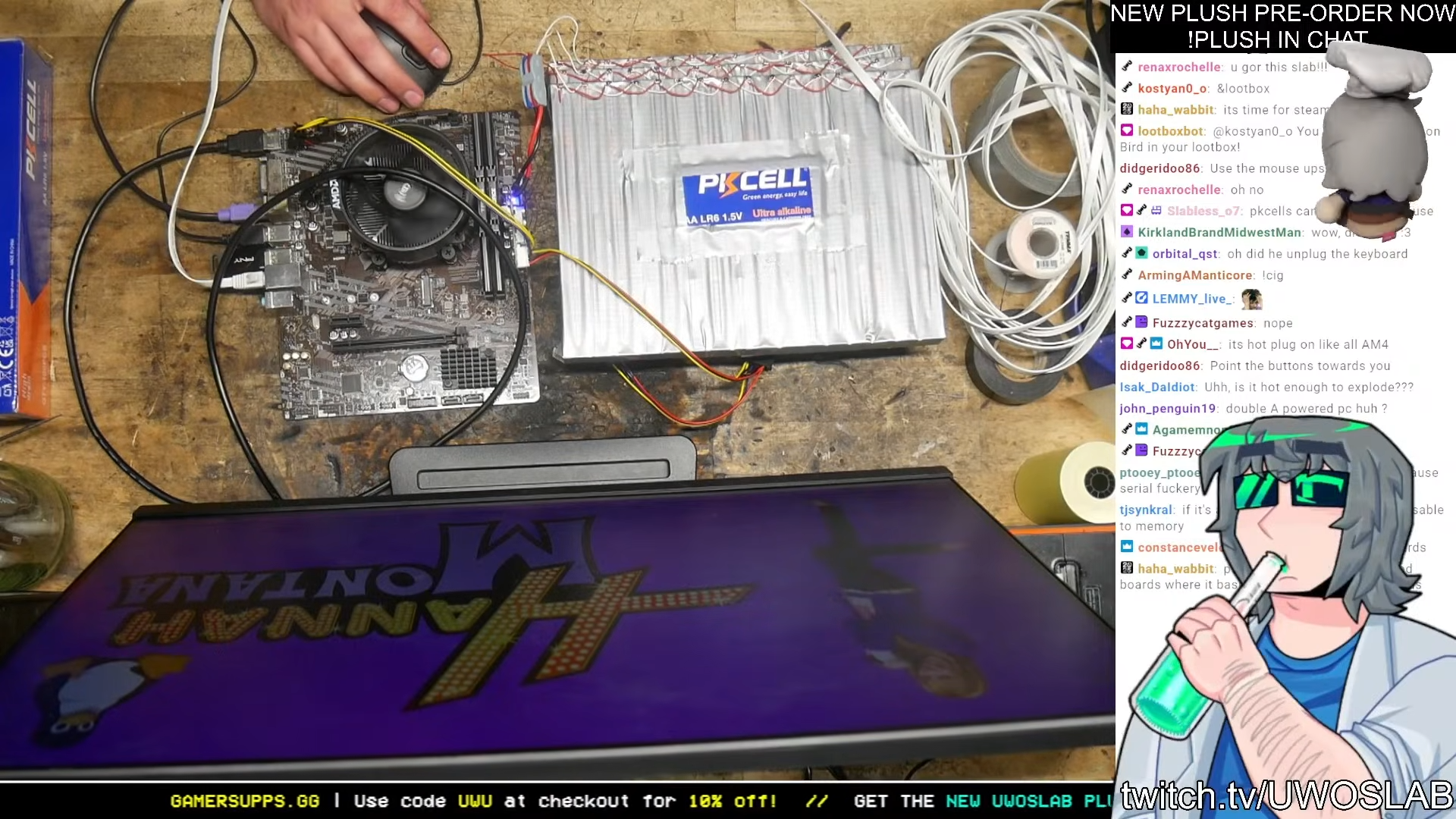
In a remarkable display of ingenuity and unconventional engineering, creator Uwoslab has achieved a new milestone in the realm of off-grid computing, successfully powering a modern AM4 desktop system using an interconnected array of 192 AA alkaline batteries. This audacious experiment, documented through a live broadcast, pushed the boundaries of what is considered feasible with consumer-grade power cells, demonstrating that even a contemporary personal computer can operate independently of traditional wall power for a significant duration under demanding conditions. The achievement stands as a testament to the maker community’s ceaseless pursuit of innovative solutions and challenges conventional notions of power delivery for electronic hardware.
The Quest for Portable Desktop Power: A Niche Endeavor
While battery-powered personal computers are commonplace in the form of laptops, which rely on sophisticated lithium-ion battery packs meticulously integrated into their designs, the concept of furnishing a full-fledged desktop system with a portable power source remains a largely unexplored and technically challenging frontier. Desktop PCs are inherently designed for sustained power delivery from an AC wall outlet, featuring power supply units (PSUs) that convert alternating current to the various direct current voltages required by components. Attempting to replicate this power profile with numerous individual batteries introduces a complex array of electrical engineering hurdles, from managing voltage stability and current draw to mitigating the inherent inefficiencies and rapid discharge characteristics of common battery chemistries. The niche of battery-powered desktops typically involves bulky uninterruptible power supplies (UPS) or custom lithium-based solutions, making Uwoslab’s approach with hundreds of disposable AA cells particularly noteworthy. This project emerges from a vibrant "maker" culture where enthusiasts frequently push the limits of technology, often blurring the lines between practical application and pure scientific curiosity.
Uwoslab’s Evolutionary Approach: Learning from Past Challenges
The success of this 192-AA battery setup was not an overnight achievement but rather the culmination of iterative experimentation, drawing critical lessons from previous attempts. Uwoslab had previously embarked on a similar endeavor, aiming to power a desktop PC using a considerably smaller bank of 9-volt zinc-carbon batteries. That initial experiment, however, met with limited success. Zinc-carbon batteries, while inexpensive, are known for their high internal resistance and notoriously poor performance under high-drain conditions. They exhibit a significant voltage sag almost immediately upon load application and possess a relatively low energy density, rendering them unsuitable for the instantaneous and sustained power demands of a desktop computer. The PC in that instance failed to remain operational for more than a few fleeting seconds, highlighting the fundamental mismatch between the battery chemistry and the computing hardware’s power requirements.
This prior experience proved invaluable, guiding Uwoslab’s strategic pivot to alkaline batteries. Alkaline cells, such as the Pookell AA batteries chosen for the successful attempt, offer several key advantages over their zinc-carbon counterparts. They boast a lower internal resistance, allowing for higher current delivery without excessive voltage drop, and maintain a more stable voltage output over a greater portion of their discharge cycle. Furthermore, the selected "high-drain" alkaline variant is specifically engineered to provide more robust current for demanding applications, even if this often comes at the expense of overall longevity compared to general-purpose alkaline batteries. This informed choice of battery chemistry was a critical factor in the project’s eventual triumph, demonstrating a methodical and data-driven approach to an inherently experimental challenge.
Architecting the Power Grid: From Concept to Construction
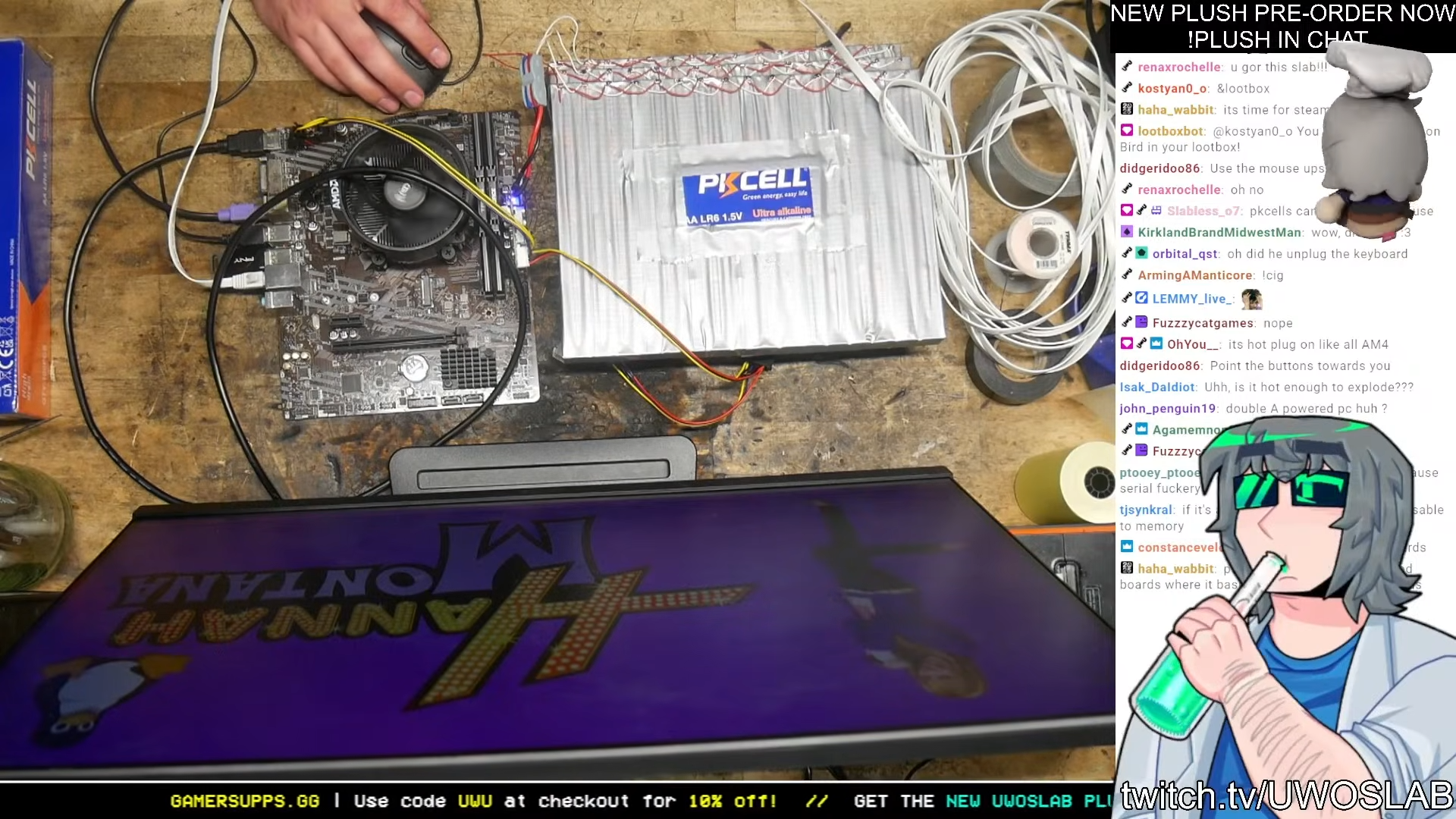
The initial vision for the project was even more ambitious, contemplating a colossal power bank comprising 400 AA cells. Uwoslab had acquired four packs, each containing 100 batteries, with the intent of creating a vast interconnected system. The preliminary plan involved wiring eight cells in parallel to create a low-voltage, high-current bank, then connecting fifty of these banks in series to achieve a much higher voltage. However, this configuration would result in a voltage of 75V (1.5V x 50), which is incompatible with the 12V rail typically required by PC components.
The actual implementation, guided by the precise voltage requirements of desktop components, involved a more refined strategy. Recognizing that standard PC components primarily operate on a 12V direct current (DC) supply, Uwoslab meticulously designed a system where individual groups of batteries would combine to deliver this specific voltage. Each AA alkaline battery provides approximately 1.5 volts. Therefore, wiring eight 1.5V cells in series creates a nominal 12V output (8 cells * 1.5V/cell = 12V). This series connection forms a fundamental 12V power module.
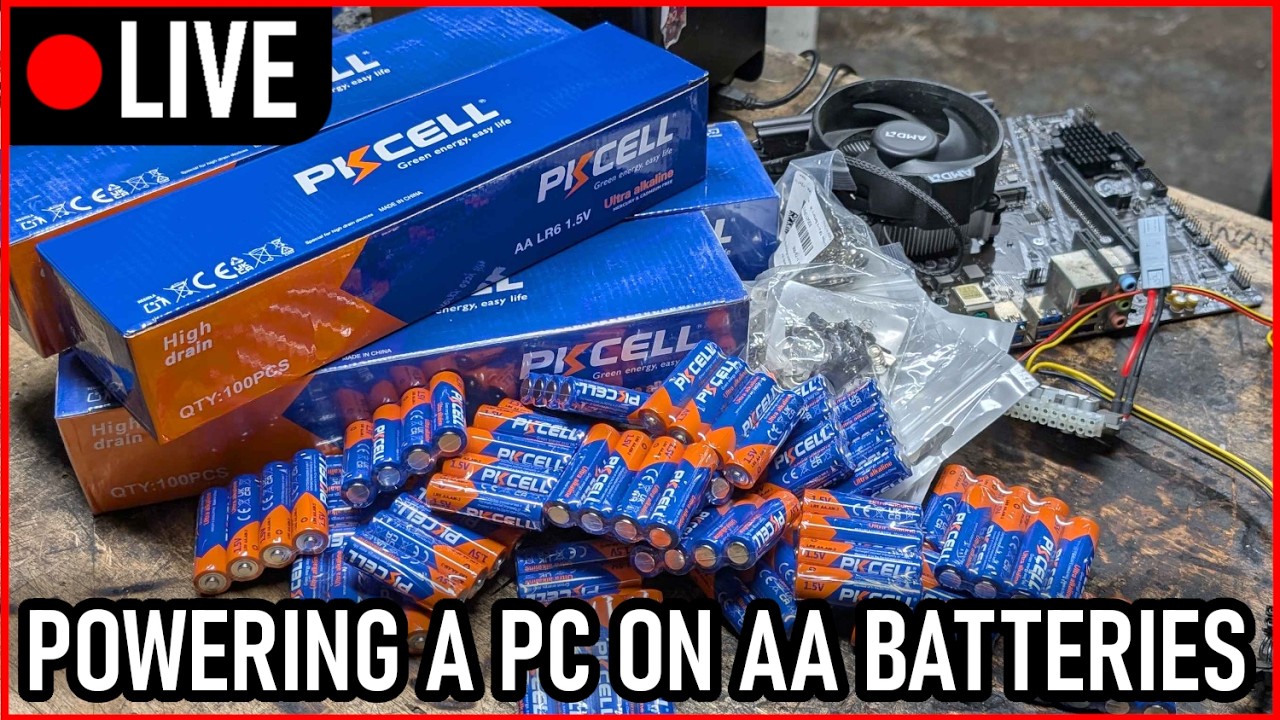
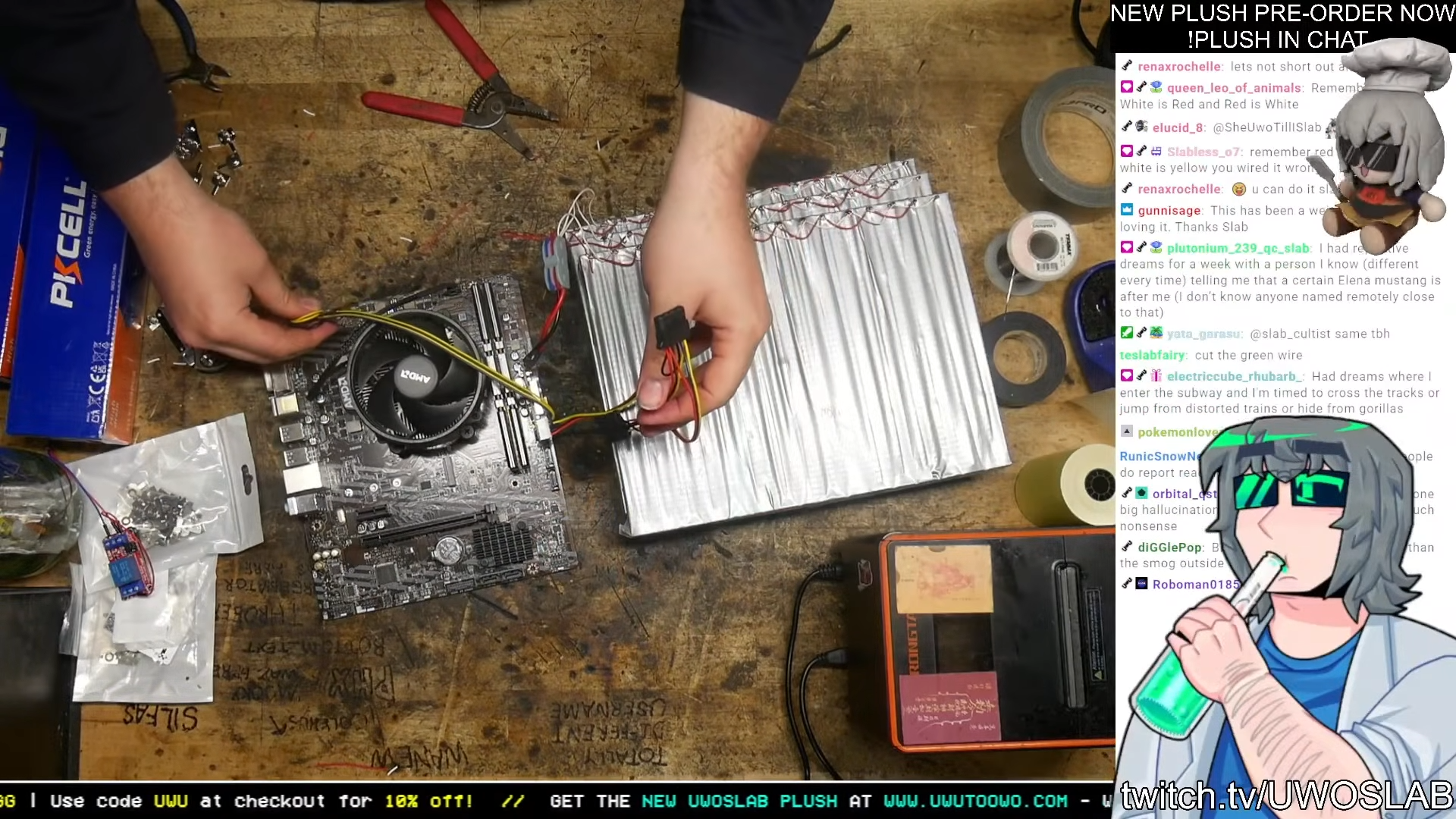
To increase the overall current capacity and extend the operational runtime, Uwoslab then connected multiple such 12V modules in parallel. The final build utilized 192 AA batteries, strategically housed within three custom-built wooden boxes. Each box accommodated 64 batteries, meaning 8 series strings of 8 batteries (64/8 = 8 parallel 12V strings per box). With three such boxes, the total configuration involved 24 parallel strings of 8 series-connected AA batteries (192 batteries total / 8 batteries per series string = 24 parallel strings). These laser-cut wooden boxes served not only as organized anchor points for the batteries but also provided crucial structural rigidity, preventing accidental disconnections or short circuits. Clips and contact pads were integrated at the ends of the apparatus to serve as the main positive and negative terminals, ensuring a robust connection. The entire assembly was further secured with duct tape, emphasizing the practical and somewhat improvisational nature of extreme DIY projects.
The Critical Power Conversion Strategy: Bypassing Inefficiencies
One of the most crucial design decisions that contributed to the project’s success was Uwoslab’s choice of power conversion. A common, albeit inefficient, approach for powering AC-designed electronics from a DC battery source involves using a DC-to-AC inverter, followed by the device’s standard AC-to-DC power supply. This method, however, introduces significant energy losses at each conversion stage (DC-AC, then AC-DC), drastically reducing the overall efficiency and battery life. For instance, a typical inverter might have an efficiency of 85-90%, and a standard PC power supply might have an efficiency ranging from 80% to over 90% (for 80 Plus rated units). Compounding these losses would quickly deplete the finite energy stored in the battery bank.
Uwoslab intelligently sidestepped these inefficiencies by employing a direct 12V DC-to-ATX adapter board. This specialized board plugs directly into the motherboard’s ATX power connector, converting the incoming 12V DC from the battery bank into the various DC voltages required by the motherboard and other components (e.g., 5V, 3.3V). This direct DC-to-DC conversion significantly minimizes energy loss, maximizing the usable power extracted from the AA battery array. This choice underscores a deep understanding of power electronics and a pragmatic approach to optimizing battery utilization for sensitive computer hardware.
The Test Rig: A Lean, Mean, Hannah Montana Machine
The desktop PC chosen for this extraordinary experiment was designed for minimal power consumption, a critical consideration when operating on a finite battery supply. It featured an AM4-socket system, indicating a modern AMD platform. Crucially, the system lacked a dedicated graphics processing unit (GPU), relying instead on an integrated graphics processor (IGP) found within an AMD G-series APU (Accelerated Processing Unit). APUs combine CPU and GPU functionalities onto a single die, making them highly power-efficient for tasks that do not require heavy graphics rendering. To further reduce power draw and simplify the setup, the system booted directly from a flash drive, eliminating the need for a power-hungry mechanical hard drive or even a solid-state drive.
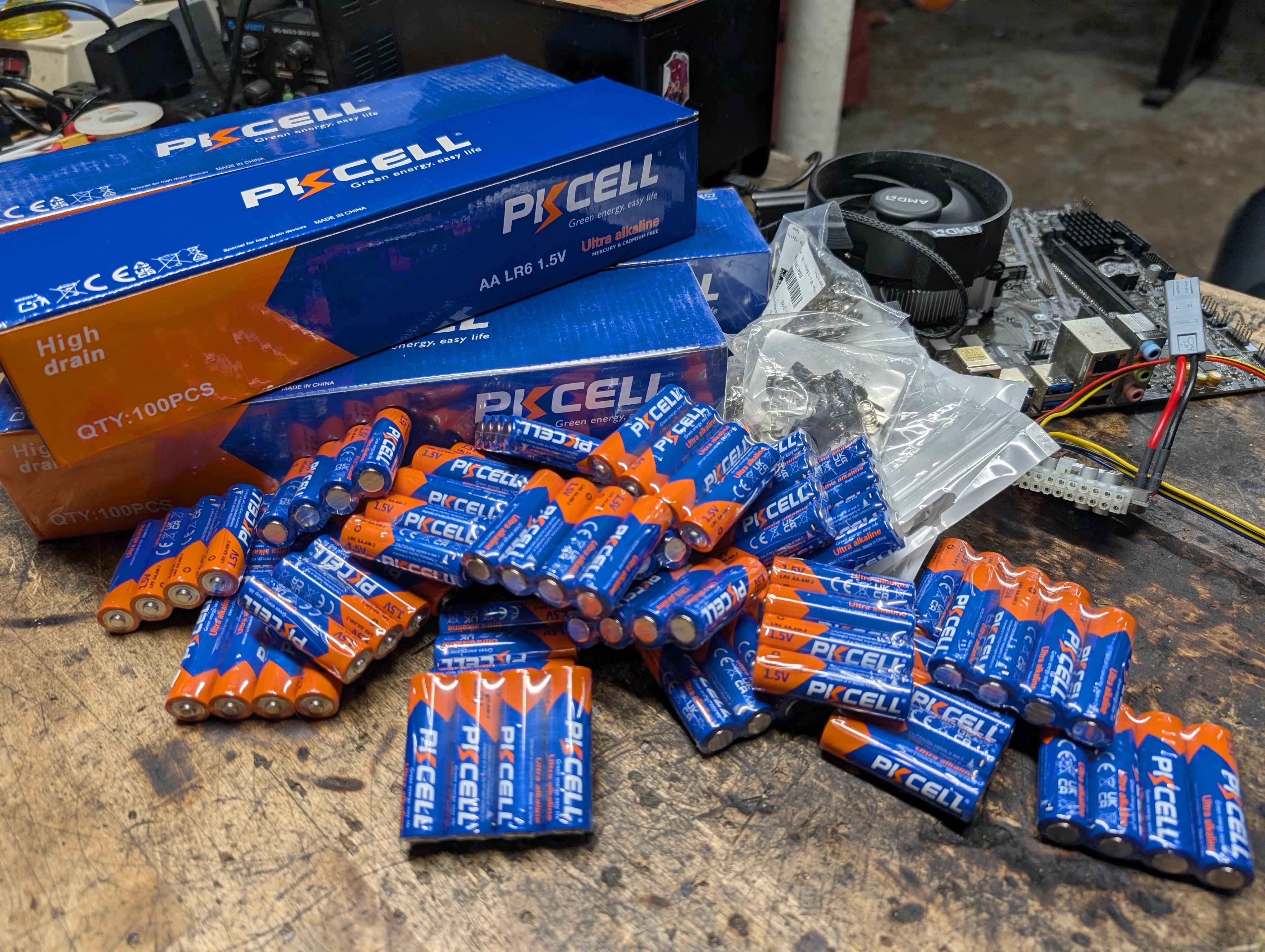
Adding a touch of unexpected charm and internet meme culture to the technical rigor, the operating system of choice was Hannah Montana Linux. This niche Linux distribution, originally released in 2009 and based on Disney’s popular teen popstar, recently experienced a modern revival. Known for its lightweight footprint and unique aesthetic, Hannah Montana Linux proved to be an ideal candidate for demonstrating the PC’s functionality without imposing excessive system resource demands. Its recent remaster, built on Debian with a KDE Plasma re-skin, ensures compatibility with modern hardware while retaining its characteristic quirkiness.
Results and Analysis: A Raging Success
The moment of truth arrived as Uwoslab initiated the power-up sequence. The 192-AA battery bank, initially reading a robust 13V, successfully brought the AM4 system to life. The PC booted seamlessly into Hannah Montana Linux, dispelling any doubts about the stability of the improvised power source. To rigorously test the system’s resilience under load, Uwoslab then subjected the CPU to a stress test using stress-ng, a widely utilized benchmarking tool in the Linux environment designed to apply various stressors to a system.
Under a sustained 98% CPU utilization, the battery-powered PC performed admirably. The voltage, while naturally experiencing a slight drop under such a heavy load, stabilized at a healthy 11.95V. This consistent voltage delivery during intense computational activity is a remarkable feat for an array of consumer-grade alkaline batteries, which are notorious for their voltage degradation under continuous high current draw. The experiment ran for a full 30 minutes, successfully completing the stress test without any hitches or system shutdowns. Uwoslab noted that, based on the remaining capacity at the end of the test, the system likely had enough residual power to operate for "a couple more hours" before the voltage drop became too significant for stable operation.

This performance far exceeded the prior failed attempt with zinc-carbon batteries and stands as a significant technical accomplishment. While a hypothetical calculation for 400 AA batteries suggested a potential for 160 watts of power for ten straight hours, real-world conditions, especially with only 192 batteries and a CPU under 98% load, would naturally yield a shorter runtime. The successful 30-minute stress test, with the potential for additional hours of lighter usage, definitively proves the viability of Uwoslab’s carefully engineered solution. The project provides concrete data demonstrating that, with proper electrical design and battery selection, even an x86 desktop computer can be sustained by a large array of common alkaline cells.
Broader Implications: Ingenuity, Education, and Sustainability Considerations
Uwoslab’s project, while undeniably impressive from an engineering standpoint, prompts a wider discussion on its implications. On one hand, it serves as a powerful illustration of human ingenuity and the boundless possibilities within the DIY and maker communities. Such experiments foster a deeper understanding of fundamental electrical principles, power management, and the intricate relationship between hardware components and their energy sources. It offers invaluable educational insights into series and parallel circuit design, voltage regulation, and the practical challenges of energy conversion.
However, the practicality and sustainability of powering a desktop PC with 192 single-use AA batteries raise pertinent questions. The sheer number of batteries required for even a limited runtime, coupled with their environmental impact upon disposal, makes this solution far from a practical or sustainable alternative to conventional power or rechargeable battery systems like lithium-ion. Each alkaline battery contains chemicals that, while less toxic than older battery types, still require responsible disposal to prevent environmental contamination. The cost associated with acquiring 192 "high-drain" AA batteries also renders it economically unfeasible for everyday use. For context, while a theoretical 400 AAs might generate around 160 watt-hours (Wh) over 10 hours at a steady state, a typical laptop battery offers 50-100 Wh in a much smaller, lighter, and rechargeable package.
From a broader technological perspective, this experiment highlights the ongoing advancements in power efficiency of modern computer components. The ability of a contemporary AM4 APU system to operate on such an unconventional power source, even under stress, speaks volumes about the continuous optimization efforts by chip manufacturers. While unlikely to spark a revolution in battery-powered desktop design, Uwoslab’s achievement undoubtedly contributes to the collective knowledge base of extreme hardware modification and innovative power solutions, reinforcing the spirit of exploration that drives technological progress. This experiment serves as a compelling reminder that the boundaries of computing are constantly being redefined, often in the most unexpected and inspiring ways.