Optimizing Creativity: A Comprehensive Guide to the Best Laptops for Adobe Photoshop in 2025

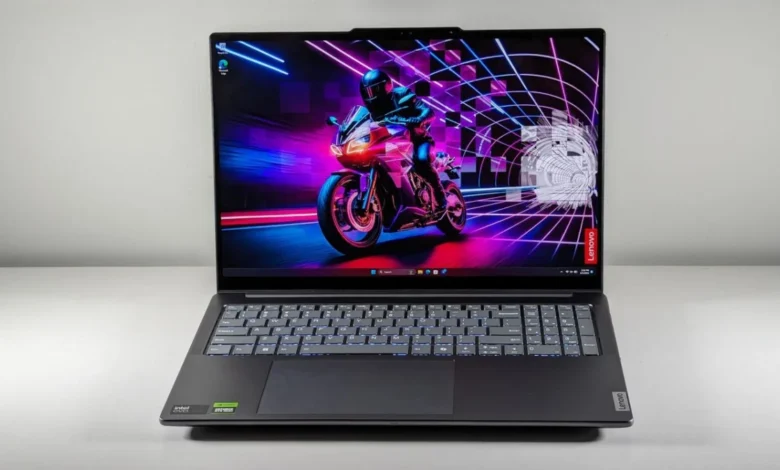
The pursuit of digital artistry and professional photo manipulation in 2025 demands a sophisticated portable workstation, one that seamlessly integrates raw processing power, enduring battery life, and a display capable of rendering every nuance of color. As Adobe Photoshop continues to evolve, incorporating increasingly complex filters, 3D capabilities, and advanced AI-driven features, the hardware requirements for an optimal editing experience have become more stringent and specialized. This guide delves into the crucial components that define a superior Photoshop laptop and presents the leading models available this year, curated by Laptop Mag’s rigorous testing and expert analysis.
The Evolving Landscape of Photo Editing Hardware
The journey of photo editing from rudimentary desktop setups to today’s highly portable, powerful laptops reflects a significant technological progression. Historically, Photoshop was primarily CPU-bound, relying heavily on a processor’s raw clock speed for performance. However, with the advent of GPU acceleration, particularly with Adobe’s increasing utilization of graphics cards for tasks like real-time filter previews, complex layer operations, and 3D rendering, the discrete graphics processing unit (GPU) has become a non-negotiable component for serious editors. The introduction of Nvidia’s RTX series and AMD’s Radeon RX GPUs, along with Apple’s M-series chips featuring integrated, high-performance graphics, has fundamentally reshaped performance expectations.
Beyond sheer processing speed, the visual fidelity of a laptop’s display has become paramount. Early laptops often suffered from limited color accuracy and brightness, making professional-grade color grading a challenge. Today, advancements in display technology, such as OLED (Organic Light-Emitting Diode) and Apple’s Liquid Retina XDR, offer expansive color gamuts (like DCI-P3 and Adobe RGB) and exceptional contrast ratios, crucial for editors who demand precise color representation. The rise of AI in Photoshop, manifested through features like Generative Fill and Neural Filters, has also introduced a new hardware consideration: the Neural Processing Unit (NPU), now integrated into many modern CPUs like Intel’s Core Ultra and AMD’s Ryzen AI Max+ Pro series, promising accelerated AI tasks directly on the device.
Critical Hardware Specifications for Photoshop
Selecting the right laptop for Photoshop is a balancing act, prioritizing components that directly impact performance, accuracy, and user experience.
-
Central Processing Unit (CPU): A robust CPU is the brain of your editing machine. For casual users, an Intel Core i5 or AMD Ryzen 5 is sufficient. However, professionals and power users should target high-performance processors like the Intel Core Ultra 7 or 9, AMD Ryzen 7 or 9, or Apple’s M-series chipsets (M3, M4, or Pro/Max variants). These processors offer superior multi-core performance, essential for handling large files, complex layers, and simultaneous tasks within Photoshop and other creative applications. The integrated NPUs in Intel Core Ultra and AMD Ryzen AI Max+ Pro processors are particularly beneficial for accelerating AI-driven Photoshop features, offloading these computations from the CPU and GPU for greater efficiency.
-
Graphics Processing Unit (GPU): While Photoshop can run without a discrete GPU, a dedicated graphics card is a significant accelerator. Nvidia’s RTX 40-series and the newer RTX 50-series, or AMD’s Radeon RX GPUs, are highly recommended. These GPUs provide hardware acceleration for a wide array of Photoshop functions, from applying filters and effects to rendering 3D elements and driving high-resolution displays. The amount of Video RAM (VRAM) is also crucial; 4GB is a good minimum, but 8GB or more is ideal for intensive tasks and future-proofing, especially with increasing image resolutions and AI complexity.
-
Random Access Memory (RAM): Memory is critical for multitasking and working with large files. While Adobe lists 8GB as a minimum, 16GB of RAM should be considered the baseline for any serious Photoshop user. For professionals dealing with multi-gigabyte files, numerous layers, smart objects, or running multiple Adobe applications concurrently (e.g., Photoshop, Lightroom, Illustrator), 32GB or even 64GB of DDR5 RAM will provide a noticeably smoother and more responsive workflow, minimizing frustrating slowdowns and crashes.
-
Storage: Fast storage is paramount for quick file access, saving, and loading. A Solid State Drive (SSD) is essential, with NVMe PCIe Gen 4 or Gen 5 drives offering the fastest speeds. A minimum of 512GB SSD storage is recommended, but 1TB or more is highly advisable for storing numerous RAW files, project assets, and application installations. While external drives can supplement storage, a large internal SSD ensures optimal performance for active projects.
-
Display: For a visual medium like photo editing, the display is arguably the most critical component. Look for high-resolution panels (QHD, 3K, or 4K) that offer superior pixel density. More importantly, prioritize displays with excellent color accuracy and wide color gamut coverage. OLED and Mini-LED panels, along with Apple’s Liquid Retina XDR, are top contenders, delivering vibrant colors, deep blacks, and exceptional contrast. A high DCI-P3 color gamut percentage (ideally 90% or higher) and a low Delta-E value (indicating color accuracy) are key indicators of a professional-grade display. Brightness (measured in nits) is also important, particularly for working in varied lighting conditions. Touchscreen and 2-in-1 capabilities can enhance workflow for digital artists who prefer direct pen input.
Top Laptop Selections for Adobe Photoshop in 2025
Our extensive testing at Laptop Mag identifies the following models as the best laptops for Adobe Photoshop across various categories, reflecting the latest advancements and user needs as of June 2025.
Best Overall: Lenovo Yoga Pro 9i 16 Gen 9
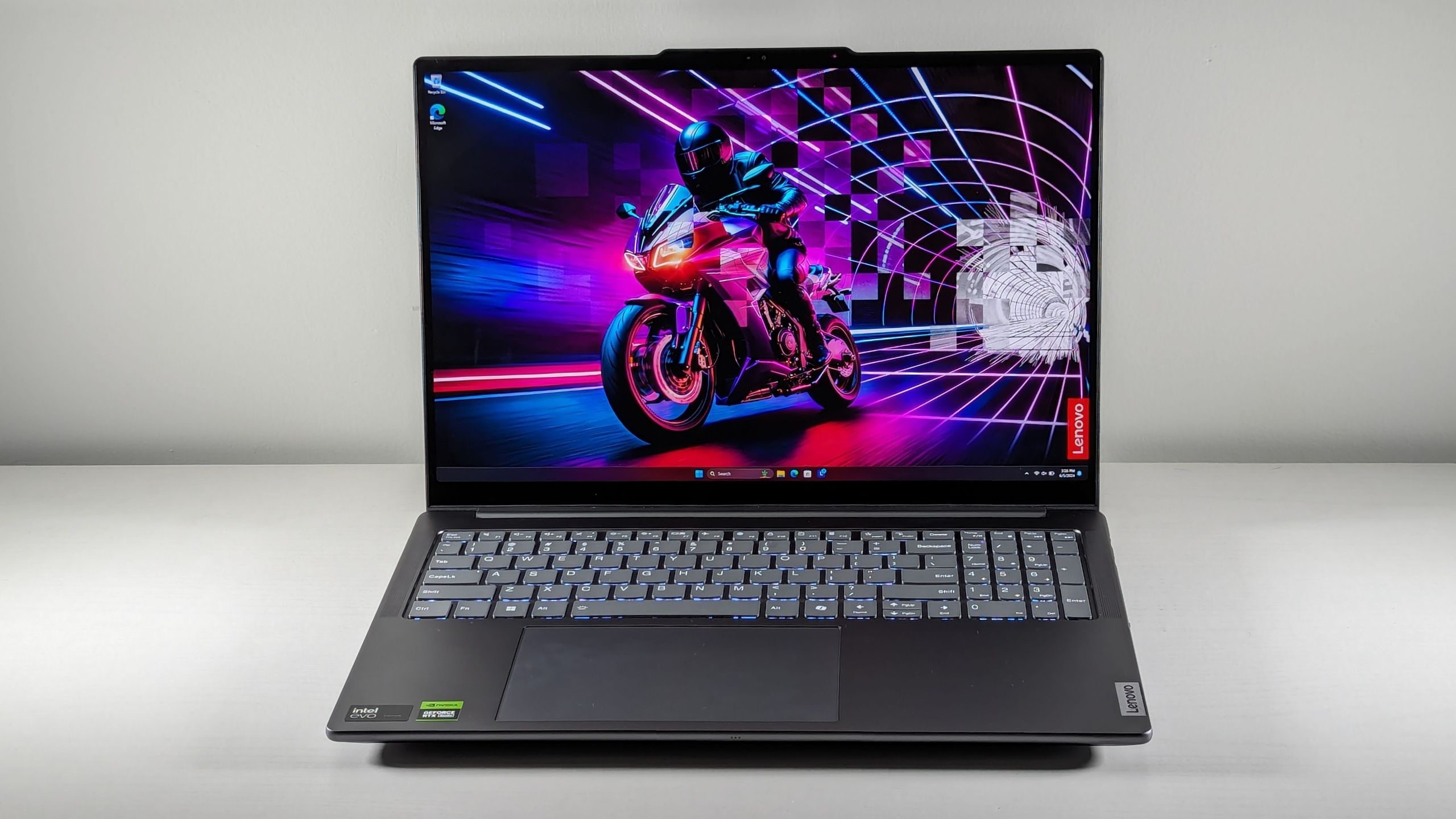
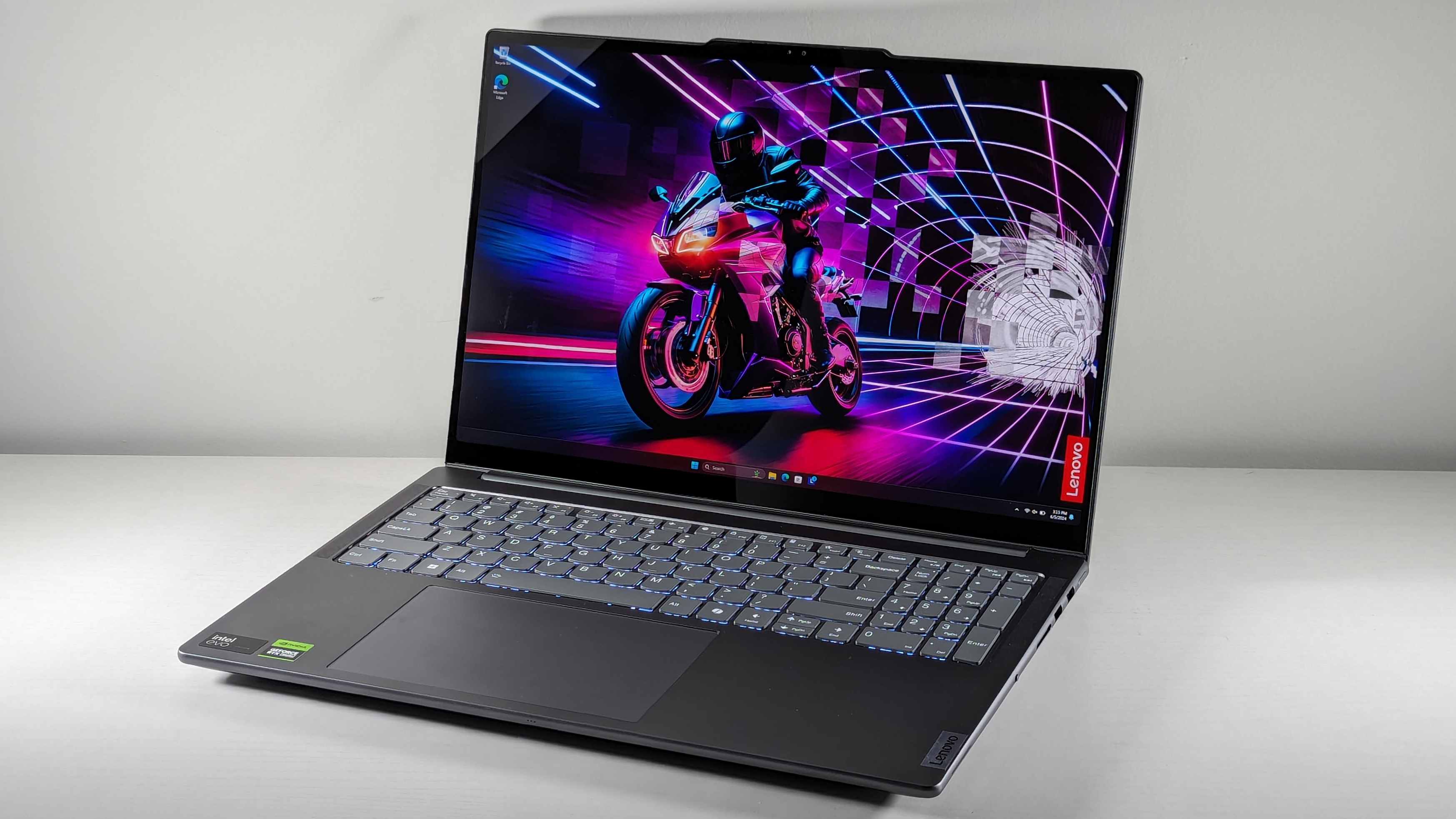
The Lenovo Yoga Pro 9i 16 Gen 9 stands out as the quintessential creator’s laptop, offering a harmonious blend of power and visual brilliance. Its 16-inch, 3200 x 2000, 165Hz touch display is a visual marvel, covering an impressive 105.7% of the DCI-P3 color gamut, significantly surpassing the premium laptop average of 91.2%. This ensures photo editors experience rich, accurate, and vivid colors, crucial for precise image manipulation. Under the hood, the Intel Core Ultra 9 185H processor, coupled with an Nvidia GeForce RTX 4050 GPU, provides robust performance for demanding Photoshop tasks, including intricate filters, 3D effects, and AI-powered tools. Our benchmarks recorded a Geekbench 6 score of 12,141, demonstrating its formidable CPU capabilities. It also achieved a Handbrake transcoding time of 3 minutes and 53 seconds, showcasing its efficiency in media processing. Despite its powerful components, the Yoga Pro 9i maintains a respectable battery life of 9 hours and 51 minutes on the Laptop Mag battery test, offering substantial untethered productivity. While its audio performance might be a minor drawback for video editing, its core strengths for photo editing are undeniable. Starting at $1,482, with a fully specced version at $2,043, it offers compelling value for its performance tier.
Best Under $1,000: Asus Zenbook 14 OLED (Q425M)
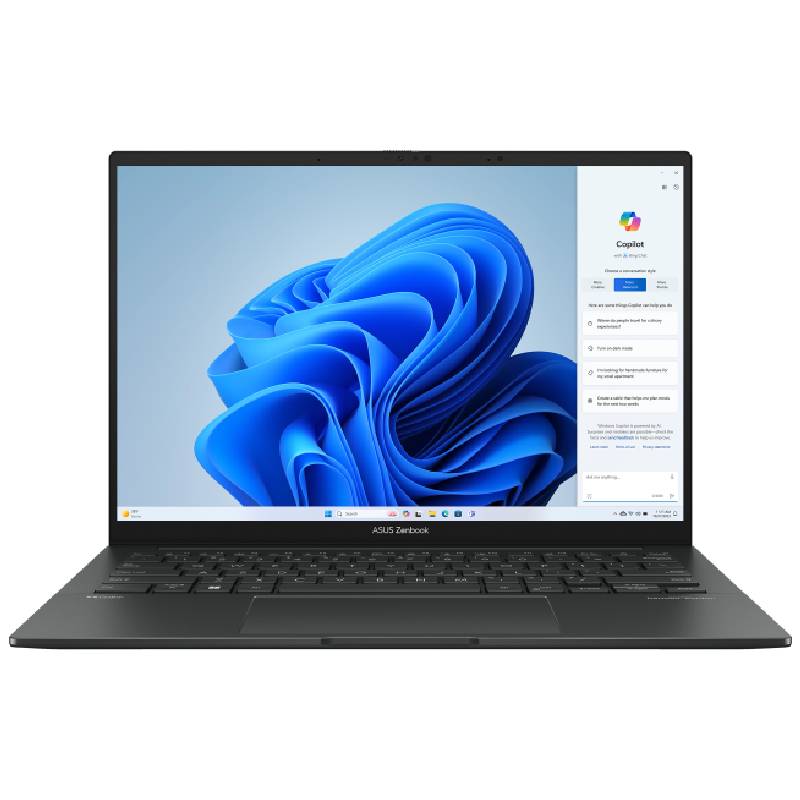
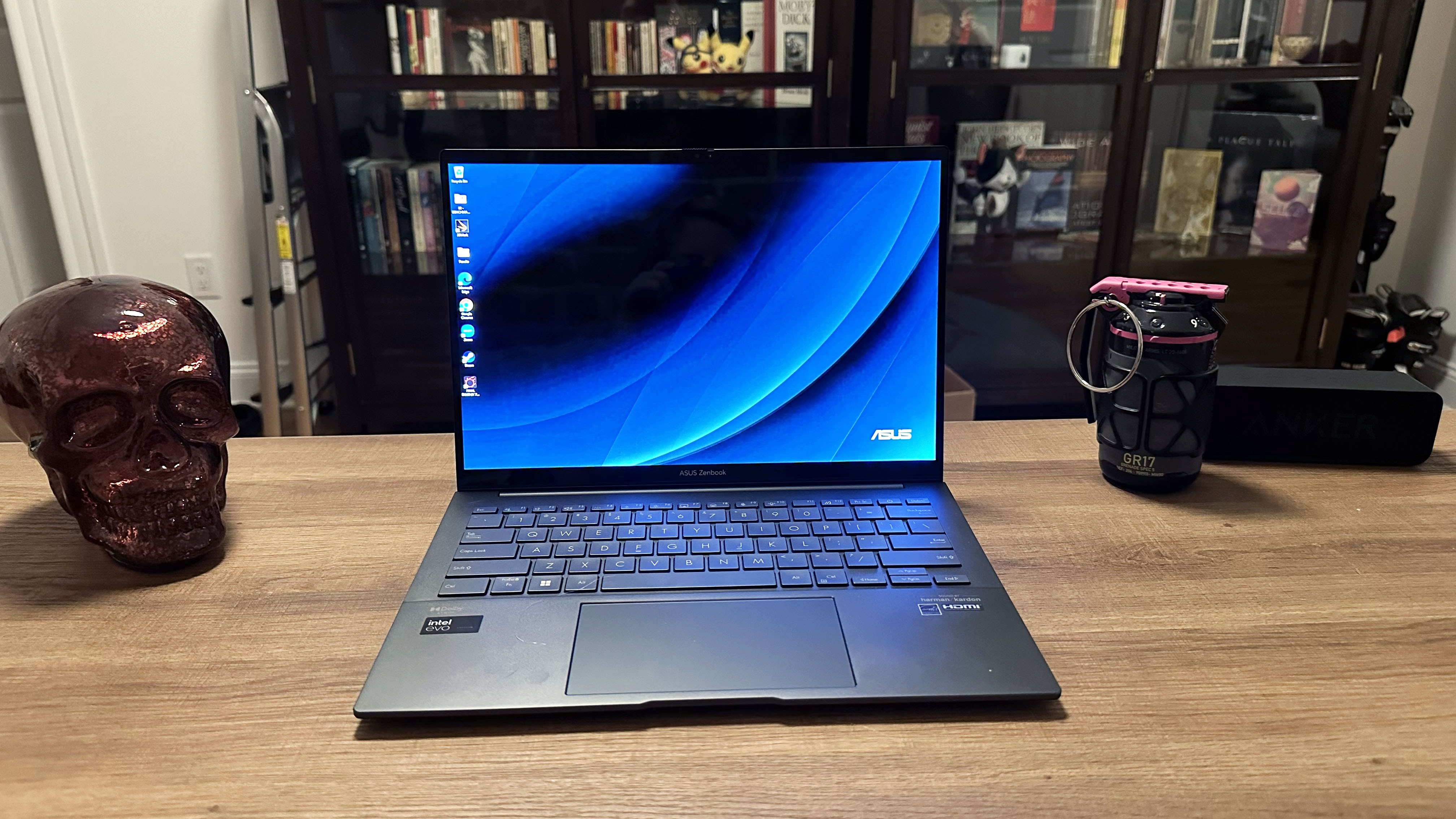
For budget-conscious creators, the Asus Zenbook 14 OLED (Q425M) is an exceptional choice, defying its price point with impressive specifications. This laptop bundles an Intel Core Ultra 7 155H processor with powerful Intel Arc integrated graphics, 16GB of DDR5 RAM, and a spacious 1TB SSD, all for under $1,000 (with an upgraded spec at $1,049). Its 14-inch FHD OLED touchscreen delivers crisp and vibrant visuals, covering 79.8% of the DCI-P3 color gamut, comparable to premium competitors like the Apple MacBook Air 13 M3 (77.8%). While its integrated graphics may not match discrete GPUs for heavy 3D rendering, it handles essential Photoshop tasks with remarkable speed. A standout feature is its extraordinary battery life, lasting 15 hours and 52 minutes on our web surfing test, making it ideal for extended work sessions away from power outlets. Its Geekbench 6 score of 12,707 and Handbrake time of 6 minutes and 36 seconds underscore its strong general performance, solidifying its position as a top budget-friendly option for Photoshop users.

Best Under $1,500: Acer Swift X 14 (2024)
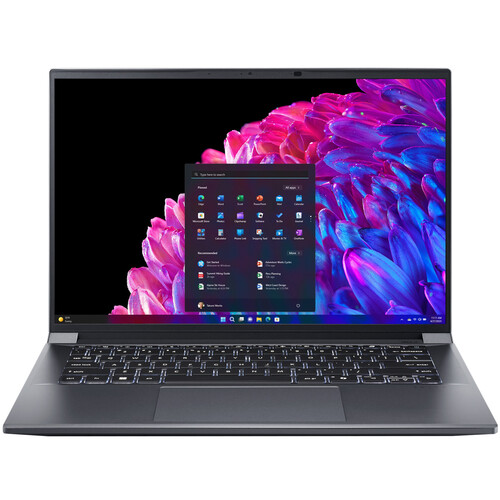
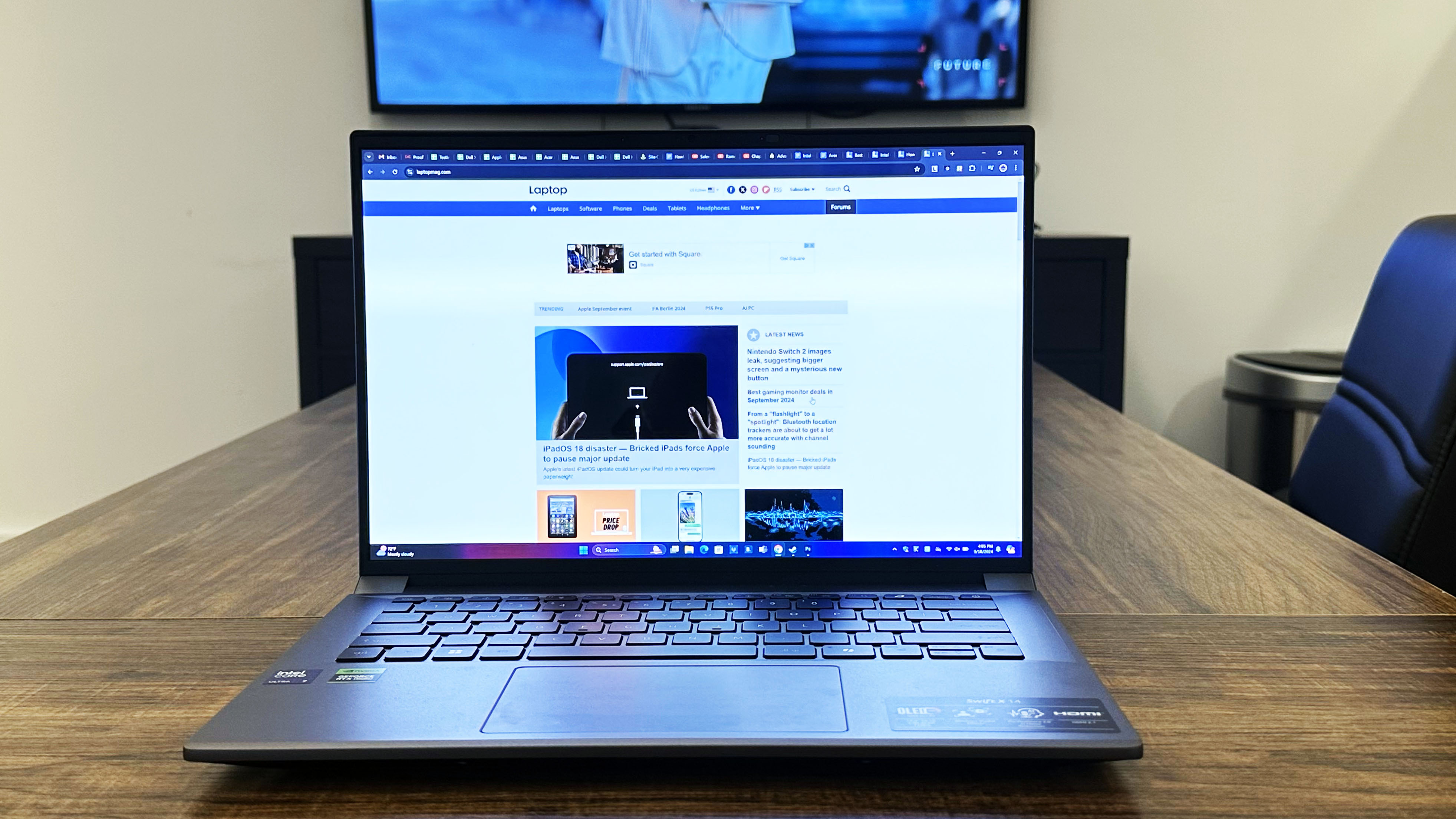
The Acer Swift X 14 (2024) bridges the gap between budget and high-end performance, particularly for those requiring a discrete GPU without breaking the bank. Starting at $1,099, the mid-range model features an Intel Core Ultra 7 155H processor and an Nvidia RTX 4050 GPU, alongside 16GB of RAM and a 512GB SSD for $1,299. This configuration offers significant 3D rendering capabilities and accelerated performance for complex Photoshop operations. Its 14-inch CineCrystal OLED display, while registering 79.6% DCI-P3 coverage in our lab tests, delivers visually stunning and vivid colors. The laptop’s Geekbench 6 score of 13,114 and Handbrake time of 5 minutes and 21 seconds highlight its potent combination of CPU and GPU power. Weighing a mere 2.6 pounds, the Swift X 14 is remarkably portable for a laptop housing a discrete GPU. Its battery life of 7 hours and 33 minutes, though not class-leading, is commendable given its powerful graphics. For those needing an RTX 4070, a top-line configuration is available for $1,699, pushing its capabilities even further.
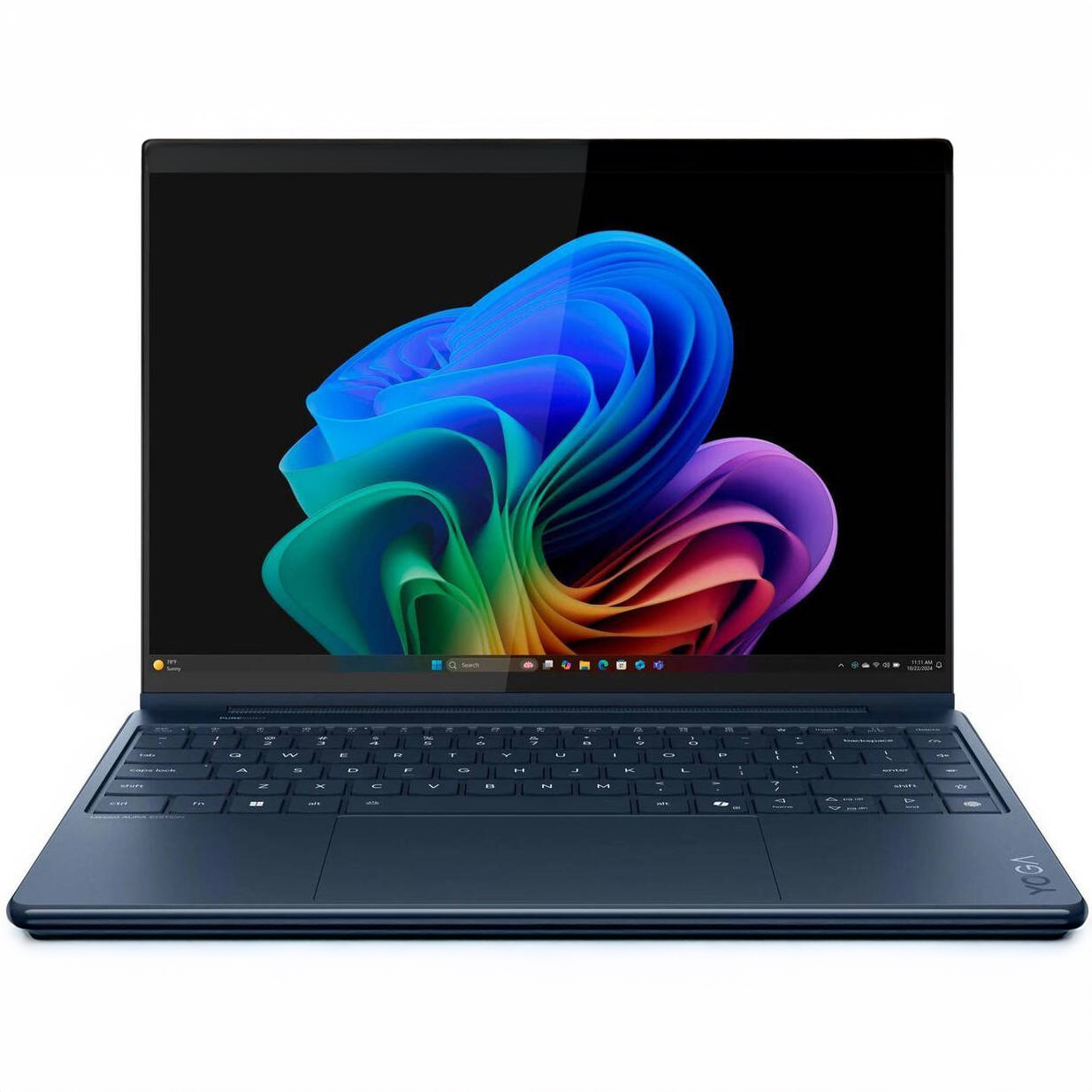
Best 2-in-1: Lenovo Yoga 9i 2-in-1 Aura Edition
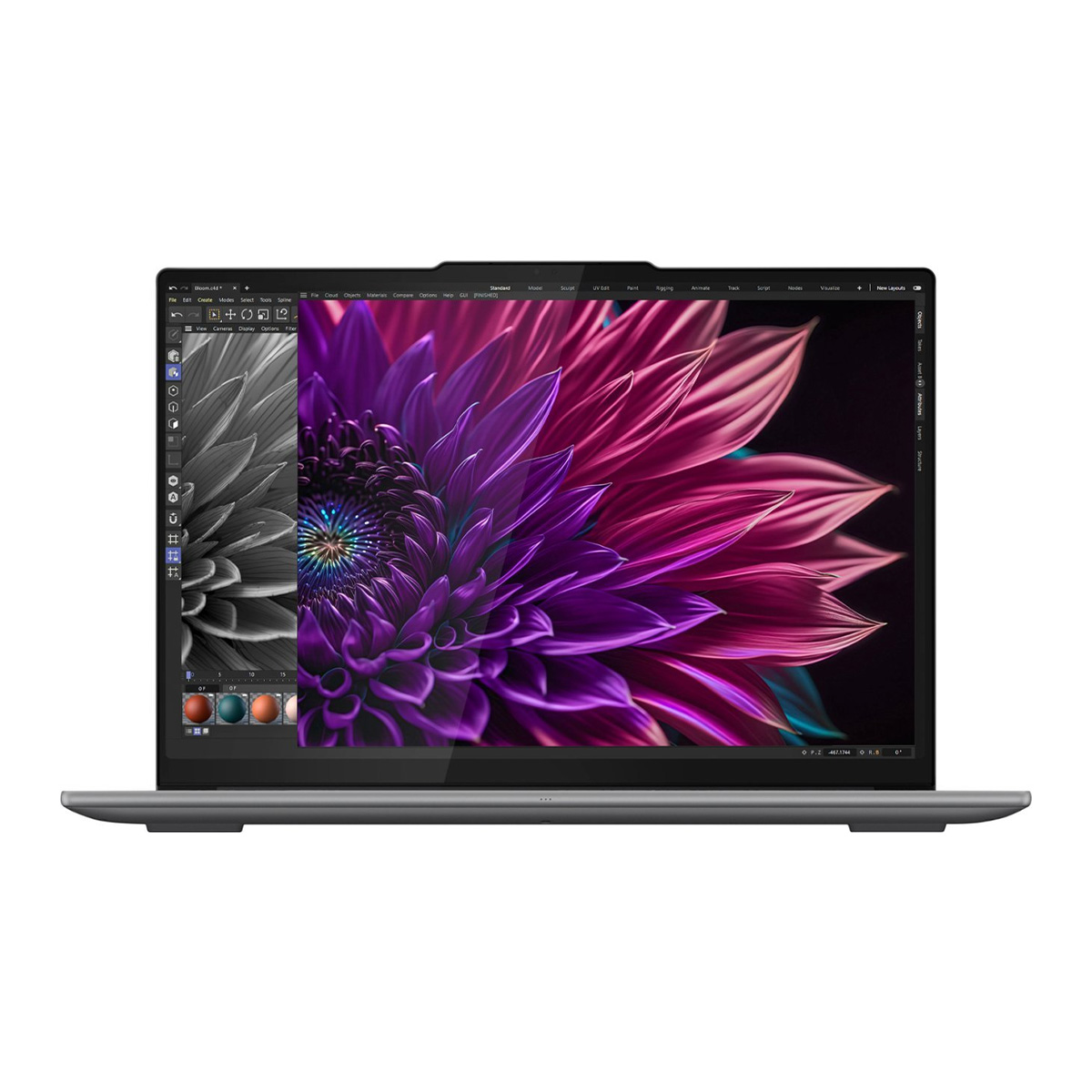
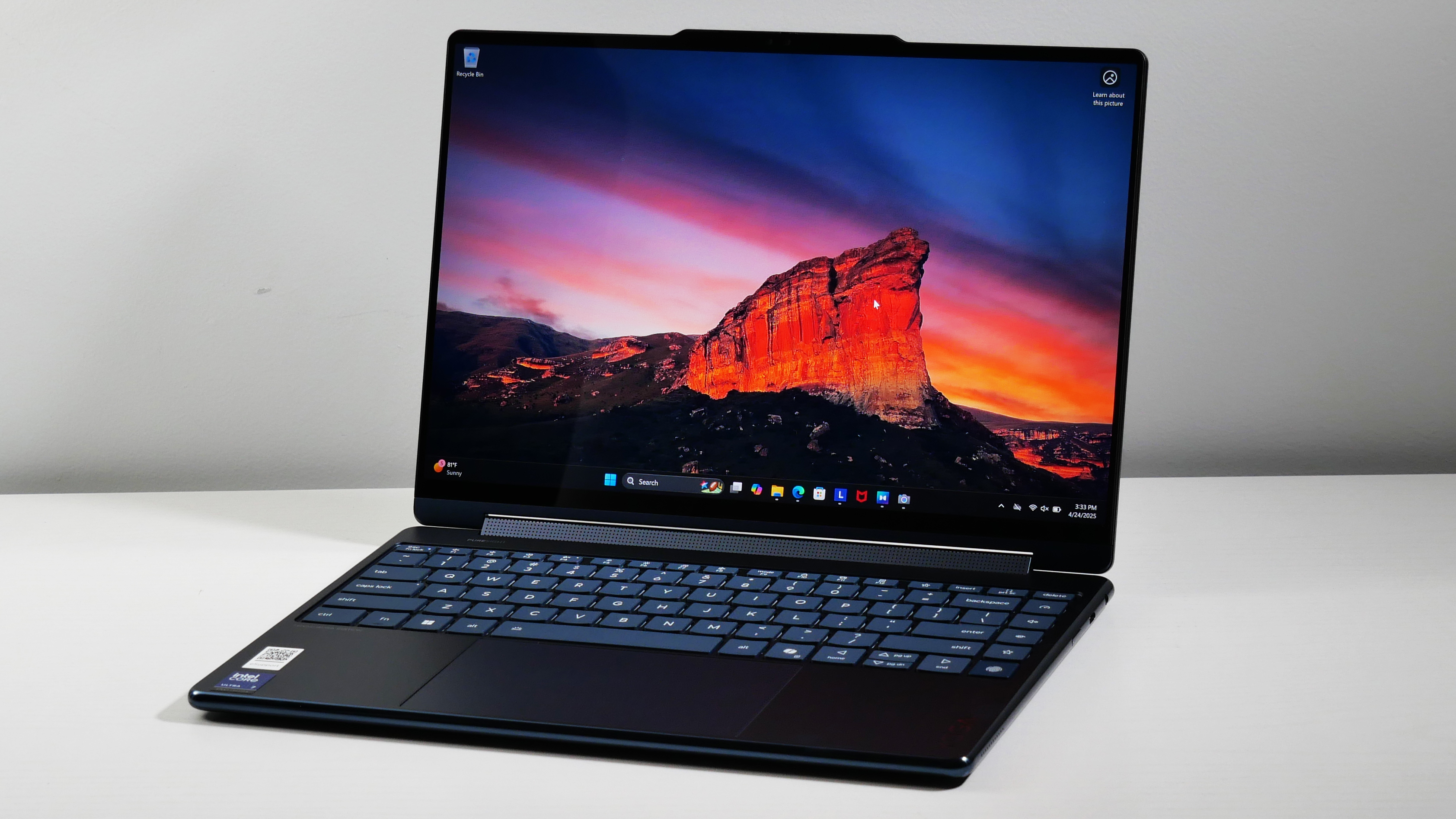
The Lenovo Yoga 9i 2-in-1 Aura Edition offers unparalleled versatility for digital artists and photographers who benefit from pen input and a convertible form factor. Its 14-inch OLED display is a true highlight, boasting an exceptional 149.2% DCI-P3 color gamut coverage and an average brightness of 421 nits. This makes it one of the most color-accurate and vibrant displays we’ve tested, producing "drool-worthy colors" as noted by Laptop Mag’s reviews editor. While its Intel Core Ultra 7 258V processor with Intel Arc 140V integrated graphics delivered a Geekbench 6 score of 11,059, indicating a more "leisurely approach" to demanding tasks compared to discrete GPU counterparts, it still handles most Photoshop features competently. Its battery life of 12 hours and 47 minutes ensures all-day productivity. The Yoga 9i’s svelte 2.9-pound design and robust audio further enhance its appeal, making it an excellent choice for those prioritizing display quality and flexibility for artistic expression.

Best MacBook: Apple MacBook Pro 16 M4 Pro (2024)
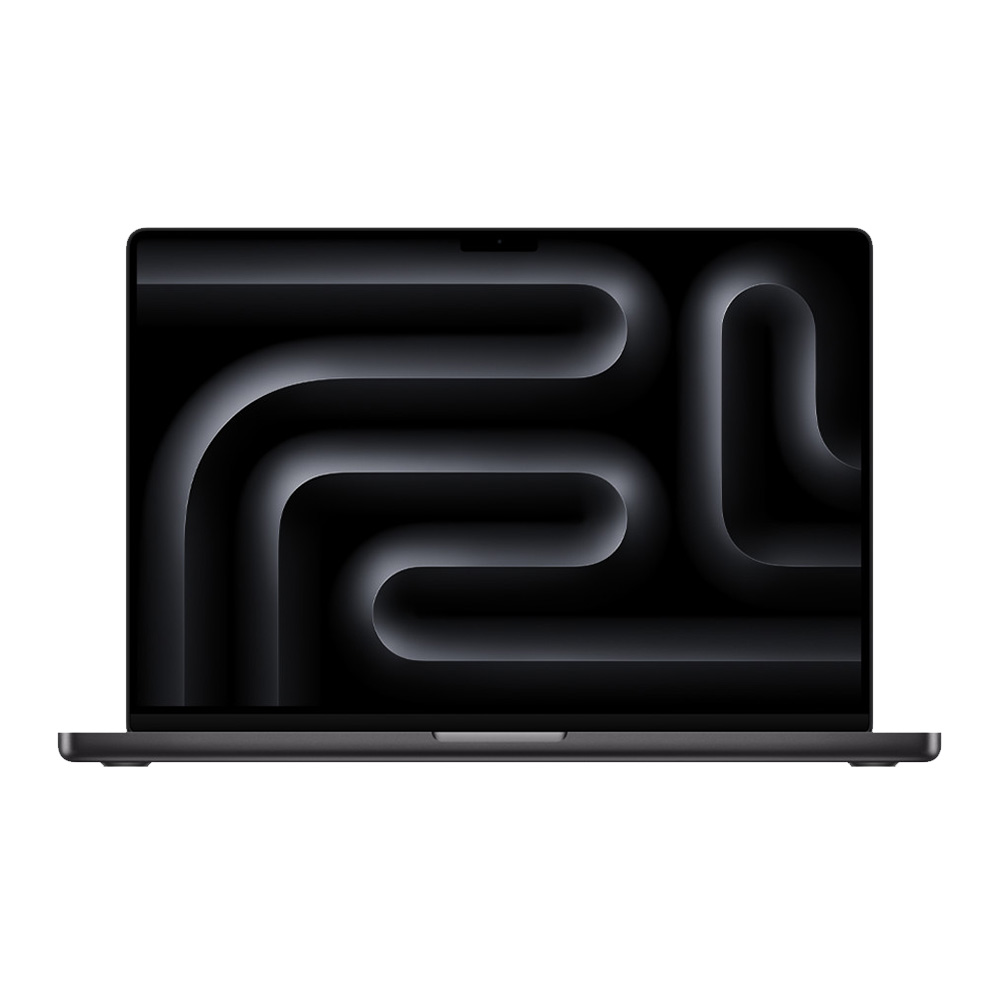
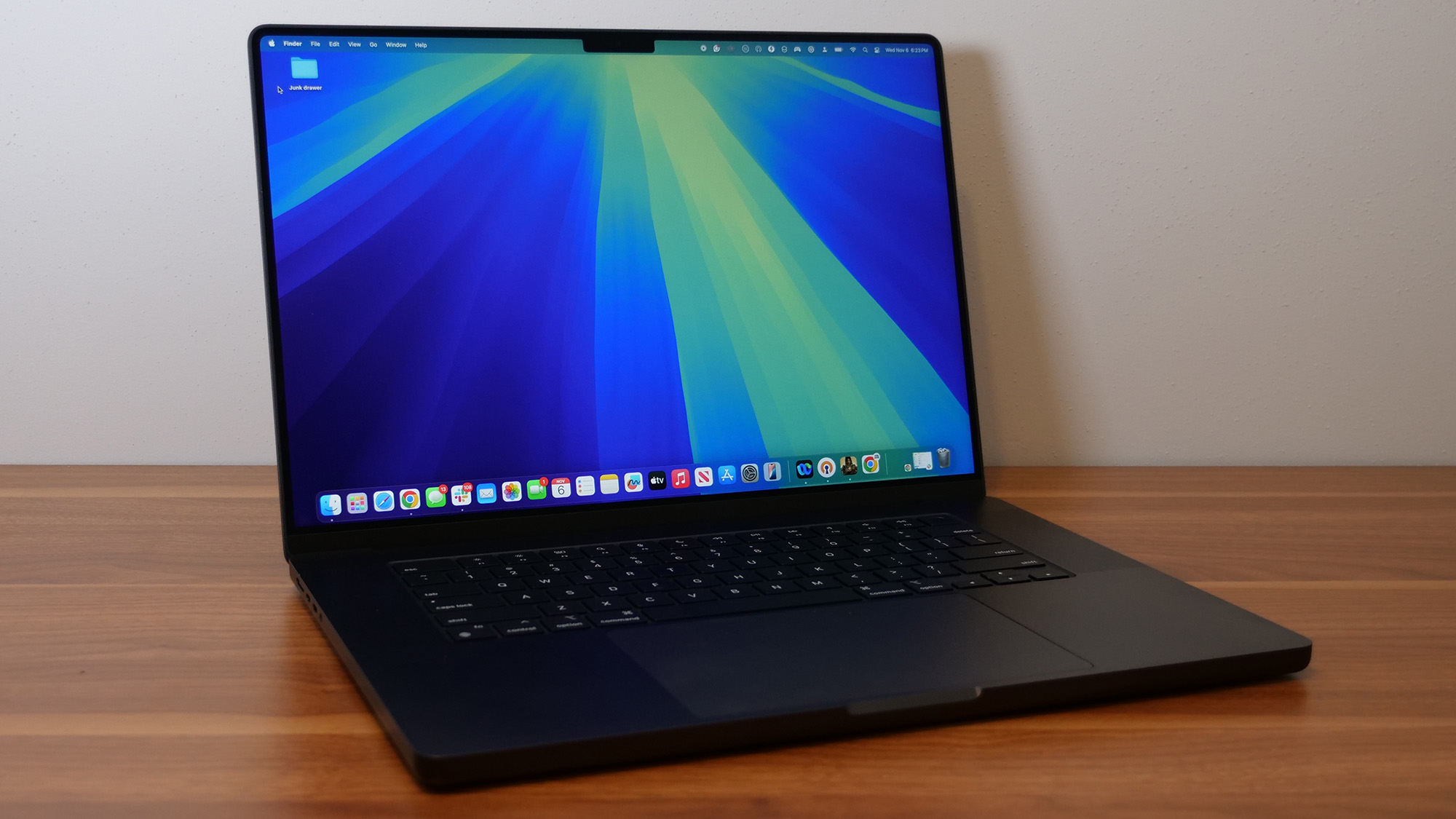
For Apple ecosystem users and professionals seeking unmatched performance and efficiency, the 2024 Apple MacBook Pro 16-inch with the M4 Pro chipset remains the gold standard. While its starting price of $2,499 is steep, it justifies the investment with extraordinary power and a seamless macOS experience. The 14-core Apple M4 Pro CPU and 20-core Apple GPU, featuring a 16-core Neural Engine, deliver a staggering Geekbench 6 score of 22,822, nearly doubling the premium laptop average. This raw power translates to incredibly fast processing for all Photoshop tasks. Its 16.2-inch 3456 x 2234 Liquid Retina XDR display is astoundingly bright (565 nits average) and highly color-accurate (81.4% DCI-P3 coverage). The MacBook Pro’s legendary battery life is also a major draw, lasting an incredible 20 hours and 46 minutes on the Laptop Mag battery test, far exceeding expectations and allowing for extensive untethered work. For professionals working with large, complex Photoshop files and requiring ultimate reliability and integration within the Apple creative suite, the MacBook Pro 16 M4 Pro is an unparalleled choice.
Best Workstation: HP ZBook Ultra 14 G1a
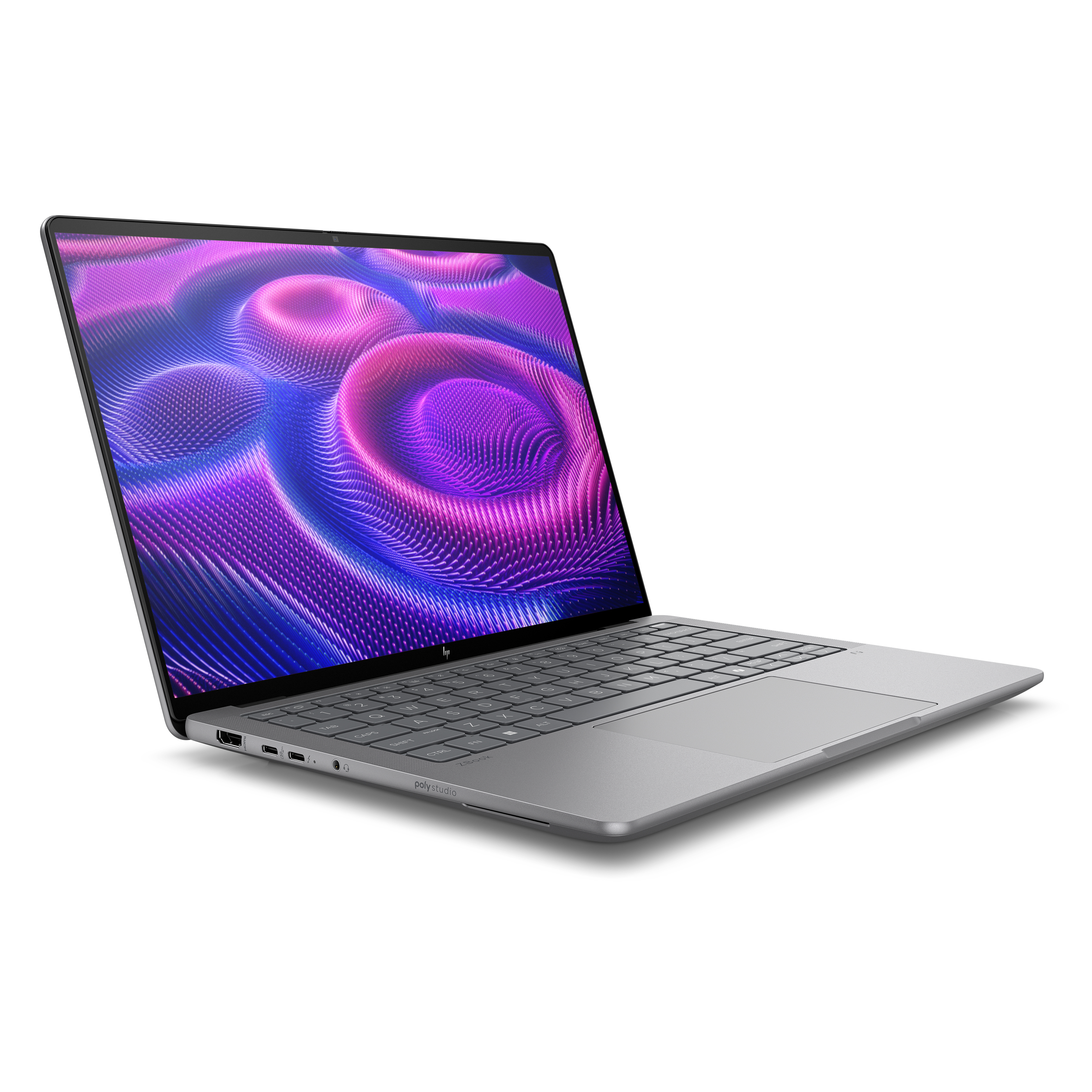
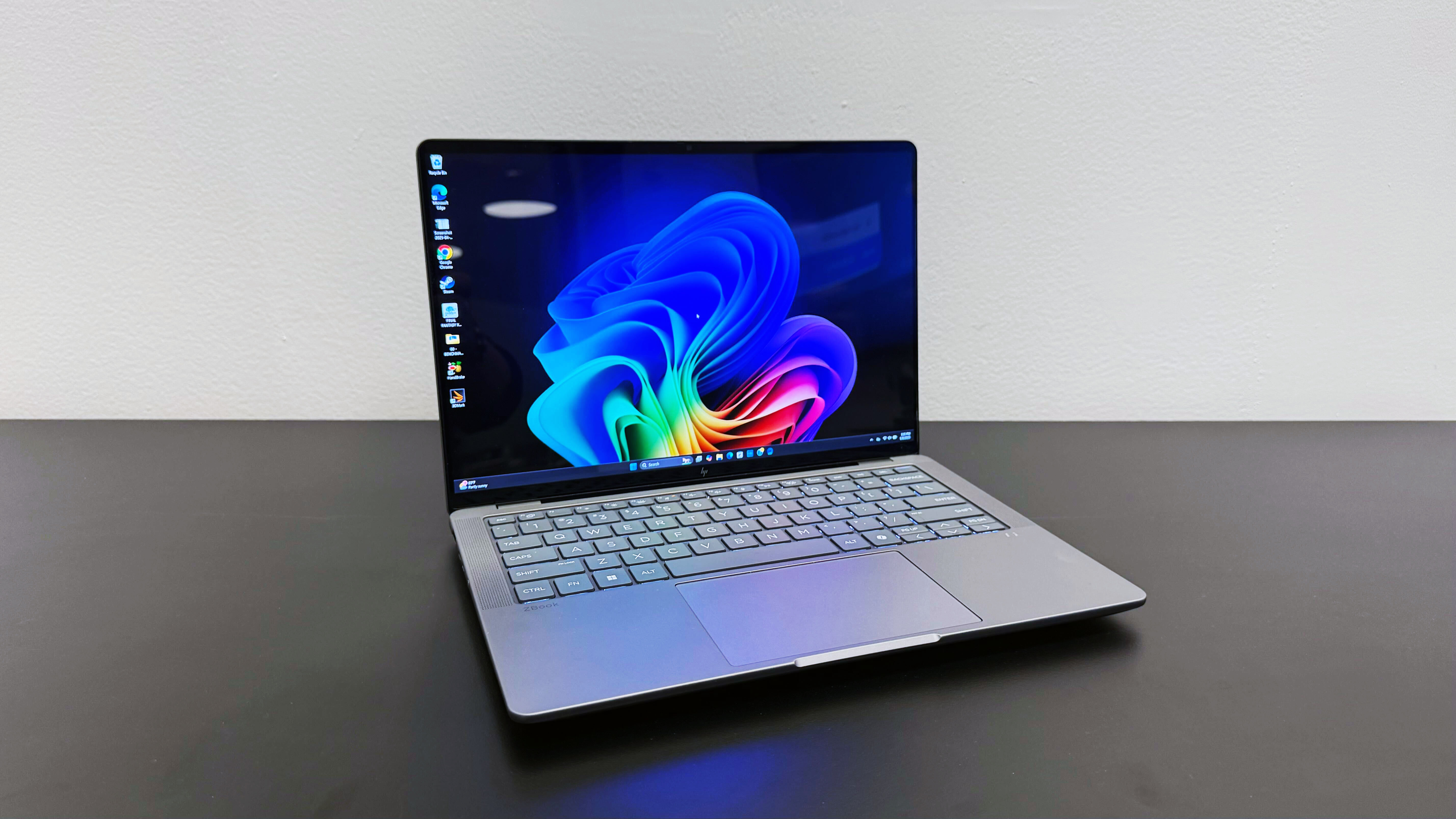
The HP ZBook Ultra 14 G1a is a mobile workstation that redefines portability for high-performance computing. At just 0.71 inches thick and 3.4 pounds, it defies its workstation classification, easily mistaken for a productivity laptop. However, powered by an AMD Ryzen AI Max+ Pro 395 chip with AMD Radeon 8060S integrated graphics, it delivers serious processing muscle. This machine achieved a Geekbench 6 score of 17,721 and an impressive Handbrake transcoding time of 2 minutes and 34 seconds, even outperforming the MacBook Pro 16 M4 Pro in this specific test. Its 14-inch (2880 x 1800) OLED touch display is exceptionally vivid, covering 139.9% of the DCI-P3 color gamut, making it a dream for color-critical work. While its battery life of 6 hours and 45 minutes is typical for a workstation but less than some creator-focused laptops, its sheer power and portability for intensive Photoshop projects (including layered graphics and 3D work) are remarkable. Starting at $2,599, with the reviewed model costing $4,049, it’s an investment for professionals whose budget knows no limits and who demand peak Windows performance.
Benchmark Comparisons and Real-World Impact
Our comprehensive benchmark suite provides quantifiable data supporting these recommendations. The Geekbench 6 scores highlight raw CPU performance, directly correlating to how quickly Photoshop can execute general operations, process complex algorithms, and handle multiple layers. The Handbrake time (converting a 4K video to 1080p) offers insight into overall system efficiency and multi-core processing, which translates to faster export times and smoother operations for large image batches.
Battery life (web surfing at 150 nits) is a critical metric for mobile professionals, indicating how long one can work untethered. Laptops like the MacBook Pro 16 M4 Pro and Asus Zenbook 14 OLED (Q425M) demonstrate exceptional endurance, making them ideal for fieldwork or long commutes. SSD transfer speeds are vital for quickly loading and saving large Photoshop files, and while the MacBook Pro’s BlackMagic scores showcase its industry-leading storage performance, other premium options still offer excellent speeds for demanding workflows.
Crucially, for photo editing, DCI-P3 Color Gamut coverage and Display Brightness (Nits) are paramount. Displays with higher DCI-P3 percentages, like those on the Lenovo Yoga 9i 2-in-1 Aura Edition (149.2%) and HP ZBook Ultra 14 G1a (139.9%), ensure that a wider range of colors can be accurately reproduced, which is indispensable for professional color grading. Brightness levels determine visibility in various environments, from dimly lit studios to outdoor shoots.
Considerations for Prospective Buyers
Beyond the top picks, several factors influence the ultimate choice for a Photoshop laptop.
-
Minimum System Requirements vs. Recommended: While Adobe’s minimum specifications are surprisingly low (e.g., an Intel or AMD processor with AVX2 and SSE 4.2, 8GB RAM, 256GB SSD, and a 1.5GB VRAM GPU), these are for basic functionality. For a fluid and efficient workflow, our recommended specs – an Intel 13th-gen Core i7 or newer, AMD Ryzen 7 7000 series or newer, or Apple Silicon M2 or newer; at least 16GB of RAM; 512GB+ PCIe Gen 4 SSD; Nvidia RTX 2050 (4GB VRAM) or newer; and a 1080p+ display – represent a much better starting point.
-
Photo Editing vs. Video Editing: Most laptops excellent for Photoshop will also handle video editing, but with a caveat: audio quality and sustained performance under heavy, prolonged loads are more critical for video. Video editing often demands even more RAM and a more powerful discrete GPU, especially for 4K footage and complex effects. Therefore, while overlap exists, a dedicated video editing machine might require higher specifications in certain areas.
-
The Nuance of Windows on ARM (Snapdragon X Elite): While Snapdragon X Elite laptops show promise for their efficiency and integrated NPU capabilities, their current limitation lies in software compatibility. As of now, only Adobe Photoshop and Lightroom run natively on Windows on ARM. Other critical Adobe applications like Premiere Pro, InDesign, or Illustrator require emulation, which can lead to performance bottlenecks and stability issues due to increased resource consumption. For a comprehensive Adobe Creative Suite user, a traditional Intel or AMD Windows laptop, or an Apple MacBook, remains the more reliable choice for 2025.
Laptop Mag’s Rigorous Testing Methodology
Every laptop featured in this guide undergoes Laptop Mag’s comprehensive testing protocol. This involves a battery of synthetic benchmarks and real-world application tests to evaluate CPU and GPU performance, battery life, display quality, heat management, and user-centric features like keyboard and audio. For Photoshop-specific evaluations, particular attention is paid to:
- Display Analysis: Using a Klein K-10A colorimeter, Klein ChromaSurf, and DisplayCal software, we measure average brightness (nits), DCI-P3 color gamut coverage (percentage), and Delta-E values (color accuracy, where lower is better). These metrics are crucial for ensuring that the colors seen on the screen accurately reflect the final output.
- Performance Benchmarks: The Geekbench CPU benchmark assesses overall processing power, directly correlating to Photoshop’s responsiveness. 3DMark benchmarks are utilized to gauge discrete GPU performance, which is vital for hardware-accelerated features, 3D rendering, and AI tasks.
- Real-world Application Tests: Beyond synthetic benchmarks, laptops are subjected to real-world tasks, such as converting a 4K video file using Handbrake, to simulate demanding creative workloads and assess sustained performance.
This multi-faceted approach ensures that our recommendations are not only based on raw specifications but also on demonstrable performance in scenarios directly relevant to photo editing professionals and enthusiasts. Laptop Mag, with decades of experience and backed by Future Publishing, maintains its commitment to providing independent, trustworthy reviews that empower consumers to make informed purchasing decisions in the rapidly evolving tech landscape.