Python Context Managers Beyond Opening Files: Mastering Resource Lifecycle Management

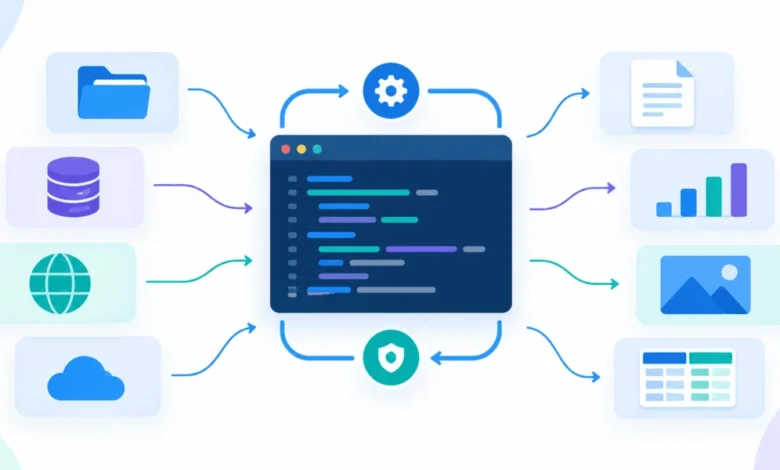
In the professional software engineering landscape, the Python context manager is frequently mischaracterized as a simple syntax convenience for closing file streams. While the ubiquitous with open(path) as f pattern is the standard entry point for developers, this mechanism serves a much more fundamental role as a robust boundary for resource lifecycle management. By enforcing a strict setup-and-cleanup contract, context managers provide a critical safeguard against memory leaks, stale environment states, and the silent persistence of temporary artifacts—failures that often remain dormant until a runtime exception triggers an unexpected termination.
The engineering challenge stems from the inherent fragility of procedural cleanup. In typical data science or machine learning workflows, scripts often perform a sequence of housekeeping tasks: creating scratch directories, modifying environment variables for hardware acceleration, suppressing verbose library logging, and initiating performance timers. In a linear execution model, these tasks are reverted at the end of the file. However, if a data-processing function raises an unhandled exception midway, the cleanup code at the bottom of the script is never reached. This leaves the system in a degraded state, consuming disk space with abandoned files, misconfiguring environment variables for subsequent processes, or silencing critical system warnings.
The Architecture of the With Statement
At its core, the Python with statement is not a feature restricted to I/O operations; it is a structural guarantee of block exit. The Python language reference defines the protocol via two special methods: __enter__() and __exit__(). When the interpreter encounters a with statement, it executes __enter__() to initialize the environment. Regardless of whether the subsequent code block finishes successfully, returns early, or raises an exception, the __exit__() method is invoked. This ensures that even when a system crashes, the "teardown" phase—deleting directories, resetting loggers, or closing network sockets—is executed with high reliability.
The mechanics of this protocol are precise. The __exit__() method receives three arguments: the exception type, the exception value, and the traceback. If the block completes successfully, these arguments are passed as None. If an exception occurs, the method receives the error details. Crucially, the return value of __exit__() determines the flow of the program. A truthy return value suppresses the exception, effectively silencing the error, while a falsy return value (or None) allows the exception to propagate to the caller. For most production applications, developers must ensure that __exit__() returns False, ensuring that critical errors are never swallowed and can be handled at the appropriate architectural level.
Eliminating Manual Housekeeping with Custom Managers
The transition from procedural cleanup to context-managed resource handling can be illustrated through the evolution of performance monitoring. A common requirement in high-performance computing (HPC) environments is the precise measurement of execution time for specific logic blocks. Manual implementations often involve capturing a start time and a stop time, with a print statement placed between them.
By wrapping this logic in a dedicated class, engineers can guarantee that the duration is calculated even if the task fails. A custom Timer class implementing __enter__() to start the clock and __exit__() to calculate and log the delta ensures that the performance data is captured. Furthermore, if the task fails, the class can tag the output as "failed," providing immediate visibility into whether a process crashed or merely hung during execution. This shift moves instrumentation from a series of scattered, error-prone statements to a encapsulated, reusable, and testable component.
Leveraging Contextlib for Streamlined Automation
While custom classes are ideal for maintaining internal state, the Python standard library offers the contextlib module for simpler requirements. The @contextmanager decorator allows developers to define a context manager as a generator function. Everything preceding the yield statement acts as the setup phase, and everything following it serves as the cleanup.
This approach is particularly effective for managing stateful global configurations, such as logging levels or library-specific parameters. For instance, when running a model evaluation that requires silencing debug-level logs, the quiet() context manager can be employed. By using a try…finally block within the generator, developers can ensure that the original logging level is restored regardless of the outcome of the evaluation block. This pattern eliminates the "forgotten reset" bug that frequently plagues complex, multi-stage pipelines.
Standard Library Solutions for Temporary Resources
The Python standard library, specifically the tempfile and unittest.mock modules, provides production-grade managers that address common infrastructure challenges. The tempfile.TemporaryDirectory() class is the industry-standard solution for handling scratch space. By automatically creating a unique directory at initialization and recursively deleting it upon block exit, it prevents the accumulation of stale artifacts—a common issue in distributed machine learning pipelines where thousands of temporary files can consume terabytes of storage.
Similarly, patch.dict() from unittest.mock is an indispensable tool for managing environment variables or configuration dictionaries. Modifying global environment variables is inherently dangerous in concurrent systems; however, when used within a controlled scope, patch.dict() provides a mechanism to safely override settings for a specific function or block and revert them instantly afterward. This ensures that configuration changes do not leak into other threads or subsequent tasks, maintaining the integrity of the process environment.
Managing Complex Lifecycles with ExitStack
In scenarios where the number of resources—such as multiple file handles or database connections—is determined dynamically at runtime, nested with statements become unmanageable. This is where ExitStack, a component of contextlib, proves essential. ExitStack maintains an internal stack of cleanup operations. When a resource is registered with enter_context() or a function is registered with callback(), ExitStack tracks them and executes them in reverse order upon exiting the block.
This mechanism is invaluable for complex tasks like merging large datasets from hundreds of individual shards. By using ExitStack, an engineer can open an arbitrary number of input files and a single output file, ensuring that every handle is closed correctly even if an error occurs during the processing of the middle shards. It essentially provides a dynamic, programmable version of the static with statement, allowing for complex resource management without the "pyramid of doom" indentation associated with nested blocks.
Implications for Production Reliability
The broader implication of adopting context managers is a significant reduction in the "failure surface" of an application. In professional environments, the happy path—where every line of code executes perfectly—is the exception, not the rule. Code that relies on manual cleanup at the bottom of a function is inherently brittle; it operates on the optimistic assumption that the process will reach the end of the file.
When an application fails, especially in production, it is often due to an unexpected state. Context managers shift the responsibility of cleanup from the developer’s manual tracking to the Python language runtime. This shift is not merely stylistic; it is a defensive programming strategy. By defining the lifecycle of a resource as a discrete, encapsulated block, developers create code that is self-cleaning, more readable, and significantly more resilient to the unpredictable nature of runtime errors.
For AI engineers and backend developers, the context manager should be viewed as a fundamental unit of work. Whether it is managing a GPU memory context, a distributed lock, or a temporary disk cache, the principle remains the same: define the boundary, guarantee the cleanup, and minimize the risk of leaving the system in a stale, broken, or insecure state. As systems scale in complexity, the ability to manage these lifecycles effectively becomes the primary differentiator between reliable, production-ready code and fragile, experimental scripts. By moving beyond simple file handling and embracing the full potential of the protocol, engineers can build systems that are as robust in failure as they are in success.