Google Unveils Gemini 4 Carbon: A New Frontier Model Engineered for Complex Knowledge Work, Advanced Coding, and Enterprise Cybersecurity

Google has officially announced the global release of Gemini 4 Carbon, its most capable artificial intelligence frontier model to date. Designed specifically to handle the most complex cognitive workloads, Carbon is tailored for developers, enterprise organizations, scientific researchers, and everyday consumers requiring deep reasoning capabilities. The launch follows closely on the heels of the recent introduction of Gemini 4 Argon, positioning Google’s latest generation of models to dominate both routine efficiency tasks and high-stakes computational problem-solving.
While Gemini 4 Argon remains the optimal choice for standard software engineering and everyday knowledge work, Gemini 4 Carbon is built for tasks that stretch the absolute limits of machine intelligence. This includes multi-step coding, extensive debugging, open-ended scientific research, and complex agentic workflows. By allocating significantly more processing tokens to explore thoroughly, reason deeply, and execute extended verification loops, Carbon delivers unmatched performance across specialized industries.
Chronology and Early Deployments
The rollout of Gemini 4 Carbon is the culmination of a deliberate, phased release strategy by Google and its deep learning division. Two weeks prior to the public announcement, Google provided early access of the Carbon model to select cybersecurity defenders via its specialized Fairwind Program. This controlled deployment allowed security professionals to stress-test the model’s capabilities in real-world threat hunting, vulnerability patching, and code auditing.
Following the
successful validation of its cybersecurity prowess, Google expanded availability today to commercial developers through Google AI Studio and Gemini for business. Simultaneously, the model is rolling out to Google AI Ultra subscribers through the Gemini application, AI Mode in Search, and Google Antigravity—Google’s environment for multi-agent coordination.
Unprecedented Benchmark Performance and Economic Efficiency
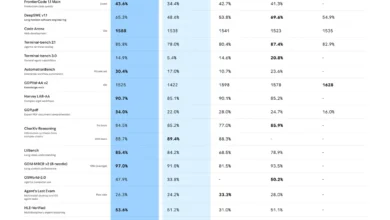
Independent evaluations and real-world workflow benchmarks demonstrate that Gemini 4 Carbon successfully bridges the gap between ultra-high accuracy and practical production economics. Industry testing places Carbon at the top of several critical developer and research benchmarks.
The model achieved the number one ranking on CursorBench 4.0, Perplexity’s WANDR benchmark for evaluating deep-search research agents, and Zapier’s AutomationBench. Crucially, Google achieved this performance level while maintaining a competitive cost structure. Gemini 4 Carbon is priced identically to Gemini 4 Argon—at $2 per million input tokens and $10 per million output tokens—making it more than twice as cost-effective per task compared to competing external frontier models.
Furthermore, in multimodal knowledge retrieval, Google partnered with Artificial Analysis to introduce the Multimodal Knowledge Agent (MKA) benchmark. This evaluation tests how natively an AI agent can reason over dense files containing charts, images, blueprints, schematics, and tables. Carbon secured the number two position overall while operating at an average cost per task more than six times lower than the top-performing alternative.
Revolutionizing Agentic Workflows with Google Antigravity
To maximize the potential of Gemini 4 Carbon on large-scale projects, Google is previewing a new feature within Google Antigravity known as /swarm. This capability transforms a single user prompt into a coordinated team of autonomous AI agents that users can monitor in real time.
Developers can assign Carbon to roles that demand rigorous logical deduction—such as software architectural design, cross-subsystem coordination, and security auditing. Carbon can then be paired with faster, lighter models operating across parallel, isolated workspaces, alongside adversarial verifiers that test every line of code or structural change. Early demonstrations of the /swarm feature have highlighted its ability to process complex inputs, such as transforming historical photographs and engineering plates into interactive 3D exhibitions, or converting public municipal planning PDFs into detailed architectural visualizations.

Advanced Capabilities in Full-Stack Coding and 3D Design
In the realm of software engineering, Gemini 4 Carbon excels at multi-agent collaborative tasks, including multi-package migrations, root-cause investigations across sprawling legacy codebases, and major architectural overhauls. For web application development, the model independently executes build-and-verify loops, diagnoses runtime errors, and visually checks both its code and the rendered user interface to ship functional applications.
These enhanced spatial reasoning and visual design skills extend seamlessly into 3D game development, spatial computing, and creative coding. Developers utilizing Carbon within Google Antigravity have successfully built complex browser-based simulations, procedural environments, and interactive digital artifacts from minimal descriptive prompts.
Frontier Cybersecurity and Defensive Intelligence
Security operations represent one of the most significant beneficiaries of the Gemini 4 Carbon release. Through the Fairwind Program, security teams have leveraged Carbon’s end-to-end intelligence to safeguard critical software infrastructure.
Testing indicates that Carbon leads across prominent industry benchmarks for discovering vulnerabilities (SEC-bench Pro), exploiting flaws in controlled environments (ExploitGym), and generating verified root-cause patches (CWE-bench v1). By tracing how security flaws can be chained together across complex network architectures, Carbon provides enterprise defenders with an automated capability to preemptively harden applications against sophisticated cyber threats.
Accelerating Scientific Discovery and Mathematical Reasoning
In the scientific sector, Gemini 4 Carbon demonstrates substantial improvements in cross-disciplinary reasoning spanning physics, advanced mathematics, and the life sciences. The model is capable of synthesizing experimental data, formulating and testing hypotheses, and working through multi-step domain problems with minimal human intervention.
Early commercial adopters, such as the drug toxicity research firm Axiom Bio, have integrated Carbon into their production pipelines. According to company representatives, Carbon has emerged as a leading model for translational science, successfully identifying novel mechanisms of chemical toxicity that had previously eluded traditional analysis methods.
To support the scientific community further, Google has expanded access to Gemini 4 Carbon through its ongoing scientific research initiative. Following an earlier initiative that provided thousands of researchers with free access to Argon in Google Antigravity, qualified scientists applying through ongoing rolling admissions will now also gain access to Carbon’s advanced reasoning engine.
Safety, Alignment, and Security Mitigations
As AI model capabilities scale upward, Google has emphasized its parallel commitment to robust safety frameworks and misuse prevention. Because Gemini 4 Carbon introduces advanced cybersecurity proficiencies, Google has reinforced the model using an expanded version of the safety and security stack established during the Argon release.
The updated architecture incorporates enhanced resilience against prompt injection attacks, unauthorized autonomous agent behaviors, and potential misuse vectors. Detailed metrics regarding the model’s alignment lifecycle, robustness testing, and safety mitigations have been published alongside the official Gemini 4 Carbon Safety and Security Report.
Availability and Enterprise Integration
Gemini 4 Carbon is available immediately via API integration in Google AI Studio and Google Cloud’s Gemini for enterprise customers. Subscribers to Google AI Ultra will also find the model integrated natively into the core Gemini application, AI Search modes, and the Google Antigravity environment.
With standardized enterprise pricing, comprehensive developer documentation, and updated migration guides now accessible, Google’s latest model release marks a significant transition toward autonomous, multi-agent artificial intelligence capable of executing deeply complex intellectual labor at production scale.