OpenAI Unveils Codex Micro: A Specialized Hardware Keypad for AI-Enhanced Coding Workflows

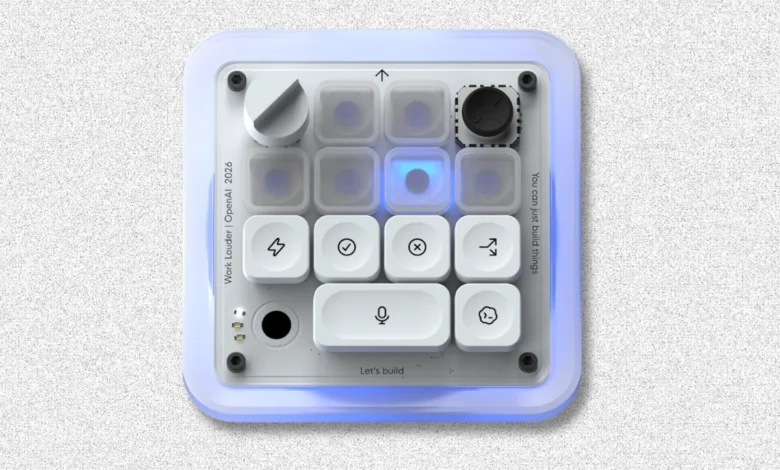
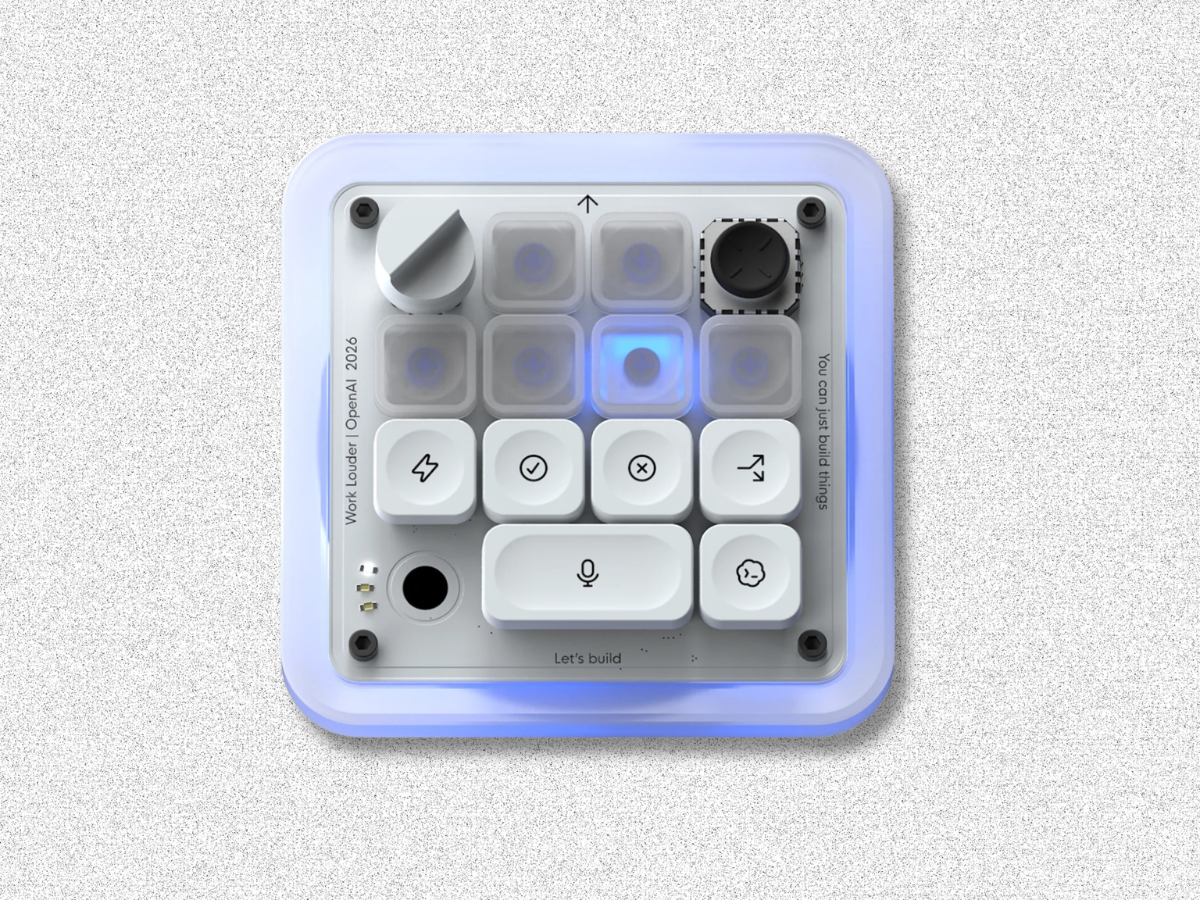
OpenAI has officially launched the Codex Micro, its inaugural hardware product designed for consumers, a mechanical keypad priced at $230 and specifically engineered to enhance interaction with the company’s powerful Codex coding agent. This specialized peripheral marks a significant, albeit experimental, step for OpenAI into the physical product space, contrasting sharply with its primary focus on large language models and artificial intelligence software. Developed in collaboration with Work Louder, a company known for its custom mechanical input devices, the Codex Micro integrates 13 mechanical switches, a sensitive touch sensor, a unique rotary dial for on-the-fly adjustment of AI reasoning levels, and an analog stick, all aimed at streamlining the coding process for developers utilizing OpenAI’s AI assistant.
Pre-orders for the Codex Micro are currently open through OpenAI’s official website, with the first units anticipated to begin shipping later this month. The company has characterized this initial offering as a "limited-run product," suggesting a cautious approach to its foray into hardware and potentially testing market demand before committing to a broader product line. This venture is distinct from the highly anticipated screen-free AI device that OpenAI is reportedly developing in partnership with former Apple design chief Jony Ive, which is expected to feature advanced sensors and spatial awareness capabilities. The Codex Micro, instead, zeroes in on a niche but critical aspect of the developer workflow, promising to offer tangible productivity gains through direct hardware control over AI functions.
The Codex Micro: Bridging AI Software and Physical Input
At its core, the Codex Micro is a testament to the growing demand for more intuitive and efficient ways to interact with sophisticated AI tools. The device’s design prioritizes customizability and direct control, offering a suite of inputs tailored for developers. The 13 mechanical switches provide tactile feedback and can be programmed for a myriad of shortcuts, macros, or specific Codex commands, allowing users to execute complex actions with a single press. These are complemented by a touch sensor and an analog stick, further expanding the range of programmable inputs beyond simple key presses.
However, the most innovative feature is arguably the rotary dial, which allows users to adjust the "reasoning level" of the Codex AI in real-time. This unique control provides a direct hardware interface for a core AI parameter, enabling developers to fine-tune the AI’s computational depth or contextual understanding without navigating software menus. For instance, a higher reasoning level might prompt Codex to consider a broader context or perform a more exhaustive analysis before generating code, while a lower setting could prioritize speed for simpler tasks. This on-the-spot adjustment capability could significantly reduce context switching, a common productivity drain for developers who frequently move between coding environments and AI interaction interfaces.
Beyond functional inputs, the Codex Micro also incorporates integrated RGB lighting. Far from being merely aesthetic, these lights serve as a dynamic notification system, providing visual cues for various alerts such as task completion, AI requiring further input, or system status changes. The inclusion of multiple dozen extra keycaps further underscores the device’s commitment to personalization, allowing users to tailor the keypad’s appearance and tactile feel to their individual preferences. Connectivity options include both Bluetooth for a clean, wireless workspace and USB-C for a reliable, low-latency wired connection, ensuring compatibility with both Windows and macOS environments.
OpenAI’s Broader Hardware Strategy and Context
The launch of the Codex Micro arrives amidst a period of significant strategic evolution and external challenges for OpenAI. While primarily known for its groundbreaking AI models like GPT and DALL-E, the company’s move into hardware signals a broader ambition to create integrated AI ecosystems. This strategic pivot aligns with a growing trend among leading AI firms to extend their reach beyond pure software, seeking to capture more of the user experience through proprietary devices.
The Jony Ive Partnership: Last year, OpenAI made headlines by announcing a high-profile collaboration with Jony Ive, the legendary former chief design officer of Apple. This partnership aimed to develop a "screen-free AI device" that would leverage multiple cameras and sensors for advanced spatial awareness and intuitive interaction. This ambitious project, reportedly backed by SoftBank CEO Masayoshi Son, represents OpenAI’s long-term vision for ambient AI, devices that seamlessly integrate into daily life. The Codex Micro, in contrast, is a more focused, utilitarian tool aimed at a specific professional demographic, explicitly designed to augment an existing software agent rather than introduce an entirely new form factor for AI interaction. This distinction highlights a multi-pronged hardware strategy, addressing both niche professional needs and broader consumer aspirations.
The Apple Lawsuit: Adding another layer of complexity to OpenAI’s hardware ventures is an ongoing lawsuit filed by Apple. The tech giant alleges that former Apple employees, who subsequently joined OpenAI, stole trade secrets to aid in the development of OpenAI’s hardware products. While the specifics of the lawsuit remain under judicial review, OpenAI has publicly stated that the Codex Micro, having been developed with Work Louder, appears to fall outside the scope of this particular dispute, suggesting it was not a product of the internal hardware team potentially implicated in the suit. This clarification is crucial for OpenAI as it navigates the legal landscape while simultaneously expanding its product portfolio.
The Competitive Landscape: The move into hardware also positions OpenAI more directly against competitors like Anthropic, Google, and Meta, all of whom are exploring or have already launched their own hardware initiatives. Google, with its Pixel line and Nest devices, has a long history of integrating AI into consumer hardware. Meta has invested heavily in virtual and augmented reality hardware with its Quest headsets, aiming to build the metaverse. For these companies, hardware represents a crucial differentiator, allowing them to create tightly integrated experiences that leverage their proprietary AI models and potentially lock users into their respective ecosystems. The Codex Micro, even as a "limited-run" experiment, can be seen as OpenAI’s initial foray into this competitive arena, testing the waters for how physical products can enhance its core AI offerings.
Pricing, Value, and Market Reception
The $230 price tag for the Codex Micro has sparked considerable discussion within the developer community and among technology analysts. For a device with 13 mechanical switches, a touch sensor, a dial, and an analog stick, some have questioned whether the cost is justified, particularly when compared to general-purpose macro keypads available on the market. Devices like Elgato’s Stream Deck, a popular choice for streamers and content creators, offer a similar concept of customizable inputs for streamlining workflows, often at comparable or lower price points, depending on the model. However, the Stream Deck and similar alternatives typically lack the direct, integrated control over AI-specific parameters like the Codex Micro’s reasoning level dial.
The value proposition of the Codex Micro, therefore, hinges heavily on individual user workflows and their reliance on OpenAI’s Codex agent. For professional developers, software engineers, or data scientists who frequently interact with Codex for code generation, debugging, or explanation, the productivity benefits could be substantial. The ability to instantly adjust AI parameters, trigger complex code snippets, or navigate through AI suggestions without breaking focus could save precious time and mental effort, making the $230 investment a justifiable expense for enhancing daily productivity. As one might infer from developer forums, the time saved from reducing context switching and streamlining repetitive AI interactions could quickly offset the initial cost for high-volume users.
Conversely, for casual users or those who only occasionally leverage AI coding assistants, the price point may be more difficult to rationalize. General-purpose macro keypads offer a degree of physical input customization at a lower cost, even if they lack the specific, deep integration with Codex’s reasoning capabilities. This dichotomy suggests that OpenAI is initially targeting a professional niche, leveraging their existing user base of developers who are already invested in the Codex ecosystem.
The "Limited Run" Implications and Future Outlook
OpenAI’s decision to classify the Codex Micro as a "limited-run project" carries several implications. It could signify a cautious market test, allowing the company to gauge demand and gather user feedback before committing to mass production or a permanent product line. This approach minimizes financial risk and provides valuable insights into the viability of specialized AI hardware.
However, a limited run also raises questions about long-term support, warranty terms, and future iterations. OpenAI has not yet announced specifics regarding ongoing availability, restocks, international shipping, or long-term software support for the device. For developers considering integrating the Codex Micro into their mission-critical workflows, these omissions might introduce an element of uncertainty. The lack of commitment to sustained availability could deter some potential buyers who prioritize longevity and assured product support.
The success or failure of the Codex Micro will undoubtedly influence OpenAI’s future hardware strategy. If the device garners significant positive reception and demonstrates clear value for its target audience, it could pave the way for more specialized AI peripherals, potentially expanding to other professional domains or even broader consumer applications. Conversely, if uptake is low or feedback is lukewarm, OpenAI might re-evaluate its approach to hardware, perhaps focusing solely on its more ambitious Jony Ive collaboration or refining its software-centric strategy.
As the shipping date for the first units approaches later this month, prospective buyers and the wider tech community will be closely watching for further announcements from OpenAI regarding international availability, warranty details, and the company’s long-term vision for hardware. The Codex Micro represents an intriguing, albeit cautious, step for OpenAI into a new frontier, underscoring the increasing convergence of artificial intelligence with tangible, physical products designed to augment human capability. It embodies a growing trend where specialized hardware interfaces are becoming essential tools for unlocking the full potential of advanced AI models in professional environments.