Opera Pioneers Direct AI Integration with New Browser Connector Feature, Revolutionizing User Interaction with Web Content

Oslo, Norway – Opera has unveiled a significant advancement in browser-AI interaction with the introduction of its new "Browser Connector" feature for Opera One and Opera GX. This innovative capability empowers external artificial intelligence tools, including industry leaders like ChatGPT and Claude, to directly access and interpret the content of open browser tabs. Currently accessible through Opera’s "Early Bird" testing channel at no cost, the Browser Connector leverages the proprietary Model Context Protocol (MCP) to establish a seamless link between supported AI services and the user’s active browsing session. This development marks a pivotal moment in the evolution of web browsers, transforming them from mere content displayers into dynamic, AI-enhanced productivity hubs.
The core function of the Browser Connector is to eliminate the traditional barriers between web content and AI processing. Historically, users wishing to leverage AI for tasks like summarization, analysis, or content generation based on web pages had to manually copy and paste text or links into an AI chat window. Opera’s new feature streamlines this workflow by allowing connected AI services to programmatically read the textual content of any open tab. Beyond text, the Browser Connector is equipped to capture screenshots of active pages, enabling AI models to analyze visual elements such as charts, graphs, product listings, or complex user interfaces that would otherwise require cumbersome manual descriptions. This direct access significantly enhances the AI’s contextual understanding, promising a more efficient and integrated user experience for research, content creation, and data interpretation across multiple sources.
Opera’s Strategic Embrace of AI: A Chronological Overview
This latest innovation is not an isolated development but rather a calculated progression within Opera’s long-standing strategy to integrate artificial intelligence deeply into its browsing ecosystem. The foundational technology, the Model Context Protocol (MCP), first debuted in Opera Neon, a pioneering subscription-based AI browser launched by Opera earlier in the decade. While Neon was positioned as a premium, experimental platform showcasing the potential of AI-driven browsing, its underlying MCP technology proved instrumental. It demonstrated the feasibility and power of allowing AI to directly interact with browsing data, laying the groundwork for broader, more accessible applications.
Following the insights gained from Neon, Opera began to integrate AI features into its mainstream, free-to-use browsers. Opera One, launched as a re-imagined flagship browser, and Opera GX, tailored for gamers, both received native AI capabilities, most notably through the integration of Opera’s own AI assistant, Aria. Aria provides instant access to AI queries, content generation, and information retrieval directly within the browser sidebar, further solidifying Opera’s commitment to embedding AI as a core component of the browsing experience. The Browser Connector extends this commitment by opening the door to a wider array of specialized third-party AI tools, providing users with unprecedented choice and flexibility.
The global browser market is intensely competitive, with major players constantly vying for user attention through new features and performance enhancements. While browsers like Microsoft Edge have integrated AI through Copilot, offering sidebar summaries and content creation tools, and Google Chrome is steadily experimenting with its own AI functionalities, Opera’s Browser Connector represents a distinct approach. Instead of exclusively relying on its proprietary AI, Opera is fostering an open ecosystem that allows users to connect their preferred external AI models. This strategy could position Opera as a neutral, powerful platform for AI-assisted browsing, appealing to users who rely on specific AI tools beyond what any single browser can natively offer.
Enhancing Productivity and User Experience Across Diverse Applications
The practical implications of Opera’s Browser Connector are far-reaching, promising to revolutionize how individuals and professionals interact with the web. For academic researchers, the ability to have an AI tool like Claude instantly summarize and cross-reference multiple research papers open in different tabs could drastically cut down literature review times. Students could leverage ChatGPT to generate concise study notes from online lectures or articles without the tedious process of copying sections into a separate document.
In professional settings, marketing teams could use the connector to analyze competitor websites, comparing product listings, pricing structures, and promotional strategies across various tabs, with the AI highlighting key differences and similarities. Financial analysts could feed an AI model with multiple news articles and market data pages, asking it to identify trends or synthesize complex information into actionable insights. Even for everyday users, comparing product specifications on e-commerce sites or understanding complex terms in a legal document becomes significantly easier when an AI can directly process the information from the page.
Beyond mere summarization, the visual analysis capability unlocks new possibilities. Imagine an interior designer browsing furniture websites, asking an AI to analyze the style and color palette of various pieces across different tabs to recommend complementary items. Or a web developer using an AI to identify specific UI elements on multiple sites to understand design patterns. These capabilities move beyond simple text processing, transforming the browser into a genuinely intelligent assistant capable of understanding both the textual and visual context of the web. This promises substantial productivity gains, reducing cognitive load and accelerating decision-making processes by making information readily digestible and actionable through AI.
Navigating the Privacy and Security Paradigm in AI-Enhanced Browsing
While the benefits of the Browser Connector are compelling, the integration of AI tools with direct access to browsing data naturally raises critical questions regarding privacy and data security. Opera has acknowledged these concerns, particularly during the "Early Bird" testing phase, emphasizing that users must be fully aware of the implications. When the Browser Connector is enabled, the connected AI service gains visibility into the content of open tabs. This means that any accessible page content – including potentially sensitive personal, financial, or confidential information – could theoretically be read and processed by the connected AI tool.
Opera’s design philosophy for the Browser Connector likely centers on user consent and transparency. The feature is not automatically enabled; users must actively navigate to Opera’s settings, specifically within the "AI Services" section, to install and connect supported AI tools. This explicit opt-in mechanism is a crucial control point, empowering users to decide when and how their browsing data is shared with AI services. However, the responsibility also falls on the user to exercise caution. Before activating an AI connection, users are advised to review their open tabs to ensure no sensitive information is exposed inadvertently.
From an industry perspective, the handling of data by third-party AI services is paramount. While Opera facilitates the connection, the ultimate data processing and storage practices are governed by the terms of service and privacy policies of the individual AI providers (e.g., OpenAI for ChatGPT, Anthropic for Claude). Users must familiarize themselves with these policies to understand how their data is used, whether it’s stored, and for how long. Opera, as the browser developer, has a responsibility to clearly communicate these distinctions and to potentially implement safeguards that allow users to manage permissions granularly, perhaps on a per-tab or per-domain basis in future iterations. The "Early Bird" phase is critical for gathering feedback on these privacy aspects and refining the user experience to ensure a secure and trustworthy environment.
Enabling the Feature and User Responsibility in the Early Bird Phase
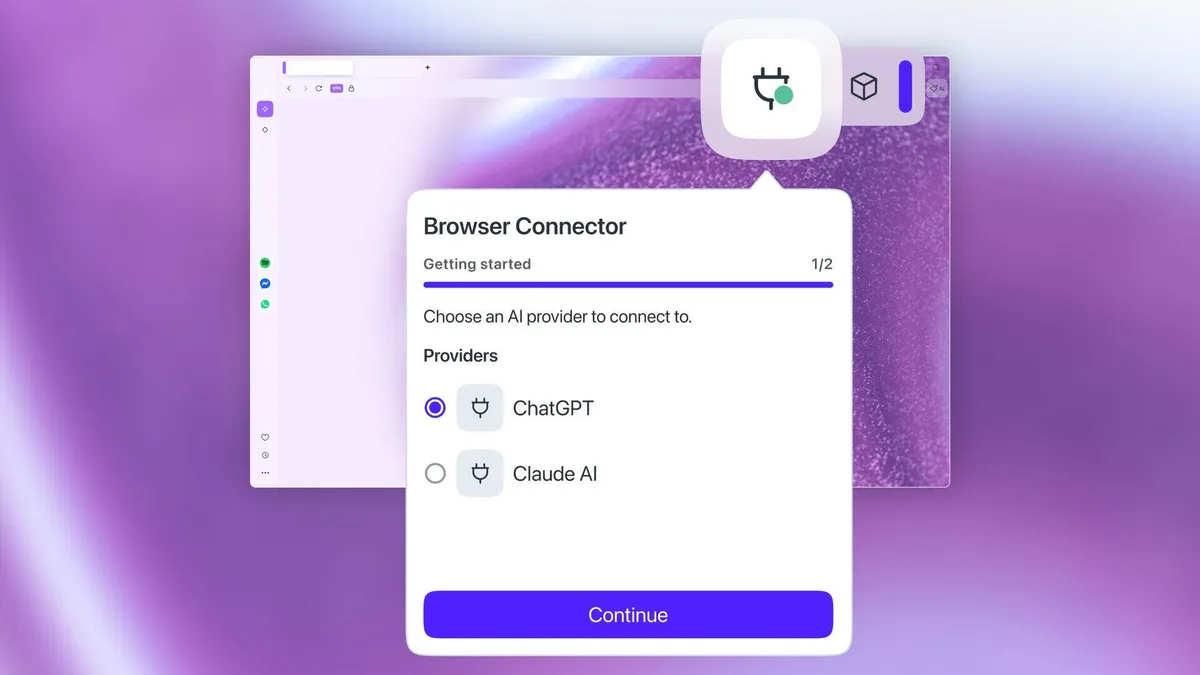
Accessing and enabling the Browser Connector is designed to be straightforward for users participating in the "Early Bird" program. Within Opera One or Opera GX, users can open the browser settings and utilize the search function to locate "AI Services." Here, an option will be presented to install the Browser Connector feature. Upon installation, users will be guided through the process of linking supported external AI tools, such as ChatGPT or Claude, to their active browsing session. This process typically involves granting explicit permission for the AI service to interact with the browser’s tab content.
It is imperative for users in this pre-release testing channel to understand the nature of "Early Bird" features. These are experimental functionalities that may evolve significantly before a full public release. While Opera has not provided a definitive timeline for a broader rollout, the insights gained from early testers will be crucial in shaping the final product. Feedback on performance, stability, user interface, and, critically, privacy controls will directly influence subsequent development cycles. Users are encouraged to report any issues or suggestions to Opera, contributing to the refinement of a feature that holds immense potential.
Industry Reactions and The Future of Browsing
The introduction of the Browser Connector is likely to elicit varied reactions across the tech industry. Analysts are expected to highlight Opera’s proactive stance in the AI race, potentially giving it a competitive edge in a crowded browser market. This move could force other browser developers to accelerate their own plans for deeper, more open AI integrations. The emphasis on supporting external AI tools, rather than solely relying on proprietary solutions, could also set a new standard for browser-AI collaboration, fostering a more vibrant ecosystem for AI service providers.
However, the privacy implications will undoubtedly remain a focal point of discussion. Industry watchdogs and privacy advocates will closely scrutinize how Opera and its AI partners handle user data, especially as the feature moves beyond the "Early Bird" phase. The long-term success of the Browser Connector will heavily depend on Opera’s ability to build and maintain user trust through transparent data practices and robust security measures.
Looking ahead, the Browser Connector points towards a future where the web browser transcends its current role as a passive portal. It envisions a browser that is an active, intelligent agent, anticipating user needs, providing contextually relevant assistance, and seamlessly integrating with a suite of AI-powered tools. This shift could redefine productivity, learning, and entertainment on the internet, making complex tasks simpler and information more accessible than ever before. While the full impact remains to be seen, Opera’s Browser Connector represents a bold step towards a more intelligent and interconnected digital experience, potentially ushering in a new era of AI-augmented web browsing.