Google Announces Gemini 3.7 Flash: A High-Performance Model Tailored for Coding and Autonomous Agents

Google has officially unveiled Gemini 3.7 Flash, positioning the release as its most intelligent workhorse model to date, specifically engineered to optimize software engineering tasks and power autonomous digital agents. Arriving mere weeks after the rollout of Gemini 3.6 Flash, this rapid iteration highlights the tech giant’s aggressive development cycle. Driven by comprehensive developer feedback and underlying algorithmic breakthroughs, Gemini 3.7 Flash introduces substantial advancements across web development, production-level coding, and knowledge-dense professional workflows, all while launching at a remarkably aggressive price point designed to accelerate enterprise adoption.
The Chronology of the Flash Series and Rapid Iteration
The artificial intelligence landscape has witnessed unprecedented velocity in model deployment, and Google’s recent release schedule is a primary indicator of this trend. Just three weeks prior to the introduction of Gemini 3.7 Flash, the company released Gemini 3.6 Flash alongside several smaller variants. Industry analysts note that this compressed release timeline represents a shift toward continuous deployment methodologies, where minor architectural refinements and algorithmic breakthroughs are packaged and shipped to developers almost immediately rather than being held for major annual product cycles.

According to engineering leads at Google, the quick succession from version 3.6 to 3.7 was made possible by listening closely to the software development community. Developers leveraging the Flash series for large-scale automation reported specific friction points regarding multi-step planning, tool utilization, and edge-case debugging. By refining the underlying reinforcement learning loops and optimizing the transformer architecture for speed and precision, the development team managed to deliver a significant generational leap in capability in less than a month.
Enhanced Intelligence for Complex Workflows and Software Engineering
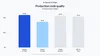
Gemini 3.7 Flash demonstrates substantial performance gains over its predecessor across a variety of rigorous technical benchmarks. In software engineering tasks, the model exhibits superior debugging capabilities, higher first-pass code accuracy, and a notable enhancement in generating production-ready code.
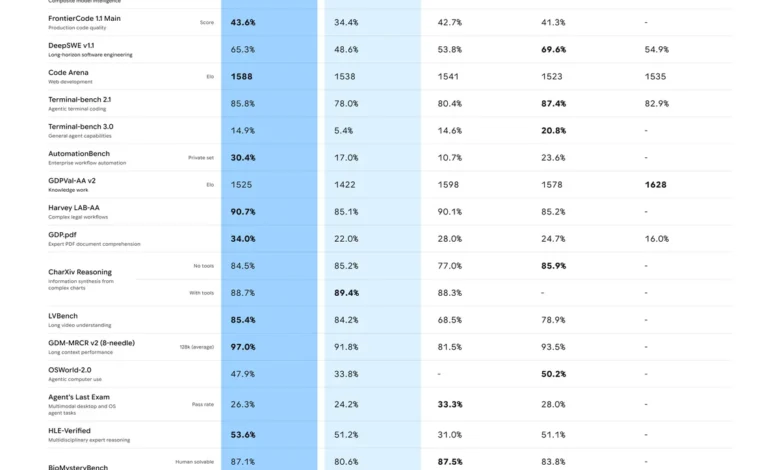
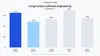
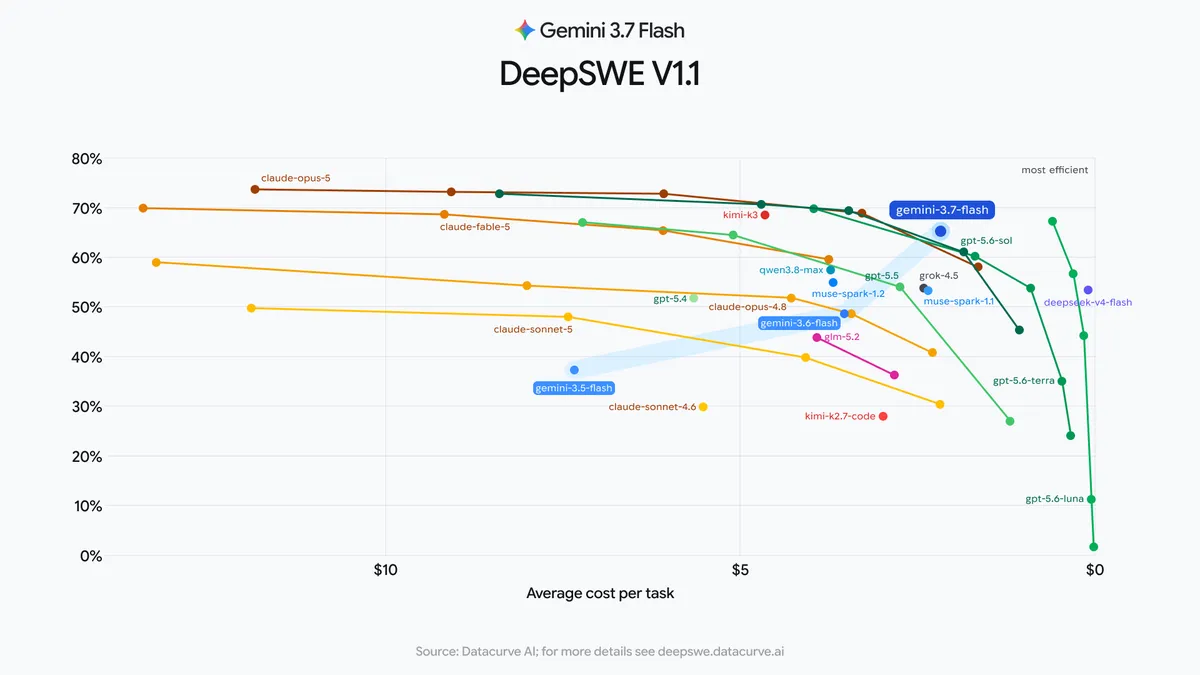
Independent evaluations underscore these improvements. On the FrontierCode 1.1 Main benchmark, Gemini 3.7 Flash achieved a score of 43.6%, compared to 34.4% for the previous iteration. Similarly, on the DeepSWE v1.1 benchmark measuring long-horizon software engineering competence, the model scored 65.3%, outperforming the 49.0% recorded by version 3.6 Flash. These metrics suggest that the model is increasingly capable of managing complex, multi-file codebases without requiring constant human intervention or iterative error correction.
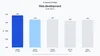
In the realm of web development, the model showcases an enhanced ability to translate visual references into functional, feature-complete user interfaces. Whether supplied with a static screenshot, a UI design file, or a comprehensive corporate design system, Gemini 3.7 Flash maintains high design adherence. This proficiency is reflected in its performance on WebDev Arena, part of the Arena.ai leaderboard, where it secured an Elo rating of 1588, surpassing the 1538 rating of Gemini 3.6 Flash.
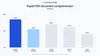
Beyond software development, the model targets knowledge-dense sectors such as finance, legal, and biosciences, where document comprehension is paramount. On the GDP.pdf benchmark—a rigorous test designed to evaluate a model’s capacity to ingest and reason over complex, multi-page professional documents—Gemini 3.7 Flash achieved 34.0%, a substantial improvement over the 22.0% scored by its predecessor. Furthermore, in AutomationBench, which tests an AI’s ability to execute real-world business workflows, the model nearly doubled its predecessor’s success rate, moving from 17.0% to 30.4%.
Developer Experience, Pricing Strategy, and Economic Implications
A critical component of the Gemini 3.7 Flash release is the deliberate focus on improving the overall developer experience. Engineers testing the model report that it exhibits a higher degree of patience and discipline when executing multi-step plans. It is designed to recognize roadblocks more efficiently, ask clarifying questions when user intent is ambiguous, and follow complex sets of instructions with greater fidelity. This disciplined execution reduces the need for manual oversight and minimizes the number of retries required during agentic workflows.
To drive rapid ecosystem adoption and lower the barrier to entry for startups and enterprises building autonomous agents, Google has structured an aggressive pricing model. Through the end of the year, Gemini 3.7 Flash is available at an introductory rate of $0.75 per million input tokens and $3.75 per million output tokens. This represents a 50% reduction in cost compared to the original pricing of Gemini 3.6 Flash per million tokens. Industry observers point out that this deflationary pricing trend in frontier-class intelligence is forcing a broader market realignment, making high-frequency agentic applications economically viable for commercial deployment.
Early Enterprise Reactions and Ecosystem Integration
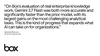
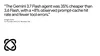
Early access partners and enterprise customers have shared positive feedback regarding the precision and cost-efficiency of Gemini 3.7 Flash. Organizations operating in sectors ranging from legal tech and data analytics to automated web navigation report that the model’s enhanced reasoning capabilities allow them to build more resilient applications. Companies such as Box, Databricks, Harvey, LangChain, and Pydantic have highlighted how the combination of low latency, high context comprehension, and reduced operational costs enables new classes of enterprise automation that were previously cost-prohibitive.
In addition to API availability for developers, Google is integrating Gemini 3.7 Flash directly into its consumer and professional productivity suites. Beginning today, Gemini Spark—the continuous, background AI agent available to Google AI Pro and Ultra subscribers across more than 160 countries—will be powered by the new model. Originally launched at Google I/O, Gemini Spark acts as a persistent digital assistant capable of taking autonomous actions on behalf of the user. With the underlying upgrade to 3.7 Flash, Spark gains improved tool utilization for Google Workspace applications, allowing for more efficient file consolidation, automated drafting, and status updates across complex, multi-skill workflows.
Safety, Safeguards, and Responsible Deployment
As AI models grow increasingly capable of autonomous software engineering and complex reasoning, questions surrounding safety and potential misuse become paramount. Google has emphasized that Gemini 3.7 Flash incorporates updated and rigorous Frontier Safety safeguards.
In alignment with the company’s established framework for bioresilience and its dedicated cyber security program, the model ships with enhanced mitigations against malicious exploitation. These include specialized guardrails designed to prevent the model from assisting in the creation of Chemical, Biological, Radiological, and Nuclear (CBRN) threats, as well as protections against offensive cyber capabilities. Google maintains that these safeguards have been calibrated to restrict dangerous use cases while preserving the broad spectrum of beneficial applications essential for security research and defensive engineering. Comprehensive data regarding safety evaluations and model limitations is detailed in the official Gemini 3.7 Flash model card.
Broader Industry Impact and Future Outlook
The release of Gemini 3.7 Flash underscores a definitive shift in the artificial intelligence sector toward specialized utility. Rather than focusing purely on raw parameter scale, major labs are increasingly prioritizing inference speed, cost reduction, and specialized reasoning capabilities tailored specifically for agentic architectures—systems designed to take independent actions, write code, and execute multi-step business logic without constant human prompting.
By aggressively undercutting previous pricing tiers while simultaneously driving up benchmark performance in coding and document comprehension, Google is signaling its intent to capture significant market share in the enterprise software automation space. As developers begin integrating Gemini 3.7 Flash into production environments, the broader tech industry will be watching closely to see how competing foundational model providers respond to this new benchmark for cost-effective intelligence.