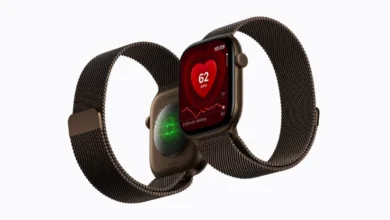
The latest installment of the 9to5Google podcast, Pixelated episode 123, brings a critical examination of Google’s evolving hardware strategy, specifically focusing on the newly debuted Fitbit Edge. Hosts Damien and Abner delve into the positioning of this device, which arrives as a strategic middle ground between the entry-level Fitbit Air and the premium-tier Pixel Watch 5. This release marks a significant inflection point for Google’s wearable portfolio, as the company attempts to streamline its hardware ecosystem while maintaining a competitive edge in the crowded health-tracking market.
The Fitbit Edge: Bridging the Wearable Gap
The introduction of the Fitbit Edge is not merely a product launch; it is a tactical response to a market that has become increasingly fragmented. For years, consumers have been forced to choose between the ultra-minimalist fitness-focused trackers like the Fitbit Air and the full-featured, OS-integrated Pixel Watch series. The Edge promises to resolve this dichotomy by offering a "best of both worlds" approach: the extended battery life and lightweight form factor of a traditional tracker, paired with a display and notification suite that rivals mid-tier smartwatches.
Initial impressions from the Pixelated team suggest that while the device excels in its core functionality—tracking steps, heart rate, and sleep metrics—its primary value proposition remains its role as a timepiece. In an era where screens have become ubiquitous, the simplicity of the Fitbit Edge’s clock-centric interface represents a design philosophy shift for Google. By prioritizing the "at-a-glance" utility of a watch, Google is leaning into the consumer demand for wearable devices that do not overwhelm users with constant, intrusive notifications.
Market Context and Historical Evolution of Fitbit
To understand the significance of the Fitbit Edge, one must look at the timeline of Google’s integration of Fitbit. Since the acquisition was finalized in early 2021 for approximately $2.1 billion, Google has been under immense pressure to reconcile the two distinct brand identities. The early days of the merger were characterized by uncertainty, as users questioned whether the Fitbit brand would eventually be phased out in favor of a unified Pixel-branded wearable line.
The trajectory of this integration has been steady:

- January 2021: Google completes the acquisition of Fitbit, pledging to prioritize user privacy and health data security.
- October 2022: The debut of the original Pixel Watch signals Google’s intent to compete directly with the Apple Watch.
- 2023-2024: A period of refinement, where Fitbit sensors and algorithms are increasingly baked into the Pixel Watch, while standalone Fitbit devices see updates to their display technology and software interoperability.
- Late 2024: The release of the Fitbit Edge reflects a mature strategy that recognizes the market’s need for specialized, rather than generalized, hardware.
The Looming Crisis in Memory Pricing
Beyond the hardware discussion, Pixelated episode 123 shifts toward a broader concern regarding the semiconductor industry: the instability of Random Access Memory (RAM) prices. The hosts express skepticism regarding the near-term future of memory hardware costs, citing global supply chain constraints and the surge in demand driven by the Artificial Intelligence sector.
The implications for the consumer electronics market are profound. As AI-integrated devices—specifically those requiring high-bandwidth, high-capacity RAM—become the industry standard, the competition for memory modules has intensified. Data indicates that global DRAM prices have experienced significant volatility over the past four quarters. Manufacturers are currently grappling with the transition to DDR5 technology, which, while more efficient, carries a premium price point.
If current trends continue, the consumer may face a dual challenge: the necessity of higher RAM capacities for upcoming software iterations and the rising cost of the hardware required to run them. This "RAM tax" could effectively drive up the starting prices of mid-range smartphones and laptops, potentially stalling the momentum of affordable, high-performance technology.
The Apple Comparison: Ecosystem Lock-in
The discussion concludes with an analysis of Apple’s current ecosystem trajectory, a recurring theme on the podcast. The hosts raise pointed questions about the growing complexity—and occasional opacity—of Apple’s software and hardware integration. By examining the "walled garden" approach, the episode highlights the challenges faced by consumers who wish to navigate between the Android and iOS ecosystems.
From an industry standpoint, this contrast is stark. Google has leaned heavily into open-source roots and interoperability, whereas Apple has doubled down on proprietary services. The "good lord what is happening in there?" sentiment expressed by the hosts serves as a metaphor for the rapid, sometimes chaotic, expansion of feature sets that both tech giants are undertaking. As Apple moves further into spatial computing and proprietary silicon, the divide between the two philosophies has never been more apparent.
Industry Implications and Future Outlook
The release of the Fitbit Edge and the ongoing concerns regarding component costs underscore the realities of the post-pandemic tech landscape. Companies are no longer chasing rapid growth at all costs; they are focusing on value retention and ecosystem stickiness.

For Google, the Fitbit Edge is a defensive play. It protects the lower end of the market from budget competitors while simultaneously preparing the user base for a more seamless transition to the more expensive Pixel Watch ecosystem. However, this strategy relies on the assumption that consumers will continue to value dedicated, single-purpose hardware over the "everything-device" model favored by tech enthusiasts.
Furthermore, the volatility of the memory market suggests that the industry is heading toward a period of consolidation. Companies that lack the vertical integration of a firm like Apple or the software-driven ecosystem of Google may find themselves unable to absorb the rising costs of raw components, leading to a potential reduction in the number of players in the smartphone and wearable space.
Conclusion
Pixelated episode 123 provides a snapshot of an industry in transition. Whether it is the pragmatic focus of a new fitness tracker or the macroeconomic concerns regarding global supply chains, the discussion highlights that the value of technology is increasingly defined by its ability to simplify, rather than complicate, the user’s life. As Google continues to iterate on its hardware, the success of the Fitbit Edge will likely serve as a barometer for the company’s ability to balance its legacy fitness roots with its modern ambitions in the smartwatch market.
For those interested in a deeper dive into these topics, the 9to5Google community offers a space for ongoing discourse. The podcast remains a critical resource for keeping pace with these rapid developments, serving as both a news aggregator and a forum for the analysis of the tech landscape. As we look toward the remainder of the year, the primary value proposition for the consumer remains, as the episode title suggests, the simple utility of the clock—a reminder that in a world of complex, connected technology, the most essential features are often the most fundamental.