Waymo and Toyota partner to deploy autonomous bZ4X robotaxis in Japan and international markets

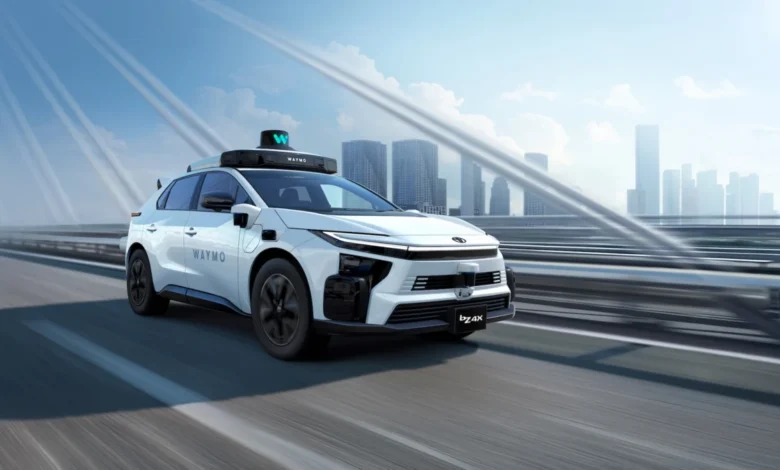
The landscape of autonomous transportation is set for a significant geographical and technological shift as Waymo, the Alphabet-owned self-driving pioneer, formalizes a strategic alliance with automotive giant Toyota. Under the terms of the agreement announced on October 30, 2026, the two companies will collaborate to integrate the Waymo Driver—the proprietary software and hardware stack responsible for the company’s navigation—into Toyota’s bZ4X electric vehicle platform. This initiative marks a pivotal step in scaling autonomous ride-hailing services beyond North America, with an initial focus on the Japanese market and future expansion into right-hand-drive territories, most notably the United Kingdom.
The Evolution of the Partnership
The roots of this collaboration trace back to April 2025, when the two entities signed a preliminary memorandum of understanding. At that time, the agreement was characterized by industry analysts as exploratory, providing a framework for both parties to assess the feasibility of combining Toyota’s manufacturing prowess with Waymo’s advanced sensor suite and artificial intelligence.
Over the subsequent 18 months, teams from both companies engaged in rigorous engineering assessments. The transition from a tentative exploratory phase to a definitive manufacturing partnership signals that both organizations have moved past the research-and-development phase and are now focused on commercial-grade deployment. By utilizing Toyota’s Takaoka factory in Japan, the partnership gains a streamlined production line capable of integrating the Waymo Driver directly into the vehicle architecture during the manufacturing process, rather than relying on aftermarket retrofitting.
Technical and Operational Scope
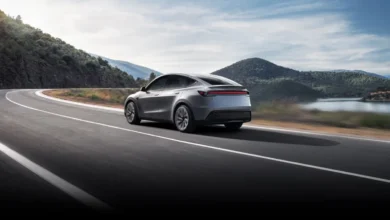
The selection of the Toyota bZ4X—marketed simply as the "bZ" in North America—is a strategic choice. As an all-electric SUV, the vehicle offers the necessary interior space, energy efficiency, and modularity required for a robotaxi application. The bZ4X is designed with high-voltage electrical architecture that is well-suited to support the high power consumption requirements of LiDAR, radar, and onboard computing systems inherent in Level 4 autonomous driving.
Testing is slated to begin in Japan in early 2027. This testing phase will serve two primary purposes: validating the performance of the Waymo Driver in the distinct traffic environments of Japan, and refining the user interface for a local passenger base. Japan presents unique operational challenges, including dense urban environments, narrow streets, and complex pedestrian interactions that differ significantly from the suburban and grid-based urban landscapes where Waymo currently operates in cities like Phoenix, San Francisco, and Los Angeles.
Beyond Japan, the partnership has a clear mandate for the U.K. market. Waymo has maintained an active presence in London for several months, conducting rigorous testing with its current fleet of Jaguar I-Pace vehicles. The introduction of the Toyota bZ4X—which is inherently designed for right-hand-drive markets—will likely accelerate Waymo’s ability to petition for the necessary regulatory permits required to offer public-facing, driverless taxi services in the U.K. capital.
Supporting Data and Industry Context
The autonomous vehicle industry has seen a consolidation of strategy in recent years. While many startups have struggled with the "valley of death" between prototype and mass production, Waymo has successfully maintained its lead by focusing on fleet durability and regulatory compliance.
Industry data suggests that the global autonomous ride-hailing market is projected to reach significant valuation milestones by 2030, driven by the shift toward electric, software-defined vehicles. Toyota, historically a cautious player regarding fully autonomous systems, has opted for a "chaperone" approach to technology—partnering with proven software providers rather than attempting to build a bespoke autonomous stack from the ground up. This move allows Toyota to leverage its massive manufacturing scale while mitigating the immense R&D costs associated with artificial intelligence development.
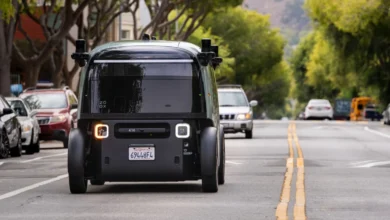
For Waymo, the benefits are equally clear: fleet diversification. Relying on a single vehicle platform creates supply chain risks and potential vulnerabilities in localized service. By adding Toyota to its portfolio alongside the Jaguar I-Pace and Zeekr (a Geely-owned EV brand), Waymo creates a resilient, multi-platform fleet capable of meeting the demands of different international regulatory and consumer environments.
Official Statements and Strategic Vision
Hiroki Nakajima, executive vice president of Toyota and a member of the board, emphasized that the collaboration is not strictly confined to ride-hailing. "This collaboration will help scale that technology and bring it to customers in Japan and beyond through Waymo’s ride-hailing service, and in parallel, Toyota will continue to explore how integrating vehicles with traffic infrastructure can make those roads safer still," Nakajima noted in a recent press statement.
This reference to "traffic infrastructure" suggests that Toyota intends to use its deep integration with municipal planning and vehicle-to-everything (V2X) communication technology to enhance the safety envelope of autonomous vehicles. By utilizing real-world data harvested from Waymo’s fleet, Toyota aims to refine its broader safety systems, potentially benefiting the company’s entire consumer vehicle lineup.
Broader Implications for the Automotive Sector
The move reflects a broader trend toward "software-defined mobility." Traditional automakers are increasingly finding that the competitive advantage is no longer found solely in internal combustion or battery performance, but in the software layer that manages vehicle movement, safety, and passenger experience.
The partnership also has significant implications for global regulatory standards. As Waymo and Toyota work together to secure permits in Japan and the U.K., they are likely to contribute to the formation of international standards for autonomous vehicle safety. Regulators in these regions have historically been more conservative than those in the United States, and the backing of a domestic industrial giant like Toyota will likely provide the political and technical capital needed to navigate complex local licensing processes.
Future Outlook
While the current announcement focuses on robotaxis, the language in the partnership agreement leaves the door open for the deployment of Waymo’s technology in personally owned vehicles. This remains the "holy grail" of the autonomous industry: moving from high-cost, geofenced taxi operations to a scalable, mass-market consumer product.
For the short term, however, the industry will be watching the 2027 pilot programs in Japan. The success of these trials will determine how quickly Waymo can transition from a North American-centric operator to a truly global mobility company. With the manufacturing backing of Toyota, the barriers to entry for global expansion have been significantly lowered, setting the stage for what many analysts predict will be a rapid acceleration of autonomous service rollouts across the Asia-Pacific and European regions.
As the industry moves toward 2027, the focus for the Waymo-Toyota team will be on data ingestion, local environmental mapping, and building public trust. The combination of Japanese manufacturing precision and Silicon Valley software agility represents a formidable new chapter in the history of transport, one that promises to redefine how urban populations navigate their environments in the coming decade.