Intel Suffers Historic 30 Percent Plunge Wiping Out 150 Billion Dollars and Triggering a One Trillion Dollar Semiconductor Market Wipeout

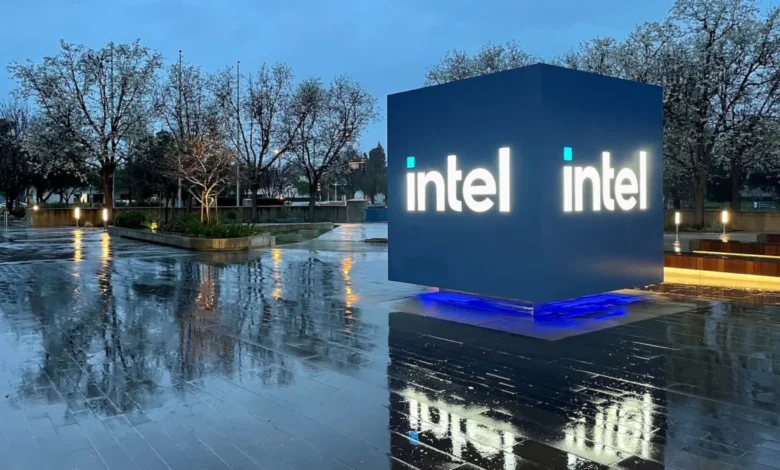
The global technology sector experienced one of its most volatile trading sessions in recent history on Friday, as semiconductor giant Intel Corporation sustained the most catastrophic single-day collapse in its decades-long existence. Intel shares plummeted by 30 percent in a matter of hours, evaporating nearly $150 billion in market capitalization. The unprecedented sell-off was triggered by a deeply disappointing quarterly financial report and a bleak forward-looking outlook, anchored by an anticipated contraction of more than 20 percent in sales within the company’s crucial client computing group (CCPG), which has historically served as its primary cash generator.
The shockwaves from Intel’s historic decline immediately reverberated far beyond the company’s corporate headquarters in Santa Clara, California. While no other individual firm suffered losses matching the sheer scale of Intel’s percentage drop, the broader semiconductor industry was dragged into a severe correction. According to intraday market estimates compiled by financial analytics platforms including Benzinga, approximately $1 trillion in cumulative market capitalization was eradicated across the global chip sector during the Friday trading session. Major industry heavyweights—including Nvidia, Advanced Micro Devices (AMD), Taiwan Semiconductor Manufacturing Company (TSMC), and Broadcom—all experienced steep declines as investors reevaluated valuations across the entire hardware ecosystem.
The Anatomy of a Crash: Disappointing Guidance and Structural Weakness
The immediate catalyst for Friday’s market rout was Intel’s release of its quarterly earnings report, which laid bare the severe headwinds facing the legacy chipmaker. For years, Intel has been navigating a difficult and capital-intensive transition from an integrated device manufacturer to a hybrid model that also encompasses contract manufacturing, known as foundry services. However, the near-term financial metrics revealed that the company’s foundational business lines are deteriorating faster than anticipated.
At the heart of the guidance downgrade is the client computing group, the division responsible for designing and manufacturing processors for personal computers, laptops, and workstations. Intel projected that CCPG revenue would contract by upwards of 20 percent in the upcoming quarters. Industry analysts attribute this expected slump to a combination of persistent oversupply in the consumer PC market, weaker-than-expected enterprise hardware refresh cycles, and intensifying competition from rival firms like AMD and Apple, both of which have steadily captured market share in both consumer and data center segments.
Compounding these challenges are Intel’s ongoing capital expenditure requirements. The company has committed billions of dollars to constructing new fabrication facilities in the United States and Europe as part of a grand strategy to restore American semiconductor manufacturing leadership. However, these multi-billion-dollar investments require sustained operating cash flow to fund, and the projected drop in CCPG revenue threatens to squeeze the liquidity needed to execute this turnaround plan successfully.
A Timeline of the Decline: From Dominance to Distress
To understand the magnitude of Friday’s collapse, it is necessary to examine the broader historical context of Intel’s operational trajectory over the past decade.
During the 1990s and 2000s, Intel enjoyed an almost unchallenged monopoly position in the microprocessor market, defining the architecture of the personal computing revolution. However, the company experienced a series of strategic missteps that ultimately eroded its competitive advantage.
In the mid-2010s, Intel famously underestimated the commercial viability of mobile computing processors, ceding the smartphone revolution largely to ARM-based architectures designed by competitors such as Qualcomm and Apple. Furthermore, the company suffered chronic delays in transitioning its manufacturing nodes to smaller geometries—specifically struggling with the transition from 14-nanometer to 10-nanometer and 7-nanometer processes. These manufacturing delays allowed rivals like TSMC, manufacturing chips for AMD, to leap ahead in process technology, yielding processors that offered superior power efficiency and performance.
The appointment of Pat Gelsinger as Chief Executive Officer in early 2021 marked the beginning of an aggressive restructuring campaign dubbed IDM 2.0. Gelsinger sought to modernize Intel’s manufacturing capabilities, open up its foundries to external customers, and rapidly close the technological gap with TSMC. While this strategy won praise from geopolitical policymakers concerned about supply chain resilience, it proved to be extraordinarily expensive and slow to yield commercial returns.
Throughout 2023 and early 2024, Intel showed tentative signs of stabilization, convincing some market participants that the turnaround was gaining traction. However, Friday’s guidance update shattered those assumptions, signaling that the timeline for operational recovery is longer and the financial strain is deeper than previously communicated to Wall Street.
Broad Industry Impact: A One Trillion Dollar Shockwave
The contagion effect that swept through the semiconductor sector on Friday highlights the interconnected nature of the modern global technology supply chain. When a bellwether as foundational as Intel issues a catastrophic earnings warning, institutional investors frequently interpret the news as a systemic indicator rather than an isolated corporate failure.
The broader market sell-off affected companies across the entire value chain:
- Fabless Chipmakers: Firms like AMD and Qualcomm saw their equity values decline as traders questioned whether softer PC demand noted by Intel would inevitably impact competing product lines.
- Semiconductor Equipment Manufacturers: Companies supplying photolithography and etching equipment, such as ASML, Applied Materials, and Lam Research, experienced pullbacks amid fears that semiconductor fabricators might delay capital expenditures and fab construction projects in response to deteriorating market conditions.
- Foundries and Outsourced Assembly: TSMC and other foundries faced downward pressure as investors recalculated future utilization rates and demand forecasts for advanced node capacity.
Even artificial intelligence market leader Nvidia, which has largely been insulated from traditional PC market softness due to insatiable demand for its data center GPUs, experienced notable intraday volatility. Although AI infrastructure spending remains robust, the sheer scale of the macro-level capital withdrawal on Friday demonstrated how deeply algorithmic trading and exchange-traded fund (ETF) rebalancing can link disparate segments of the tech sector.
Official Responses and Market Analysis
In the wake of the historic market drop, financial institutions, equity research firms, and industry analysts scrambled to issue updated assessments of Intel’s valuation and strategic outlook. Major Wall Street investment banks downgraded their price targets for Intel stock, citing diminished earnings visibility and heightened execution risk associated with the company’s foundry ambitions.
Market analysts pointed out that Intel’s valuation has fallen to levels that make strategic restructuring options more difficult to finance. With its market capitalization heavily eroded, the company possesses less equity currency to fund potential acquisitions or weather prolonged operational downturns without incurring significant debt.
While executive leadership has not yet announced emergency strategic revisions beyond those already underway, pressure is mounting from institutional shareholders for increased clarity on how Intel plans to protect its core margins while continuing to fund its capital-intensive manufacturing expansion. Observers suggest that the company may be forced to accelerate cost-cutting initiatives, slow down non-essential capital expenditures, or re-evaluate the pace of its foundry expansion plans to preserve cash.
Implications for the Global Technology Landscape
The ramifications of Intel’s historic stock plunge extend far beyond Wall Street trading desks, touching upon national security, supply chain geopolitics, and the future trajectory of computing technology.
For years, governments in the United States and Europe have poured substantial public subsidies—such as the U.S. CHIPS and Science Act—into domestic semiconductor manufacturing initiatives, with Intel designated as a primary domestic champion. The underlying thesis of these industrial policies is that rebuilding domestic fabrication capacity is essential to mitigate geopolitical risks centered around Taiwan and East Asia. Friday’s market event, however, underscores the immense financial fragility inherent in attempting to maintain a cutting-edge, vertically integrated semiconductor manufacturing base in a cyclical market prone to severe demand shocks.
Furthermore, the contraction in Intel’s primary cash cow division raises questions about the pace of innovation in the personal computing ecosystem. A financially strained Intel may be forced to rationalize its research and development budgets, potentially slowing down the rollout of next-generation client processors and affecting software optimization cycles across the industry.
As the dust settles from one of the most tumultuous trading sessions in semiconductor history, market participants, regulators, and industry competitors alike will be closely monitoring Intel’s next moves. The events of Friday have demonstrated unequivocally that the path to restoring legacy manufacturing supremacy is fraught with financial peril, and that the modern tech economy remains acutely sensitive to shifts in foundational hardware demand.