Rivian Rolls Out Major Hardware Upgrades for Electric Commercial Vans with Extended Range and All-Wheel Drive

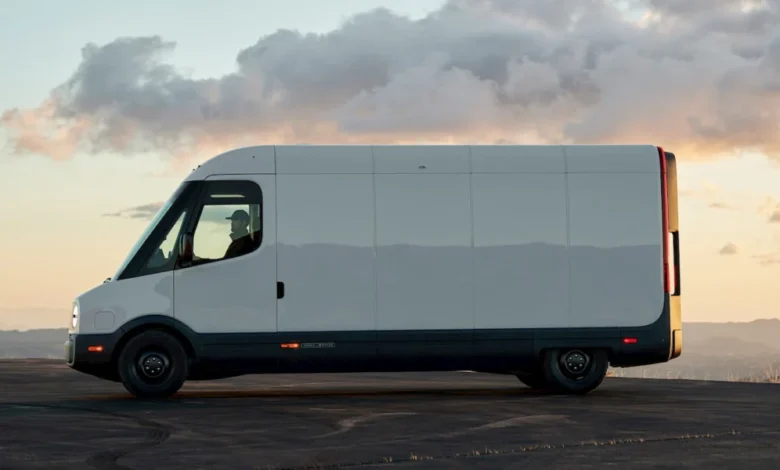
Electric vehicle manufacturer Rivian has officially commenced deliveries of its most substantial hardware overhaul for its commercial delivery van lineup since production began in late 2021. The sweeping refresh introduces a significantly larger lithium iron phosphate (LFP) battery pack, which yields an estimated 30 percent increase in driving range, alongside the debut of a brand-new dual-motor all-wheel-drive (AWD) configuration. Confirmed via the company’s Q3 shareholder presentation, these long-awaited performance bumps aim to address persistent operational limitations that have capped the vehicle’s utility primarily to dense urban environments for the past several years.
Background and Evolution of the Rivian Commercial Van Program
The genesis of Rivian’s commercial van program traces back to a massive, high-profile partnership with retail giant Amazon, which initially placed an order for 100,000 electric delivery vans as part of its Climate Pledge commitment to achieve net-zero carbon carbon emissions by 2040. Deliveries under this historic agreement commenced in the summer of 2022. For the initial four years of production, the platform relied on a standardized front-wheel-drive architecture paired with an approximately 100 kWh LFP battery pack. This configuration provided a rated range of roughly 160 miles per charge.
While this range proved highly effective for urban and suburban last-mile delivery routes—where frequent stopping, lower average speeds, and high package volume define daily operations—it presented a significant bottleneck for fleet operators requiring broader operational radiuses. Logistics networks operating in sprawling suburban peripheries or rural territories often demand significantly higher daily mileage caps. Furthermore, front-wheel-drive configurations faced traction hurdles when navigating adverse weather conditions, unpaved driveways, or muddy rural terrain while carrying heavy payloads.
Recognizing these limitations, Rivian first hinted at structural improvements in late 2025. By February 2026, as Amazon expanded its operational Rivian fleet by 50 percent year-over-year, the manufacturer formally acknowledged that it was engineering a larger energy storage system and an all-wheel-drive variant specifically tailored to broaden route coverage.
Technical Specifications: The 129 kWh Battery Pack and Dual-Motor Architecture

According to recent EPA certification filings for the 2027 model year EDV 700 (Electric Delivery Van 700)—the larger variant offering 652 cubic feet of cargo capacity—the newly integrated battery pack provides 129 kWh of usable energy. Compared to the legacy 100 kWh pack, this represents an approximate 29 percent increase in total energy capacity, directly supporting Rivian’s official metric of a 30 percent overall range enhancement.
The upgrade rollout is strategically divided across Rivian’s size classes. The larger EDV 700 receives both the high-capacity battery pack and the newly engineered dual-motor AWD system. Meanwhile, the smaller EDV 500 variant retains its existing battery architecture and front-wheel-drive setup, reflecting its designated role in tighter urban deliveries where gross vehicle weight and maneuverability take precedence over extended range capabilities.
When analyzing efficiency metrics, the standard front-wheel-drive EDV 700 equipped with the 129 kWh pack is projected to achieve a real-world operating range of approximately 208 miles, up from the previous 160-mile benchmark. The heavier, dual-motor AWD variant absorbs a minor efficiency penalty due to the continuous integration of a secondary drive unit, yielding an estimated range between 195 and 200 miles—roughly a 23 percent improvement over the legacy baseline. This effectively returns the platform to the original performance targets initially envisioned by engineers when the commercial van program was first conceptualized.
Strategic Implications for the Commercial Fleet Market
The introduction of these hardware updates arrives at a critical juncture for Rivian as the company works to diversify its customer base beyond its foundational anchor tenant, Amazon. Although Amazon held a period of exclusivity that officially concluded in late 2023, the e-commerce titan has remained the overwhelming consumer of Rivian’s commercial van manufacturing capacity.
However, recent industry intelligence suggests broader market penetration may be underway. Industry observers recently spotted an unbadged Rivian delivery van wrapped in Walmart+ commercial livery atop a transport carrier in Indiana, fueling widespread speculation regarding potential new enterprise contracts, though neither corporate entity has officially confirmed a formal supply agreement.
The timing of Rivian’s technological refresh also aligns with significant structural shifts in the North American commercial electric vehicle landscape. The competitive arena has contracted notably over the past two years. General Motors shuttered production of its BrightDrop electric van line in Ontario, Canada, and technology startup Canoo faced severe financial distress and ultimate bankruptcy proceedings. Consequently, Ford’s established E-Transit remains Rivian’s primary competitor in the full-size commercial electric vehicle segment within the United States market. By upgrading its powertrain options and introducing all-wheel-drive capability, Rivian is positioning itself to capture market share from competitors who have scaled back operations or exited the space entirely.

Market Analysts and Industry Perspective
Industry analysts view the hardware refresh as an essential evolution for the commercial division. For years, the 160-mile operational threshold functioned as an invisible barrier, restricting the vehicle’s adoption among utility providers, telecommunications corporations, and regional postal services whose daily itineraries frequently exceed urban boundaries and lack guaranteed overnight depot charging access.
By unlocking a real-world operating range approaching the 200-mile mark and introducing all-weather traction via dual-motor architecture, Rivian has fundamentally altered the economic and logistical calculations for prospective fleet managers. Vehicles capable of handling rural topography and extended daily loops eliminate the operational friction that traditionally deterred non-urban fleets from transitioning to electric vehicle alternatives.
Furthermore, the longevity and chemical stability of lithium iron phosphate (LFP) chemistry provide distinct operational advantages for commercial enterprises. LFP batteries can be safely charged to 100 percent on a daily basis without accelerated degradation compared to nickel-manganese-cobalt (NMC) chemistries, reducing long-term total cost of ownership—a paramount metric for commercial fleet operators managing strict balance sheets.
Looking Ahead: Production Scaling and Future Commercial Horizons
As Rivian ramps up manufacturing of the updated EDV 700 variants at its Normal, Illinois production facility, market watchers will closely monitor production throughput and delivery cadences. The successful integration of these components not only validates the scalability of Rivian’s proprietary commercial architecture but also tests the company’s ability to satisfy diversified enterprise demands outside of the Amazon ecosystem.
If the newly enhanced range metrics and all-wheel-drive capabilities successfully validate themselves in rigorous commercial service networks, Rivian could cement its status as a dominant supplier of heavy-duty electric logistics vehicles in North America. The remaining hurdle is no longer technological capability, but commercial execution: converting industry interest and spotted pilot vehicles into formalized, high-volume enterprise contracts across diverse industrial sectors.
Related posts: