Booking an electric flight in Europe is only 10 years away, says influential Dutch researcher

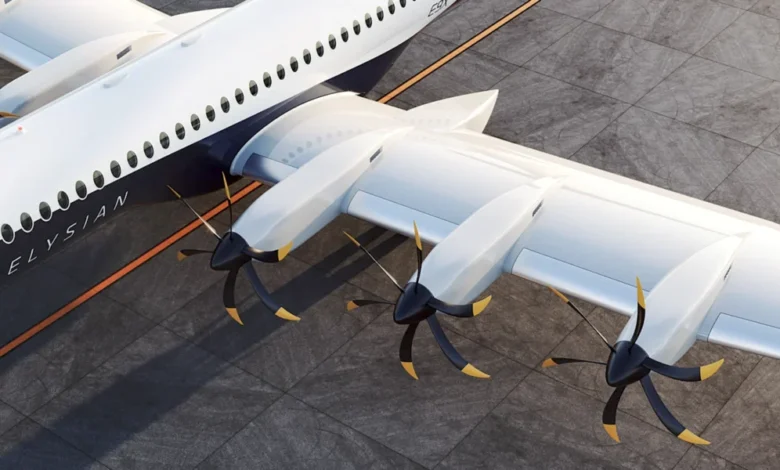
The landscape of commercial aviation is standing on the precipice of a profound transformation, driven by mounting environmental pressures and innovative engineering. Dutch startup Elysian Aircraft is leading this charge with the development of the E9X, a commercial airliner designed from the ground up to operate entirely on battery power. Promising quieter cabins, lower operational costs decoupled from fossil fuel volatility, and zero direct emissions, the E9X aims to reshape short-haul travel. According to prominent aerospace researchers and industry projections, commercial passengers could be booking tickets on all-electric European flights within the next decade, with a targeted market entry set for 2034.
The Environmental Imperative and Aviation’s Footprint
Aviation remains one of the most challenging sectors to decarbonize. While global attention is frequently directed toward ground transportation, the commercial aviation industry accounts for more than 2% of global heating when factoring in carbon dioxide alongside non-CO2 emissions, such as nitrogen oxides and water vapor contrails. In wealthy nations and regions with high concentrations of air traffic, that proportional share is considerably higher.
Environmental groups, including climate campaign organization Stay Grounded, have consistently emphasized that reducing the sector’s climate impact requires more than incremental efficiency gains; it demands a fundamental shift in propulsion technology. Traditional jet fuel relies entirely on petroleum markets, exposing airlines to severe price fluctuations driven by geopolitical conflicts and supply chain vulnerabilities. Electric aviation offers a dual benefit: eliminating direct greenhouse gas emissions while insulating airline operational costs from the volatility of global oil markets.
Engineering the E9X: Overcoming the Weight Barrier
At the heart of Elysian Aircraft’s ambitious strategy is the E9X, a clean-sheet design developed in close collaboration with aerospace researchers at the Delft University of Technology (TU Delft). Designing a commercial electric aircraft has long been considered nearly impossible by traditional aerospace standards due to the fundamental laws of energy density. Conventional lithium-ion batteries are significantly heavier than jet fuel for an equivalent amount of energy output. As fuel burns off during a traditional flight, the aircraft becomes progressively lighter; by contrast, a battery-powered aircraft maintains a constant weight throughout the journey, compounding energy consumption challenges.
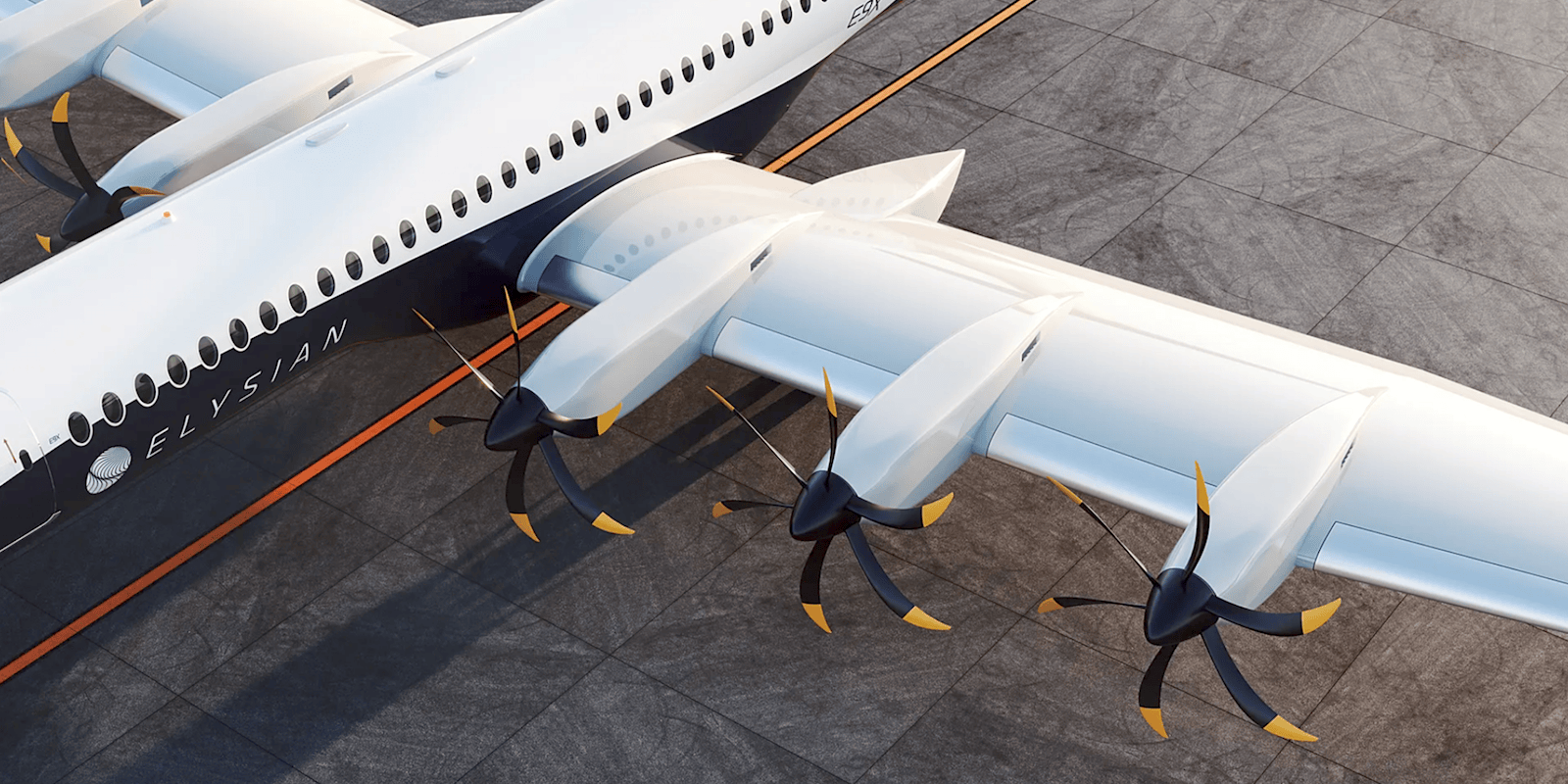
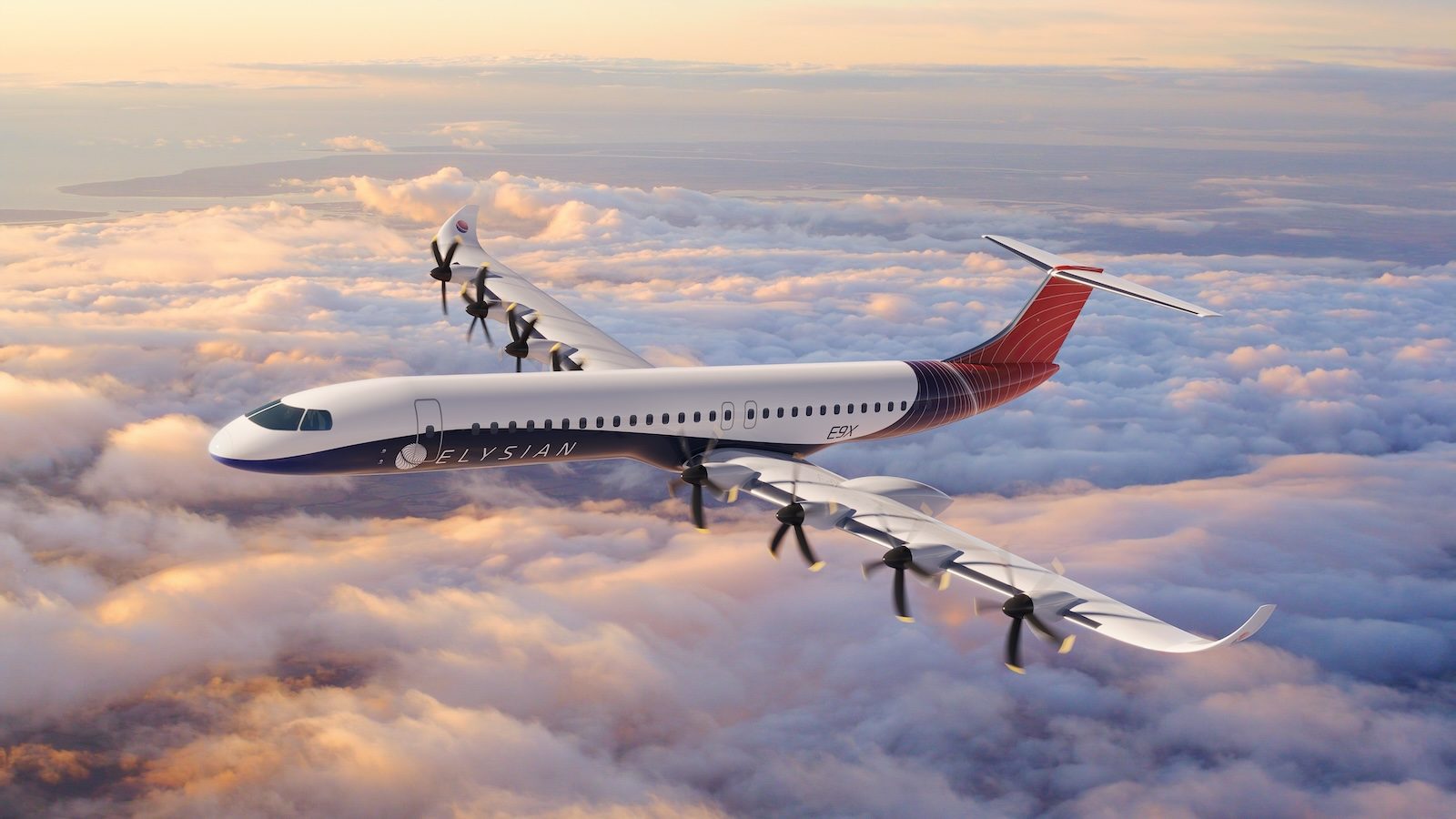
Elysian has addressed this formidable engineering hurdle by rethinking where and how energy is stored. Instead of traditional fuselage layouts, the E9X packs its oversized, highly optimized wings with modular battery packs. These batteries distribute power across six electric motors driving wing-mounted propellers.
While precise technical specifications regarding battery chemistry and weight remain closely guarded proprietary information, the aircraft is designed to accommodate up to 100 passengers. It boasts a targeted operational range of up to 1,000 kilometers, roughly equivalent to 620 miles. Industry analysts note that this specific range bracket is strategically vital, as it covers nearly half of all scheduled commercial passenger flights worldwide.
Chronology and Development Milestones
The path from academic concept to a commercial airliner requires rigorous testing, regulatory validation, and industrial partnerships. Elysian’s progress over recent years demonstrates a methodical approach to achieving its 2034 service entry goal.
Initial conceptual frameworks began taking shape through research partnerships at TU Delft, focusing on aerodynamic efficiency, distributed electric propulsion, and novel structural load distribution for heavy wing-mounted batteries. Following the formal establishment of Elysian Aircraft, the startup advanced through critical design reviews.
In a major validation of its aerodynamic and thermal management concepts, the company successfully completed its second conceptual design review and flew a scaled demonstrator aircraft. This flight testing was conducted in cooperation with the German Aerospace Center (DLR), one of Europe’s leading aeronautical research organizations. The trials provided critical empirical data on how distributed battery architecture behaves under flight conditions, proving that heavy energy storage systems can be successfully integrated into aircraft wings without compromising structural integrity or flight safety.
Parallel to its flight testing, Elysian has engaged legacy aviation stakeholders to ensure the E9X can seamlessly integrate into existing commercial networks. The startup has partnered with major European carriers KLM and Transavia to evaluate the operational, maintenance, and passenger-handling requirements of electric airliners. Furthermore, aircraft leasing firm TrueNoord has joined the coalition to investigate commercial financing models and asset management strategies for fleets of battery-electric aircraft.
Strategic Implications and Market Impact
The introduction of a 90-to-100 passenger electric airliner with a 1,000-kilometer range carries profound implications for European and global transportation networks. Daniel Jacobson, co-founder of Elysian Aircraft, highlighted the sweeping potential of this technology in statements to international media.

"By being able to transport 90 passengers for initially 800 kilometers and eventually 1,000 kilometers, you can reduce emissions to zero from half the world’s flights," Jacobson told EuroNews. "That is a very large amount of flight activity in the world. And you reduce total emissions from aerospace by 20%."
Achieving a 20% reduction in global aviation emissions through a single aircraft category would represent one of the most significant environmental milestones in the history of commercial flight. Furthermore, short-haul European routes—such as London to Paris, Amsterdam to Berlin, or Frankfurt to Milan—are heavily contested by high-speed rail networks. While rail remains an effective low-carbon alternative for city-to-city travel, regional electric aviation can bridge geographical gaps that rail cannot efficiently serve, such as island hops, peninsular crossings, and routes obstructed by challenging topography.
Beyond emissions reductions, electric propulsion offers substantial quality-of-life benefits for communities surrounding major metropolitan airports. Electric motors generate significantly less noise than traditional turbofan or turboprop jet engines, potentially opening up possibilities for increased flight slots during evening and early morning hours without violating strict municipal noise curfews.
Challenges on the Horizon to 2034
Despite the optimism surrounding Elysian’s timeline, significant hurdles remain before passengers can routinely book electric flights. Certification by aviation authorities such as the European Union Aviation Safety Agency (EASA) and the Federal Aviation Administration (FAA) will be a rigorous, multi-year process for an entirely new propulsion architecture.

Additionally, airport infrastructure must evolve. Charging 100-passenger commercial airliners within rapid airline turnaround times will require massive electrical grid upgrades at regional and international airports, demanding high-capacity megawatt charging stations capable of replenishing massive battery arrays in minutes.
Nevertheless, with scaled demonstrators already airborne, institutional backing from legacy carriers and lessors, and academic rigor grounded in Dutch and German aerospace research, Elysian Aircraft’s vision of sustainable regional flight is steadily transitioning from theoretical design to tangible reality. As the industry looks toward the mid-2030s, the E9X stands as a frontrunner in the race to electrify the skies.