“What would a WoW 2 give you that World of Warcraft: Forever isn’t already giving you?” – Blizzard addresses the MMO elephant in the room

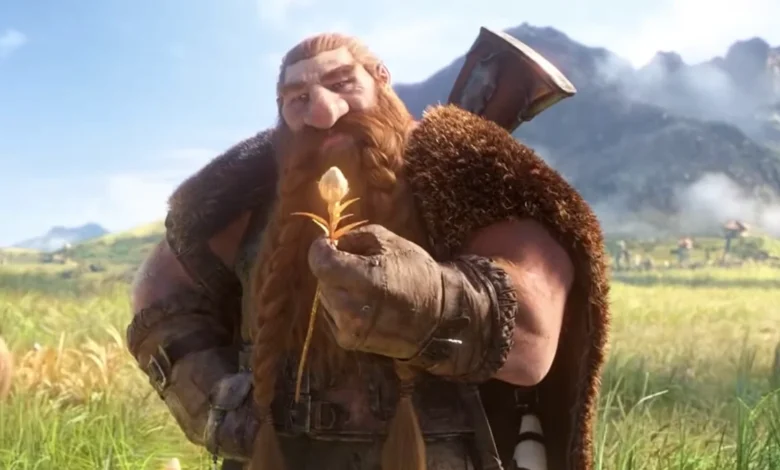
The Evolution of Azeroth: World of Warcraft: Forever
World of Warcraft: Forever, frequently referred to by the community as Classic Plus, represents a departure from the historical strictness of previous Classic iterations. While prior versions of the game were designed as archival snapshots—meticulously recreating the state of the game at specific historical intervals—Forever adopts an alternate-reality approach. By decoupling itself from the rigid constraints of original timeline progression, Blizzard is granting its development team the creative agency to introduce new zones, mechanics, and narrative arcs that never existed in the original product.
The technical overhaul accompanying this release is extensive. Players will have access to an SD/HD character model toggle, allowing them to flip between the aesthetic fidelity of the 2004 original and updated, high-definition character models. Furthermore, the inclusion of a new playable race, the Skyborne, alongside entirely new dungeons, raids, and a revamped skill and talent tree system, suggests that Blizzard is treating this not as a museum piece, but as a living, evolving ecosystem.
The Blizzard Roadmap: A Decade of Strategy
The announcements at BlizzCon 2026 provided a rare, high-transparency look into the company’s internal planning. The following timeline outlines the key pillars of Blizzard’s multi-year release schedule:
- 2026: Launch of World of Warcraft: Forever, signaling a shift toward evergreen content cycles.
- 2027–2028: Continued support for the ongoing Worldsoul Saga in the retail version of World of Warcraft, culminating in a major climactic confrontation involving the franchise’s primary antagonists.
- 2029: Projected launch of Diablo 5, building on the commercial success of the Diablo IV expansion cycle.
- 2030: Planned release of a large-scale, open-world StarCraft shooter, marking the franchise’s return to active development after a prolonged hiatus.
This sequence indicates that Blizzard is prioritizing the health of its existing revenue generators—WoW and Diablo—while slowly incubating new projects. The decision to commit to such long-range windows reflects a desire to manage stakeholder expectations in an era of high-pressure development cycles.
The Technical Case Against a Sequel
The question of why Blizzard has consistently avoided the development of a "World of Warcraft 2" is answered largely by the sheer technical and financial gravity of the current game. During the conference, Principal Designer Kris Zierhut addressed the logic of the company’s infrastructure. According to Zierhut, the engine powering World of Warcraft has undergone two decades of iterative optimization. The server architecture, which handles thousands of concurrent players across massive, seamless world spaces, is the result of continuous refinement rather than a single static design.
From an engineering perspective, discarding this infrastructure would be counterproductive. The current codebase is optimized for low-latency combat, complex spell resolution, and high-density player interactions—features that have been stress-tested for over 22 years. Replicating this stability in a ground-up sequel would necessitate an investment likely exceeding several hundred million dollars, with no guarantee that the new engine would surpass the performance of the current, battle-hardened framework.
Economic and Industry Context
The broader gaming industry is currently navigating a period of fiscal caution. With parent company Xbox announcing significant workforce reductions—including the layoff of approximately 1,600 employees in 2026—major studios are moving away from the "high-risk, high-reward" model of creating entirely new, unproven IP from scratch.
Blizzard’s past experience serves as a cautionary tale. The failed "Titan" project, which was in development for years before being canceled and subsequently salvaged to create Overwatch, remains a painful lesson in the costs of "starting over." By folding potential new ideas into existing, successful franchises—like the new StarCraft shooter or the reimagined Classic experience—Blizzard mitigates the risk of failure. Investors and analysts generally view this "franchise-first" strategy as a defensive measure to maintain a stable market share while minimizing the potential for disastrous project write-offs.
The Problem of Migration
A secondary factor in the avoidance of a direct sequel is the risk of audience fragmentation. Blizzard’s transition from the original Overwatch to Overwatch 2 served as a case study in the difficulties of migrating a player base. The forced transition created friction within the community, with some players alienated by the removal of original features and the shift to a free-to-play model.
In contrast, World of Warcraft: Forever acts as a symbiotic addition. By offering a "new" version of the game that runs alongside the retail version, Blizzard avoids the need to force existing players to abandon their investments. The company has learned that for an MMO of this scale, continuity is the most valuable currency. A sequel would effectively demand that players abandon two decades of digital achievements, cosmetic rewards, and historical progress. By evolving the existing platform, Blizzard keeps the player base intact while offering fresh engagement hooks.
Narrative Implications: The Untold Future
The decision to pursue "untold stories" within the Forever framework also solves a narrative dilemma. Modern World of Warcraft is currently locked into the epic, high-stakes conclusion of the Worldsoul Saga. This narrative trajectory leaves little room for the grounded, exploratory questing that defined the original game.
By creating a parallel space in Forever, the writing team can revisit the original aesthetic and tone of the 2004 era without contradicting the high-fantasy stakes of the current retail expansion. This creates a dual-track experience: players who prefer the modern, high-octane narrative can continue with the Worldsoul Saga, while those who desire the slower, more methodical world-building of the early game have a dedicated home.
Conclusion: A Strategic Pivot
The unveiling of World of Warcraft: Forever is more than just a nod to nostalgia; it is a calculated strategic maneuver. By maximizing the utility of its existing server architecture and doubling down on the brand loyalty of its most successful property, Blizzard is insulating itself against the volatility of the modern market.
While the announcement of Diablo 5 and a new StarCraft project provides the "big" news that headlines require, the true story of the 2026 BlizzCon is the decision to maintain and improve what is already built. As Kris Zierhut noted, there is no inherent flaw in the story or the mechanics of World of Warcraft that requires a reboot. In an era where development costs are skyrocketing and player retention is the primary metric of success, Blizzard has determined that the most profitable path forward is not to look for the next great thing, but to perfect the one they have held for over two decades. The future of Blizzard, it seems, lies not in the "next" game, but in the infinite, iterative potential of the current one.