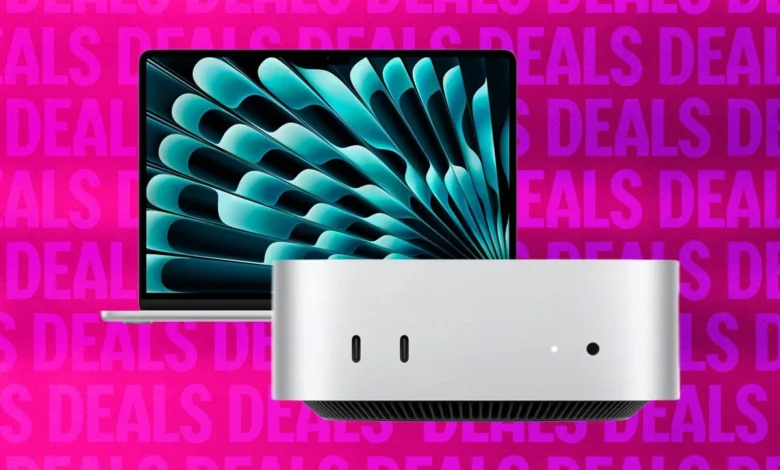
Apple’s latest iteration of the 14-inch MacBook Pro, featuring the newly debuted M6 silicon, has arrived with a significant pricing strategy shift that has prompted immediate scrutiny from industry analysts and consumers alike. While the hardware represents the next step in Apple’s proprietary chip evolution, the $1,999 base price—which includes 16 GB of RAM and 512 GB of storage—highlights an ongoing trend of rising costs across the Cupertino company’s professional-tier laptop lineup. This launch marks the first integration of the M6 chip into a portable form factor, though the broader implications for the product ecosystem suggest that Apple’s current segmentation strategy is creating friction for potential buyers.
Chronology of the M-Series Evolution
The trajectory of Apple’s custom silicon has been defined by rapid, iterative improvements since the M1 chip was first unveiled in late 2020. The transition from Intel-based architecture to Apple Silicon allowed the company to regain control over its hardware-software synergy, leading to significant gains in power efficiency and thermal performance.
The M2, M3, and M4 generations further solidified this dominance, often blurring the lines between the "Air" and "Pro" tiers. However, the release of the M5 earlier this year marked a shift toward more aggressive pricing tiers. Earlier in 2026, Apple implemented a widespread price adjustment across its Mac portfolio, which saw the base 14-inch MacBook Pro receive a $300 price hike. This adjustment was met with criticism, as the entry-level model remained spec-locked in a way that placed it in direct competition with more affordable models, such as the MacBook Air, which frequently shared similar core silicon configurations. With the introduction of the M6, Apple appears to be doubling down on this premium pricing model, despite the increasing availability of high-performance alternatives within their own catalog.
Technical Performance and the M6 Advantage
The M6 chip, while currently available in the updated Mac Mini, introduces several architectural refinements that differentiate it from its predecessor. Internal testing indicates a marked improvement in GPU efficiency and the integration of a dual-engine Neural Engine. For creative professionals—specifically those involved in video editing, 3D rendering, and machine learning workflows—the increased throughput for AI-driven tasks provides a tangible benefit.
However, the hardware configuration of the base model remains a focal point of concern. By offering 16 GB of RAM and 512 GB of storage at the $1,999 price point, Apple faces a challenge in justifying the cost against the backdrop of the current market. Critics argue that at this price, users expect more generous baseline memory or storage, particularly as AI-heavy applications demand more local overhead. While the M6 provides a performance floor that exceeds the M5, the value proposition is diluted by the fact that the external chassis and display technology—while industry-leading with Mini-LED backlighting—have remained largely static for multiple generations.
Comparative Value: The "Double-Dip" Strategy
A detailed analysis of the current Apple lineup reveals a compelling alternative strategy for consumers with a $2,000 budget. Because of recent retail adjustments—including significant discounts on M6-equipped Mac Minis and M5-equipped MacBook Airs—a consumer could technically purchase both devices for a combined cost roughly equivalent to a single 14-inch M6 MacBook Pro.
The Mac Mini, now retailing with frequent discounts that bring the entry price down to the $700–$800 range, serves as a powerful workstation. When paired with an M5 MacBook Air, which is also seeing price reductions, the user gains a versatile computing setup. This "distributed computing" approach allows users to offload heavy, always-on AI tasks or rendering jobs to the Mac Mini while retaining the portability of the MacBook Air for mobile productivity.
From an infrastructure perspective, this setup is increasingly popular among power users who utilize the Mac Mini as a remote server or a headless "agent box." By configuring a Mac Mini with 32 GB or 64 GB of unified memory, users can achieve higher multitasking throughput than the base 14-inch MacBook Pro, albeit without the integrated high-refresh-rate display and premium chassis of the professional laptop line. This reality suggests that Apple’s segmentation may be alienating users who prioritize raw performance and memory over the "all-in-one" portable professional experience.
Market Positioning and Competitive Response
Apple’s strategy appears to be one of "upselling," where the professional line is positioned as a distinct tier that justifies its price through build quality, screen technology, and port selection rather than just raw processing power. Yet, the existence of the M5 Pro-equipped MacBook Pro, which currently retails for only a marginal increase over the base M6 model, presents a internal conflict. If a user is willing to spend nearly $2,000, they are often faced with a choice between the latest generation chip (M6) in a base configuration or an older generation "Pro" chip (M5 Pro) that offers higher core counts and better thermal management.
Industry analysts observe that Apple is navigating a difficult period of inflation and component cost volatility. The company’s decision to maintain high margins on its professional hardware is a reflection of its dominant market position in the premium laptop segment. However, the rise of powerful, lower-cost desktop alternatives and the stagnation of base-model specifications suggest that consumer demand is shifting toward value-oriented configurations.
Broader Implications for the Apple Ecosystem
The pricing of the M6 MacBook Pro has broader implications for the lifecycle of Apple’s product development. As the gap between the "Air" and "Pro" lines continues to narrow in terms of day-to-day usability, the primary differentiator has become the price-to-performance ratio. If Apple continues to raise the entry barrier for the MacBook Pro line, it risks pushing professional users toward the Mac Mini or toward alternative platforms that offer more competitive memory and storage tiers at lower price points.
Furthermore, the emphasis on the Neural Engine in the M6 marketing suggests that Apple is banking on the future of on-device AI to justify these costs. For the average professional, however, the immediate need is for reliable memory and storage headroom. As software developers continue to optimize for the Neural Engine, the value of the M6 may increase, but for the current fiscal cycle, the price-to-value disparity remains a significant hurdle.
Conclusion: Evaluating the Purchase
For the prospective buyer, the current landscape requires a careful assessment of needs. The 14-inch M6 MacBook Pro remains a top-tier machine for those who require a high-quality display and portability in a single package. However, the availability of high-performance desktop units and discounted previous-generation laptops provides a viable path for those seeking to maximize their investment.
As the market absorbs the release of the M6, the discourse will likely continue to center on whether Apple’s current pricing structure is sustainable in the face of increasingly efficient and affordable hardware alternatives. Whether the M6 MacBook Pro can maintain its status as the "pro" choice will depend not just on the efficiency of the chip, but on how Apple chooses to balance its premium branding with the pragmatic requirements of its professional user base in the coming months. The company has not issued a formal statement regarding these pricing concerns, maintaining its standard practice of focusing on the overall user experience and the unique integration of hardware and software as the primary value drivers for the brand.