Want a Skylight Calendar Without the Subscription? This Alternative Is on Sale

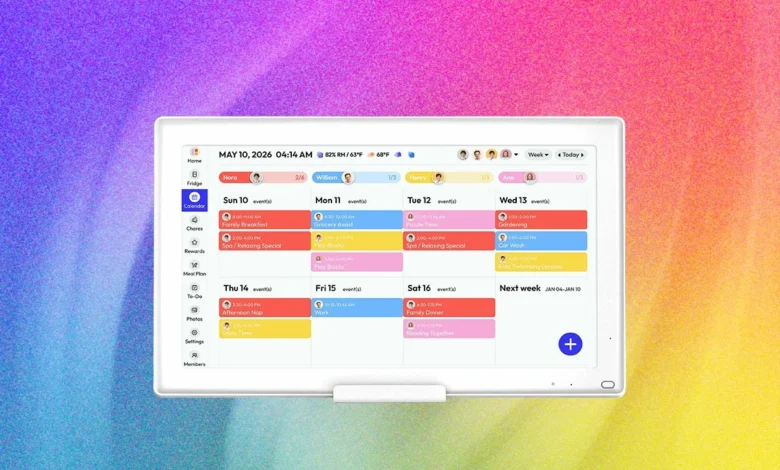
The rise of the "smart home" has transformed domestic management from a collection of paper planners and sticky notes into a centralized digital ecosystem. As families juggle increasingly complex schedules—ranging from professional commitments and school activities to health tracking and household maintenance—the demand for dedicated, physical interfaces that bridge the gap between digital calendars and home life has surged. While smartphones and tablets have long served this purpose, the emergence of dedicated digital wall calendars represents a shift toward "passive" information displays, designed to be viewed at a glance without the distractions inherent in mobile device usage.
The Evolution of Digital Domestic Management
For years, the smart home market was dominated by general-purpose smart displays, such as those from Amazon and Google. These devices, while capable, are often plagued by algorithmic interference, push notifications, and advertising, which can disrupt the primary goal of household organization. The current generation of dedicated digital wall calendars—such as the Skylight, Dakboard, and the Everblog HomeCal—seeks to provide a focused, high-visibility alternative.
These devices operate by synchronizing with established digital infrastructure, including Google Calendar, Apple’s iCal, and Microsoft Outlook. By pulling data from these cloud-based services and presenting them on a wall-mounted or desktop-based display, these tools allow for real-time updates that are accessible to all members of a household simultaneously. This transition from individual screens to communal, wall-mounted displays has been noted by analysts as a key development in the "family hub" hardware category.
The Subscription Paradox in Smart Hardware
A significant friction point for consumers in this sector is the business model adopted by leading manufacturers. Many high-profile brands, such as Skylight, have moved toward a "hardware-plus-service" model. In this framework, while the physical unit is purchased upfront, essential software features—such as integrated meal planning, advanced photo-based screensavers, and extended task management—are gated behind a recurring monthly or annual subscription fee.
Industry analysts suggest this model is designed to offset the ongoing costs of cloud storage and software maintenance. However, it has created a segment of "subscription fatigue" among consumers who are increasingly wary of adding recurring charges to their monthly budgets for hardware they have already purchased. The current market trend indicates a bifurcation: premium brands emphasizing subscription-based ecosystems, and emerging competitors focusing on "one-and-done" pricing structures to attract price-sensitive consumers.
Spotlight on the Everblog HomeCal: A Subscription-Free Alternative
The HomeCal 21.5" Calendar, manufactured by Everblog, has gained attention for its decision to eschew the subscription model while maintaining parity with the feature sets of its primary competitors. Market data shows that the HomeCal is currently positioned as a direct rival to subscription-reliant models, offering comprehensive access to chore tracking, task management, reward systems for children, and meal planning without requiring an ongoing financial commitment.
From a technical perspective, the device mirrors the core functionality of established industry leaders. Users interface with the calendar through a dedicated mobile application, which acts as the control center for family profiles, calendar synchronization, and data management. While the device’s photo-uploading utility has been noted as having a slower throughput—requiring image-by-image uploads compared to the batch-processing capabilities of some rivals—the absence of a paywall provides a compelling value proposition for households looking to minimize their recurring expenses.
Chronology of Market Adjustments
The shift toward the current retail environment for smart calendars has been marked by several key phases:
- 2020–2021: The COVID-19 pandemic catalyzed a surge in demand for domestic management tools as work-from-home and remote learning schedules necessitated tighter household coordination.
- 2022–2023: The "subscription era" matured, with major manufacturers pivoting their revenue models to prioritize recurring software income over hardware margins.
- 2024: A consumer backlash against "subscription creep" led to the rise of independent, value-focused brands, with manufacturers like Everblog adjusting their pricing strategies to compete directly with subscription-heavy incumbents during peak retail seasons.
- October 2026: Current market data confirms significant price reductions on hardware, such as the $100 discount on the HomeCal 21.5" model at Amazon, signaling an aggressive push for market share during the holiday shopping cycle.
Ergonomics and Installation Considerations
The physical design of digital calendars has moved beyond simple screen-on-a-frame aesthetics. Manufacturers are now accounting for the "interior design factor," recognizing that these devices are intended to be permanent fixtures in living rooms or kitchens. The Everblog HomeCal, for example, features a 21.5-inch panel with mounting hardware for wall installation, as well as a flat-bottom design intended for tabletop use.
However, industry experts note that the stability of such large displays is a frequent point of contention. While internal components are designed for reliability, the external build often requires specialized accessories. Retailers have responded by offering modular add-ons—such as specialized stands and wood-grain frames—that allow the device to integrate more seamlessly into home decor. While these accessories often command a premium, the ability to reallocate savings from the device’s initial purchase price (due to sales or the absence of subscription fees) has allowed consumers more flexibility in customizing their setup.
Broader Implications for the Smart Home Sector
The success of subscription-free models like the HomeCal carries implications for the broader Internet of Things (IoT) landscape. If consumers continue to favor one-time purchase models over subscription services, manufacturers may be forced to rethink their monetization strategies. This could lead to a future where high-end features are included as standard, with companies instead relying on hardware upgrades or optional third-party integrations to drive revenue.
Furthermore, the lack of widespread adoption of voice-assistant integration in these calendars—largely due to the complexity of multi-user authentication and privacy concerns—suggests that manufacturers are prioritizing a "visual-first" experience. By keeping these devices as passive displays rather than interactive voice hubs, developers are effectively reducing the risk of accidental activations and data privacy breaches, which remain the top concerns for smart home users.
Strategic Outlook for Consumers
For those considering the acquisition of a digital calendar during the upcoming holiday season, the decision-making process should be grounded in three factors: ecosystem compatibility, long-term cost, and aesthetic integration.
- Ecosystem Compatibility: Ensure that the device natively supports the calendar platforms already in use by the family (Google, iCloud, Outlook).
- Long-Term Financial Commitment: Calculate the "total cost of ownership." A device that is $300 upfront with no subscription may be significantly cheaper over a three-year period than a $150 device that requires a $10-per-month subscription fee.
- Physical Integration: Evaluate the space where the device will reside. Larger screens (21+ inches) offer superior legibility but require adequate wall space or a stable, non-obstructive surface.
As the market continues to evolve, the distinction between high-end professional tools and consumer-grade home management devices will likely blur. For now, the move toward feature-rich, subscription-free hardware represents a significant win for the average consumer, providing the organizational benefits of a smart home without the "tether" of a monthly invoice. Whether this model remains sustainable for manufacturers in the long term remains to be seen, but for the present, it offers a clear, cost-effective path to achieving a more organized and digitized household.