Ilford Pan F Plus: A Deep Dive Into the Enduring Legacy of Ultra-Low ISO Black and White Film

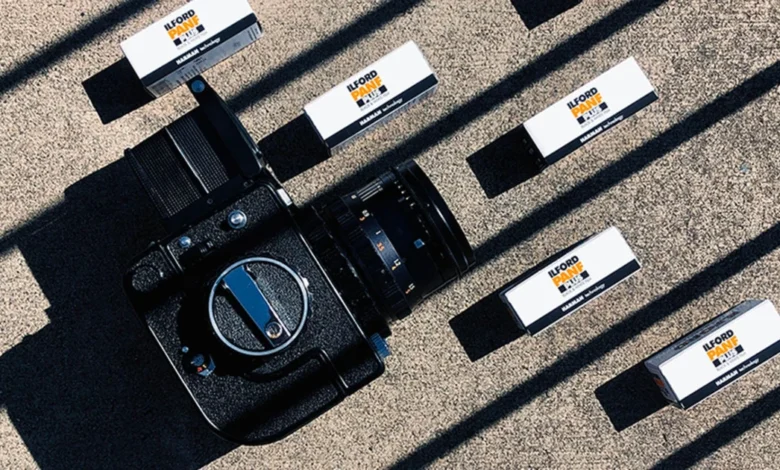
Within the specialized ecosystem of analog photography, a distinct category of emulsions commands a dedicated following: the ultra-low ISO films, often informally designated as the Sub-100 Club. Unlike their high-speed counterparts optimized for low-light conditions—such as Ilford Delta 3200 or Kodak T-Max P3200—these slow-speed films operate at ISO ratings below 100. They are prized not for versatility in challenging lighting, but for their uncompromising commitment to fine grain, optical resolution, and high-contrast aesthetics. Among these emulsions, Ilford Pan F Plus stands as a foundational pillar, representing nearly eight decades of continuous manufacturing evolution.
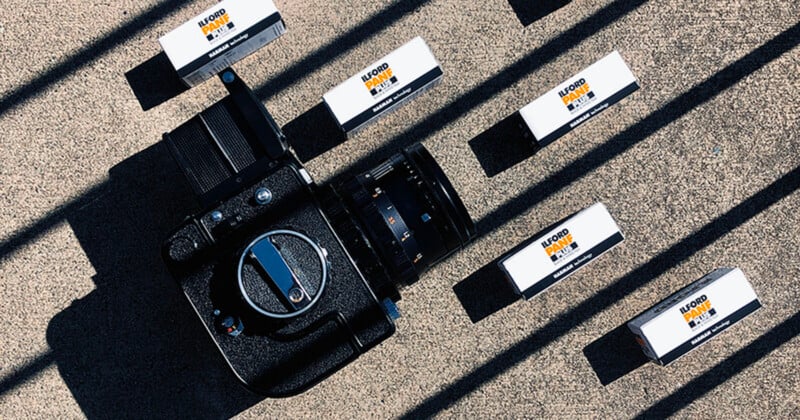
Historical Evolution and Emulsion Development
Introduced originally in 1948 by Ilford, the Pan F panchromatic black-and-white emulsion was engineered to deliver maximum resolving power for photographers prioritizing detail above all else. Over the decades, the film has undergone significant chemical and manufacturing refinements. A major milestone occurred in 1992, when the formulation was updated and officially designated with the "Plus" suffix, signaling improvements in acutance and emulsion stability. Subsequent minor updates by Ilford into the 2000s further modernized its performance characteristics.

Despite its longevity, Pan F Plus occupies a niche within the broader film market. While high-speed and general-purpose films like HP5 Plus or Tri-X dominate commercial sales volumes, Pan F Plus continues to cater to a dedicated segment of architectural, landscape, and fine-art photographers who require clinical sharpness and unique tonal gradation.

In a significant development for large-format practitioners, Ilford expanded the availability of Pan F Plus beyond traditional 35mm and 120 roll film formats. Responding to decades of persistent demand from the large-format community, Ilford introduced Pan F Plus in 4×5 and 8×10 sheet film configurations, cementing its utility for technical and view-camera applications where maximum image circle resolution is paramount.

Technical Performance: Grain, Acutance, and Contrast
The defining characteristics of Ilford Pan F Plus stem directly from its slow ISO rating, which typically hovers around ISO 50 for daylight conditions. This low sensitivity yields exceptionally fine grain structure. Photographers utilizing 35mm formats can achieve grain profiles comparable to larger medium-format negatives, while medium- and large-format users retain the capability to produce mural-sized enlargements without perceptible degradation from grain interference.

In addition to fine grain, Pan F Plus is engineered for high acutance—the measure of edge contrast at boundaries between light and dark areas within an image. High acutance creates the visual impression of superior sharpness and crisp detail delineation. While acutance is frequently modulated during chemical development through specialized high-acutance developers like Rodinal, Pan F Plus possesses an inherent edge-contrast profile that accentuates fine lines and structural textures.

This optical property makes the film a traditional favorite for architectural documentation and crisp landscape photography. Conversely, portrait photographers often approach Pan F Plus with caution; its high acutance and contrast tend to render human skin textures with uncompromising clarity, emphasizing lines, blemishes, and tonal transitions. However, practitioners focused on dramatic, high-contrast portraiture utilize these exact traits to impart a sculptural, film-noir quality to their subjects.

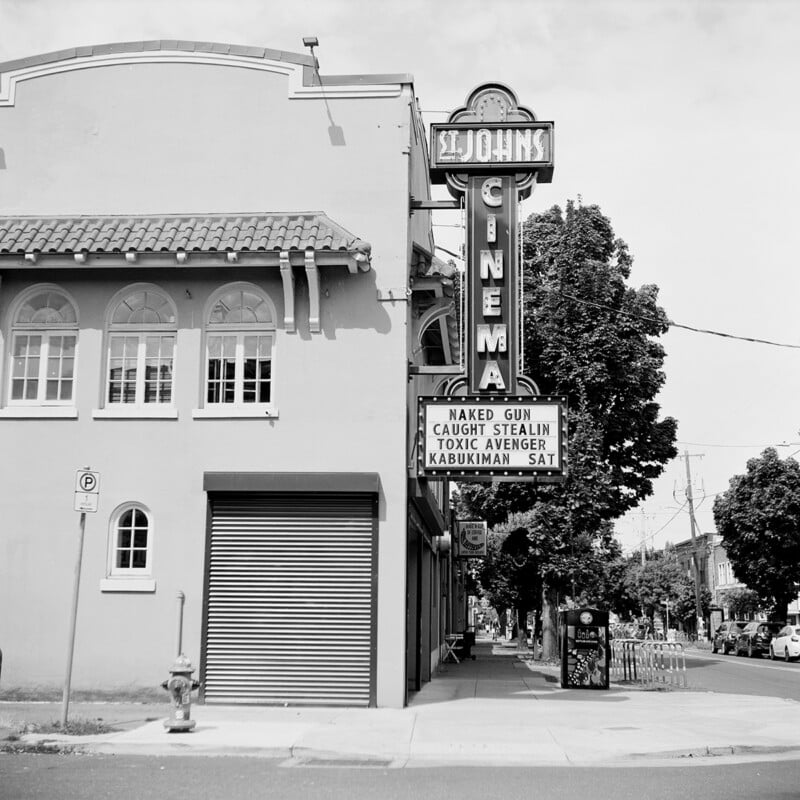
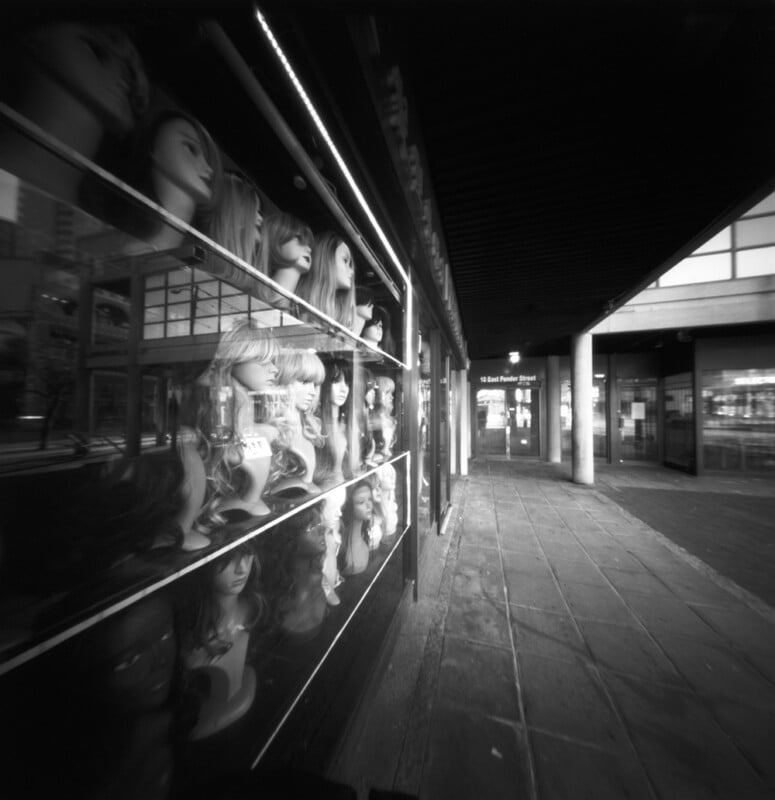
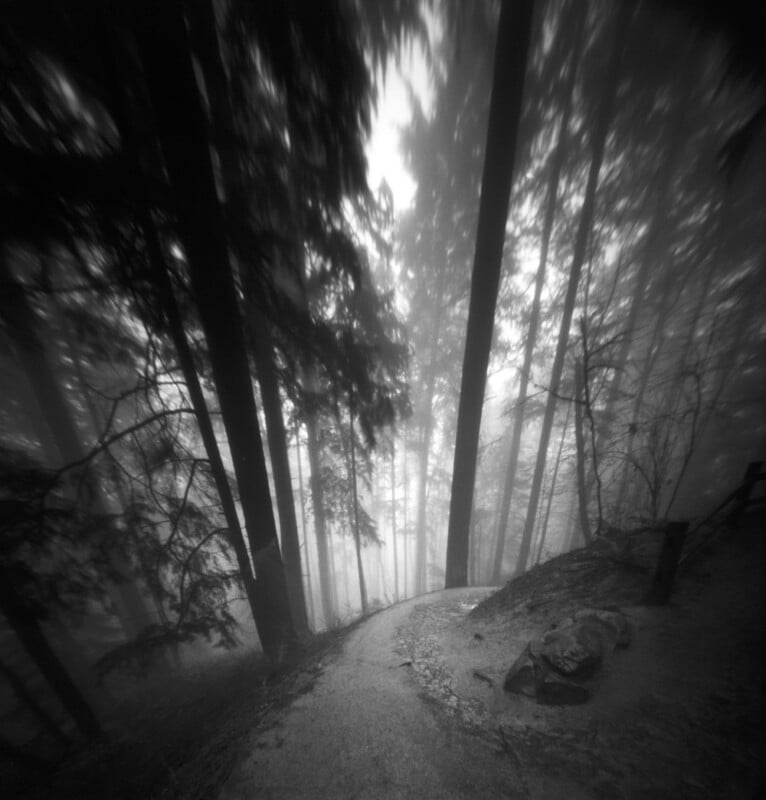
The tonal rendering of Pan F Plus is notably dramatic. The emulsion produces deep, saturated shadows paired with brilliant highlights, creating a rich contrast curve. While midtones retain sufficient nuance to prevent total shadow clipping or blown-out highlights, the overall aesthetic leans toward a moody, atmospheric character rather than a flat, neutral grayscale response.
Practical Considerations: Exposure, Reciprocity, and Latent Image Stability
Mastering Ilford Pan F Plus requires careful attention to technical parameters that distinguish slow-speed films from more forgiving modern emulsions. Because of its low ISO rating, photographers must either restrict its use to bright daylight conditions, employ fast lenses at wide apertures (such as f/1.4) to maintain shallow depth of field, or utilize tripods paired with slower shutter speeds.

Long-exposure photography introduces the challenge of reciprocity failure—the nonlinear decrease in film sensitivity during extended exposure times. For Pan F Plus, exposures ranging between 1 and 10 seconds require an additional half to one full stop of exposure compensation. As shutter speeds extend toward 60 seconds, reciprocity adjustments increase to approximately two full stops of overexposure, necessitating actual exposure times of roughly 240 seconds to secure a fully dense negative. Historical technical data indicates that modern iterations of Pan F Plus exhibit improved reciprocity characteristics compared to formulations from the early 2000s, reflecting ongoing emulsion refinements by Ilford engineers.
Furthermore, Pan F Plus demands disciplined workflow management regarding latent image retention. The film is known for poor stability once exposed but left undeveloped. While standard films can often sit in a camera or storage for months without noticeable degradation, Pan F Plus can exhibit significant image thinning and apparent underdevelopment if processing is delayed beyond a few weeks. Ilford’s official technical data sheets recommend developing exposed Pan F Plus within three months to preserve optimal shadow detail and contrast range, though prompt processing immediately following exposure remains the industry best practice.
Industry Impact and Market Availability
The enduring survival of specialized emulsions like Ilford Pan F Plus underscores the resilient demand for traditional chemical photography in the 21st century. Despite the dominance of digital sensor technology, analog workflows continue to attract practitioners seeking tactile processes and distinct aesthetic signatures unavailable through digital manipulation.

Industry analysts note that sustained interest in specialty black-and-white films has driven manufacturers to maintain and even expand legacy production lines. Collaborations between traditional manufacturers like Ilford and regional specialty laboratories—such as Blue Moon Camera and Machine in Portland, Oregon—play a vital role in sustaining the physical supply chain and processing infrastructure required by film photographers.

For photographers willing to navigate its technical demands, Ilford Pan F Plus offers a singular visual vocabulary defined by exceptional sharpness, micro-detail resolution, and theatrical contrast. Whether deployed in urban environments, architectural studies, or expansive landscapes, the film remains a benchmark for ultra-low-speed monochrome imaging.
Related posts: