Why Electric Vehicles Require Specialized Rubber: Putting Hankook iON Tires to the Test

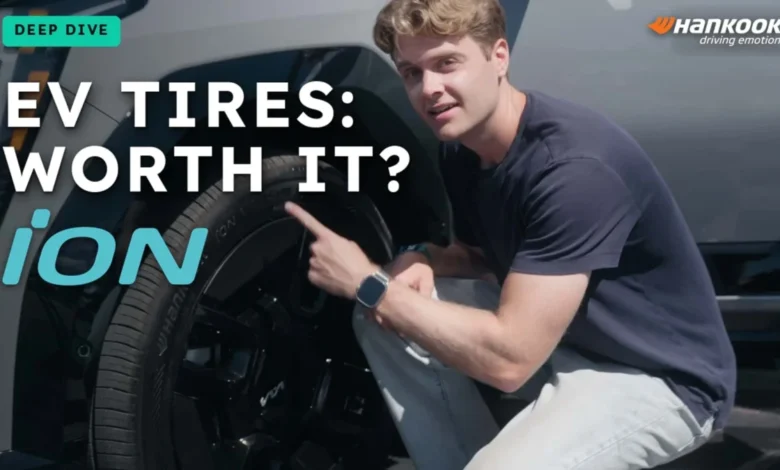
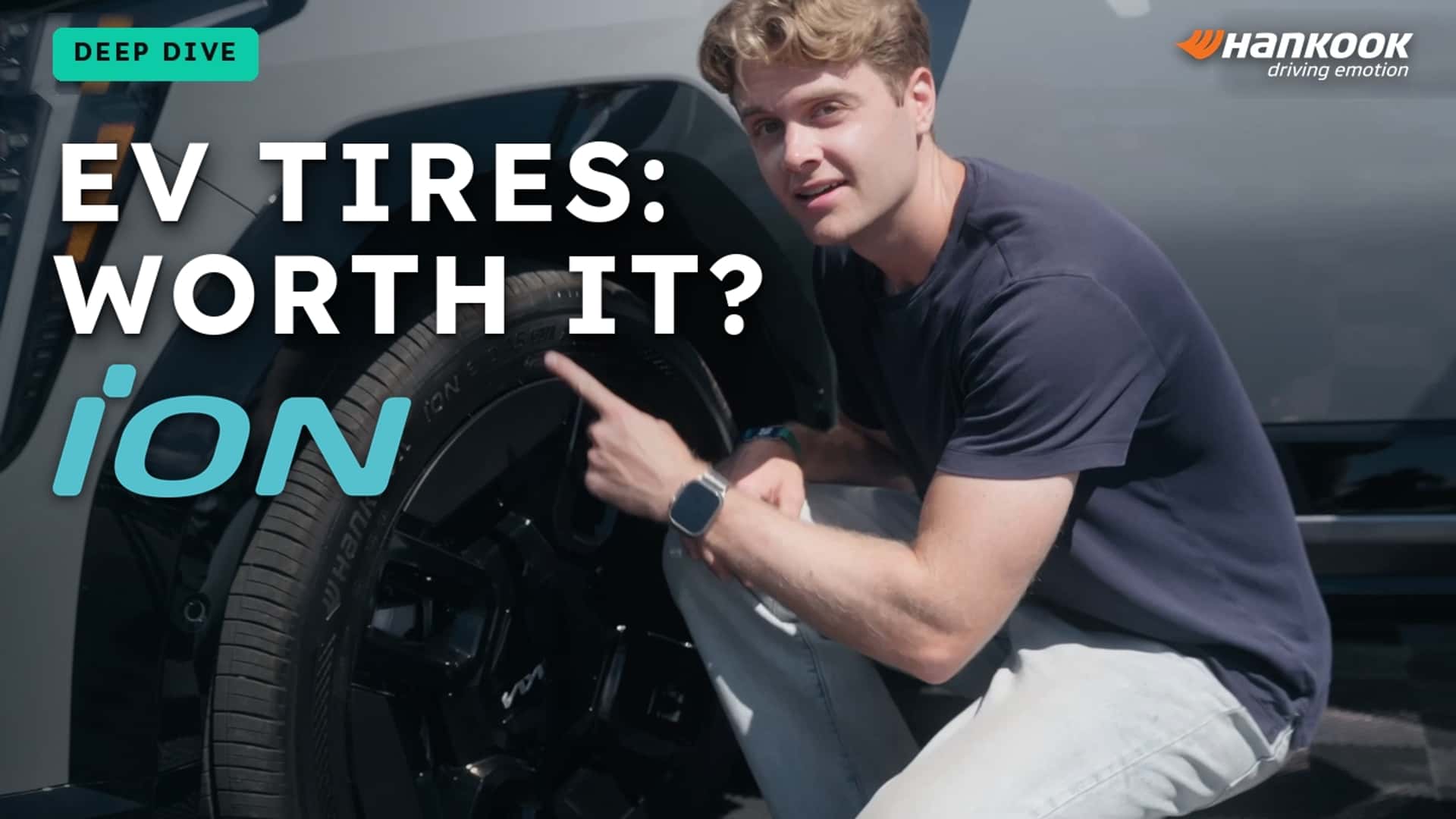
Electric vehicles have fundamentally altered the automotive landscape, replacing traditional internal combustion engines with high-output electric motors and swapping gas tanks for heavy lithium-ion battery packs. However, the paradigm shift in EV engineering extends far beyond powertrain components. As automakers push the boundaries of instantaneous torque and heavyweight architecture, the tire industry has been forced to completely reinvent the traditional rubber contact patch. To better understand the engineering requirements of modern electrification, industry observers and automotive journalists recently converged on North America’s largest outdoor test drive exhibition, the Demo Days Festival, where tire manufacturer Hankook showcased its dedicated iON electric vehicle tire lineup.
The Evolution of Automotive Rubber in the Electric Era
For over a century, pneumatic tires were developed primarily to handle the operational characteristics of internal combustion engine (ICE) vehicles. These traditional tires were engineered to manage progressive power delivery, moderate curb weights, and the acoustic profile of combustion engines that naturally masked low-frequency road noise. The mass adoption of battery-electric vehicles (BEVs) has rendered many of those legacy design assumptions obsolete.
Modern EVs introduce a fundamentally different set of physical forces to the pavement. Foremost among these is instantaneous torque delivery. Unlike a traditional gas-powered vehicle, which must build RPMs and rely on transmission gear ratios to deliver peak power, an electric motor provides maximum torque from a complete standstill. When a driver depresses the accelerator pedal of a high-performance EV, the rubber compound and tread blocks face an immediate, violent rotational force. This sudden spike in kinetic energy significantly accelerates tread wear on standard, combustion-optimized tires.
Furthermore, battery packs add substantial mass to a vehicle. An average mid-size to large electric SUV can easily weigh between 4,000 and 6,000 pounds—several hundred pounds heavier than its internal combustion counterparts. This elevated gross vehicle weight rating (GVWR) increases the vertical load pressing down on the contact patch during cornering, acceleration, and braking. Consequently, standard tires subjected to heavy EVs experience accelerated shoulder wear, structural fatigue, and shortened operational lifespans.
Inside the Demo Days Festival: Putting the iON Line to the Test
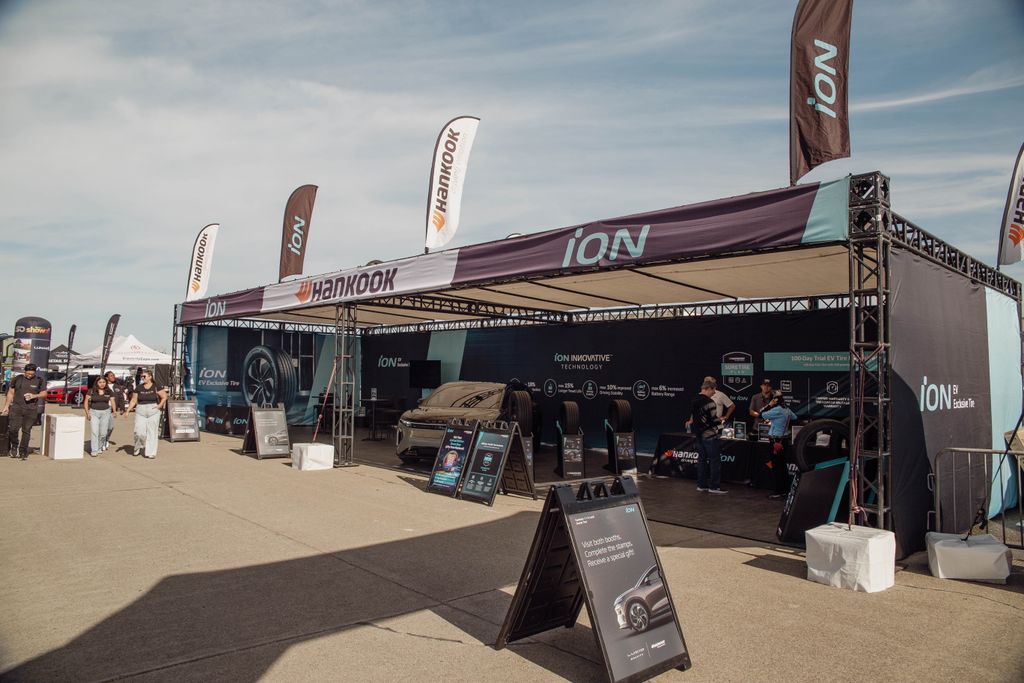
To demonstrate how tire manufacturers are responding to these structural challenges, Hankook brought its specialized iON tire portfolio to the Demo Days Festival, an expansive outdoor automotive event that draws thousands of consumers and industry professionals. The festival, which recently concluded its high-profile tour stops in major metropolitan markets including Los Angeles and San Francisco, provides an ideal ecosystem for real-world automotive evaluations.
At the Hankook exhibition booth, attendees and media representatives were invited to examine the technological differences between standard aftermarket tires and purpose-built EV rubber. More importantly, the event offered journalists an opportunity to experience these engineering differences firsthand behind the wheel of a heavy, high-output electric vehicle.
The test vehicle chosen for the evaluation was a Lucid Gravity luxury electric SUV. Tipping the scales at approximately 6,000 pounds while generating a staggering 909 lb-ft of instantaneous torque, the Gravity served as an ultimate stress test for any tire manufacturer. Fitted with Hankook’s iON evo AS all-season tires, the luxury utility vehicle was subjected to dynamic handling drills, sudden acceleration runs, and high-speed braking evaluations to observe how specialized tread compounds manage extreme weight and torque.
Engineering Solutions: Tackling Noise, Weight, and Rolling Resistance
Developing a tire specifically for electric vehicles requires a delicate balancing act of competing engineering priorities. Tire designers must simultaneously reduce rolling resistance to maximize driving range, strengthen internal structures to support heavy loads, enhance grip to handle excessive torque, and dampen road noise to preserve the tranquil cabin experience inherent to EVs.
Acoustic management represents one of the most critical breakthroughs in dedicated EV tire development. In a traditional gas-powered car, engine idle, exhaust notes, and mechanical drivetrain vibrations easily drown out the high-frequency hum of tires rolling over coarse asphalt. Because electric vehicles operate in near silence, tire cavity noise becomes much more noticeable to vehicle occupants.
To combat this, Hankook integrated specialized acoustic technologies into the iON product line. The tires feature optimized sipes across the inner tread blocks alongside advanced polyurethane foam inserts positioned on the interior lining of the casing. This sound-absorbing material successfully disrupts resonant frequencies within the tire cavity, drastically reducing cabin noise intrusion without compromising high-speed structural integrity.
Equally important is the optimization of vehicle range. Range anxiety remains a psychological and practical barrier for many prospective EV buyers. Every component of an electric vehicle—from climate control systems to aerodynamics—is meticulously engineered to preserve kilowatt-hours. Tires are no exception, as rolling resistance accounts for a significant percentage of an EV’s energy consumption.
Traditional tires often compromise between grip and rolling resistance. However, the iON line utilizes a specialized compound enriched with high-concentration silica and sustainable raw materials, combined with an optimized curing profile. This formulation lowers rolling resistance by minimizing energy loss as the tire deforms against the road surface. According to internal engineering estimates and industry testing, equipping an electric vehicle with Hankook iON tires can yield up to a 6 percent increase in driving range on a single full charge. When scaled over the lifespan of a battery pack, this efficiency gain translates into fewer charging stops and reduced long-term operating costs for consumers.
Market Implications and Consumer Adoption
The introduction and rapid expansion of dedicated EV tires signify a maturing aftermarket segment within the automotive industry. As global EV adoption accelerates, tire manufacturers can no longer rely on a one-size-fits-all product strategy. Major global suppliers—including Michelin, Goodyear, Pirelli, and Hankook—have all introduced specialized EV-focused sub-brands in recent years to capture market share in this high-growth sector.
For consumers, transitioning to an EV-specific tire requires a shift in purchasing psychology. These specialized products often carry a price premium over standard replacement tires due to the advanced materials, acoustic foam additions, and complex compound engineering required during manufacturing. However, industry analysts note that the extended tread life resulting from reinforced internal structures, combined with the tangible efficiency and range benefits, can offset the initial upfront cost over the lifecycle of the product.
To ease consumer hesitation regarding the adoption of dedicated EV tires, manufacturers are increasingly implementing risk-free trial programs. For instance, Hankook currently offers its SureTire Plan free trial, allowing customers to purchase iON tires and evaluate their real-world performance. Under the terms of the program, motorists who are not completely satisfied with the ride quality, noise reduction, or efficiency can return the tires free of charge within a 100-day window, subject to specific warranty terms and conditions.
Looking Ahead: The Future of EV-Centric Mobility
As automotive manufacturers continue to roll out next-generation electric platforms with higher horsepower figures, denser battery architectures, and advanced autonomous driving systems, the demands placed upon the humble tire will only intensify. The automotive aftermarket is entering a specialized era where rubber is treated as an active, high-tech component of the vehicle’s powertrain and chassis control systems rather than a passive consumable.
Events like the Demo Days Festival highlight the growing disconnect between legacy aftermarket assumptions and the harsh physical realities of modern electrification. By successfully bridging the gap between heavy battery loads, immense torque demands, and consumer expectations for quiet comfort and extended range, products like the Hankook iON lineup establish a new benchmark for tire engineering. As the global vehicle fleet continues its transition away from fossil fuels, specialized rubber will undoubtedly remain a cornerstone of sustainable, efficient, and refined electric mobility.