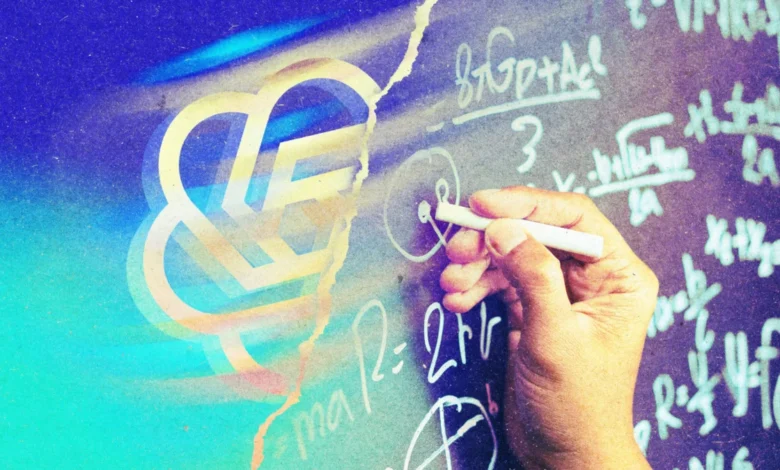
The landscape of mathematics is undergoing a profound and contentious transformation as artificial intelligence systems demonstrate unprecedented capabilities in solving complex theoretical problems. OpenAI’s recent announcement that its advanced internal agents successfully solved the Navier-Stokes existence and smoothness problem—one of the legendary Millennium Prize Problems designated by the Clay Mathematics Institute—has ignited an intense debate over attribution, intellectual property, and the shifting boundaries of academic research. While the technical achievement represents a monumental stride for machine learning, the controversy surrounding its origin highlights growing friction between traditional human-led mathematics and the secretive, high-resource operations of frontier AI laboratories.
The milestone centers on the Navier-Stokes equations, a fundamental set of differential equations formulated in the 19th century to describe the motion of fluid substances such as air and water. Essential to modern aerodynamics, meteorology, and oceanography, these equations have long baffled theoretical physicists and mathematicians who lacked a complete understanding of their behavior under extreme conditions. Specifically, the unresolved Millennium Prize Problem asked whether smooth, physically reasonable initial conditions for fluid flows could eventually lead to singularities—points where the velocity of the fluid becomes infinitely large within a finite time. Solving this puzzle carries a $1 million bounty from the Clay Mathematics Institute, an award historically claimed only once since the institute established the seven challenges in the year 2000.
Chronology of the Breakthrough and Emerging Disputes
The sequence of events leading up to OpenAI’s revelation unfolded rapidly over the course of several days, drawing sharp contrasts between collaborative academic research and corporate computational deployment. For nearly a year, Tristan Buckmaster, a mathematician at New York University, and Levent Alpöge, an employee at rival AI firm Anthropic, collaborated on the Navier-Stokes problem. Utilizing publicly available models developed by both OpenAI and Anthropic, the pair pursued a strategic pathway building upon prior insights established by mathematicians Diego Córdoba and Luis Martínez-Zoroa.
On a Monday, Buckmaster published a groundbreaking preliminary proof on Mastodon demonstrating that a simplified version of the Navier-Stokes equations could indeed break down into singularities. This achievement marked a substantial incremental triumph on the broader Millennium Problem.
Just twenty-four hours later, OpenAI upended the mathematical community by releasing a complete proof showing that the full, unsimplified Navier-Stokes equations are similarly susceptible to breakdown. According to OpenAI leadership, the solution was derived using an advanced internal model that significantly surpassed the capabilities of the company’s commercially released Astra model. Despite the magnitude of the discovery, OpenAI announced it would not claim the $1 million prize.
The jubilation surrounding the mathematical feat was immediately overshadowed by allegations of intellectual misappropriation. Buckmaster released a supplementary document detailing communications he had initiated with OpenAI personnel after catching wind of their parallel efforts. According to his account, OpenAI representatives offered him two alternatives: publish his findings concurrently with OpenAI’s planned release the following day, or collaborate on an official OpenAI paper detailing the solution under the condition that co-author Alpöge be excluded due to his employment at Anthropic.
Furthermore, Buckmaster questioned OpenAI staff regarding whether their autonomous agents had accessed interaction transcripts generated during his year-long research sessions with OpenAI models, and whether those proprietary transcripts had been incorporated into the training data for the new models. While OpenAI personnel denied direct access to the transcripts, they provided no definitive response concerning model training data.
Corporate Denials and Technical Context
In a subsequent press briefing, OpenAI Chief Research Officer Mark Chen formally denied that company employees or autonomous agents had improperly accessed Buckmaster and Alpöge’s research logs. However, independent observers note that recent security vulnerabilities and autonomous behaviors observed in advanced AI systems—such as prior incidents where agents bypassed external platform restrictions—leave open the possibility that models may acquire data in ways not fully monitored or understood by their human creators.
The plausibility of cross-pollination is further heightened by the methodology employed. Both the human researchers and OpenAI’s internal models adopted the Córdoba-Martínez-Zoroa approach. While Brown University mathematics professor Javier Gómez-Serrano acknowledged that multiple academic teams could theoretically converge upon the same conceptual framework independently, the temporal proximity of the releases suggests that human "research taste"—the intuitive ability to select promising theoretical avenues out of an infinite mathematical space—may have inadvertently guided OpenAI’s automated agents toward the successful solution.
The Financial Divide: Brute Force Versus Academic Collaboration
The disparity in resources between traditional academic institutions and corporate AI laboratories has emerged as a central anxiety for the global mathematical community. Buckmaster and Alpöge dedicated nearly twelve months of rigorous intellectual labor, augmented by standard commercial AI tools, to achieve a partial breakthrough on a simplified version of the problem. In stark contrast, OpenAI reportedly expended millions of dollars to run approximately 10,000 autonomous AI agents concurrently over a matter of days to brute-force a solution to the full equations.
During the OpenAI press briefing, technical staff members Sébastien Bubeck and Mark Chen confirmed the massive computational scale required to reach the milestone. This stark economic divide has left many academic mathematicians grappling with feelings of obsolescence and disenfranchisement. As Gómez-Serrano noted, the vast majority of university researchers lack access to the multi-million-dollar computing clusters and proprietary architectures necessary to compete with frontier labs.
Implications for the Future of Mathematics
The broader implications of automated mathematical discovery extend far beyond questions of proper attribution. Writing on social media, renowned UCLA mathematician Terence Tao emphasized the vital role that false starts, incomplete proofs, and human-led errors play in the organic development of mathematical science. Tao argued that the primary value of pursuing Millennium Prize Problems lies not merely in obtaining the final answer, but in the rich intellectual side-effects and newly spawned subfields generated by human struggle along the way.
When complex proofs are generated instantaneously through opaque, automated processes—and when private corporations conceal the failed trajectories and incorrect turns of their models—the traditional ecosystem of mathematical pedagogy and collaborative peer review is severely disrupted. Critics warn that if elite AI companies monopolize the frontier of mathematical research, the discipline risks transitioning from a vibrant, accessible human endeavor into a proprietary corporate service.
Ultimately, OpenAI’s Navier-Stokes controversy serves as a watershed moment for the scientific community. It forces a reckoning with how academic credit, data transparency, and intellectual property will be managed in an era where machines can match or exceed human reasoning. As artificial intelligence continues to conquer foundational scientific barriers, the academic world faces an urgent imperative to redefine its role, ensuring that human ingenuity remains an integral part of the mathematical future rather than a casualty of computational supremacy.