Maximizing Your Amazon Prime Membership Benefits Ahead of the October Big Deal Days

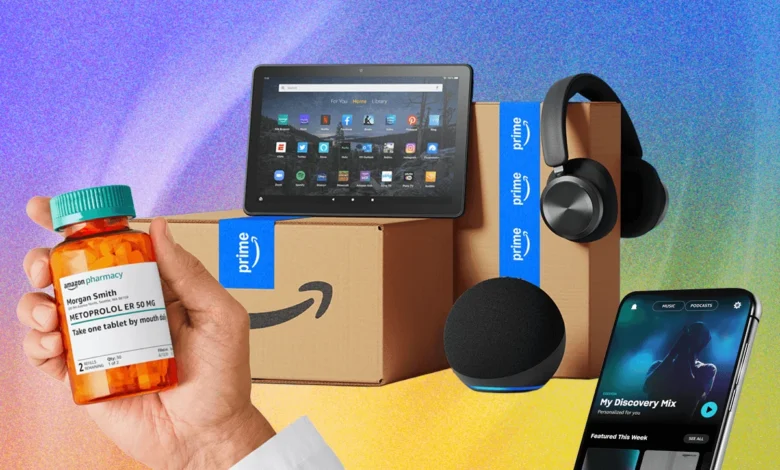
Most consumers initially sign up for Amazon Prime to secure the convenience of free two-day shipping, but the service has evolved into a vast, multifaceted ecosystem that many subscribers fail to fully utilize. With an estimated 201 million Prime members in the United States, the platform serves as a pillar of modern consumer behavior. As Amazon prepares for its upcoming Prime Big Deal Days—scheduled for October 6 and 7, 2026—it is increasingly important for members to evaluate whether they are extracting full value from their $139 annual investment. While Amazon has frequently faced scrutiny regarding labor practices and data management, the membership remains a dominant force in the retail sector, offering a range of digital, financial, and logistical perks that extend far beyond simple delivery speed.
Understanding the Membership Structure and Costs
Amazon Prime operates on a tiered pricing model designed to capture different demographic segments. A standard individual membership is priced at $139 per year or $15 per month. The annual payment option represents a significant savings, reducing the monthly cost to approximately $11.58. For younger consumers, the Prime for Young Adults program—formerly known as Prime Student—provides a streamlined entry point. Eligible individuals aged 18 to 24 can access the service for $69 annually or $7.50 monthly, following a six-month trial period. This program also includes a proprietary cash-back mechanism that allows members to earn rewards on select purchases, often reaching 5 percent, with potential increases during major shopping events.
For low-income households, the Prime Access program offers a critical alternative. Individuals who can verify participation in government assistance programs, such as the Supplemental Nutrition Assistance Program (SNAP), are eligible for a discounted membership rate of $7 per month. This initiative requires annual re-verification of eligibility, and the program is capped at a four-year limit, after which members must transition to a standard subscription.
Logistical Advantages and Delivery Evolution
The core value proposition of Prime remains its logistics network. Members receive free same-day or next-day shipping on millions of eligible items, along with standard two-day delivery. This logistical dominance is further supported by the expansion of Amazon Lockers, which provide secure, unattended delivery points for customers concerned about package theft or accessibility. Furthermore, the Buy With Prime integration allows third-party merchants to utilize Amazon’s fulfillment infrastructure, enabling shoppers to complete purchases on non-Amazon sites using their existing Prime credentials. This expansion suggests a strategic shift by Amazon to position its logistics network as a universal standard for e-commerce, rather than just a proprietary shipping arm.
Digital Media and Entertainment Services
The inclusion of entertainment services has been a primary strategy for increasing member retention. Amazon Music Prime offers ad-free access to a curated selection of playlists and podcasts drawn from a catalog of 100 million songs. For users requiring greater control, Amazon Music Unlimited—a high-fidelity, on-demand service—is available to Prime members at a discounted rate of $12 per month, compared to the standard $13 monthly fee.
Prime Video serves as a significant competitor in the streaming landscape. The platform features original content such as the critically acclaimed series Fallout and the expansive science fiction drama The Expanse. Additionally, Amazon has invested heavily in live sports broadcasting, securing rights to NFL Thursday Night Football and various MMA events. However, the monetization of these services has shifted; current plans include advertisements by default. Members seeking an ad-free viewing experience must pay an additional $5 monthly fee, a change that reflects a broader industry trend toward tiered subscription models and hybrid revenue streams.
The Mechanics of Prime Big Deal Days
Prime Big Deal Days, established as a mid-year counterpart to the original Prime Day, has grown into a major retail phenomenon. In 2026, the event is scheduled for October 6 and 7. Historical data indicates that while these events often outperform traditional shopping benchmarks like Cyber Monday in terms of volume, the quality of discounts can be inconsistent. Industry analysts frequently advise consumers to track price histories rather than relying solely on the "sale" designation.
The editorial team at WIRED maintains a rigorous approach to these events, focusing exclusively on products that have undergone independent testing. This editorial standard is designed to filter out the proliferation of low-quality, third-party brands that often flood the site during high-traffic promotional periods. For the 2026 event, the focus will remain on verifying the authenticity of deals to ensure consumers are receiving genuine value rather than inflated discounts on compromised merchandise.
Utility and Household Management Perks
Beyond shopping, Amazon provides tools aimed at household efficiency. Amazon Day delivery allows members to consolidate their weekly orders into a single, scheduled delivery. This initiative serves two functions: it reduces the volume of packaging waste, addressing one of the most common consumer complaints regarding Amazon’s delivery habits, and it offers a more predictable arrival schedule for urban dwellers.
For those who are not in immediate need of their items, the No-Rush Shipping option incentivizes slower delivery speeds. When selected at checkout, members may receive digital credits applicable toward Kindle books or digital games, or, in some cases, an instant discount on their current order. While the specific reward varies, it represents a tangible trade-off that benefits both the consumer’s wallet and Amazon’s logistical efficiency.
Emerging Technologies and AI Integration
The integration of generative artificial intelligence is the latest frontier for the Prime ecosystem. Alexa+, the updated iteration of Amazon’s voice assistant, is currently available as a perk for Prime members. While non-Prime users must pay $20 per month for this service, it is included in the membership. The system is designed for more natural conversational interaction, offering personalized recommendations, assistance with smart home management, and the ability to generate creative content such as bedtime stories. This move highlights Amazon’s attempt to transition its virtual assistant from a simple command-line interface to a sophisticated, AI-driven personal concierge.
Financial and Health-Related Services
Amazon’s expansion into health and financial services is a newer, more controversial development. Prime Rx offers a prescription savings card usable at pharmacies nationwide, including Amazon Pharmacy. While the program provides clear cost-saving benefits for those without comprehensive insurance, it has prompted discussions regarding the privacy of health data. Similarly, OneMedical provides virtual care for common ailments for an annual fee of $99, mirroring the services provided by many employer-sponsored insurance plans.
The Amazon Key program, which allows for in-garage deliveries, requires the purchase of specific hardware, such as a smart garage kit. While it offers a layer of security for package deliveries, it remains a service that invites external access into the home, a feature that some users find convenient while others cite as a significant privacy risk.
Impact and Future Implications
The breadth of the Prime ecosystem suggests that Amazon is no longer just a retailer; it is a service provider that aims to integrate itself into every aspect of the consumer’s daily life, from grocery shopping through Amazon Fresh and Whole Foods to digital entertainment and financial planning. The value of a Prime membership is no longer found in a single feature, but in the aggregation of these services.
For the average consumer, the challenge lies in the "subscription fatigue" that often follows the accumulation of these digital services. As prices for memberships rise and companies continue to introduce ad-supported tiers, users must perform a periodic audit of their digital life. The upcoming October 2026 Big Deal Days will serve as a bellwether for consumer sentiment, providing insight into whether the convenience of the Amazon ecosystem continues to outweigh the increasing costs and complexity of the platform.
As it stands, a Prime membership remains an effective tool for those who actively leverage the breadth of its offerings. However, the most fiscally responsible approach for the modern consumer is to treat the membership as a dynamic asset—periodically reviewing usage statistics and canceling underutilized services—rather than a passive utility that remains beneficial regardless of how it is engaged. Whether for the upcoming deals or the long-term logistical support, the key to the Prime experience is not simply having the membership, but knowing exactly how to use it.
Related posts: