The Trillion-Dollar Bet: How the AI Infrastructure Boom Risks Becoming the Greatest Misallocation of Capital in History

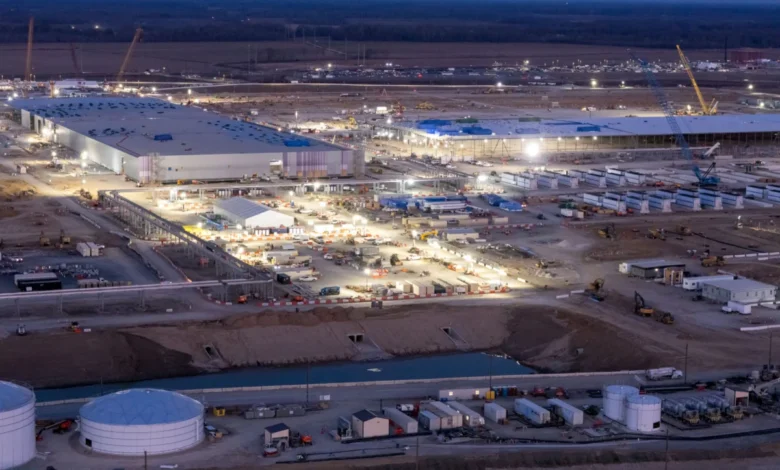
When Jessica Wachter, a finance professor at the University of Pennsylvania’s Wharton School, set out to evaluate the long-term economic impact of artificial intelligence, she deliberately bypassed the endless business and technical debates surrounding the utility of generative models. Instead, she anchored her research on an indisputable reality: a select group of technology giants, widely known as hyperscalers, are deploying unprecedented sums of capital to construct massive AI data centers across the globe.
Rather than attempting to forecast how deeply artificial intelligence will penetrate global industries, Wachter and her co-authors inverted the equation. They examined how rapidly the earnings of these hyperscaling corporations must expand to justify expenditures projected to reach nearly $1.1 trillion by 2027. This forensic accounting approach strips away the marketing rhetoric of the contemporary AI boom, exposing the raw financial mechanics and systemic vulnerabilities underpinning the most aggressive infrastructure expansion in corporate history.
The conclusions drawn from this research are stark. To break even by 2030—accounting for the cost of capital, a standard 15% rate of return, and rapid asset depreciation—these leading technology firms must increase their productivity by a factor of 2.7. While such a trajectory mirrors the monumental economic growth observed during the United States IT boom of the mid-1990s, compressing a decade-long productivity revolution into just a few years represents a staggering hurdle. Should these corporations fail to hit their profit targets, the consequences could extend far beyond depressed stock prices, threatening widespread corporate defaults and bankruptcy. In the assessment of the study’s authors, should this anticipated productivity surge fail to materialize, the current infrastructure buildout risks becoming the largest misallocation of capital in human history.
The Scale of the Buildout and the Revenue Gap
The financial stakes driving the artificial intelligence ecosystem are historically unprecedented. This year alone, hyperscalers—including Alphabet, Microsoft, Amazon, Meta, and Oracle, the latter serving as a critical partner to OpenAI—are expected to spend roughly $750 billion on specialized facilities designed to house advanced computing hardware. According to forward-looking projections by financial institutions such as Goldman Sachs, total capital expenditures dedicated to AI infrastructure could comfortably eclipse $5 million over the next four years.
This colossal outlay stands in stark contrast to immediate monetization realities. Gary Gensler, former Chair of the Securities and Exchange Commission (SEC) and currently a professor at the MIT Sloan School of Management, points out that total industry revenues generated by artificial intelligence are tracking between $150 billion and $200 billion annually.
"The challenge is that the spending does not have commensurate revenues yet. That’s a fact," Gensler notes, framing the trillion-dollar question that now hangs over global markets: Will these astronomical investments generate sufficient returns to validate their cost, or are we witnessing a speculative bubble detached from fundamental economic utility?
The implications of this discrepancy touch the core of the macroeconomic landscape. Current capital expenditures by hyperscalers are rapidly approaching nearly 3% of United States Gross Domestic Product (GDP). As these corporations transition from funding projects entirely out of accumulated corporate cash reserves to heavily relying on external debt and complex financial instruments, the balance sheets of the tech sector—and by extension, the broader economy—become increasingly vulnerable.
The Accelerating Shift Toward External Debt and Financial Engineering
For years, the primary financial buffer protecting the technology sector was its massive hoard of liquid capital. Companies like Alphabet generated billions in free cash flow, allowing them to self-fund speculative technological bets without courting systemic risk. However, the relentless acceleration of AI infrastructure spending has fundamentally altered this dynamic.
Recent financial disclosures underscore this structural pivot. Alphabet reported that its quarterly revenues of nearly $120 billion were entirely absorbed by infrastructure outlays, resulting in a free cash deficit of approximately $5.9 billion—its first quarterly shortfall since the company’s initial public offering in 2004. Across the broader sector, free cash flow—calculated as operating cash flow minus capital expenditures—is projected to slip firmly into negative territory.
To bridge this widening funding gap, tech giants are increasingly turning to debt markets. According to data compiled by Morgan Stanley, more than half of the $2.9 trillion expected to be spent by hyperscalers between 2025 and 2028 will be financed through external capital sources. This reliance on debt has catalyzed an intricate web of financial engineering reminiscent of pre-crisis eras, utilizing specialized purpose vehicles, private credit funds, and complex joint ventures.
A prime illustration of this sophisticated financial architecture is Meta’s Hyperion data center project in Richland Parish, Louisiana. Initially announced in late 2024 as a two-gigawatt facility with a $10 billion price tag, the project has since expanded to five gigawatts, with projected costs escalating to $50 billion. To manage the financing, Meta entered into a joint venture with private-credit firm Blue Owl Capital, transferring an 80-percent stake to an entity named Beignet.
Under the arrangement, a subsidiary of the joint venture acts as the landlord, leasing the facilities back to a wholly owned subsidiary of Meta via a series of four-year leases. Meta additionally provides a residual value guarantee, pledging to cover the remaining asset value if the leases are terminated early. Financial analysts, including Columbia Business School professor Stijn Van Nieuwerburgh, point out that the four-year duration of these leases directly mirrors the depreciative lifecycle of the high-performance graphics processing units (GPUs) housed within the facilities. If Meta walks away from the leases, investors are left holding empty real estate with no cash flow and depreciated specialized hardware.

The Hidden Systemic Risk to Public Markets and Everyday Citizens
The diffusion of this debt throughout the broader financial ecosystem transforms a corporate capital expenditure cycle into a potential systemic hazard. Because institutional lenders, private credit funds, and asset managers are deeply intertwined with these infrastructure projects, the risk is distributed widely across the financial system.
"A lot of financial institutions, directly or indirectly, are exposed to these data centers either as lenders, or as guarantors of some of the debt, or as backers of the private credit funds who are funding these data centers," Van Nieuwerburgh explains. "People don’t even know they’re holding this stuff. It’s somewhere deep inside their pension fund. Ultimately, it’s backing their life insurance policies. And that risk is getting distributed everywhere in places that are invisible."
This invisible distribution of risk has also collided directly with local utility markets and residential ratepayers. To power massive campuses like the one in Richland Parish, utilities such as Entergy Louisiana have proposed constructing multiple natural-gas power plants, significantly expanding regional power generation capacity. While technology firms routinely offer long-term purchase agreements to guarantee electricity consumption, consumer advocacy groups express deep skepticism regarding who will ultimately shoulder the financial burden if the AI sector experiences a severe downturn or if demand shifts toward more computationally efficient models.
Logan Burke, executive director of the Alliance for Affordable Energy, highlights the vulnerability of local ratepayers. If technology corporations scale back their operations or terminate energy purchase contracts prematurely, local utility customers risk being left subsidizing multi-billion-dollar energy infrastructure built expressly to serve transient corporate demand.
The Depreciation Trap and the Imperative of Technological Obsolescence
Compounding the financial risk is the unprecedented speed of hardware depreciation. At the heart of every modern AI data center lie specialized GPU chips—predominantly manufactured by Nvidia—which account for roughly 60% of total hardware costs.
Because the computational performance of these elite semiconductors roughly doubles every two years, data centers risk rapid technological obsolescence. Owners of facilities commissioned today will face the mandatory multi-billion-dollar expense of tearing out and replacing entire generations of chips before the decade is out simply to remain competitive. Without continuous capital injections, these state-of-the-art facilities risk transforming into stranded assets, described by Princeton researcher Mihir Kshirsagar as expensive industrial "hulks" scattered across rural landscapes.
The Triple Wager: Revenues, Productivity, and Public Acceptance
For the current economic model to hold, market participants must win what MIT Sloan’s Gary Gensler describes as a triple parlay bet:
- Hyperscalers must successfully generate unprecedented, multi-trillion-dollar revenues from AI services.
- Artificial intelligence must measurably accelerate macro-level economic productivity across the broader business landscape.
- The high-cost frontier models driving this consumption must successfully fend off the competitive threat of cheaper, highly efficient open-source or localized models that businesses may deem "good enough" for everyday tasks.
Each of these pillars remains deeply interdependent yet individually precarious. While corporate surveys indicate that executives anticipate modest productivity gains over the coming years—often driven by headcount reductions rather than purely expansive revenue growth—economy-wide macroeconomic statistics have yet to register a definitive productivity surge attributable to artificial intelligence.
Daron Acemoglu, an MIT economist and Nobel laureate, emphasizes that sustained capital investment is entirely contingent upon tangible productivity improvements. "If you don’t get the productivity gains, at some point people are going to sour on AI, and that will bring down investments and it would also limit revenue growth," Acemoglu warns. Furthermore, if productivity growth is achieved primarily through aggressive corporate layoffs and labor substitution, public and political backlash may intensify, manifesting in regulatory hurdles, zoning pushback, and friction that could further stunt anticipated revenues.
Conclusion: Preparing for the Day of Reckoning
Financial bubbles driven by transformative technologies are a recurring motif in economic history. From the frantic expansion of fiber-optic networks during the late-1990s telecommunications boom to the real estate excesses preceding the 2007 financial crisis, capital markets have repeatedly demonstrated an aggressive enthusiasm for revolutionary infrastructure.
While a market correction or corporate retrenchment in the artificial intelligence sector appears increasingly inevitable, economic history also offers a note of cautious optimism. The speculative excesses of past bubbles frequently left behind durable, foundational infrastructure—such as the fiber-optic cables that eventually enabled the modern internet economy.
However, the current AI infrastructure cycle introduces a novel structural vulnerability: the complete entanglement of speculative corporate debt with everyday retirement funds, utility rates, and commercial credit markets. When the day of reckoning arrives, the underlying utility of artificial intelligence will undoubtedly survive, but the financial architecture built to house it may require a painful and sobering restructuring.