Can the REEL Paper 8 from Vintage Visual truly facilitate professional-grade large-format printing in remote environments

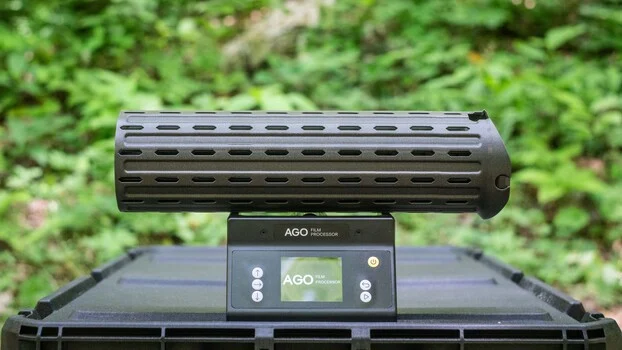
For decades, the standard for producing high-quality silver-gelatin photographic prints has remained tethered to the darkroom. The conventional process necessitates light-tight environments, expansive workspaces for chemical trays, and climate-controlled conditions to ensure the structural integrity of fiber-based papers. However, the introduction of the REEL Paper 8 by Vintage Visual represents a technical shift toward portable, closed-system processing. By utilizing a perforated ABS plastic cylinder designed to fit within a Paterson 8-reel tank, this device enables photographers to process prints up to 12×16 inches without the need for traditional open-tray development.
The device was recently subjected to rigorous field testing in the Nantahala National Forest, a remote region in North Carolina, to determine if the hardware could maintain print quality while operating in non-traditional, off-grid settings.
Chronology of Field Testing and Development
The development of the REEL Paper 8 arrives at a time when analog photography is experiencing a resurgence, yet the logistical requirements of darkroom work remain a barrier to entry for many practitioners. The field test conducted in the Nantahala National Forest followed a systematic, end-to-end workflow:
- Image Capture: Using 4×5 large-format film, exposures were made in the forest environment, utilizing natural light to capture the landscape.
- Negative Processing: The film was developed on-site to ensure immediate feedback on exposure and composition.
- Print Exposure: Utilizing a portable light source, the 8×10 Ilford Fiber-Base Gloss paper was exposed under controlled, light-tight conditions.
- Chemical Processing: The exposed paper was loaded into the REEL Paper 8 and placed into a Paterson 8-reel tank, where developer, stop bath, fixer, and wash were cycled through the system.
This workflow demonstrated that the device effectively functions as a daylight-loading system, provided the user has a light-tight method for the initial exposure phase. By replacing open trays with a single, sealed tank, the process minimizes the risks of contamination and physical damage to the paper that often occurs in makeshift outdoor darkrooms.
Technical Specifications and Engineering
The REEL Paper 8 is constructed from high-grade ABS plastic, a material chosen for its chemical resistance and durability. The unit measures approximately 12.75 inches (32.4 cm) in length and 3.5 inches (8.9 cm) in diameter. Its primary design feature—a series of perforations and slots—allows for the even distribution of chemistry across the surface of the photographic paper, preventing the pooling or "staining" that can plague manual rotation methods.
When paired with the AGO Film Processor, the system benefits from automated agitation programs and precise temperature regulation. This synergy between the hardware and the processor is intended to mitigate the human error often introduced during manual agitation, which is critical when working with high-contrast or sensitive silver-gelatin emulsions.
Comparative Analysis: Traditional vs. Portable Processing
The shift from traditional tray processing to the REEL Paper 8 system offers distinct logistical advantages and disadvantages.
Space Efficiency: In traditional darkroom printing, a photographer requires a minimum of three trays (developer, stop, fixer), with an additional two often used for washing and hypo-clearing. For a 12×16 print, this setup demands a surface area of at least 4 to 6 square feet. The REEL Paper 8 reduces this footprint to the diameter of a single tank, which is approximately 6 inches. This represents an 80% to 90% reduction in spatial requirements.
Chemical Consumption: Open trays require a significant volume of chemistry to ensure the paper is fully submerged and that the solution remains active throughout the printing session. Because the REEL Paper 8 operates as a closed system, it requires significantly less liquid volume. Empirical data from the field test suggest a reduction of approximately 30% in total chemical volume compared to standard tray processing, contributing to both lower costs and reduced waste, which is particularly relevant for environmental management in remote locations.
Cost Implications: The financial barrier to entry is a significant factor. The REEL Paper 8 retails for approximately $115 USD. When including the required Paterson 8-reel tank (roughly $100 USD) and the recommended AGO Film Processor, the total investment exceeds $500 USD. For institutional or professional users, this is a negligible expense compared to the construction of a permanent darkroom. For the independent enthusiast, however, the return on investment depends heavily on the volume of printing.
Official Responses and Industry Reception
While Vintage Visual has not released formal statements regarding the device’s long-term environmental durability, early reviews from the analog photography community emphasize the build quality. The molding of the plastic has been noted for its lack of sharp edges or snag points, which is vital to prevent scratching the delicate surface of fiber-based papers.
Professional darkroom technicians have noted that while the REEL Paper 8 is an excellent tool for consistency, it does not remove the necessity of a light-tight environment for the exposure phase. It is a processing tool, not an all-in-one printing studio. Users must still have a dark-bag or a light-tight shelter to load the paper into the reel and expose it under an enlarger or contact printing frame.
Broader Impact on the Analog Photography Sector
The introduction of the REEL Paper 8 is indicative of a broader trend in the analog market: the miniaturization of studio equipment. As more photographers move away from dedicated studio spaces toward mobile, "van-life" style photography or remote location work, the demand for equipment that is both modular and robust has increased.
Implications for Workflow:
- Consistency: The integration with the AGO system allows for reproducible results, a major challenge in field printing where temperature and agitation are hard to control.
- Sustainability: The reduction in chemistry volume aligns with a growing movement within the photographic community to reduce the ecological impact of silver-gelatin printing, which traditionally involves the disposal of large amounts of silver-laden fixing agents.
- Accessibility: By removing the "tray space" requirement, this technology allows urban photographers with limited square footage to engage in large-format printing without the need for a dedicated darkroom, potentially increasing the popularity of fiber-based printing among apartment-dwelling artists.
Conclusion and Future Outlook
The REEL Paper 8 is a specialized piece of equipment that serves a distinct niche. Its value proposition is high for photographers who prioritize mobility and space efficiency. However, it is not a "magic bullet" that eliminates the fundamental requirements of photographic printing. The need for light-tight exposure remains, and the initial capital outlay is substantial.
For the nomadic photographer or the artist with limited living space, the system provides a viable pathway to producing large-scale, archival-quality prints that were previously only possible in a stationary darkroom. As the industry continues to evolve, it is likely that modular, tank-based printing systems will become more prevalent, potentially forcing a reevaluation of how "traditional" darkroom photography is defined in the 21st century. Whether this technology represents a permanent shift or a niche innovation depends on the continued availability of high-quality photographic paper and the willingness of a new generation of photographers to invest in the hardware required to sustain these analog workflows.