Framework Announces Significant Price Hikes for Laptop 13 Pro Due to Soaring LPCAMM2 Memory Costs and Broader Supply Chain Volatility

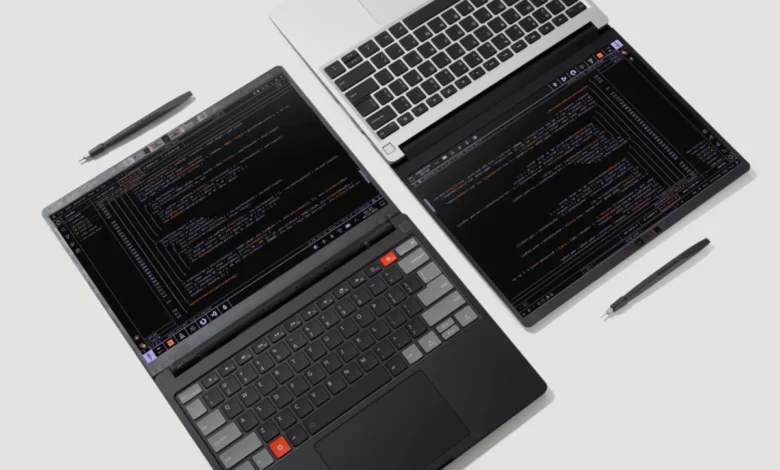
Framework, the innovative modular laptop manufacturer, has announced substantial price adjustments for its upcoming Framework Laptop 13 Pro, citing unprecedented increases in component costs, most notably for LPCAMM2 memory modules. The company’s Chief Executive Officer, Nirav Patel, conveyed the challenging news in a recent blog post, revealing that the cost update from their LPCAMM2 supplier far exceeded all predictions, escalating to "more than double" the price of existing inventory. This dramatic surge in memory pricing, coupled with rising costs for other critical components, necessitates a significant recalibration of Framework’s pricing structure for new orders and a complex fulfillment strategy for existing pre-orders.
Unforeseen Component Cost Escalation Forces Price Revisions
The core of Framework’s pricing dilemma stems from the volatile memory market. Nirav Patel explicitly stated that the expected low-to-mid double-digit percentage increase in LPCAMM2 costs from Q2 to Q3 turned into a staggering "more than double" surge compared to previous inventory prices. This unexpected jump places considerable financial strain on the company, compelling them to pass on a significant portion of these increased costs to consumers to avoid jeopardizing operational viability. LPCAMM2 memory, a new standard for high-performance, compact memory, is specifically integrated into the Intel Core Ultra Series 3 version of the Framework Laptop 13 Pro. In contrast, models utilizing AMD Ryzen AI 300 processors will continue to employ the more conventional SO-DIMM memory modules, which appear to be less affected by this particular price shock.
The financial impact on new orders is severe. The 32GB LPCAMM2 module, previously priced at $439, will now retail for an eye-watering $800 – an 82% increase. Even more dramatically, the 64GB LPCAMM2 module, initially offered at $849, will now command a formidable $1,600, representing an 88% surge. While the 16GB LPCAMM2 modules will temporarily remain at $239, Framework has cautioned that their price will also inevitably rise once current stocks are depleted. These increases are not isolated to memory; Framework also indicated rising costs for X7 and X9 chips, Windows license fees, and select memory, storage, and silicon components across some of its Ryzen AI 300 Series configurations.
Framework’s Commitment to Transparency and Pre-Order Fulfillment Strategy
In an industry often characterized by opaque pricing and supply chain management, Framework has consistently distinguished itself through a commitment to transparency. CEO Nirav Patel’s detailed blog post, which is updated more publicly than most other PC vendors, exemplifies this approach, offering an unvarnished look into the company’s challenges. This level of candor, while potentially alarming to customers, reinforces the trust Framework has cultivated within its community of repairability advocates and early adopters.
For customers who have already placed pre-orders, Framework has outlined a nuanced fulfillment plan designed to minimize impact, though some adjustments will still be necessary. The company confirmed it possesses sufficient 64GB LPCAMM2 modules to cover pre-order batches through Batch 4 for laptops and Batch 7 for mainboards. Beyond these initial batches, orders configured with 64GB will be automatically updated to use a 32GB module at the original, lower 32GB price. Similarly, remaining 32GB modules will be allocated to DIY Edition and Mainboard pre-orders up to Batch 4 for laptops and Batch 7 for mainboards. Subsequent orders configured with 32GB will be downgraded to a 16GB module at the original 16GB price. Notably, pre-built Core X7 Ultra configurations originally containing 32GB of memory will not be adjusted, as Framework does not currently offer a 16GB pre-built option for that specific model, a configuration they plan to introduce later.
Crucially, Framework has reiterated its customer-centric policy regarding price fluctuations for pre-orders. If the cost of a component within an unfulfilled pre-order decreases, the customer will benefit from the lower price. Conversely, if component costs rise, Framework will honor the price paid at the time of pre-order, insulating early customers from these new increases. This policy, while commendable, underscores the financial burden Framework is absorbing on behalf of its existing customer base for a significant period.
Background Context: Framework’s Unique Model and Market Volatility
Framework carved a niche in the highly competitive laptop market by championing modularity, upgradeability, and repairability. Its laptops are designed to be easily disassembled, allowing users to replace or upgrade components like RAM, storage, ports, and even mainboards. This ethos stands in stark contrast to the industry trend of increasingly glued-together, non-user-serviceable devices. The success of Framework hinges on the availability of components at reasonable prices and the ability to maintain a sustainable supply chain for these individual modules.
The adoption of LPCAMM2 memory is a testament to Framework’s pursuit of cutting-edge technology to enhance performance and efficiency. LPCAMM2 (Low Power Compression Attached Memory Module 2) is a relatively new memory standard that offers several advantages over traditional SO-DIMMs, including a smaller form factor, lower power consumption, and potentially higher performance, making it ideal for thin and light devices. However, being an early adopter of such advanced technology also exposes a company to potential supply chain risks, including limited suppliers and volatile pricing, especially during initial production phases.
The broader semiconductor and memory markets have been notoriously volatile in recent years. Factors contributing to this instability include:
- Global economic shifts: Inflationary pressures, interest rate hikes, and fluctuating consumer demand.
- Geopolitical tensions: Trade disputes and regional conflicts can disrupt supply chains for raw materials and finished components.
- Manufacturing capacity constraints: The complex fabrication processes for advanced chips and memory often require years to scale up, making the industry susceptible to sudden demand spikes or supply disruptions.
- AI boom: The explosion in demand for Artificial Intelligence (AI) accelerators has significantly driven up demand for high-bandwidth memory (HBM) and other advanced DRAM, indirectly impacting pricing and availability across the entire memory market. While LPCAMM2 is distinct from HBM, the overall increased demand for advanced memory types can strain manufacturing resources and shift priorities for memory producers.
- Currency fluctuations: International transactions for components are subject to exchange rate volatility, further complicating cost predictions.
Industry analysts, such as those from TrendForce, have frequently reported on the cyclical nature of the DRAM market, with periods of oversupply leading to price drops, followed by periods of undersupply and significant price increases. The magnitude of the current LPCAMM2 increase, however, suggests more than just a typical market cycle; it points to a specific supply bottleneck or an unexpectedly high demand for this particular module type.
A Chronology of Rising Costs and Strategic Responses
The timeline of these events, while not fully detailed by Framework, can be inferred:
- Early 2024: Framework opens pre-orders for the Laptop 13 Pro, likely based on initial component cost forecasts for Q2-Q3.
- Q2 2024: Framework’s internal projections anticipate a "low-to-mid double digit" percentage increase for LPCAMM2 costs for the upcoming quarter. This is a normal expectation in a dynamic market.
- Late Q2 / Early Q3 2024 (Recently): Framework receives an updated cost structure from its LPCAMM2 supplier, revealing an increase "more than double" the price of their previous inventory. This dramatic shift is the catalyst for the current announcement.
- Immediate aftermath: Framework’s team, led by Nirav Patel, undertakes an "evaluation of a number of possible paths forward," including absorbing costs, adjusting configurations, and revising future pricing.
- July 2024: The company publicly announces the price adjustments and pre-order fulfillment strategy via a blog post. The first batch of Laptop 13 Pro pre-orders is slated to ship, putting immediate pressure on Framework to execute its complex fulfillment plan.
This rapid sequence of events highlights the challenges of operating in a modern, globalized supply chain where unforeseen cost shocks can rapidly alter business plans and impact customer relations.
Broader Impact and Implications
The Framework Laptop 13 Pro price adjustments carry significant implications for the company, its customers, and the broader modular computing movement.
For Framework:
- Reputational Management: While Framework’s transparency is commendable, significant price hikes are never welcome news for customers. The company will need to continue its open communication to manage expectations and maintain trust, especially for those affected by configuration downgrades.
- Financial Strain: Absorbing the difference for existing pre-orders that see price increases, while lowering prices for others, demonstrates a commitment to customer satisfaction but also represents a considerable financial commitment for the company. This could impact profitability margins and future investment capacity.
- Business Model Challenges: Framework’s value proposition is built on long-term ownership and upgradeability. If initial purchase prices become prohibitively high due to component costs, it could erode this value proposition, making the total cost of ownership less competitive against traditional, less repairable laptops.
- Innovation vs. Cost: Being an early adopter of cutting-edge technology like LPCAMM2 brings performance advantages but also exposes the company to greater supply chain risks and cost volatility, a delicate balance for a niche manufacturer.
For Consumers:
- Higher Entry Barrier: The increased prices, particularly for higher memory configurations, will undoubtedly make the Framework Laptop 13 Pro less accessible to some consumers, potentially limiting its market reach. A 64GB configuration now costs an additional $751 for new orders, a substantial sum.
- Purchasing Decisions: Customers may be forced to reconsider their desired configurations, opting for lower memory options or the AMD Ryzen AI 300 models that use SO-DIMMs, which are currently less impacted by these specific price increases.
- Future Upgrade Costs: The current pricing of LPCAMM2 modules suggests that future upgrades to memory for the Intel Core Ultra models could also be exceptionally expensive, potentially dampening the long-term upgrade appeal.
For the Modular Computing Industry:
- Supply Chain Resilience: This event serves as a stark reminder of the inherent fragility of global technology supply chains, even for companies prioritizing sustainability and local sourcing where possible. It underscores the importance of diversified supplier bases and robust risk management strategies.
- Standard Adoption: The high cost of LPCAMM2 could influence the broader industry’s adoption rate of this newer memory standard. If manufacturers face similar cost challenges, they might delay integration or opt for more mature, cost-stable technologies.
- The "Right to Repair" Movement: Framework is a standard-bearer for the right to repair. When core components become exorbitantly expensive, it challenges the practical feasibility of repair and upgradeability for the average consumer, even if the physical design allows it. This highlights that "repairable" also needs to be "affordable to repair."
Conclusion
Framework’s recent announcement regarding significant price increases for its Laptop 13 Pro due to soaring LPCAMM2 memory costs and other component price hikes represents a critical juncture for the company. While their commitment to transparency and honoring existing pre-order prices for increased costs is commendable, the substantial price adjustments for new orders highlight the profound challenges posed by an increasingly volatile global supply chain. This situation underscores the delicate balance between innovation, cost, and accessibility in the technology sector, particularly for companies like Framework that are striving to redefine consumer electronics ownership through modularity and repairability. As the first batches of the Laptop 13 Pro begin shipping, the tech community will closely observe how Framework navigates these financial headwinds and how these adjustments ultimately shape the future of modular computing.