Grand Theft Auto Modder Achieves Unprecedented Feat, Nesting Classic Titles Within San Andreas

A remarkable development within the Grand Theft Auto modding community has captured widespread attention, as modder DryxioGTA successfully engineered a modification allowing players to launch and fully experience Grand Theft Auto III (GTA 3) and Grand Theft Auto: Vice City (GTA VC) as interactive mini-games directly within Grand Theft Auto: San Andreas (GTA SA). This innovative creation represents a significant technical achievement, showcasing the enduring creativity and programming prowess prevalent in the dedicated fan base of Rockstar Games’ iconic franchise. The modder initially demonstrated this groundbreaking functionality in a YouTube video released recently, showcasing the nested games running seamlessly on a Windows virtual machine operating within a macOS environment, adding another layer of technical sophistication to the demonstration.
Unveiling the "GTA Inception" Mod
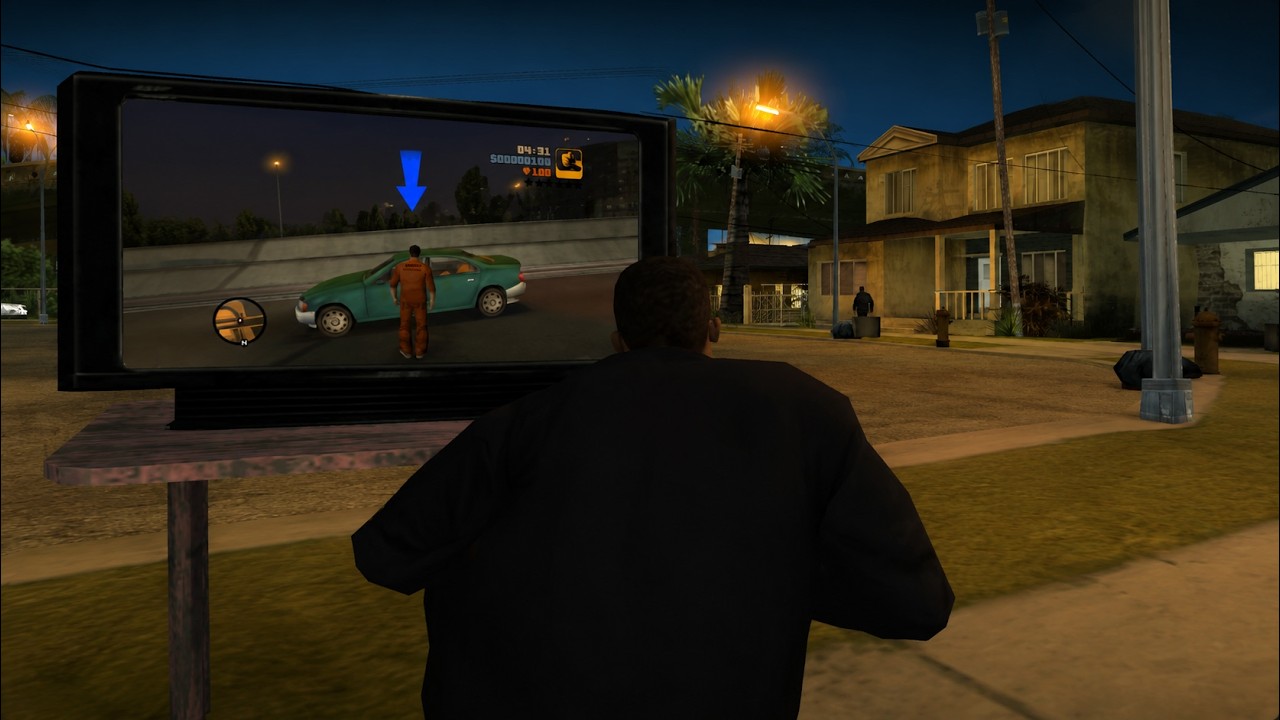
The core mechanism of DryxioGTA’s mod is as ingenious as it is captivating. Within the sprawling open world of Grand Theft Auto: San Andreas, players controlling protagonist CJ can approach an in-game television set, which has been artfully integrated into the game environment by the mod. Upon interaction, a prompt appears, offering the choice to initiate either GTA: Vice City or GTA III. Selecting an option immediately transforms the television screen into a fully functional display for the chosen classic title.
What truly sets this mod apart is its dynamic interactivity. Gamers are not merely watching a video; they are actively playing a separate, complete game instance. The F10 key serves as a toggle, allowing players to switch control fluidly between the overarching GTA San Andreas experience and the miniature game running on the television. When GTA III (or Vice City) is active, players can navigate its world, complete missions, and engage in all the activities characteristic of the original title, all while the larger GTA San Andreas world continues to unfold around them, with its non-player characters (NPCs) and ambient activities proceeding uninterrupted. Conversely, switching back to control CJ in GTA SA leaves the mini-game running autonomously on the in-game television, a persistent digital window into another classic era of Grand Theft Auto.
A Deeper Dive: Nested Worlds within Worlds
Just hours after the initial demonstration, DryxioGTA escalated the impressiveness of their work, releasing a subsequent video that unveiled an even more complex and mind-bending iteration of the mod: the ability to run GTA Vice City inside GTA III, which itself is running inside GTA San Andreas. This "triple-layer" nesting pushes the boundaries of what was previously thought possible within the constraints of these game engines.
The enhanced version begins in GTA SA, where players activate GTA III on a large screen, much like the original mod. Once immersed in GTA III, now effectively a "game within a game," players can drive to another designated in-game screen within GTA III‘s Liberty City to then launch GTA Vice City. This creates an unparalleled gaming experience: one can be navigating the streets of San Andreas, seamlessly transition to the gritty urban landscape of Liberty City, and then plunge into the neon-soaked hedonism of Vice City, with all three distinct game environments existing and running simultaneously. This intricate layering offers a fascinating glimpse into the potential for recursive game design and community-driven innovation.
Technical Underpinnings and the RenderWare Legacy
The technical complexity behind DryxioGTA’s achievement cannot be overstated. Grand Theft Auto III, Vice City, and San Andreas were all developed using Rockstar’s highly customized RenderWare engine, a crucial detail that likely facilitated this nesting. While RenderWare offered flexibility and was a powerful tool for its era, running multiple instances of games built on it concurrently, especially in a visually integrated and interactive manner, presents formidable challenges. These include memory management, CPU allocation, graphics rendering pipelines, and maintaining game state integrity across separate processes. The fact that the demonstration involved a Windows virtual machine on macOS further underscores the modder’s command over system resources and virtualization technologies to achieve stable performance.
The mod effectively tricks the host GTA SA game into displaying and controlling another fully independent game process within its own rendering context. This goes beyond simple texture overlays or video playback, involving real-time input capture, output redirection, and maintaining the internal logic of the nested games. It speaks volumes about the modder’s deep understanding of the games’ internal architectures and the RenderWare engine itself.
A Chronology of Grand Theft Auto and Modding Culture
The Grand Theft Auto series has a rich history of fostering a vibrant modding community, driven by the open-world nature of its games and the passionate dedication of its player base.
- 2001: Grand Theft Auto III Release: This title revolutionized open-world gaming, introducing a 3D environment and setting the standard for the genre. It quickly became a fertile ground for early PC modding, with players experimenting with custom vehicles and character skins.
- 2002: Grand Theft Auto: Vice City Release: Building on the success of GTA III, Vice City offered a distinct 1980s aesthetic and expanded gameplay. Modders continued to push boundaries, creating new missions and enhancing graphics.
- 2004 (PC release 2005): Grand Theft Auto: San Andreas Release: Widely considered a magnum opus of its era, San Andreas offered an unprecedented scale with three distinct cities and vast countryside. Its robust scripting capabilities and extensive asset library made it a prime target for modders, leading to thousands of modifications ranging from minor cosmetic changes to ambitious total conversions.
- 2005 – Present: The GTA modding scene for these classic titles has remained remarkably active. Tools like CLEO scripts, IMG tools, and various editors have empowered generations of modders to customize nearly every aspect of the games.
- Recent Developments: DryxioGTA’s YouTube channel showcases a history of innovative GTA modding, culminating in these nested game demonstrations. The videos, uploaded recently, quickly garnered thousands of views, highlighting the community’s enthusiasm for such novel creations.
- Upcoming Grand Theft Auto VI (GTA 6): The looming release of GTA 6, currently slated for consoles on November 19 after several reported postponements (originally rumored for 2025, with recent reports indicating a 2026 delay for PC), has sparked a resurgence of interest in the franchise’s older titles. Fans are revisiting the classics, and modders are finding new ways to celebrate and expand upon their legacy.
The Enduring Legacy of the 3D Universe Trilogy
Grand Theft Auto III, Vice City, and San Andreas collectively form what fans refer to as the "3D Universe Trilogy," a pivotal era in gaming history. These titles were instrumental in popularizing the open-world genre, offering unparalleled freedom, engaging narratives, and memorable characters.
- GTA III broke ground with its fully 3D urban environment, non-linear gameplay, and mature themes. It demonstrated the viability of sandbox gaming on a large scale.
- GTA: Vice City captivated players with its vibrant 1980s setting, iconic soundtrack, and compelling rags-to-riches storyline. Its distinct atmosphere remains a fan favorite.
- GTA: San Andreas expanded the scope exponentially, featuring a massive map encompassing three cities and diverse rural areas. It introduced RPG elements, gang warfare, and a deeply personal narrative, cementing its place as one of the most influential games ever made.
These games, despite their age, continue to be played, discussed, and, crucially, modded. The modding community actively contributes to their longevity, introducing new content, improving graphics, fixing bugs, and, as DryxioGTA has shown, reimagining their fundamental structure. This continued engagement is a testament to the games’ robust design and the passion of their players.
Rockstar Games and the Modding Ecosystem: A Tenuous Balance
The relationship between Rockstar Games, the developer and publisher of the Grand Theft Auto series, and its modding community has historically been complex and often nuanced. While Rockstar has generally tolerated, and in some cases quietly appreciated, single-player cosmetic and creative mods that extend the life and appeal of its games, its stance becomes significantly stricter when mods impact Grand Theft Auto Online or involve the distribution of proprietary game assets without permission.
In the past, Rockstar has taken legal action against modding tools and projects that facilitate cheating in GTA Online or infringe heavily on their intellectual property. However, mods like DryxioGTA’s, which enhance the single-player experience through technical ingenuity and without directly monetizing Rockstar’s assets in a competing way, often exist in a grey area of tacit acceptance. These creative endeavors are typically seen as a form of fan art and community contribution that keeps the older games relevant and generates positive buzz around the franchise, especially during periods awaiting new releases.
The modding community, in turn, acts as an unofficial research and development arm, exploring new gameplay possibilities, pushing technical boundaries, and even performing critical bug fixes that might otherwise be overlooked by the original developers. This dynamic interplay underscores the symbiotic, if sometimes cautious, relationship between game creators and their most dedicated fans.
Broader Implications and the Future of Interactive Entertainment
DryxioGTA’s "GTA Inception" mod carries several significant implications for both the immediate future of Grand Theft Auto fandom and the broader landscape of interactive entertainment.
- Game Preservation and Replayability: Mods like this breathe new life into classic titles, making them more engaging for returning players and potentially introducing them to younger audiences who might not have experienced the original releases. By offering novel ways to interact with familiar content, the mod effectively contributes to the digital preservation and continued cultural relevance of these seminal games.
- Unleashing Community Creativity: The mod serves as a powerful testament to the boundless creativity and technical expertise within the gaming community. It highlights that the "end" of a game’s development cycle is often just the beginning for its most dedicated players, who continue to innovate and expand upon the original vision in unexpected ways. This bottom-up innovation often pushes conceptual boundaries that official developers, constrained by commercial considerations and strict deadlines, might not explore.
- Pioneering "Nested" Gaming Experiences: While not a commercial product, this mod offers a compelling proof-of-concept for nested or recursive gaming experiences. Imagine future games designed with intentional "portals" to other titles or mini-games, blurring the lines between standalone experiences. This could lead to entirely new genres or ways of interacting with vast game libraries, potentially enabling players to create their own interconnected meta-narratives across different virtual worlds.
- Technical Benchmarking: The ability to run multiple complex game engines simultaneously, even within a virtualized environment, provides an interesting benchmark for system performance and software optimization. It pushes the limits of what contemporary hardware and software can achieve when tasked with managing multiple resource-intensive processes.
- Challenges and Limitations: While impressive, such mods are not without their challenges. Stability issues, compatibility across different system configurations, and potential conflicts with other mods are common hurdles. Furthermore, the ethical considerations of utilizing copyrighted assets for derivative works, even non-commercial ones, remain a constant backdrop for the modding scene.
In conclusion, DryxioGTA’s groundbreaking "GTA Inception" mod is more than just a clever trick; it is a profound demonstration of technical mastery, community passion, and the enduring legacy of the Grand Theft Auto franchise. As the gaming world eagerly awaits the next official installment, such fan-driven innovations serve as powerful reminders of the creative potential that lies within the hands of players, continuing to redefine and enrich the interactive experiences we cherish.