Toyota Leverages Aggressive Conquest Incentives and California-Specific Rebates to Accelerate bZ Electric Vehicle Adoption

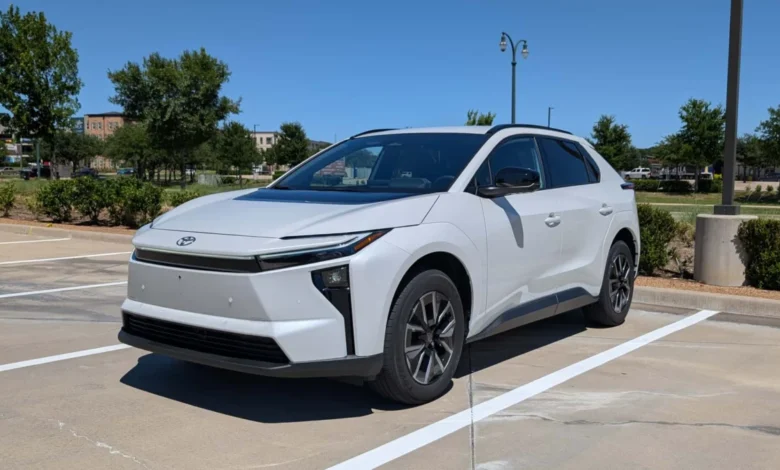
Toyota Motor North America has launched a strategic offensive in the increasingly competitive electric vehicle sector, deploying a series of aggressive financial incentives designed to lure current EV owners away from rival brands. The centerpiece of this campaign is a $3,000 "conquest cash" offer specifically targeted at owners of older electric vehicles who transition to the latest Toyota bZ model. This move signals a significant shift in Toyota’s marketing strategy as it seeks to capitalize on the momentum of its refreshed electric crossover, which has seen a dramatic surge in sales during the first half of 2026. By focusing on "conquesting"—the industry term for winning over customers who currently own a competitor’s product—Toyota is directly challenging the dominance of established EV players in key markets, most notably California.
The $3,000 conquest incentive is not a universal offer but is instead a highly surgical strike aimed at a specific demographic of EV drivers. To qualify, customers must currently own or lease a specific range of electric vehicles manufactured between the 2020 and 2023 model years. While Toyota’s internal communications focus on high-volume competitors, the program is designed to capture early adopters who may be looking to upgrade from their first-generation or mid-lifecycle EVs to a platform that offers more modern amenities and refined driving dynamics. Interestingly, Toyota has structured this incentive to be transferable within a household; if an immediate family member residing at the same address owns a qualifying vehicle, the $3,000 credit can still be applied to the purchase of a new bZ.
The California Strategic Pivot
The geographical restriction of this conquest cash to California is a calculated move by Toyota. California remains the largest and most influential EV market in the United States, serving as both a regulatory bellwether and a primary volume driver for zero-emission vehicles. By stacking incentives in the Golden State, Toyota is positioning the bZ as a high-value alternative to the ubiquitous Tesla Model 3 and Model Y. However, the timing of this offer requires careful navigation of state-level policies. California is currently preparing to launch a new $3,500 EV buying incentive, but analysts note that Toyota’s conquest cash likely cannot be combined with that specific state program. The state’s upcoming rebate is primarily structured to assist first-time EV buyers and lower-income households, whereas Toyota’s $3,000 offer is explicitly for those who already participate in the EV ecosystem.
Despite the lack of overlap with certain state rebates, the combination of Toyota’s manufacturer incentives and existing federal tax credits—where applicable through lease loopholes—creates a pricing structure that is difficult for competitors to match. For California residents, the bZ is now positioned as one of the most financially accessible mid-sized electric crossovers on the market, bridging the gap between mass-market affordability and Toyota’s reputation for long-term reliability.
National Financing and Lease Incentives
While California receives the most aggressive "conquest" treatment, Toyota has not neglected the rest of the United States. Recognizing that high interest rates remain a significant barrier to EV adoption, the automaker is offering 0% APR financing for up to 72 months on the bZ in various regions. In a financial climate where standard auto loan rates often hover between 6% and 9%, a zero-interest six-year loan represents a massive saving in total cost of ownership, potentially reducing the lifetime cost of the vehicle by thousands of dollars.
Furthermore, Toyota is leaning heavily into leasing as a primary tool for EV distribution. The company is offering up to $4,000 in "lease cash," which effectively subsidizes the capitalized cost of the vehicle. This has resulted in highly competitive lease terms, such as a 36-month lease for $349 per month with approximately $3,999 due at signing. Such deals are intended to lower the "barrier to entry" for skeptical buyers who may be wary of the rapid depreciation or technological obsolescence often associated with modern EVs. Additionally, Toyota continues to support specific demographics with a $750 rebate for active-duty military personnel and veterans, alongside a $500 rebate for recent college graduates, further broadening the vehicle’s appeal across different life stages.
The Evolution of the bZ Platform
The aggressive nature of these incentives is backed by a product that has undergone significant refinement. The original iteration of Toyota’s battery-electric crossover, the bZ4X, faced a challenging launch characterized by technical hurdles and criticism regarding its charging speeds and cold-weather range. However, the 2026 Toyota bZ represents a concerted effort by the Japanese automaker to address these shortcomings. The refreshed model features improved battery thermal management systems, which allow for more consistent DC fast-charging speeds, even in adverse weather conditions.
Range anxiety, a perennial concern for EV skeptics, has also been addressed through software optimizations and hardware efficiencies. The 2026 bZ offers a more competitive range profile and a "Woodland" trim level that appeals to the growing segment of "overlanding" enthusiasts who want electric efficiency without sacrificing light off-road capability. The interior packaging has also seen upgrades, with a focus on higher-quality materials and a more intuitive infotainment interface, aligning the bZ more closely with the premium feel of Toyota’s higher-end hybrid models like the Crown and the Venza.

Sales Performance and Market Momentum
The impact of these strategic adjustments and financial incentives is clearly visible in Toyota’s sales data. In the first half of 2026, Toyota reported sales of 17,553 units for the bZ, a staggering 100% increase compared to the same period in 2025. This growth trajectory has propelled the bZ into the position of one of America’s favorite non-Tesla electric cars. This surge is particularly notable given Toyota’s historically cautious approach to full electrification, as the company has long prioritized its hybrid and plug-in hybrid (PHEV) lineups.
Industry analysts suggest that the bZ’s success is a result of "brand trust" meeting "market correction." For years, Toyota loyalists who wanted to go fully electric were forced to look toward brands like Tesla, Hyundai, or Ford. With the bZ now offering a competitive range, improved charging, and aggressive pricing, those loyalists are returning to the "three ovals" on the hood. The doubling of sales suggests that Toyota has successfully navigated the "trough of disillusionment" that often follows the launch of a new technology platform.
Chronology of Toyota’s Electrification Strategy
To understand the significance of the current bZ incentives, one must look at the timeline of Toyota’s EV journey:
- 2022: The launch of the bZ4X, Toyota’s first global mass-market BEV, co-developed with Subaru. The launch was marred by a global recall related to wheel hub bolts.
- 2023: Toyota focused on stabilizing the platform, improving production efficiency, and addressing software-related range estimations.
- 2024-2025: A transition period where Toyota introduced the "Beyond Zero" (bZ) sub-brand identity more forcefully and began experimenting with localized incentives to clear early inventory.
- 2026: The introduction of the refreshed bZ with enhanced charging and range, accompanied by the current "conquest" campaign and 0% APR financing.
This chronology demonstrates a move from a tentative, reactionary stance to a proactive, market-share-grabbing strategy. Toyota is no longer merely "offering" an EV; it is actively fighting for dominance in the segment.
Broader Implications for the EV Market
Toyota’s aggressive "conquest" strategy has broader implications for the automotive industry. When a manufacturer of Toyota’s scale begins offering deep discounts and 0% financing, it often triggers a "price war" or an "incentive arms race." Competitors like Hyundai, Kia, and Ford may be forced to respond with their own conquest offers to prevent their customer base from eroding.
Furthermore, Toyota’s focus on California highlights the state’s role as an experimental laboratory for EV policy and marketing. If the $3,000 conquest cash proves successful in California, it is highly likely that Toyota will expand the program to other "Section 177" states—those that follow California’s stricter emissions standards—such as New York, Washington, and Massachusetts.
For the consumer, this period represents a "golden era" of EV purchasing. The combination of manufacturer desperation to meet emissions credits, high inventory levels, and aggressive financing makes it an ideal time to switch from internal combustion or older electric technology to a modern platform. Toyota’s bet is that by sacrificing short-term margins through these "gobs of incentives," they can secure long-term brand loyalty in the electric era, ensuring that the millions of drivers who grew up with Camrys and Corollas feel just as comfortable in a bZ.
As the second half of 2026 progresses, the industry will be watching closely to see if Toyota can maintain this sales momentum. If the bZ continues to double its year-over-year volume, it will validate Toyota’s "multi-pathway" approach—proving that while hybrids are currently the company’s bread and butter, they are more than capable of competing at the highest levels of the pure-electric market when the financial and product stars align.