AUTOBEST 2026 ECOBEST Challenge Reveals How Far 15 Popular Electric Vehicles Can Travel After the Battery Gauge Hits Zero

Electric vehicle ownership continues to expand globally, but range anxiety remains one of the primary psychological barriers for prospective buyers. The fear of being stranded on the side of a highway with a completely depleted battery is a scenario that haunts many drivers making the switch from internal combustion engines. However, recent real-world testing provides reassuring insights into how modern electric vehicles handle the final moments of their battery life.
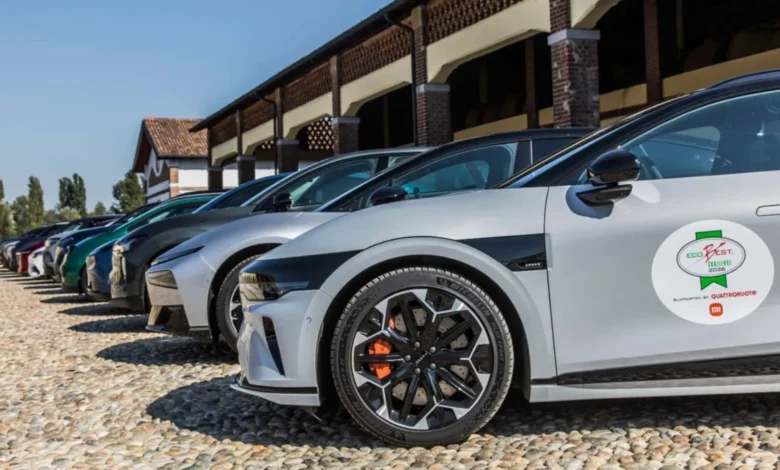
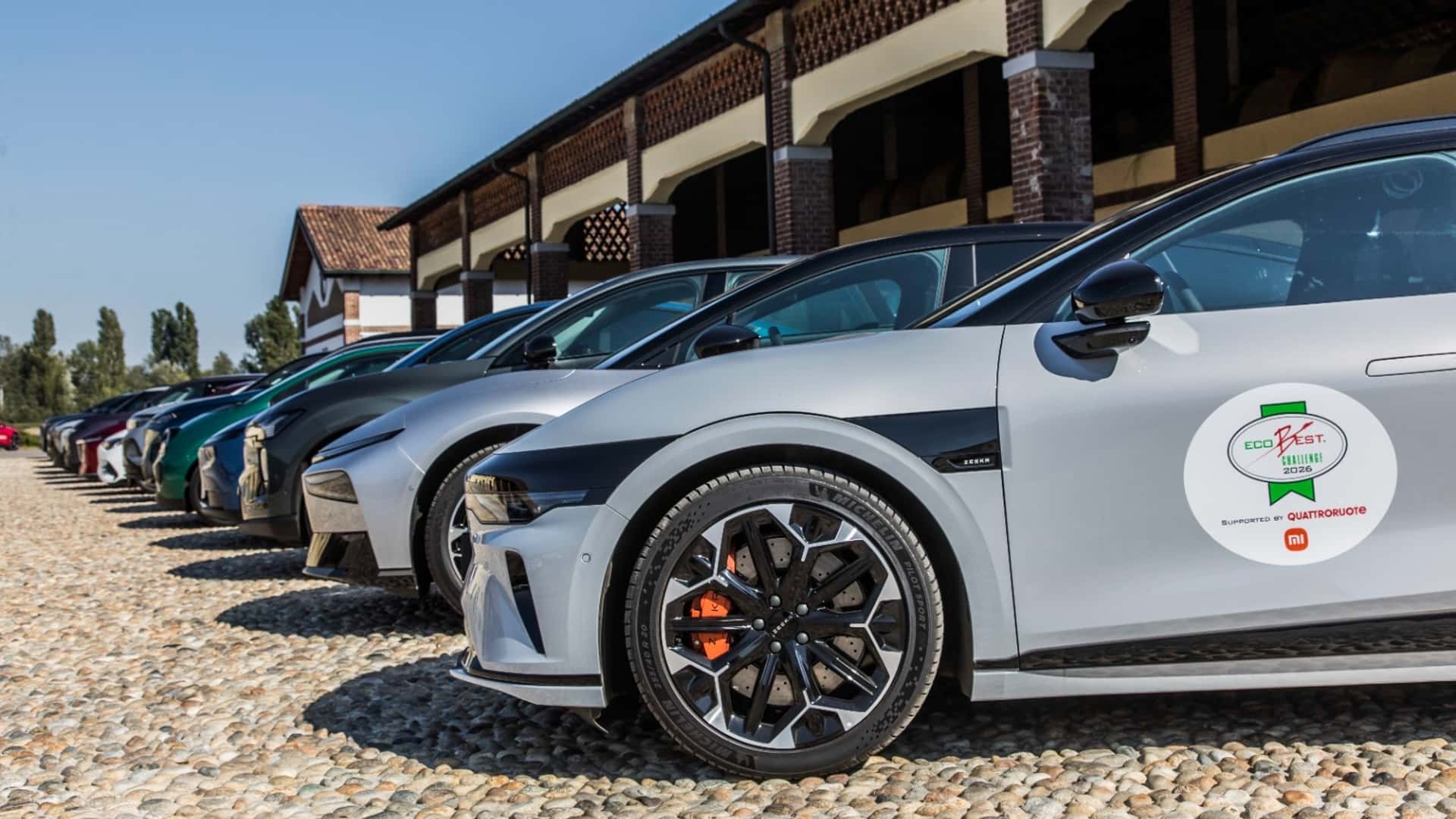
The findings from the 2026 ECOBEST Challenge, organized by the automotive organization AUTOBEST, put 15 new electric vehicles to a rigorous "truth test" under real traffic conditions near Milan, Italy. The results demonstrated that an EV’s dashboard indicator showing zero percent battery or zero miles of remaining range does not mean the vehicle immediately shuts down. In fact, every single vehicle tested continued to travel a significant distance after the gauges indicated total depletion, though the variance between different manufacturers was striking.
The Real-World Testing Methodology
To evaluate how vehicles perform when pushed to their absolute limits, AUTOBEST designed a comprehensive, standardized testing protocol. The objective was to eliminate variables such as driver behavior, weather discrepancies, and topographical advantages to provide consumers with an accurate benchmark of vehicle efficiency and reserve capacity.
The evaluation process began with a controlled convoy drive on a predetermined route near Milan. This course incorporated a balanced mix of urban city streets, winding country roads, and high-speed multi-lane highways to mimic daily driving conditions. To ensure absolute fairness, a lead vehicle set a strict, consistent pace for the entire group. Furthermore, professional automotive journalists rotated vehicles every 19 miles (30 kilometers). This rotation effectively neutralized individual driving style differences, ensuring that aggressive or conservative driving habits did not skew the data for any single car.
Throughout the initial road phase, vehicles were operated under standardized conditions. Each car carried only a single driver. The climate control systems were left active to simulate real-world energy consumption, and vehicles were kept in their standard driving modes rather than specialized Eco settings. Ambient temperatures during the evaluation period hovered between 68 and 77 degrees Fahrenheit (20 to 25 degrees Celsius), maintaining optimal operating parameters for the lithium-ion battery packs.
The critical final phase of the evaluation took place at Quattroruote’s Vairano proving ground. Once a vehicle’s instrumentation cluster registered either zero miles of remaining range or a zero percent state of charge, the driver continued operating the vehicle around the closed test track. The test concluded only when the car completely exhausted its remaining energy and could no longer move forward under its own power. The distance covered between the initial zero reading and the final immobilization point was meticulously recorded.
Performance Breakdown: The Post-Zero Distance Range
The results of the Vairano proving ground test highlighted a fascinating divergence in engineering philosophy and battery management systems among global automakers. While all 15 vehicles successfully kept moving after displaying zero, the distance they managed to travel varied wildly—from a mere fraction of a mile to nearly 20 miles.
On average, the test fleet managed to travel approximately 10 miles (16 kilometers) after hitting empty. This buffer is intentionally built into modern EV software to protect drivers from miscalculating their stops and to ensure safety in emergency situations.
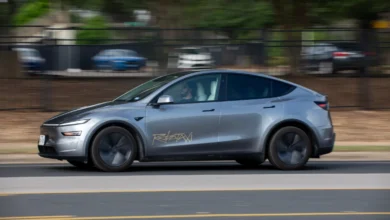
At the top of the leaderboard, the Leapmotor B10 surprised evaluators by leading the pack. The B10 managed to travel an impressive 19.9 miles (32 kilometers) after its dashboard read zero percent charge. Close behind was the Tesla Model Y Long Range, which continued to roll for roughly 18.9 miles past empty. These vehicles provide drivers with a generous safety net, offering ample time to locate a nearby charging station or pull safely off a busy highway even after the instrumentation insists the battery is fully spent.
Conversely, the performance at the lower end of the spectrum highlighted potential risks for drivers who rely strictly on dashboard readouts. The Xpeng P7+ recorded the lowest post-zero distance in the entire test, managing a meager 0.6 miles (approximately 1 kilometer) before grinding to a halt. While the Xpeng boasts impressive total range capabilities on a full charge, its aggressive power-cut strategy leaves virtually no room for error once the battery hits its lower threshold. A driver relying on the P7+ would likely find themselves stranded almost immediately after the warning light illuminates, necessitating prompt roadside assistance.
Understanding the Physics of EV "Empty"
To comprehend why electric vehicles can continue driving after showing zero, one must examine the underlying chemistry and battery management systems (BMS) that govern modern EVs.
Unlike a traditional smartphone or laptop battery that may shut down abruptly when it reaches zero percent, automotive battery packs are complex assemblies managed by sophisticated software. A lithium-ion battery pack consists of thousands of individual cells. As the vehicle consumes energy and the state of charge declines, the voltage across these cells drops correspondingly.
If the voltage drops past a critical safety threshold, permanent and irreversible damage can occur to the internal chemistry of the cells, drastically reducing the battery’s overall lifespan and capacity. To prevent this, the vehicle’s battery management system enforces a strict protective buffer. When the dashboard displays zero percent, the vehicle has exhausted its usable state of charge—meaning the energy allocated for normal driving has been depleted. However, a hidden reserve of energy remains locked inside the pack. The car intentionally refuses to access this reserve under normal operation, acting as a safeguard for the battery hardware.
Furthermore, discrepancies often exist between the state of charge percentage and the estimated range calculation. These two metrics are derived from different algorithms and do not always reach zero simultaneously. For instance, previous testing on the Tesla Model 3 revealed that when the battery dropped to zero percent charge, the range estimator still displayed two remaining miles of travel. From that specific milestone, the vehicle proceeded to travel an additional 31 miles before total immobilization.
AUTOBEST’s published data effectively maps the distance covered post-zero, but industry analysts note that distance alone does not tell the whole story. The data table does not account for the precise amount of reserve energy remaining at the zero-percent mark, nor does it detail the power output or speed maintained by each vehicle during its final stretch. Consequently, while the Leapmotor B10 traveled over thirty times farther than the Xpeng P7+ after the warning, it does not necessarily mean the Leapmotor held thirty times more reserve energy; rather, it reflects differences in how conservatively each vehicle dispenses its final kilowatts.
Innovation in Recovery: The Zeekr 7GT Support Vehicle
Beyond evaluating range accuracy, the 2026 ECOBEST Challenge introduced a practical innovation in roadside vehicle recovery. Traditionally, when multiple test vehicles run completely out of energy on a closed circuit or designated route, recovering them requires conventional towing services or dedicated flatbed trucks, which can cause significant delays in testing schedules.
To streamline this process, AUTOBEST utilized a Zeekr 7GT as a mobile support vehicle. Equipped with advanced bidirectional charging capabilities, specifically Vehicle-to-Load (V2L) technology, the Zeekr 7GT served as a roving power bank. When a participating EV finally exhausted its battery pack and came to a complete stop on the test track, the support vehicle was dispatched directly to the scene.
Using the V2L function, technicians plugged a charging cable from the Zeekr 7GT directly into the stranded vehicle, transferring a controlled amount of electrical energy from the support car’s massive battery pack into the depleted EV. Within a short period, the stranded vehicle received enough charge to power up its systems and drive itself back to the paddock area under its own power.
This rescue method eliminated the logistical friction of traditional towing and underscored the practical utility of bidirectional charging features in everyday scenarios. As V2L and Vehicle-to-Grid (V2G) technologies become more prevalent in upcoming EV models, roadside assistance models may shift toward peer-to-peer vehicle charging rather than relying exclusively on fossil-fueled tow trucks.
Industry Implications and Consumer Takeaways
The findings from the 2026 ECOBEST Challenge carry significant implications for both automotive manufacturers and everyday consumers. For automakers, the wide discrepancy in post-zero performance highlights a lack of standardization in how range is communicated to the driver. While some brands prioritize conservative buffers that offer generous safety margins, others present a more literal interpretation of battery depletion, which increases the psychological stress of long-distance travel.
For consumers, the primary takeaway is both reassuring and cautionary. On one hand, drivers dealing with unexpected traffic delays or misplaced charging infrastructure can take comfort in knowing that a zero-percent warning does not mean immediate immobilization. An average buffer of 10 miles provides a meaningful window to locate a charger or pull off the highway safely.
On the other hand, relying on this buffer is a risky strategy. Vehicles like the Xpeng P7+ demonstrate that not all EVs are engineered with a generous post-zero reserve. Treating the dashboard zero indicator as a hard deadline remains the safest practice for EV owners. As public charging infrastructure continues to mature across Europe and North America, understanding these nuances will help drivers navigate range anxiety with greater confidence and precision.