Renault Unveils the Forefront Concept: A Modular Autonomous Electric Vehicle Designed for Modern Defense and Industrial Missions

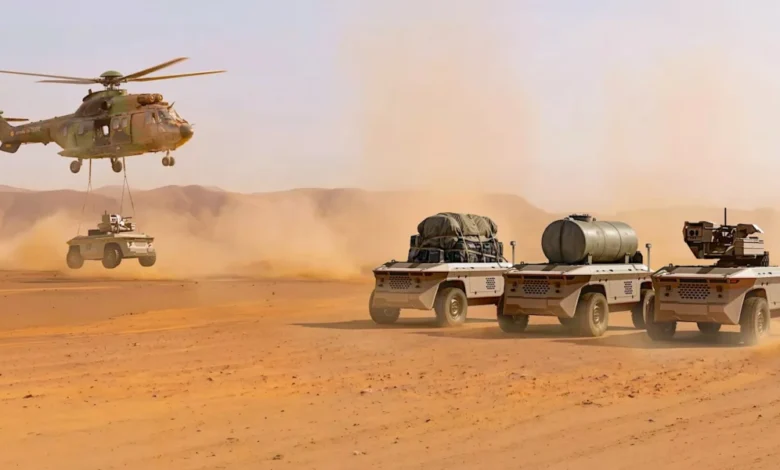
The landscape of modern military logistics and high-risk civilian operations is undergoing a rapid technological transformation, driven by the integration of electrification and autonomous capabilities. Renault Group, in a strategic collaboration with the Belgian defense engineering firm John Cockerill, has introduced the Forefront concept. This modular, autonomous electric ground vehicle platform has been specifically designed to tackle the French Army’s (Armée de Terre) most demanding mission profiles. While engineered to meet the rigorous demands of contemporary defense operations, the platform also targets critical heavy-duty civilian applications, signaling a broader shift toward unmanned ground vehicles (UGVs) capable of operating in hazardous and hard-to-reach environments.
The Genesis of the Forefront Concept
The development of the Forefront concept represents the convergence of two distinct industrial powerhouses. Renault Group brings its vast automotive manufacturing expertise, refined through decades of large-scale, cost-effective vehicle production and electric vehicle (EV) technological innovation. Conversely, John Cockerill contributes decades of specialized defense industry experience, weapon systems integration, and tactical vehicle design.

In recent years, modern armed forces have increasingly prioritized the reduction of logistical footprints, fuel dependencies, and soldier exposure in hostile zones. Electric and hybrid-electric powertrains offer significant tactical advantages over traditional internal combustion engines, including lower thermal and acoustic signatures, high instantaneous torque for extreme off-road mobility, and the ability to serve as mobile power generators in remote operating bases. By conceptualizing a modular platform that can be rapidly industrialized at a controlled cost, Renault and John Cockerill aim to deliver a scalable solution for cash-conscious defense ministries while maintaining the rigorous durability standards required for front-line deployment.
Technical Architecture and Operational Capabilities
Although the Forefront concept currently exists primarily in digital renderings and preliminary design phases, its projected specifications outline a highly versatile platform. The vehicle is architected around a modular electric powertrain and autonomous navigation suite designed to conquer complex, unstructured terrain without human intervention.
According to Renault Group Chief Executive Officer François Provost, the project bridges the gap between commercial-scale manufacturing and specialized military utility. "The Forefront Concept demonstrates the contribution that Renault Group’s industrial and technological expertise can make to a strategic sector such as unmanned ground vehicles with multiple applications expected across both civilian and military sectors in the years to come," Provost stated. "This innovative project brings together two complementary areas of expertise: Renault Group’s in the rapid, large-scale and cost-effective development and production of high-performance, reliable technological products and John Cockerill’s in the defense industry."

The autonomous navigation system is engineered to handle GPS-denied environments, electronic warfare jamming, and severe weather conditions—common variables in contemporary combat zones. Furthermore, the vehicle’s modular design allows it to be reconfigured for a variety of tasks, ranging from supply transport and hazardous material handling to reconnaissance and casualty evacuation.
Dual-Use Strategy: Bridging Defense and Civilian Sectors
The integration of dual-use technologies has become a cornerstone of modern industrial policy within the European Union, where defense innovation is increasingly tied to commercial scalability. By positioning the Forefront platform for both military and heavy industrial use, Renault and John Cockerill can amortize development costs across multiple markets.
In civilian sectors, autonomous heavy-duty electric platforms hold immense potential for industries such as mining, construction, forestry, and disaster relief. Operating heavy machinery in unstable terrain, active construction sites, or post-disaster zones frequently places human operators at severe risk. A ruggedized, autonomous utility vehicle capable of hauling heavy materials—such as reinforced concrete piping, heavy machinery components, or emergency relief supplies—offers a compelling value proposition for industrial operators seeking to improve worksite safety and efficiency.

Industry analysts note that while many defense-focused concepts lean heavily into futuristic renderings with questionable practical applications, the underlying industrial logic of utilizing a common skateboard EV architecture for utility roles is grounded in proven automotive manufacturing principles.
Timeline and Next Steps
The Forefront project is currently transitioning from the digital design phase into physical prototyping. Over the coming months, the first series of Forefront concept prototypes are scheduled to participate in a rigorous battery of field exercises, military trials, and mobility tests.
These trials will provide engineers with critical empirical data regarding battery performance under extreme thermal and mechanical stress, the reliability of the autonomous navigation stack in complex terrain, and the structural integrity of the modular chassis under heavy loads. Feedback gathered from these military evaluations will dictate the pace of further development, potentially paving the way for low-rate initial production toward the end of the decade.

Broader Implications for the Automotive and Defense Industries
The partnership between Renault and John Cockerill reflects a wider trend across Europe and North America, where traditional automotive manufacturers are forging deeper ties with defense contractors. As electrification reshapes the global automotive industry, legacy automakers are actively seeking new revenue streams and government-backed research and development grants to secure their market positions.
At the same time, defense ministries are eager to leverage commercial EV supply chains to drive down the notoriously high costs associated with bespoke military vehicle production. By utilizing off-the-shelf electric motors, battery management systems, and software architectures derived from passenger and commercial vehicle lines, defense agencies can modernize their fleets more rapidly and sustainably.
As the Forefront prototypes enter their testing phases, the success of the project could serve as a benchmark for future civil-military integration projects. Whether the platform ultimately secures procurement contracts with the Armée de Terre or finds its primary market in heavy industrial logistics, the initiative underscores the growing inevitability of electrification and autonomy in the world’s most demanding operational environments.