Tesla Robotaxi app update streamlines ride selection with real-time availability and wait-time transparency

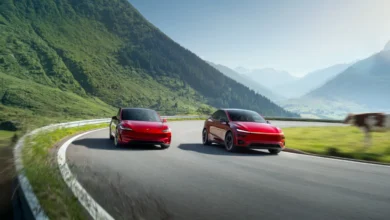
Tesla has introduced a significant user interface refinement to its Robotaxi application with the release of version 26.11.0, fundamentally altering how riders interact with the autonomous fleet. The update, which surfaced on November 7, 2026, introduces a centralized vehicle selection screen that displays estimated time of arrival (ETA), projected wait times, and current availability for both the two-seat Cybercab and the four-seat Model Y Robotaxi. By providing these metrics side-by-side, Tesla is prioritizing data-driven decision-making for its passengers, allowing them to optimize their travel based on immediate fleet dynamics rather than guesswork.
Evolution of the Robotaxi User Experience
The journey toward this streamlined interface has been iterative. When Tesla first opened paid, autonomous Cybercab services to the public in Austin, Texas, on September 3, 2026, the booking process was relatively rudimentary. Users were presented with vehicle options, but the interface lacked the granular detail required to make informed choices during periods of high demand.

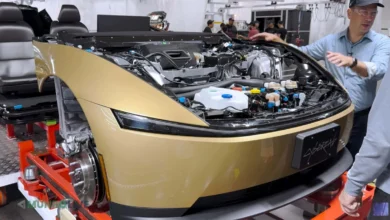
In the initial weeks of operation, the app provided a binary choice: the compact, purpose-built Cybercab or the versatile Model Y. As the service matured, Tesla released version 26.8.2, which added a critical seating capacity indicator. This change was essential for group travelers, as it prevented the logistical friction of ordering a vehicle that could not accommodate the party size. However, even with that improvement, the "curb-side uncertainty"—not knowing which vehicle would actually arrive faster—remained a pain point. With the latest update, the "best dilemma" of choosing between vehicle types is now fully informed by real-time logistics.
Fleet Expansion and Market Dynamics in Austin
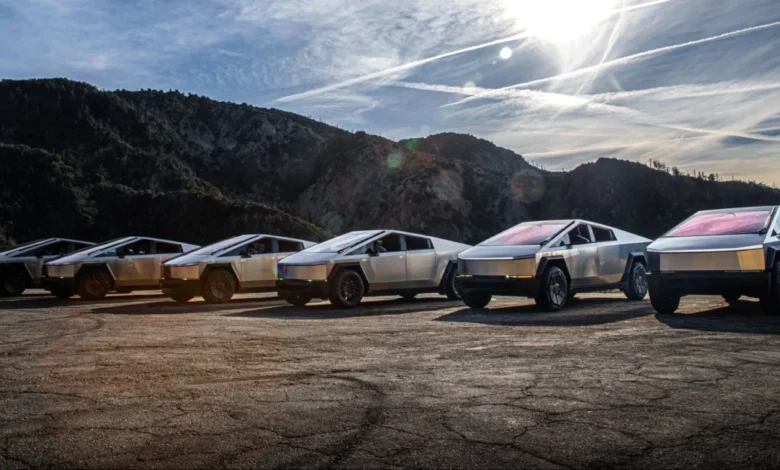
The necessity for this level of transparency is driven by the rapid scaling of Tesla’s autonomous fleet in Texas. The data suggests an aggressive deployment strategy. When the service launched in early September, the Texas Department of Motor Vehicles (DMV) registry showed approximately 45 Cybercabs operating within the service area. By late October, that number had ballooned to 573, supplemented by 631 Model Y units.
The sheer density of the fleet has led to record-breaking activity. Community-led data trackers logged over 1,576 distinct Cybercab sightings in Austin on Halloween alone, signaling a massive surge in both fleet deployment and user adoption. This saturation of the urban landscape means that the "closest" vehicle is no longer a static assumption. Because the fleet is now composed of two distinct form factors operating under the same algorithmic umbrella, the availability of a Model Y might be higher in a specific residential quadrant, while Cybercabs may be clustered near high-traffic commercial hubs. The new interface allows the system to communicate these variances to the consumer, effectively managing supply and demand in real-time.

Strategic Implications for Service Areas
While the new comparison feature is currently live for Austin riders, its deployment serves as a blueprint for the broader, multi-city rollout. As of November 2026, residents in Dallas, Houston, and Fort Worth continue to rely on the Model Y-based service. However, during the company’s third-quarter earnings call, executives reaffirmed that the Cybercab rollout for the Dallas market is slated for later this month.
The standardization of the app experience is a critical component of Tesla’s plan to scale. By ensuring that the software layer is consistent across all jurisdictions, Tesla can flip the switch on new markets with minimal friction. The ability to present accurate wait times not only builds consumer trust but also prevents the "cancellation churn" that occurs when a user orders a vehicle, finds the wait time unacceptable, and reverts to a ride-hailing competitor.
Operational Adjustments and Feature Rollouts
The UI update is the latest in a series of rapid-fire software deployments aimed at refining the passenger experience. In late October, Tesla introduced a "Quiet Mode" for its Robotaxi fleet, which allows passengers to black out the interior cabin screens. This feature, initially prototyped in the Cybercab and later ported to the Model Y, addresses the privacy and comfort needs of commuters who may wish to sleep or work during their transit.

Furthermore, Tesla has demonstrated a commitment to long-term service availability, extending operational hours in Austin from 6:00 a.m. to 2:00 a.m. This expansion suggests that the company is no longer treating the service as a pilot project but as a full-scale utility meant to compete directly with public transit and traditional rideshare services.
The Shift Toward a Cybercab-Dominant Future
The increased focus on the Robotaxi app is occurring in parallel with a significant shift in Tesla’s manufacturing priorities. On November 6, 2026, CEO Elon Musk announced that Tesla will wind down production of the Cybertruck at Gigafactory Texas by mid-2027. This decision is directly linked to the company’s pivot toward autonomy. According to Musk, the factory space currently dedicated to the electric pickup will be reallocated to increase the output of the Cybercab.
This pivot underscores the urgency of Tesla’s "Master Plan" phase regarding autonomy. While the Cybertruck served as a halo product for the brand, the company’s internal calculus has shifted. The data implies that Tesla views the Robotaxi platform as its primary engine for future revenue, potentially surpassing the sale of individually owned vehicles. By 2027, the company aims to have a high-volume, purpose-built fleet that functions as a continuous, revenue-generating asset, rather than a depreciating consumer product.

Industry Impact and Competitive Landscape
The integration of real-time availability into the Robotaxi app places additional pressure on traditional ride-hailing companies. While competitors have long offered estimated arrival times, the difference lies in the nature of the fleet. Because Tesla’s fleet is vertically integrated—meaning the hardware, the software, and the network are all under the same control—the latency between the app’s display and the actual vehicle’s arrival is expected to be lower.
Analysts monitoring the space note that this level of integration is the "holy grail" of the mobility-as-a-service (MaaS) sector. By removing the human driver from the equation, Tesla can theoretically achieve a level of operational efficiency that remains elusive to rivals who rely on independent contractors. The ability to route vehicles dynamically based on real-time traffic and demand, while providing the user with a transparent choice, creates a flywheel effect: higher utilization leads to better data, which leads to improved routing, which ultimately lowers the cost per mile for the rider.
Looking Ahead: Regulatory and Technical Hurdles
Despite the technological progress, the expansion of the Robotaxi fleet is not without its hurdles. Regulatory approval remains the primary gatekeeper for entering new markets. While Tesla has enjoyed a relatively smooth rollout in Texas, entering more densely populated or complex regulatory environments in other states will require a continued, high-level engagement with transport authorities.

The upcoming launch of Dallas service will be a significant stress test for the new software interface and the broader fleet management system. If the system can effectively manage the distribution of both Cybercabs and Model Ys across a larger, more complex geography, it will likely accelerate the timeline for national expansion.
For the end user, the update to version 26.11.0 is more than just a visual change—it is a signal that the era of "experimental" autonomous transport is ending. As the fleet grows from hundreds of units to thousands, the sophistication of the user interface must match the scale of the operation. With this update, Tesla has provided its riders with the tools to navigate a rapidly changing mobility landscape, ensuring that the transition to an autonomous future is as frictionless as possible. As the company prepares for a future where personal vehicle ownership may become secondary to on-demand, autonomous transportation, these software refinements represent the final steps in perfecting the user experience for a post-driver world.