Critical OpenSSH Vulnerability CVE-2026-123158 Triggers Exploitation Attempts Targeting Password-Disabled Linux Accounts

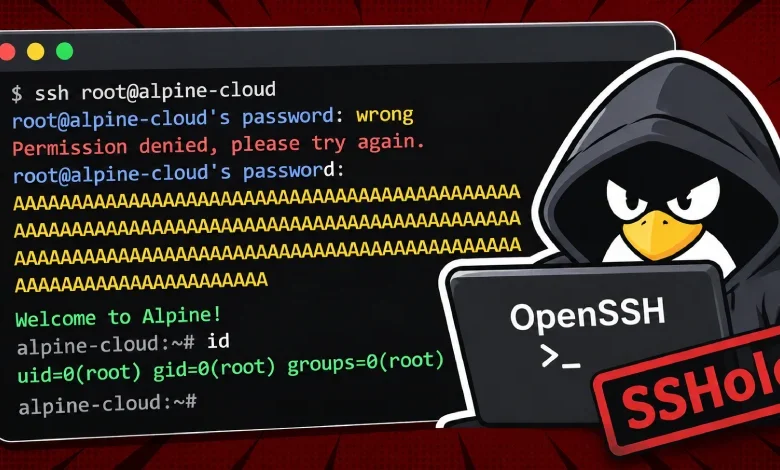
The cybersecurity landscape faces a significant challenge as threat actors have begun actively exploiting a high-severity vulnerability within the OpenSSH ecosystem. Tracked as CVE-2026-123158 and colloquially dubbed "SSHole," the security flaw presents a critical risk to specific Linux distributions, particularly those utilizing the musl C library with Pluggable Authentication Modules (PAM) disabled. This vulnerability effectively permits unauthenticated attackers to bypass traditional authentication mechanisms, potentially granting unauthorized access to systems that have been configured with disabled passwords.
Technical Genesis and Mechanism of CVE-2026-123158
The root cause of the SSHole vulnerability is traced back to a legacy patch introduced in 2016, originally intended to mitigate a username enumeration risk identified as CVE-2016-6210. In the context of OpenSSH, the system often represents a disabled password account with an asterisk (*) in the password hash field. The vulnerability emerges when the sshd daemon processes an incoming connection.
Under specific conditions, when an attacker provides an oversized password—ranging between 257 and 1,024 bytes—the system’s internal hash calculation fails. Due to the flawed implementation inherited from the 2016 patch, this failure is erroneously interpreted by the authentication logic as a successful match against the system’s representation of a disabled account. Consequently, the daemon treats the input as valid, allowing the attacker to establish a session without requiring legitimate credentials or cryptographic SSH keys.

This flaw is specifically localized to environments where OpenSSH runs on the musl C library. Because major distributions utilizing the standard glibc library handle memory and authentication strings differently, they remain largely immune to this specific vector. However, the impact is pronounced in minimalist or container-optimized environments, such as Alpine Linux, which frequently rely on musl and may have PAM disabled by default to maintain a smaller footprint.
Chronology of Discovery and Initial Exploitation
The timeline of this incident reflects the rapid transition from public disclosure to active weaponization. The vulnerability was identified and formally reported by security researcher Ozgun Kultekin, leading to a coordinated disclosure process.
- Early November 2026: The vulnerability is confirmed and analyzed, with security researchers identifying the conditions required for exploitation.
- November 5, 2026: Official patches are released as part of the OpenSSH 10.6p2 update. Concurrently, maintainers of Alpine Linux and other affected projects issue urgent security advisories.
- November 6, 2026: Within nine hours of the CVE publication, threat intelligence firm Previdian detects the first wave of active exploitation attempts.
- Post-Disclosure: Monitoring telemetry identifies specific IP addresses, notably one geolocated in Japan, engaging in reconnaissance. These actors are observed utilizing non-interactive SSH sessions to execute system commands such as
id,uname, andhostname, confirming the acquisition of root-level privileges on vulnerable honeypot infrastructure.
The Scope of Risk: Why "Password-Disabled" Does Not Mean "Secure"
A common misconception among system administrators is that an account with a disabled password (indicated by an asterisk) is inherently secure against password-based attacks. While such accounts are shielded from traditional brute-force attempts, the SSHole vulnerability transforms that "disabled" state into a backdoor.
The security firm Safe Security has emphasized that the severity of the incident is dictated by the privileges of the targeted account. In environments where administrative accounts are misconfigured or remain accessible via password authentication—even if meant to be locked—the risk is existential. An attacker gaining a shell on a server can proceed to harvest deployment credentials, environment variables containing API keys, and sensitive application secrets. This foothold serves as an ideal launchpad for lateral movement across a corporate network, potentially leading to widespread service disruption or data exfiltration.

Fact-Based Analysis: Implications for Enterprise Infrastructure
The implications of CVE-2026-123158 are multifaceted, touching upon both configuration management and supply chain security. Organizations relying on containerized infrastructure, particularly those deploying standard Alpine Linux images without hardening, are at the highest risk.
- Infrastructure Hardening: The vulnerability underscores the danger of "default" configurations. While Alpine Linux is favored for its efficiency, administrators must audit these images to ensure that PAM is enabled or that alternative, more robust authentication methods are enforced.
- Incident Response Requirements: For organizations that suspect they may have been exposed, the recovery process is not limited to patching. Alpine Linux and other security bodies strongly recommend a thorough forensic review. Administrators must scrutinize
/var/log/messagesfor any entries labeled "Accepted password for" associated with accounts that should not accept password logins. - Post-Compromise Procedures: If an unauthorized login is confirmed, the system should be treated as fully compromised. This includes revoking all SSH keys, rotating all secrets stored on the machine, and investigating for the presence of persistent backdoors or rootkits that the attacker may have installed immediately after gaining access.
Official Responses and Mitigation Strategy
The OpenSSH development team acted swiftly to address the flaw, releasing version 10.6p2 to correct the erroneous password-hashing logic. The patch ensures that the authentication process correctly distinguishes between a failed hash operation and a valid password-less entry, effectively neutralizing the bypass vector.
Alpine Linux developers have provided comprehensive guidance for users:
- Immediate Patching: Upgrade to the latest version of OpenSSH provided in the distribution’s repositories.
- Restart Services: Ensure that the
sshdservice is restarted after the package update to load the patched binary. - Verification: Review
doasusage logs and check for recently created users or unauthorized modifications to~/.ssh/authorized_keys.
While platforms such as Dropbear and systems utilizing standard glibc-based distributions are not impacted, the incident serves as a stark reminder of the "brittleness" of legacy code. The fact that a patch from 2016 could introduce such a severe vulnerability a decade later highlights the necessity for ongoing security audits of foundational software components.

Broader Cybersecurity Context
The exploitation of SSHole highlights an ongoing trend where threat actors prioritize the exploitation of widely used, low-level infrastructure software. Because OpenSSH is the backbone of remote server management globally, vulnerabilities within it provide a high return on investment for attackers.
Furthermore, the rapid weaponization of this vulnerability—occurring within hours of public disclosure—demonstrates the sophistication of modern automated scanning tools. Attackers are clearly monitoring CVE databases in real-time, ready to deploy scripts to identify and compromise vulnerable targets before administrators have had the opportunity to implement patches.
For IT and security teams, the incident reinforces the importance of "defense-in-depth." Relying solely on a single authentication factor or assuming that "disabled" accounts are inaccessible provides a false sense of security. Implementing multi-factor authentication (MFA) for all SSH sessions, enforcing strict firewall rules to limit SSH access to known IP ranges, and maintaining rigorous patch management cycles remain the most effective defenses against such sophisticated threats.
As the industry moves forward, the focus will likely shift toward more robust testing methodologies for open-source utilities. The SSHole event is expected to influence future security auditing requirements for the OpenSSH codebase, specifically concerning the interaction between historical security patches and current authentication workflows. For now, the priority remains the identification of vulnerable endpoints and the immediate deployment of the 10.6p2 update.
Related posts: