Google Maps Receives Major Update to Introduce Full Dual-Screen Support for Apple iPhone Duo

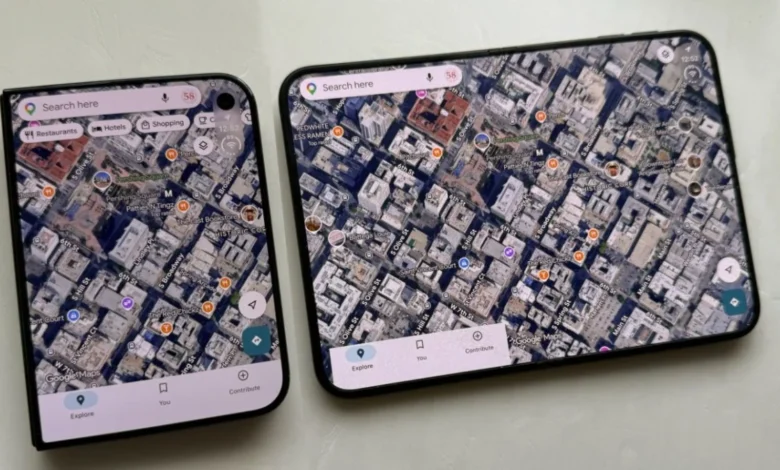
The software ecosystem surrounding foldable mobile devices continues to evolve as major third-party developers work to optimize their applications for non-traditional form factors. Google has officially joined this movement by rolling out version 26.44.4 of its popular navigation software, Google Maps, specifically tailored to accommodate the unique dual-display architecture of the Apple iPhone Duo. Although the official release notes provided by Google in the Apple App Store lean on generic descriptions—attributing the update solely to standard bug fixes and performance improvements—users who have adopted Apple’s latest foldable flagship are immediately greeted by a thoroughly redesigned interface. This development marks a significant step forward in ensuring that iOS applications can seamlessly transition between standard smartphone displays and expansive, multi-screen environments without compromising usability, aesthetic appeal, or core navigational functionality.
Background Context and the Rise of Dual-Screen Form Factors
The launch of the Apple iPhone Duo represented a paradigm shift for the iOS ecosystem, introducing hardware featuring both an external cover display and a larger inner folding screen. While Apple built robust operating system-level frameworks to help applications scale, developers have faced the ongoing challenge of adapting legacy user interfaces designed for single, rectangular slabs of glass. In the early weeks following the device’s market debut and subsequent shipping milestones, many productivity, social media, and navigation apps exhibited awkward scaling behaviors.
Google Maps was among the major applications that initially lacked native dual-screen optimization. On the outer cover display, the application was previously forced to apply a slight leftward offset to accommodate the repositioned iOS dock layout, resulting in a somewhat asymmetrical appearance. On the expansive inner screen, the experience was even less integrated; the software simply mirrored a standard, single-screen iPhone interface. Users were given the option to manually shift this window to the left or right side of the panel, but this left the vast majority of the inner display entirely empty and underutilized, failing to take advantage of the generous screen real estate that foldable device owners paid a premium to access.
Detailed Breakdown of the Version 26.44.4 Update
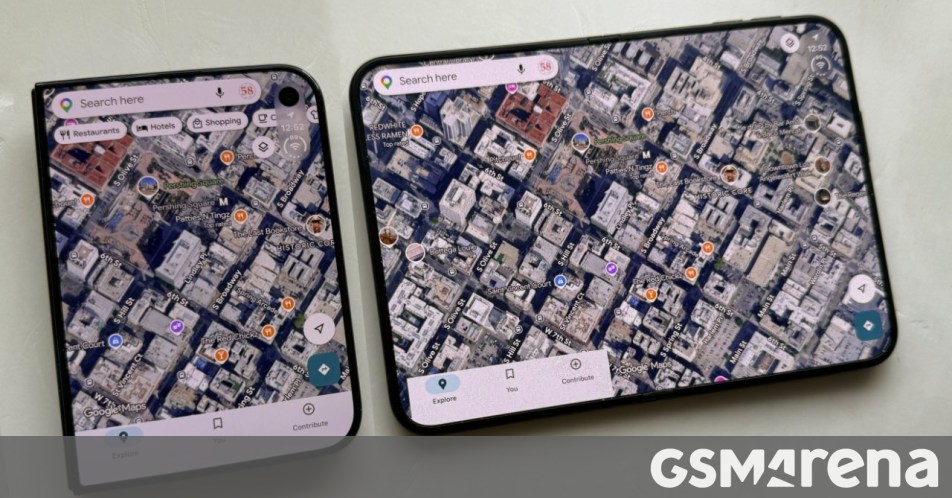
With the deployment of version 26.44.4, Google has effectively bridged the gap between its mapping software and Apple’s hardware vision. The update introduces distinct layout rules for both the outer cover and inner folding displays of the iPhone Duo.
On the outer display, the visual adjustments are largely cosmetic but greatly improve polish. The previous layout offset has been resolved, allowing the user interface elements to align correctly with the native geometry of the cover screen.
The most transformative changes, however, occur when the device is unfolded. The inner screen now hosts a rich, wide-aspect-layout that bears a striking operational resemblance to the tablet-optimized version of Google Maps found on the Apple iPad. Rather than floating in a constrained central window, the application stretches across the entirety of the inner canvas. Menus, search bars, and navigational controls are neatly anchored to the left side of the screen, while the interactive map and satellite imagery views expand dynamically to fill the remaining space from corner to corner. This dual-pane approach drastically reduces the need to constantly toggle between menus and the map view, streamlining the route-planning process for drivers, cyclists, and pedestrians alike.
Enhanced Multitasking and Street View Integration
Beyond basic map rendering, Google has re-engineered how specialized features like Street View interact with the iPhone Duo’s expansive inner display. When a user launches Street View on the unfolded device, the interface intelligently splits the screen. By default, the panoramic Street View imagery occupies the left portion of the inner panel, while a synchronized, top-down map view remains active on the right side.

Current testing indicates that the positioning of these split-pane windows is fixed, meaning users cannot dynamically swap the map and Street View panels. However, flexibility is built into the viewing modes: users have the option to expand Street View so that it completely engulfs the entire inner display for an immersive, uninterrupted visual check of a location.
Furthermore, the application demonstrates contextual continuity when hardware states change. If a user closes the iPhone Duo while actively navigating within Street View, the application seamlessly migrates the view to the outer cover screen. Upon closing the device, a dedicated on-screen button appears, allowing the user to easily dismiss Street View and return to the primary map interface on the smaller display, preventing any jarring transitions or loss of navigational context.
Market Pricing and Hardware Ecosystem
The rollout of optimized software arrives as the Apple iPhone Duo continues to establish its footprint in the high-end mobile marketplace. Available through major global retailers, the device commands a premium pricing structure that reflects its advanced engineering. In European markets, the 256GB storage configuration paired with 12GB of RAM retails at approximately €2,299.00, while the higher-capacity 512GB model with 12GB of RAM is priced at €2,549.00. In the United Kingdom, the corresponding models retail at roughly £1,999.00 and £2,199.00, respectively.
Because consumers investing in these price brackets expect a frictionless user experience across all primary applications, the lack of native support from major developers like Google has historically been a point of friction. The prompt delivery of version 26.44.4 helps justify these substantial hardware investments by unlocking the true productivity and navigational potential of the dual-screen configuration.

Industry Implications and Broader Software Trends
The swift adaptation of Google Maps for the iPhone Duo underscores a broader trend within the mobile technology sector: third-party software developers can no longer treat foldable and dual-screen devices as niche novelties. As market adoption for foldable smartphones and multi-display configurations steadily rises, app developers face mounting pressure to deliver fluid, form-factor-agnostic interfaces.
From an analytical perspective, Google’s quiet deployment of this update—hiding major architectural changes behind standard "bug fix" release notes—suggests that continuous, under-the-radar software refinement will become the norm for cross-platform giants. By aligning its flagship mapping service with the design paradigms established by Apple’s hardware engineers, Google has set a high benchmark for other ecosystem players. As competitors in the navigation, social media, and productivity sectors evaluate their own iOS software roadmaps, the success of the Google Maps iPhone Duo integration will likely serve as a case study in effective multi-display layout design. Moving forward, the expectation for seamless screen-continuity and intelligent split-view multitasking will only intensify, forcing the wider app development community to accelerate their own optimization efforts for the burgeoning foldable market.