EVgo Launches First Self-Branded Tesla Supercharger Station in Chicago, Marking a Major Milestone in EV Infrastructure Convergence

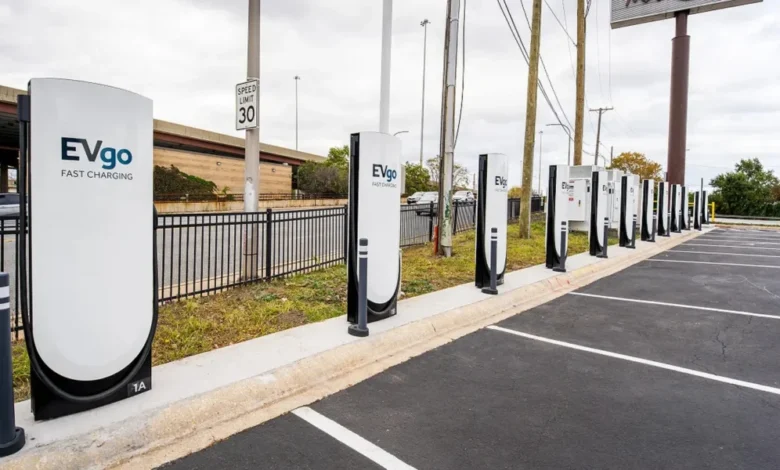
EVgo has officially opened its inaugural self-branded Tesla Supercharger station, located strategically in a Chicago grocery store parking lot at Riverside Square and River’s Edge, 3145 S Ashland Avenue. This milestone installation features 12 high-powered fast-charging stalls equipped with both North American Charging Standard (NACS) and Combined Charging System (CCS) plugs. This deployment serves as the vanguard for a much broader nationwide rollout that will see hundreds of Tesla Supercharger stalls added to EVgo’s rapidly expanding network across the United States.
The newly operational site delivers robust 325 kW power outputs, aligning with EVgo’s strategic vision to deploy ultra-fast charging infrastructure capable of supporting modern electric vehicle (EV) battery architectures. While this initial Chicago station operates at 325 kW, the company’s broader deployment framework, initially outlined in its August strategic announcements, anticipates peak capabilities scaling up to 500 kW at select future sites.
Seamless Integration and Universal Accessibility via Magic Dock
A defining characteristic of this new Chicago location is the incorporation of Tesla’s innovative Magic Dock technology. This integrated adapter system allows drivers of both NACS-compatible and CCS-equipped electric vehicles to seamlessly initiate and complete charging sessions without the need to carry external, third-party adapters.

For non-Tesla EV owners, charging sessions can be conveniently initiated through the native Tesla application. Meanwhile, Tesla drivers benefit from native ecosystem integration, as the new Supercharger stalls automatically appear within the vehicle’s built-in touchscreen navigation system and Trip Planner. This native mapping visibility is part of a broader software integration trend; EVgo fast chargers featuring NACS plugs have gradually populated Tesla’s in-car navigation systems since early September, provided users toggle on the third-party charging filter.
Badar Khan, Chief Executive Officer of EVgo, emphasized the strategic significance of this dual-plug accessibility during the launch. "By serving both Tesla and non-Tesla NACS drivers, we’re doubling EVgo’s addressable market and continuing to meet EV drivers where they are and where they want to charge," Khan stated.
Operational Partnerships and the Retail Charging Strategy
The operational framework of this new initiative highlights an evolving collaborative model within the electric vehicle charging sector. While EVgo maintains outright ownership of the Supercharger hardware and handles the consumer-facing branding, Tesla is responsible for the ongoing back-end operation, maintenance, and technical upkeep of the stalls.
This partnership leverages prime real estate partnerships, specifically targeting commercial shopping plazas anchored by major grocery stores. The initial wave of installations is rolling out in collaboration with Regency Centers, a major national owner, operator, and developer of shopping centers. By placing high-speed charging infrastructure directly into the footprints of daily-necessity retail locations, EVgo and Tesla are addressing one of the primary historical friction points of EV adoption: charging downtime. Instead of treating charging as a dedicated, standalone errand, drivers can accomplish routine grocery shopping while their vehicles rapidly replenish range.

Expanding the NACS Footprint: A Timeline of Infrastructure Evolution
The opening of the Chicago Supercharger site does not stand in isolation; it represents the latest evolution in a multi-year strategy by EVgo to future-proof its nationwide charging network.
The timeline of EVgo’s infrastructure pivot highlights a deliberate transition toward universal standard harmonization:
- 2023 and Earlier: EVgo concentrated on expanding its foundational fast-charging network primarily utilizing CCS connectors, alongside CHAdeMO plugs for legacy vehicles, while laying the groundwork for scalable site construction.
- 2025: EVgo formally initiated a comprehensive network upgrade program to integrate NACS plugs directly into its proprietary fast-charging architecture.
- Late 2025 to Early 2026: The company accelerated deployment targets, aiming to integrate NACS plugs into every newly constructed EVgo site built from 2023 onward over a strict two-year timeline.
- August 2026: EVgo formally announced its landmark partnership model to deploy self-branded Tesla Supercharger stalls, setting the stage for ultra-fast deployments ranging from 325 kW to 500 kW.
- September 2026: Integration milestones were reached as EVgo NACS-compatible fast chargers began appearing natively within Tesla vehicle navigation maps under third-party filters.
- Late 2026: The launch of the inaugural 12-stall Supercharger site in Chicago, with a clear corporate objective to scale this footprint to hundreds of stalls nationwide.
- Looking Ahead to 2027: EVgo has already signaled the future horizon of its technology roadmap, with plans to introduce even more powerful 750 kW charging systems.
Separate from the Tesla Supercharger rollout, EVgo continues to scale its core network, maintaining a target of deploying 500 NACS-equipped stalls across its proprietary fast-charging network by the close of 2026.
Broader Industry Implications and Market Impact
The intersection of EVgo’s commercial real estate expertise, Tesla’s reliable Supercharger technology, and universal plug accessibility signals a maturing EV charging ecosystem. For years, the North American charging landscape suffered from severe fragmentation, forcing drivers to navigate proprietary networks, disparate mobile applications, and incompatible connector types.

By unifying hardware standards around NACS and implementing universal adapter solutions like the Magic Dock at high-traffic retail hubs, industry leaders are effectively lowering the barrier to entry for prospective EV buyers. Range anxiety and charging infrastructure scarcity have consistently ranked among the top consumer hesitations in automotive market surveys. Strategic deployments like the Riverside Square installation in Chicago demonstrate how private-sector collaboration can rapidly densify high-speed charging options without relying exclusively on federal or municipal funding timelines.
Furthermore, the economic implications for commercial real estate developers are profound. Retail plazas that integrate ultra-fast charging infrastructure stand to capture increased foot traffic and longer dwell times from affluent demographic segments who drive electric vehicles. As EVgo prepares to expand its model across Regency Centers properties nationwide—and eyes subsequent technological leaps like its anticipated 750 kW systems slated for 2027—the blueprint for American electric vehicle refueling is undergoing a permanent, consumer-centric transformation.