Thomas Dollbaum Is A Budding Countryish Indie Rock Star

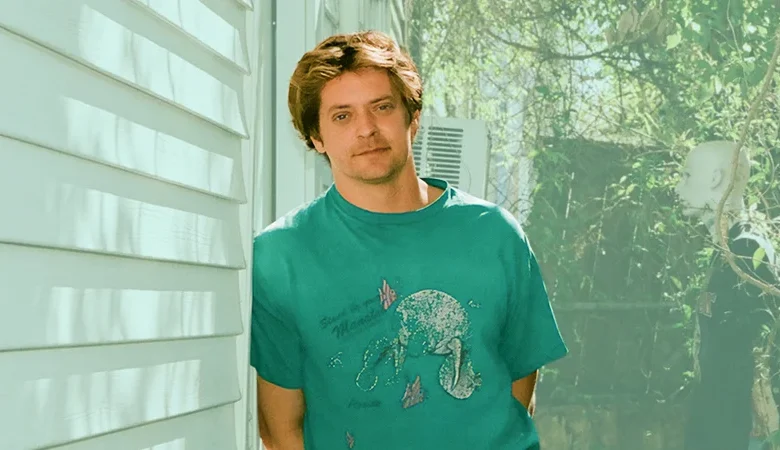
Thomas Dollbaum, a rising artist whose new album, Birds Of Paradise, is set to release Friday, is poised to make a significant mark on the indie rock landscape. Hailing from Florida and now based in New Orleans, Dollbaum crafts songs that are distinctly "countryish" in their sonic texture, often set against the backdrop of his home state’s less-celebrated locales. His MFA in poetry and a natural, conversational drawl, reminiscent of the iconic New Orleans artist Bobby Charles, imbue his music with a grounded authenticity, creating an immediate connection with listeners who might feel they’re encountering a familiar face in a dimly lit bar.
The release of Birds Of Paradise arrives at a propitious moment for this particular strain of indie rock, a genre increasingly defined by artists like MJ Lenderman, who is not only a leading practitioner but also a collaborator on Dollbaum’s new record. Lenderman’s distinctive voice provides backup vocals on the single "Coyote," a track already garnering significant praise as one of the year’s standout songs. This collaboration highlights the organic community that has formed around this burgeoning subgenre, with artists recognizing and amplifying each other’s talents.
A Delayed Debut, A Cultivated Sound
While Birds Of Paradise is being introduced to the public now, the album’s journey to release has been a patient one, spanning approximately three years. The recording sessions took place in 2023 with an ad-hoc band of friends and fellow musicians in Water Valley, Mississippi. Among these collaborators was MJ Lenderman, who was then on the cusp of releasing his breakthrough album, Manning Fireworks. Lenderman contributed not only as a drummer during the initial four-day recording blitz but also added guitar and harmonies to several tracks, including the notable "Dozen Roses."
The delay in Birds Of Paradise‘s release is attributed to a falling out with Dollbaum’s previous label over "creative differences," a common hurdle in the music industry. This unforeseen pause allowed the album to marinate, both for the artist and for the burgeoning audience for this style of music. Ultimately, Dear Life Records, a label known for supporting foundational 2020s alt-country acts like Fust and Florry, as well as Lenderman’s own Boat Songs, stepped in to bring Birds Of Paradise to fruition. However, even Dear Life Records faced its own scheduling constraints, adding further to the album’s lengthy gestation period.
Dollbaum’s Perspective on the Delay
Speaking via Zoom, Thomas Dollbaum, with his ruggedly handsome features and beach-blonde hair, addressed the protracted timeline with a surprising degree of equanimity. "I mean, there was a while I felt a little in the wilderness," he admitted. "No one really was looking at it that much. Then Dear Life had reached out, but they were just busy. They only do a certain amount of records a year." He described the initial plan to release the album a year and a half prior, and his willingness to wait for the right moment and the right people. "I was like, ‘Well, I’ve already waited almost half a year, a year, so why not just wait and put it out with some people I like?’"
Dollbaum also acknowledged the potential benefits of the extended delay, suggesting it provided necessary time for the music to be "digested," even by himself. "I think it also got the amount of time it needed to be digested, even by me," he reflected. "Took a while to get everything in order. It’s in a good place, like it’s the best version of itself it can be." He noted the irony that when the album was recorded, Lenderman’s Manning Fireworks hadn’t yet been released, highlighting the rapid trajectory of his collaborator’s career.
Thematic Depth and Regional Specificity
The thematic core of Birds Of Paradise lies in its unflinching exploration of Florida’s "seedy side." Songs like "Florida" and "Whippits/Trailer Lights" showcase Dollbaum’s innate talent for narrative songwriting, imbued with a regional specificity that has become a hallmark of artists like Lenderman and Karly Hartzman. His lyrical landscape is populated by down-and-out characters, drifters, and those seeking solace or a fresh start in the often-overlooked corners of the Sunshine State. This immersive quality is evident in new tracks such as "Big Boi," which is based on a true story about two drug addicts Dollbaum encountered and inadvertently assisted on a journey to a local "pill mill."
Dollbaum’s influences are as diverse as his sound. While comparisons to MJ Lenderman and the introspective folk of Damien Jurado are readily apparent, his music also possesses a robust, heartland rock sensibility that draws parallels to artists like Jason Isbell. Both Dollbaum and Isbell share an admiration for the late John Prine, a foundational figure in Americana music. This lineage suggests that Birds Of Paradise is likely to resonate deeply with an audience appreciative of lyrical depth, storytelling, and a sound that bridges the gap between country, folk, and rock.
The Florida Landscape: A Muse of Transience and Misunderstanding
Dollbaum’s connection to Florida, despite his current residence in New Orleans, remains a powerful creative engine. He views New Orleans as a place he’s not yet earned the right to write about, a sentiment that underscores his commitment to authenticity. Florida, conversely, is a landscape he mentally inhabits, a place where his creative world resides.
He describes Florida as a "transient place," a characteristic that has shaped his perception and artistic output. "Growing up there, it was always felt that way more than… I wouldn’t even say that I grew up in it, but it just always seemed around," he explained. He also believes Florida is "kind of misunderstood in a lot of ways."
Rather than categorizing Florida solely as Southern, Dollbaum sees it as possessing its own unique identity, albeit with distinct Southern elements, particularly in its "old Florida" inhabitants. His upbringing in a region that was half rural and half urban, coupled with parents who moved there in the 1980s, contributed to his understanding of Florida as a destination for reinvention. "It’s kind of a place people go to start over," he stated. He further elaborated on the state’s demographic makeup, noting the influx of people from the Midwest and New York, seeking a more pleasant climate without necessarily undergoing personal transformation. "People always say if you’re coming down 95 on the west coast, it’s mostly New Yorkers who moved down. And then the Midwest usually populates a lot of my part of Florida. There’s a ton of people from Ohio. A lot of people from Texas." He observed that these individuals often bring their existing lifestyles with them, finding a nicer setting but not necessarily a fundamentally different life.
Musical Roots and Influences
Dollbaum’s musical journey began in the DIY punk scene of Tampa, though the music he gravitated towards was distinct from the prevailing sound. He recalled being in a reggae band during his formative years, playing "straight covers" with a jam-band feel, more in the vein of Sublime than Rusted Root, a sound he described as having "very Florida vibe." The pragmatic approach of playing covers, particularly popular ones, was a means to draw a crowd, a stark contrast to the introspective songwriting he now excels at.
His songwriting inspirations are deeply rooted in classic American folk and rock traditions. Bob Dylan and John Prine were early influences, followed by Damien Jurado and other prominent ’90s artists during his late high school and early college years. He also developed a deeper appreciation for Neil Young’s music as he matured. The comparison to Warren Zevon and Todd Snider, particularly regarding his penchant for exploring "seedy characters," resonates with Dollbaum, who expressed a desire to delve further into Snider’s work.
The story behind "Big Boi" exemplifies Dollbaum’s approach to songwriting, drawing from real-life encounters. He described meeting two individuals at a Waffle House whose car had broken down. What began as an act of assistance evolved into an extended morning spent with them and their children and dogs, involving trips to AutoZone and ultimately a "pill mill." This experience, he recounted, left him in a peculiar situation but ultimately resolved without incident.
The Era of the "Pill Mill"
Dollbaum’s reference to "pill mills" offers a glimpse into a specific, and often troubling, aspect of Florida’s recent history. In the early 2000s, a loophole in Florida law allowed for the proliferation of clinics that prescribed and dispensed opioid painkillers with minimal oversight. These establishments, often described as "pharmacies in gas stations," made it easy for individuals, including those from out of state, to obtain large quantities of prescription drugs like hydrocodone and oxycodone. The practice led to a significant rise in prescription drug abuse and addiction in Florida and beyond, before stricter regulations were eventually implemented. Dollbaum’s firsthand encounter, while seemingly mundane in its immediate aftermath, touches upon a complex social and public health issue that has left a lasting impact.
His openness to such encounters, he suggests, stems from a general receptiveness to people. While he no longer gives rides as frequently as he did in his younger days, these experiences of human interaction have undoubtedly enriched his songwriting, providing him with a wellspring of material that feels both specific and universally resonant.
The cultivation of his artistic voice, the patient development of his sound, and the compelling narratives woven into Birds Of Paradise all point towards Thomas Dollbaum as a significant new talent. His ability to capture the essence of a place and its people, filtered through a lens of thoughtful lyricism and a compelling musicality, positions him as a notable figure in the evolving landscape of indie rock. As Birds Of Paradise makes its debut, it promises to be an album that rewards attentive listening and solidifies Dollbaum’s status as a budding star.