The Evolution of Domestic Surveillance: A Comprehensive Analysis of the 2024 Pet Camera Market and Consumer Technology Trends

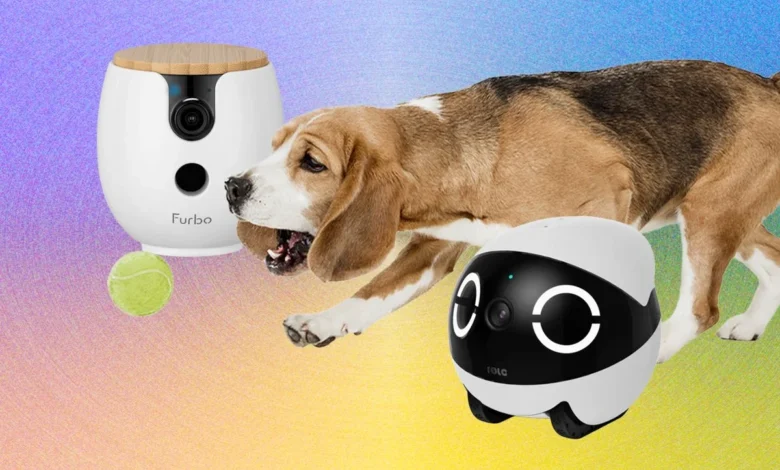
The global pet technology market has undergone a radical transformation over the last decade, evolving from simple stationary monitors to sophisticated, AI-driven interactive robots. As of 2024, the industry is projected to exceed a valuation of $5 billion, driven by a post-pandemic landscape where pet owners, returning to physical offices, seek innovative ways to mitigate separation anxiety and maintain the well-being of their domestic animals. This shift has birthed a new generation of devices that blur the lines between home security, entertainment, and telecommunications. Leading manufacturers such as Enabot, Furbo, and Petcube are currently vying for dominance in a crowded marketplace that prioritizes high-definition visual fidelity, cloud-based data analytics, and physical interactivity.
The Shift from Security to Interaction: A Market Overview
Historically, pet owners utilized standard home security cameras to check on their animals. However, a distinct divergence has emerged between general surveillance and specialized pet technology. While standard security cameras focus on motion detection for the purpose of intruder alerts, modern pet cameras are engineered to facilitate "meaningful engagement." This includes features such as treat-tossing mechanisms, laser toys, and two-way audio designed to soothe distressed animals.

Industry analysts note that the "pet humanization" trend—the tendency for owners to treat pets as family members—has led to a willingness to invest in high-end electronics. According to recent consumer data, approximately 40% of pet owners in the United States now utilize some form of smart home technology specifically for their animals. The demand is no longer just for a video feed; consumers are seeking devices that provide a "digital presence" in the home when they are physically absent.
A Chronology of Pet Tech Innovation
The trajectory of the pet camera industry can be traced through several key developmental phases:
- The CCTV Era (2000–2010): Early adopters used primitive closed-circuit television or basic IP cameras. These offered low resolution and no interactivity.
- The Rise of the Dedicated App (2011–2016): Companies like Furbo and Petcube launched, introducing the first cameras with smartphone integration and treat-dispensing capabilities.
- The Mobility Revolution (2017–2021): The introduction of wheels and treads allowed cameras to move through the home, eliminating "blind spots" where pets might hide.
- The AI and SaaS Era (2022–Present): Modern devices now utilize artificial intelligence to distinguish between a barking dog and a crying baby, or to compile "day-in-the-life" highlight reels for social media sharing. This era is also defined by Software-as-a-Service (SaaS) models, where advanced features are locked behind monthly subscriptions.
Comparative Analysis of 2024 Market Leaders
Robotic Autonomy: The Enabot Ecosystem
The current vanguard of pet technology is defined by mobility. The Enabot Ebo Air 2, priced at approximately $199, represents the pinnacle of this trend. Unlike stationary units, the Ebo Air 2 is a compact, rolling robot equipped with a 2K HD camera. Its utility lies in its ability to navigate a home’s floor plan, controlled remotely via a smartphone application. Technical specifications include two-way audio, a built-in laser toy, and an array of digital "emotions" displayed on a front-facing screen.

For users seeking nutritional interaction, the Enabot Rola PetPal ($200) offers a similar rolling chassis but adds a treat-dispensing module. While the Rola PetPal promises AI-powered recognition to capture photos of pets automatically, testing suggests that these features remain in a state of iterative refinement. The primary value proposition of these mobile units is the elimination of fixed-angle limitations, though they require a stable Wi-Fi environment and are typically limited to 2.4 GHz bands to ensure signal penetration through walls.
Budget-Friendly Stationary Solutions: Furbo and Petcube
For consumers prioritizing affordability and ease of use over mobility, the Furbo Mini ($40) and the Petcube Cam ($32) have emerged as the primary contenders. The Furbo Mini provides a 1080p HD feed and a 360-degree rotating base, though it lacks the physical treat-tossing mechanism of its more expensive siblings.
The Petcube Cam follows a similar philosophy, offering high-quality night vision and motion zone customization. Both devices exemplify the "freemium" model prevalent in the industry. While the hardware is sold at a low margin, full functionality—including cloud storage, smart alerts for specific sounds (like a dog barking or a glass breaking), and historical video playback—requires a monthly subscription, such as "Furbo Nanny" or "Petcube Care."

Integrated Feeding Systems: Petcube Bites 2 Lite and Closer Pets
Bridging the gap between surveillance and caretaking are integrated feeding cameras. The Petcube Bites 2 Lite ($125) features a 1.5-pound treat reservoir and a high-velocity tossing mechanism. Users can adjust the distance and amount of food dispensed via the app, making it a tool for positive reinforcement training from a distance.
Conversely, the Closer Pets TreatView ($100) focuses on portion control, offering a one-cup storage tank for kibble. However, technical reviews often highlight the "jarring" nature of the alert sounds used by these devices, which can occasionally frighten more sensitive animals. This underscores a critical challenge in pet tech: designing interfaces that are intuitive for humans but non-threatening to animals.
Supporting Data and Technical Specifications
To understand the efficacy of these devices, one must look at the underlying hardware. The standard for 2024 has shifted from 720p to 1080p, with premium models like the Enabot Ebo Air 2 pushing into 2K resolution.

| Feature | Mobile Robots (e.g., Enabot) | Stationary Units (e.g., Furbo) | Feeding Units (e.g., Petcube Bites) |
|---|---|---|---|
| Resolution | 2K HD / 1080p | 1080p | 1080p |
| Field of View | Unlimited (via movement) | 130° – 360° (via rotation) | 160° Fixed |
| Audio | Two-way | Two-way | Two-way |
| Storage | MicroSD / Cloud | Cloud (Subscription) | Cloud (Subscription) |
| Connectivity | 2.4 GHz Wi-Fi | 2.4 GHz Wi-Fi | 2.4 GHz Wi-Fi |
A significant technical hurdle remains the reliance on 2.4 GHz Wi-Fi bands. While 5 GHz offers faster data transfer, 2.4 GHz provides the range necessary for devices to move between rooms. This often results in "laggy" video feeds in homes with significant signal interference.
Official Responses and Stakeholder Perspectives
Animal behaviorists have expressed cautious optimism regarding the proliferation of these devices. Dr. Sarah Henderson, a specialist in feline behavior, notes, "The ability for an owner to speak to their cat during a high-stress event, such as a thunderstorm, can be invaluable. However, if the camera’s audio is distorted or the mechanical noises are too loud, it may actually exacerbate the animal’s anxiety."
From a manufacturing standpoint, companies are increasingly focusing on the "security" aspect of their cameras. In response to concerns regarding the hacking of indoor surveillance, a spokesperson for Petcube stated, "We have implemented end-to-end encryption and mandatory two-factor authentication for all users. We recognize that these cameras are placed in the most private areas of the home, and data integrity is our highest priority."

Privacy Implications and Cybersecurity Risks
As with any Internet of Things (IoT) device, pet cameras are not without risk. The integration of microphones and high-definition lenses into the private sphere of the home creates a significant surface area for cyberattacks. Journalistic investigations have previously highlighted vulnerabilities in cheaper, unbranded cameras that lacked basic encryption protocols.
Experts recommend that consumers:
- Utilize strong, unique passwords for the camera’s companion app.
- Enable two-factor authentication (2FA).
- Regularly update the device’s firmware to patch security loopholes.
- Consider turning the camera toward a wall or unplugging it when the household is occupied.
Broader Impact and the Future of Pet Care
The enrichment of the pet camera market is a precursor to a broader integration of AI in domestic life. We are moving toward a future where these devices will not just record video, but actively monitor the health of the animal. Future iterations are expected to include infrared thermography to detect fevers and AI algorithms capable of identifying changes in gait or activity levels that may indicate the onset of arthritis or other medical conditions.

Furthermore, the data collected by these cameras is becoming a valuable asset for the pet insurance industry. By providing proof of an animal’s activity levels and environment, owners may eventually see a shift toward usage-based insurance premiums, similar to telematics in the automotive industry.
In conclusion, the 2024 pet camera market reflects a sophisticated intersection of robotics, artificial intelligence, and consumer psychology. While the hardware varies from $30 stationary cubes to $200 rolling companions, the underlying trend is clear: the modern pet owner is no longer satisfied with passive observation. They demand an interactive, secure, and data-rich window into the lives of their animals, solidifying the pet camera as an essential component of the contemporary smart home.