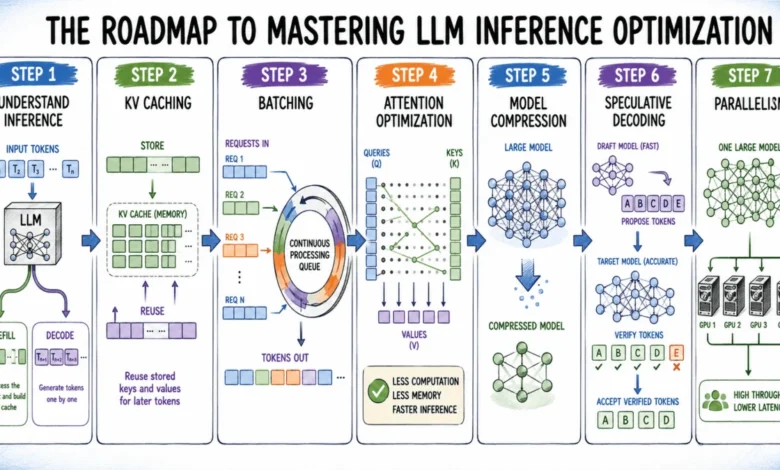
The deployment of large language models (LLMs) has shifted from a novelty to a critical infrastructure requirement for modern enterprises, yet the bridge between a functional model and a production-ready application remains fraught with performance bottlenecks. While achieving acceptable output quality is often considered a solved problem, the engineering challenges of latency, cost-efficiency, and system reliability persist. As request volumes grow, standard implementations often fail, leading to ballooning operational costs and degradation in user experience. Inference optimization has consequently emerged as a high-stakes discipline, focusing on maximizing the utility of existing hardware—typically GPUs—without the necessity of expensive model retraining.
The Anatomy of the Inference Bottleneck
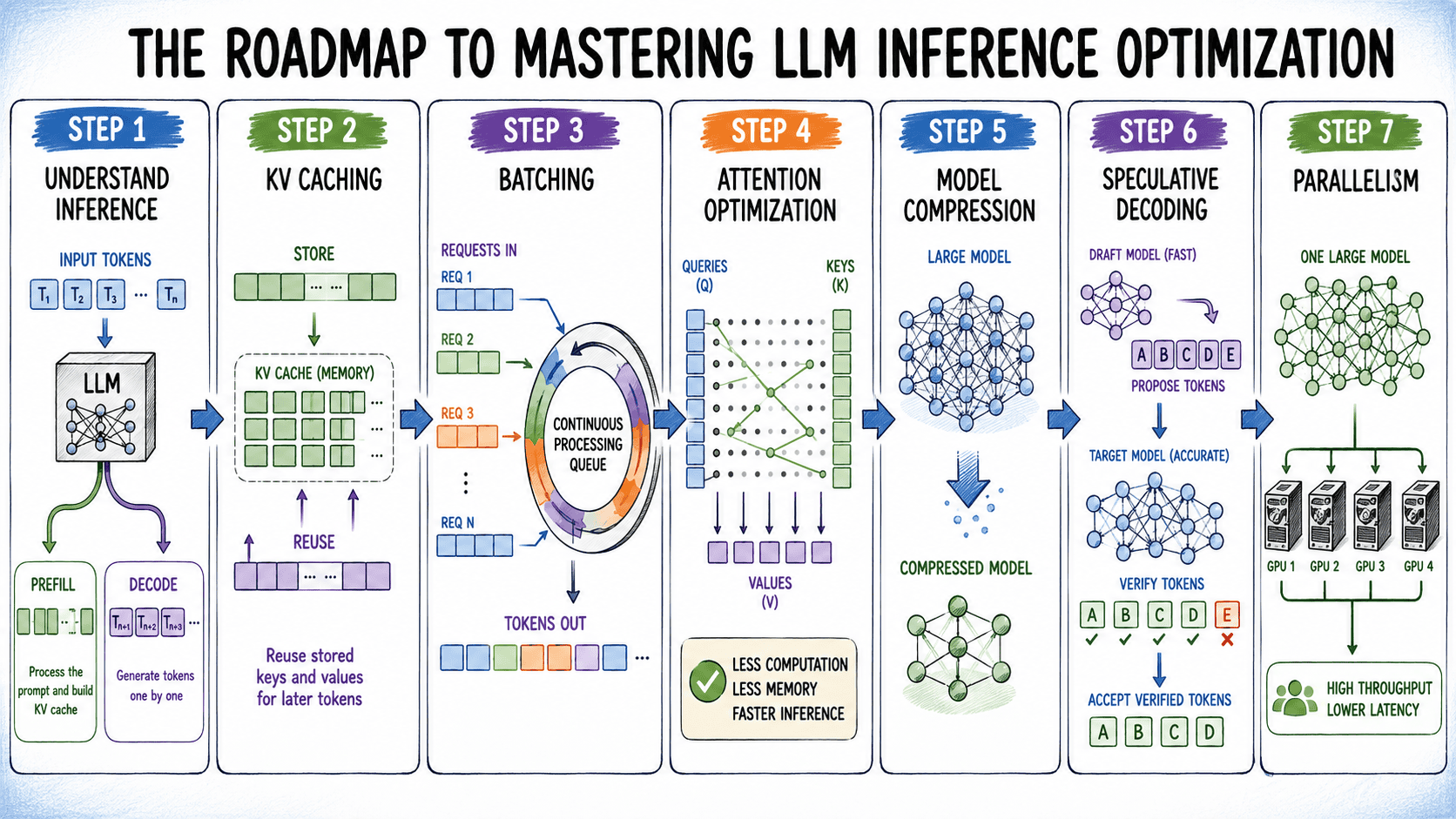
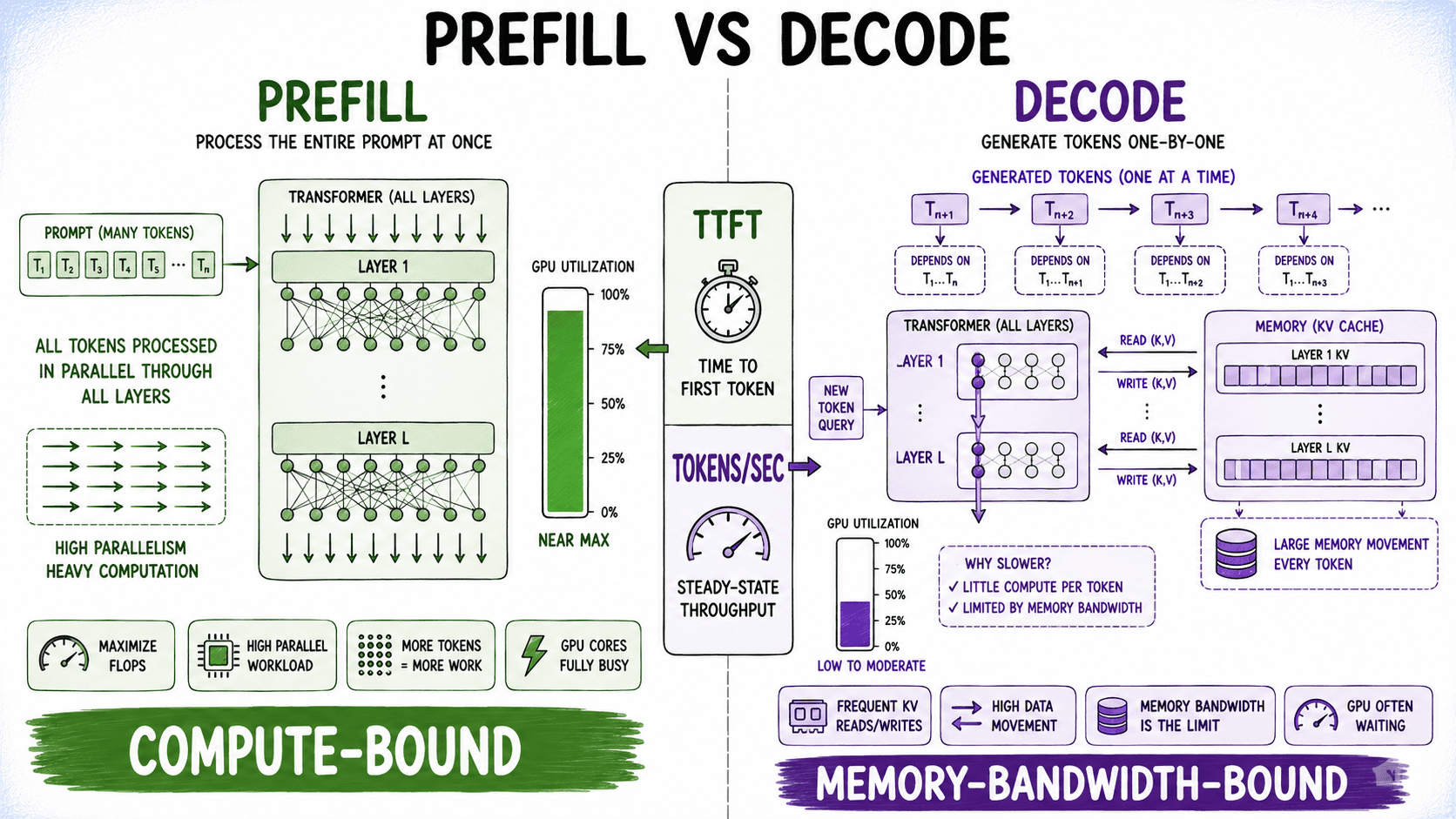
To understand the current state of LLM performance, one must look at the two-phase nature of the inference process: the prefill phase and the decode phase. The prefill phase, also known as the prompt processing stage, involves computing the key and value tensors for the entire input sequence simultaneously. Because this phase is highly parallelizable, it is compute-bound, meaning the limiting factor is the raw mathematical throughput of the GPU.
Conversely, the decode phase is autoregressive, meaning each generated token is dependent on the tokens that preceded it. This requirement makes parallel processing within a single sequence impossible, shifting the bottleneck from raw compute to memory bandwidth. The GPU spends a disproportionate amount of time moving data from high-bandwidth memory (HBM) to its processing cores, making memory access speed the primary constraint on throughput.
Historical data from industry benchmarks indicates that as context windows have expanded—moving from 4k to 128k tokens and beyond—the memory overhead of these processes has become the most significant hurdle for scalability. Without targeted optimization, the memory requirements of the Key-Value (KV) cache grow linearly with batch size and sequence length, quickly exhausting the VRAM of even the most powerful enterprise-grade GPUs like the NVIDIA H100.
Evolution of KV Cache Management and PagedAttention
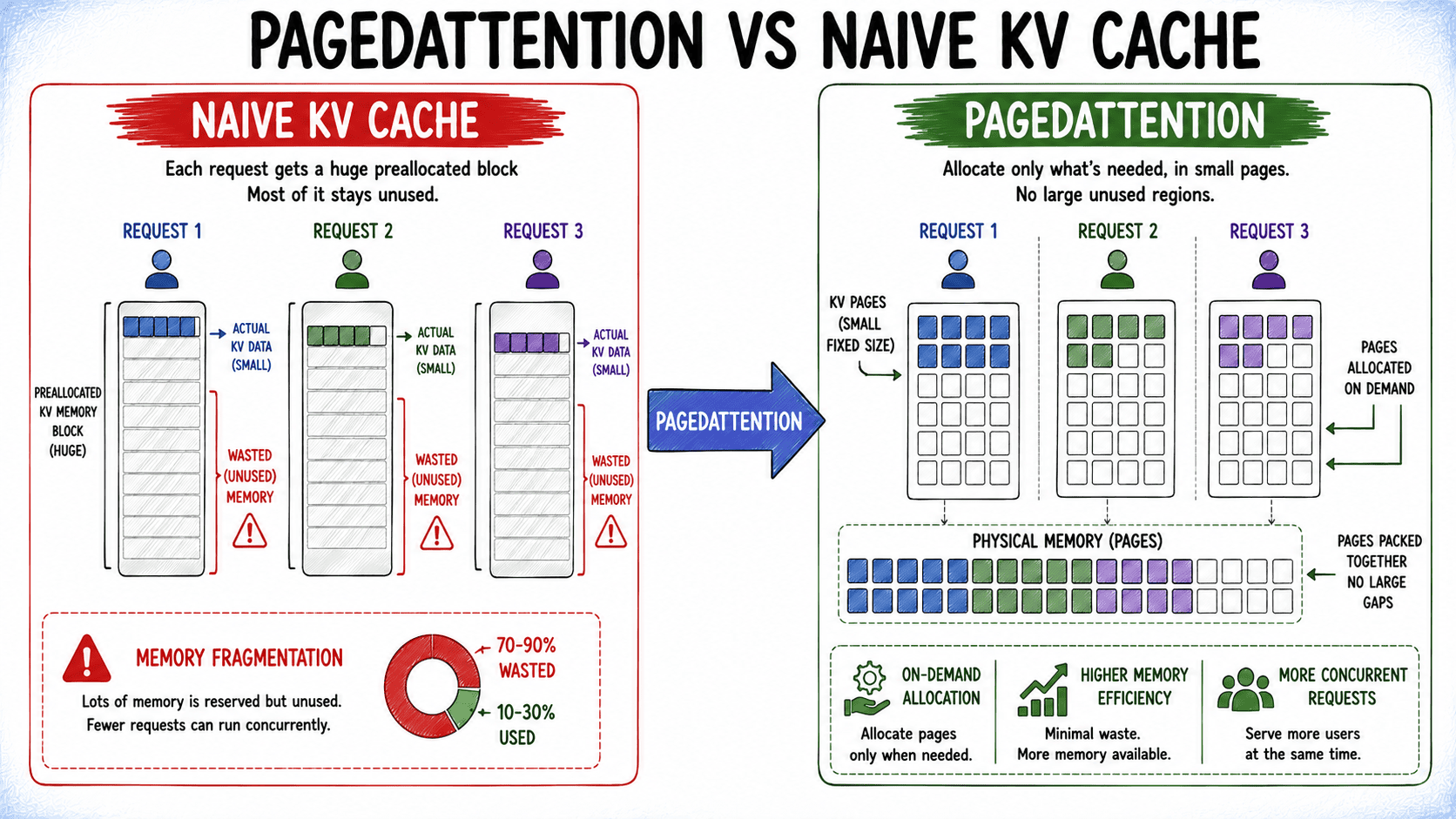
The development of KV caching was an early breakthrough, allowing systems to avoid redundant recomputations of intermediate states. However, naive implementations often suffered from severe fragmentation. In early systems, developers had to reserve memory for the maximum possible sequence length, resulting in massive amounts of wasted, idle GPU memory.
The introduction of PagedAttention by the vLLM project marked a paradigm shift in late 2023. By applying the principles of virtual memory paging from operating systems, PagedAttention allows for the non-contiguous storage of KV cache blocks. This granular management enables systems to allocate memory only when needed, drastically reducing waste and allowing for significantly larger batch sizes. Recent performance audits suggest that systems utilizing PagedAttention can achieve up to 24 times the throughput of naive implementations in high-traffic, variable-length scenarios.
The Shift Toward Continuous Batching
For years, developers relied on static batching, where a fixed number of requests were grouped together. This approach was inherently inefficient; if one request in the batch required a long output and another a short one, the entire system had to wait for the slowest request to finish before the next batch could begin.
The industry has since moved toward "continuous batching" (or in-flight batching). This technique treats the batch as a fluid pool of tasks. As soon as a single sequence completes its generation, the system immediately swaps in a new request without stalling the remaining sequences. This maximizes GPU utilization, ensuring that the silicon is rarely idle. Production runtimes such as TensorRT-LLM and vLLM have adopted this as the standard, effectively neutralizing the throughput penalties previously associated with high-variance user prompts.
Architectural Innovations in Attention Mechanisms
The attention mechanism, the "brain" of the transformer architecture, has also undergone significant refinement. Standard Multi-Head Attention (MHA) is computationally expensive, but newer variants have optimized memory access patterns. Multi-Query Attention (MQA) and Grouped-Query Attention (GQA) reduce the number of key and value heads, significantly cutting the volume of data that must be transferred during the decode phase.
Furthermore, FlashAttention, introduced by researchers at Stanford, has become a cornerstone of modern LLM infrastructure. By fusing the kernel operations of the attention mechanism and utilizing the GPU’s fast on-chip SRAM, FlashAttention avoids the frequent round-trips to global GPU memory that characterize standard implementations. Industry reports suggest that FlashAttention can speed up standard transformer training and inference by 2x to 4x, making it a "drop-in" optimization that requires no model modifications or retraining.
Model Compression: Doing More with Less
As the demand for deploying models on edge devices and smaller cloud instances grows, model compression has moved to the forefront of the optimization stack. Techniques such as quantization—reducing the precision of model weights from 16-bit to 8-bit or 4-bit—have made it possible to fit massive models into smaller memory footprints.
For instance, a 7-billion parameter model that consumes 14 GB of memory in FP16 precision can be compressed to roughly 3.5 GB in INT4 precision. This reduction is often achieved with negligible impact on the model’s perplexity or reasoning capabilities. When paired with structured sparsity, where specific weight matrices are pruned to zero based on hardware-accelerated patterns like NVIDIA’s 2:4 sparsity, developers can realize substantial performance gains without compromising output quality.
Latency Mitigation via Speculative Decoding
For latency-critical applications, such as real-time customer service agents, speculative decoding has emerged as a powerful solution. In this workflow, a smaller, "draft" model generates a rapid sequence of candidate tokens, which are then verified in parallel by a larger, more robust model. Because the verification pass is computationally efficient, the system can "accept" multiple tokens in a single forward pass. If the draft model is accurate, the end-user perceives a much lower Time-to-First-Token (TTFT) and higher total tokens-per-second. This technique is particularly effective in interactive environments where the high-latency cost of individual token generation is the primary deterrent to adoption.
The Future of Infrastructure: Prefill-Decode Disaggregation
The most advanced organizations are now moving toward a strategy of prefill-decode disaggregation. Recognizing that the compute-heavy prefill phase and the memory-bound decode phase place different demands on hardware, architects are beginning to separate these workloads. By routing requests to specialized hardware clusters—one pool optimized for massive parallel compute and another for high-bandwidth memory throughput—enterprises can ensure that heavy user prompts do not block the smooth generation of tokens for existing users.
Implications and Strategic Outlook
The implications of these optimizations are profound. By reducing the cost and latency of LLM inference, businesses can deploy more sophisticated models in environments that were previously deemed too expensive or too slow. The transition from "model-centric" AI development to "system-centric" deployment is now complete.
According to recent industry analysis, the combination of PagedAttention, continuous batching, and quantization has reduced the total cost of ownership (TCO) for LLM serving by upwards of 70% compared to 2022 standards. As organizations move toward 2025 and beyond, the competitive advantage will increasingly belong to those who can master the hardware-software interface, ensuring that their AI applications are not only intelligent but also economically and operationally sustainable at scale. Professionals tasked with model deployment must now prioritize a holistic view of the inference pipeline, profiling every layer from the kernel level to the scheduling logic to ensure peak performance.