Versioning and Tracking Scikit-LLM Experiments for Reliable AI Lifecycle Management

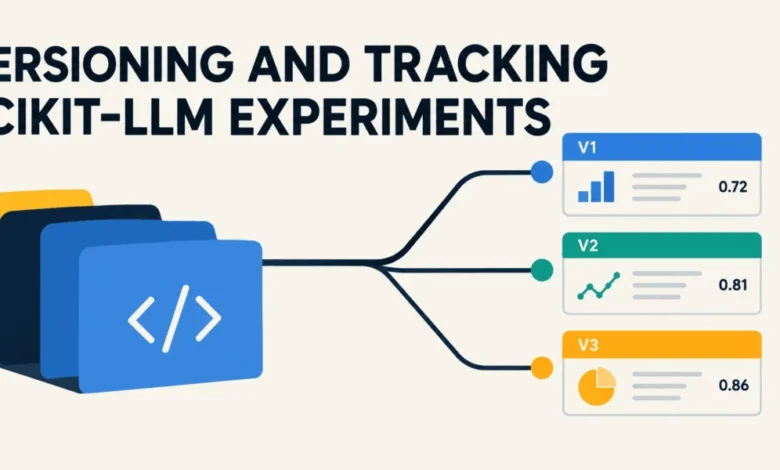
The integration of large language models (LLMs) into standard machine learning workflows has introduced significant complexity regarding model governance, reproducibility, and version control. As organizations transition from experimental, notebook-based AI development to production-grade deployments, the need for robust infrastructure to manage these assets has become paramount. By combining the Scikit-LLM library—a tool designed to bridge the gap between scikit-learn and generative AI—with MLflow, an open-source lifecycle management platform, engineers can establish a standardized methodology for logging, comparing, and registering LLM-driven pipelines.
The Challenge of LLM Pipeline Governance
In traditional machine learning, model versioning typically involves tracking hyperparameters and training data. However, LLM-integrated pipelines introduce additional variables, including specific model weights, inference parameters, and the evolving nature of the underlying LLM backends. When these pipelines are managed manually, teams often face "version drift," where the lack of a clear audit trail makes it impossible to revert to a previous, better-performing state or to identify the specific configuration that caused a regression in performance.
The industry has seen a shift toward the "Model-as-Code" philosophy, where every change in an LLM-based system—whether it involves swapping a lightweight model like Orca Mini for a more robust architecture like Falcon—is treated as a discrete event. Without the integration of tools like MLflow, these transitions remain siloed, leading to fragmented development cycles and potential downtime during production deployments.
Establishing the Technical Foundation
Building a reproducible pipeline begins with the initial configuration of the development environment. For those operating within cloud-based research environments such as Google Colab, the primary requirement is the synchronization of dependencies. Developers must ensure that Scikit-LLM is installed with appropriate extensions, such as gpt4all, which allows for local execution of models, thereby reducing latency and ensuring data privacy by keeping sensitive information on-premises or within the local compute instance.
The installation command, pip install "scikit-llm[gpt4all]" mlflow, provides the necessary bridge to local model inference. Following the installation, the configuration of a persistent backend, such as a SQLite database, is essential for the MLflow Model Registry. This database acts as the single source of truth for all experiment metadata. By setting a global tracking URI, developers can ensure that every training run is captured, regardless of whether the model is in the prototype or refinement stage.
The Anatomy of an LLM Pipeline Run
A structured approach to tracking requires the encapsulation of model training within formal MLflow runs. This process involves defining a Pipeline object—a staple of the scikit-learn ecosystem—that houses the ZeroShotGPTClassifier. By utilizing the with mlflow.start_run() context manager, every aspect of the training process, from the specific model file string to the chosen backend parameters, is automatically logged as metadata.
This granular tracking offers several benefits:
- Reproducibility: By logging the
llm_model_file, engineers can re-instantiate the exact model state months after the initial training. - Auditability: Every run is assigned a unique identifier, preventing the confusion often caused by naming collisions or overwriting model files.
- Flexibility: The use of
cloudpickleas a serialization format ensures that complex pipeline objects, which are common in LLM implementations, are preserved in their entirety, avoiding the common pitfalls associated with standard pickle serialization.
Comparative Analysis: Baseline vs. Upgraded Models
The transition from a baseline model to an upgraded version represents a critical lifecycle event. For instance, testing a lightweight model like orca-mini-3k-71m against a more powerful, larger-parameter model like falcon-q4_0 allows teams to perform a cost-benefit analysis. While the baseline may offer lower latency, the upgraded model might provide higher classification accuracy for specific, complex linguistic nuances.
When these pipelines are logged into the MLflow tracking system, the resulting data provides an objective basis for comparison. By leveraging the MLflow search API, practitioners can aggregate these results into a pandas DataFrame, allowing for a side-by-side analysis of run IDs, model names, and final execution statuses. This quantitative approach removes the guesswork from model selection, enabling teams to identify failed runs—such as those triggered by insufficient memory or incorrect API configurations—before they ever reach the deployment phase.
From Experimentation to Production Readiness
The final stage in the lifecycle is the transition from a "logged" experiment to a "registered" model. Registering a model in the MLflow Model Registry is a formal declaration that a specific pipeline has met the criteria for production use. This process involves promoting a model URI to a named registry entry, such as Production_ZeroShot_Classifier.
This step serves as a gatekeeping mechanism. By programmatically querying the registry, organizations can implement logic that ensures only models exceeding a specific accuracy threshold are eligible for promotion. For example, a search filter can be applied to mlflow.search_runs to sort by metrics.accuracy DESC, ensuring that the most capable model is automatically identified and registered. This automated pipeline reduces the likelihood of human error and ensures that the production environment is always running the most effective iteration of the model.
Broader Implications for AI Development
The methodology described here is not merely a technical exercise; it is a fundamental shift in how AI teams should view the maintenance of intelligent systems. As large language models become the engine for more sophisticated business applications, the "manual approach" to tracking will inevitably fail. Organizations that fail to adopt rigorous versioning practices risk building "black box" systems that are difficult to update, debug, or scale.
The implications for developers are clear: by adopting a standardized, tool-backed approach to pipeline management, they can spend less time troubleshooting environment discrepancies and more time refining the performance of their models. Furthermore, for project managers and stakeholders, this level of transparency provides a clear window into the development process, fostering trust in the AI lifecycle.
Conclusion
The convergence of Scikit-LLM and MLflow provides a robust framework for managing the end-to-end lifecycle of LLM-based applications. By treating pipelines as versioned assets, teams can ensure that their machine learning projects remain reproducible, auditable, and ready for the demands of a production environment. As the field continues to evolve, the ability to rapidly iterate while maintaining a strict audit trail will remain the hallmark of successful AI development. The integration of these tools marks a significant step forward in the professionalization of generative AI workflows, ensuring that the next generation of intelligent software is built upon a foundation of reliability and precision.