S&P Global Ratings Weighs Nvidia Downgrade Over Governance Concerns and Key Man Risk Following CEO Leadership Turmoil

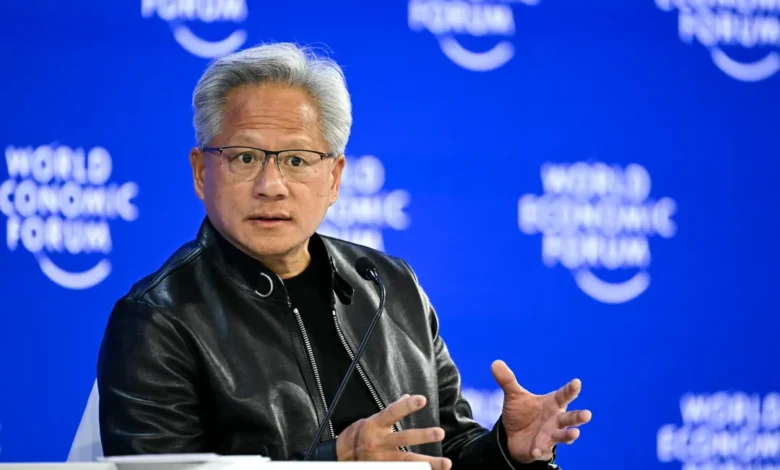
S&P Global Ratings, one of the world’s premier credit rating agencies, has officially placed chipmaking titan Nvidia under a 90-day review for a potential credit downgrade. The looming reassessment threatens to lower Nvidia’s current credit standing from AA down to AA-, marking a pivotal moment of scrutiny for the world’s most valuable artificial intelligence hardware supplier. While the prospective rating adjustment would leave Nvidia firmly within investment-grade territory, the underlying rationale for the review—rooted in corporate governance concerns, executive stability, and profound key-man risk—has sent ripples through global financial markets.
The agency’s decision to scrutinize Nvidia’s credit profile stems directly from recent leadership upheaval at the company, punctuated by the dramatic ouster and subsequent reinstatement of long-time Chief Executive Officer Jensen Huang. In an official advisory statement released to investors and regulators, S&P Global Ratings highlighted what it termed "weak executive oversight and a lack of succession planning." Furthermore, the agency underscored the severe "key man risk" associated with Nvidia’s corporate structure, pointing to the enterprise’s heavy reliance on Huang’s singular vision, strategic acumen, and industry relationships to sustain its unprecedented market dominance.
The Anatomy of Governance and Key Man Risk
In corporate finance, key-man risk describes the existential vulnerability a company faces if a vital individual—in this case, visionary founder and CEO Jensen Huang—were to suddenly depart or become incapacitated. For years, Wall Street and Silicon Valley have willingly overlooked this vulnerability, blinded by Nvidia’s meteoric financial ascent driven by the global generative AI explosion. Nvidia’s graphics processing units (GPUs) have served as the fundamental computational bedrock for virtually every major large language model developed by tech giants like Microsoft, Google, Meta, and OpenAI.
However, the recent, highly secretive boardroom drama that led to Huang’s brief departure and triumphant return shattered the illusion of impenetrable stability at the top. While details of the internal conflict remain closely guarded, the episode exposed deep structural vulnerabilities in how Nvidia manages executive transitions and board oversight. S&P Global Ratings noted that modern enterprise valuations, particularly at a scale exceeding trillions of dollars, demand robust, institutionalized succession planning and diversified leadership frameworks. The absence of these guardrails, according to the credit agency, introduces an unacceptable level of operational and strategic volatility that directly impacts creditworthiness.
Financial Implications and the AI Infrastructure Backstop
Though a drop from AA to AA- represents a modest descent on the credit rating scale—sitting safely as the fourth-highest tier—the secondary financial consequences could prove substantial. A credit downgrade invariably increases borrowing costs for corporate entities. For most established multinational corporations, incremental increases in debt servicing expenses are easily absorbed by robust cash flows. However, Nvidia’s financial footprint extends far beyond its own balance sheet, deeply entangling the chipmaker with the broader, highly leveraged artificial intelligence infrastructure ecosystem.
In recent years, Nvidia has increasingly acted as a financial backstop for neocloud providers, specialized data center operators, and AI infrastructure startups that lack the balance sheet strength or credit ratings necessary to secure traditional institutional financing on favorable terms.

This financial interlock reached a fever pitch in August, when Nvidia unveiled an ambitious $500 billion financing framework designed to supercharge global AI infrastructure development. Under the original architecture of this sweeping initiative, negotiated with a syndicate of six major global financial institutions—including Wall Street powerhouses Goldman Sachs, Apollo Global Management, and Blackstone—Nvidia agreed to guarantee roughly 25% of the underlying loans.
Yet, even prior to the leadership crisis involving Jensen Huang, cracks were beginning to show in the syndicate’s confidence. Financial disclosures and reporting from Bloomberg indicated that commercial lenders, growing increasingly wary of the systemic risks tied to the rapid, speculative buildout of AI data centers, were already pressing Nvidia to increase its financial guarantees well above the initial 25% threshold.
The Escalating Pressure on Lenders and Guarantees
With S&P Global Ratings now actively reviewing Nvidia for a downgrade, the leverage in ongoing negotiations between the chipmaker and its banking partners has shifted dramatically. A lower credit rating for Nvidia means that the primary guarantor of these multi-billion-dollar infrastructure vehicles is viewed by the market as marginally riskier.
Consequently, financial institutions participating in the $500 billion AI financing pipeline are expected to demand even larger guarantees, additional collateral, or stricter covenant protections before releasing funds. Such demands could force Nvidia to tie up significantly more of its own capital and liquidity to maintain the momentum of the AI buildout, directly contradicting the original risk-sharing premise of the consortium.
Furthermore, neocloud providers and smaller data center developers who rely on Nvidia’s credit enhancement to buy specialized server racks and networking equipment could face a severe liquidity squeeze. If borrowing costs climb across the supply chain, the pace of AI infrastructure deployment could experience a noticeable cooling effect, challenging the hyper-growth narrative that has defined the technology sector.
Timeline and Next Steps in the Review Process
S&P Global Ratings has indicated that its comprehensive review of Nvidia’s governance practices, succession frameworks, and financial exposures will conclude within a 90-day window. During this period, equity and debt markets will closely monitor whether Nvidia’s board of directors takes decisive, public steps to formalize executive succession plans, strengthen independent board oversight, and insulate the company from future leadership shocks.
As the regulatory clock ticks down, the burden of proof rests heavily on Nvidia’s executive leadership. While Jensen Huang remains universally lauded for orchestrating the AI hardware revolution, the current ratings review serves as a stark reminder from the financial establishment: at the trillion-dollar echelon of global commerce, operational genius alone is no longer an adequate substitute for institutional governance and financial resilience.