WhatsApp starts rolling out stickers with sound, here’s how they work

Meta-owned messaging giant WhatsApp has officially initiated the rollout of one of its most anticipated multimedia features to date: sound-enabled stickers. Initially spotted in development stages within early Android beta tests late last year, the capability has transitioned from a conceptual feature into a functional reality. As of the latest software updates, select beta testers on both the Google Play Store for Android and Apple’s TestFlight and App Store ecosystems for iOS are gaining the ability to craft, share, and experience custom stickers embedded with audio.
This development marks a significant shift in how users communicate via micro-expressions on the platform, bridging the traditional gap between static visuals, GIFs, traditional animated stickers, and audio notes. By allowing users to seamlessly fuse custom video snippets with synchronized sound effects or original voice recordings, WhatsApp is pushing the boundaries of expressive digital communication. While the feature is currently restricted to a staggered release among testing cohorts, the broader implications of audio-visual stickers point toward a more immersive, engaging, and dynamic messaging experience for the application’s billions of global users.
Main Facts and Mechanics of the New Feature
The core functionality of WhatsApp’s sound stickers revolves around user-generated creativity and intuitive design integration. Rather than relying solely on pre-packaged, corporate-designed sound clips, the messaging platform has empowered its user base to construct their own audio-visual assets directly within the application interface.
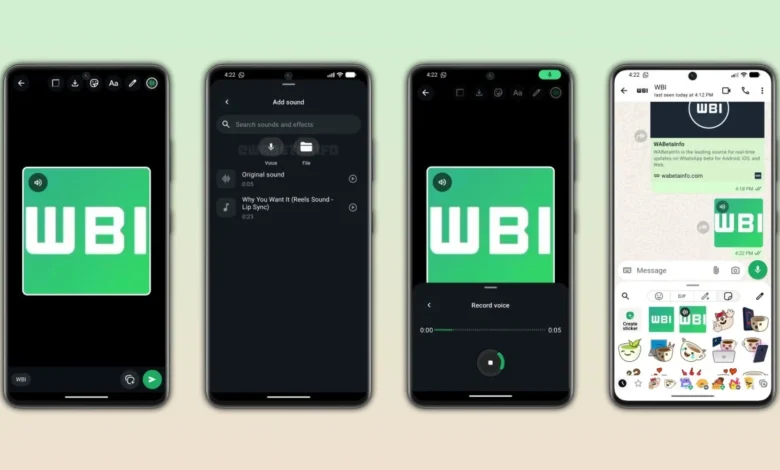
The creation process is embedded within the native sticker keyboard. To initiate creation, a user selects the "Create sticker" prompt, which opens the device’s media gallery. From there, the user selects a video file. WhatsApp’s automated processing engine immediately strips and converts the video segment into a looping, animated sticker.
Once the visual component is established, a newly integrated audio button appears at the top of the editor interface. This control panel opens up a robust suite of audio customization options, giving creators granular control over the final output. Users are presented with four distinct pathways for adding sound:
- Original Video Audio: The creator can retain the native sound accompanying the selected video clip.
- Preset Effects: A curated collection of built-in sound effects is available for quick application, ranging from comedic cues to common atmospheric noises.
- External File Import: Users can browse their device’s file manager to upload and attach custom music tracks, sound effects, or downloaded audio files.
- Direct Voice Recording: Creators can record a fresh, impromptu voice note directly through the interface to accompany the visual.
Upon successfully exporting and sending a sound sticker, the user interface updates to inform both parties of the embedded audio. A discreet yet clearly visible audio icon is stamped onto the corner of the sticker within the chat window, serving as an indicator that the asset contains sound.
To preserve user experience and prevent disruptive playback in quiet environments or formal group chats, sound stickers are muted by default. When a recipient receives a sound sticker, it remains silent until manually engaged. Tapping the audio icon triggers the sound playback, which automatically loops three times before gracefully halting. Furthermore, in alignment with Meta’s broader privacy commitments, both the underlying sticker graphic and its paired audio track remain protected by WhatsApp’s signature end-to-end encryption standards, ensuring that private communications cannot be intercepted or monitored by third parties.
Chronology of Development
The journey of sound stickers from an internal experimental codebase to a public beta release has been tracked closely by industry analysts and platform sleuths over the past several months. The timeline below outlines the key milestones in the evolution of this feature:
- October: Early references to sound stickers first surfaced within a WhatsApp Android beta build. Code analyzers discovered dormant frameworks hinting at audio-visual messaging components, though the feature was entirely non-functional and restricted to internal developer environments.
- Late Fall: Further development iterations appeared intermittently across successive beta cycles. Engineers focused heavily on optimizing the compression algorithms required to bundle video animations with audio files without triggering excessive data consumption or performance degradation on lower-end smartphones.
- Current Rollout Phase: WhatsApp officially pushed version 2.26.47.1 to select Android beta testers via the Google Play Store. Concurrently, initial access began deploying to select iOS testers utilizing Apple’s TestFlight application, alongside limited tests for standard App Store users.
- Future Outlook: While no official timeline has been disclosed by Meta regarding a general public release, historical rollout patterns suggest that successful beta testing phases typically precede a global rollout within a matter of weeks.
Supporting Data and Technical Context
The introduction of sound stickers arrives at a time when multimodal messaging formats are experiencing unprecedented popularity across the digital landscape. Short-form video platforms, rich media messaging apps, and social networks have increasingly relied on audio-visual integration to drive user engagement and retention.
Industry metrics consistently highlight the dominance of visual and auditory communication mediums over plain text. According to digital communication studies, messages incorporating rich media—such as stickers, GIFs, and voice notes—generate significantly higher engagement rates and are retained longer in conversational contexts compared to standard text blocks. WhatsApp, which processes tens of billions of messages daily, has steadily evolved from a basic SMS alternative into a feature-rich communications ecosystem.
However, the technical challenge of implementing audio-enabled stickers should not be understated. Stickers on messaging platforms are traditionally optimized for minimal file sizes to ensure instantaneous loading times, even on weak cellular networks. By introducing audio tracks, developers face the risk of bloated file sizes that could strain data allowances or slow down chat rendering. WhatsApp’s decision to limit audio playback to three loops and utilize efficient compression protocols reflects a calculated effort to balance rich multimedia functionality with lightweight performance.
Industry Comparison and Precedents
While WhatsApp is introducing this capability to its massive ecosystem, the concept of audio-accompanied visual assets is not entirely novel in the digital messaging sphere. Competitor platforms have explored similar interactive media formats with varying degrees of success.
- Telegram: Known historically for its expansive feature set, Telegram has long supported animated stickers, custom sticker packs, and high-quality audio compression. While Telegram does not feature a direct equivalent called "sound stickers," its open platform allows users to create custom bots that generate complex multimedia interactions.
- WeChat: Dominating the Asian market, WeChat has utilized animated, sound-enabled expressions for years, demonstrating that users readily embrace audio-enhanced stickers in daily interpersonal communications.
- LINE: The popular Asian messaging application built much of its early global brand identity around character-driven stickers, eventually introducing sound and voice-overs to popular IP-based stickers, creating a massive digital merchandise economy.
WhatsApp’s unique advantage lies in its sheer scale. By democratizing the creation process—allowing everyday users to turn their own videos and voice recordings into sound stickers without needing advanced graphic design or coding skills—Meta is positioning its feature as a personal, highly versatile tool rather than a purely commercial, pre-packaged media offering.
Broader Impact and Implications
The gradual deployment of sound stickers carries several noteworthy implications for both individual users and the broader digital communications sector.
Enhanced Personalization and Emotional Expression
Text-based messaging inherently lacks the nuance of face-to-face interaction, often leading to misinterpretations of tone, sarcasm, or intent. While emojis, punctuation, and standard stickers assist in conveying emotion, the addition of personalized audio creates a richer layer of context. A user can now send an inside joke accompanied by actual laughter, a birthday greeting with a snippet of a song, or a dramatic reaction featuring a familiar sound effect. This significantly narrows the communicative gap between digital text and physical conversation.
Potential Accessibility Considerations
The introduction of audio into traditionally visual mediums introduces distinct considerations for digital accessibility. For users with hearing impairments, relying solely on audio-dependent cues within a sticker could lead to missed context or exclusion from a joke. Fortunately, because WhatsApp requires manual activation of the audio icon and displays a visual indicator, the core visual message remains intact. However, the absence of automated text transcriptions for custom audio tracks remains a structural limitation that accessibility advocates may monitor as the feature matures.
Moderation and Platform Safety Challenges
With great user-generated power comes significant moderation responsibility. Allowing users to attach arbitrary audio files—including downloaded music, custom voice recordings, and external sound clips—to looping visual animations opens up new vectors for potential abuse.
From a copyright perspective, users importing music tracks or copyrighted sound effects from their file managers could inadvertently generate vast quantities of unauthorized media sharing. While WhatsApp’s end-to-end encryption architecture prevents the company from proactively listening to private message contents, automated abuse detection systems and community reporting mechanisms will play a vital role in curbing malicious exploitation, such as harassment, spam, or hate speech packaged within sound stickers.
Marketing and Brand Engagement Potential
Looking beyond personal chats, the commercial applications of sound stickers are vast. Businesses utilizing WhatsApp Business accounts could leverage sound stickers as part of their customer service or marketing strategies. Imagine promotional campaigns featuring recognizable jingles, branded character sound bites, or audio-guided call-to-action prompts. While Meta has not yet detailed enterprise-specific rollouts for sound stickers, historical precedent suggests that successful consumer features frequently find their way into business-tier offerings.
Conclusion
WhatsApp’s rollout of sound stickers represents a natural yet ambitious evolution in modern digital communication. By successfully merging custom video animation, flexible audio sourcing, and stringent end-to-end encryption into a unified, user-friendly creation tool, Meta is redefining what a chat sticker can be.
As the phased beta rollout continues across Android and iOS platforms, developers will undoubtedly monitor system performance, user feedback, and bandwidth utilization. While the exact date for a worldwide public release remains unconfirmed, the foundational framework is firmly in place. Once the feature moves past its current testing milestones and reaches the broader global audience, it is poised to permanently transform how millions of people express themselves, share memories, and interact within their daily digital conversations.
Related posts: