The Hidden Epidemic of Counterfeit Memory Storage and the Risks to Digital Data Integrity

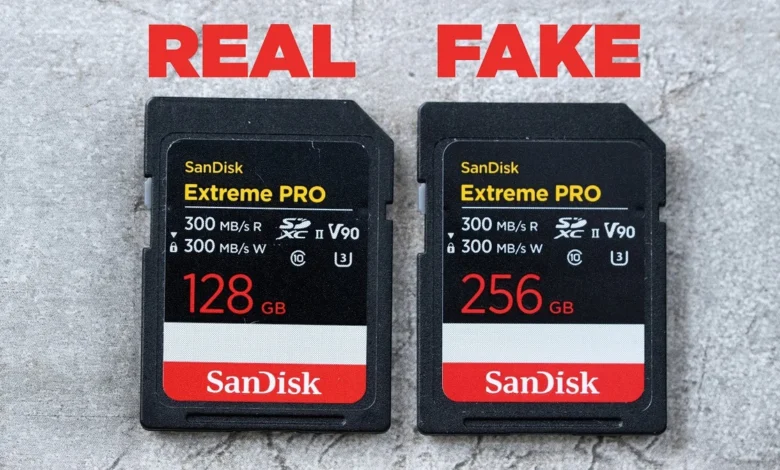
The digital economy relies heavily on the promise of storage reliability, yet a pervasive shadow market for counterfeit memory cards, SSDs, and external hard drives has compromised the data integrity of countless professional photographers, videographers, and everyday consumers. Recent investigations into supply chain vulnerabilities reveal that high-capacity, brand-name memory cards—specifically those marketed under premium labels like SanDisk, Lexar, and Samsung—are frequently being manufactured as sophisticated counterfeits. These devices often arrive in packaging indistinguishable from authentic retail goods, utilize legitimate-looking branding, and even pass initial hardware recognition tests, masking the fact that they contain defective or low-grade components prone to catastrophic failure.
The Anatomy of a Counterfeit: From Quality Control Failure to Retail Fraud
The production of flash memory is a highly specialized process, limited to a handful of global manufacturers capable of creating the sophisticated semiconductor chips required for SD cards and solid-state drives. Industry experts note that these legitimate manufacturers maintain rigorous quality control standards; however, the secondary market for defective chips has created a lucrative loophole for illicit actors.
George Pavel, a representative from data recovery firm SalvageData, indicates that scammers frequently acquire "bin-rejected" or defective silicon wafers that fail to meet the rigorous standards of major chip manufacturers. These chips, which are originally intended for low-performance applications or disposal, are purchased in bulk for pennies on the dollar. Counterfeiters then integrate these substandard components into mass-produced plastic housings, printing official branding and packaging to mirror high-end consumer goods.
This process is remarkably effective at bypassing consumer scrutiny. A physical teardown of a counterfeit SD card often reveals a standard circuit board design that mimics the architecture of authentic cards. Because approximately 75% of an SD card’s internal volume is typically empty space even in genuine products, the physical internal layout provides little indication of authenticity. Consequently, distinguishing a counterfeit from a legitimate product based on aesthetics or build quality is increasingly impossible for the average consumer, as even major manufacturers periodically update their packaging and logos, leading to "false negatives" where authentic cards appear suspicious to users.
The Deception of Digital Capacity and Performance
The most dangerous aspect of modern counterfeit storage is its ability to mimic system-level functionality. Scammers modify the firmware of the low-capacity chips to report a significantly larger storage volume to the operating system. For example, a card with only 8GB of actual storage may be programmed to report 512GB to the host device.
This creates a "ghost storage" phenomenon. When a user inserts the card into a camera or computer, the device registers the 512GB capacity without error. The user may be able to write files to the card initially; however, once the physical 8GB threshold is exceeded, the device enters a state of logical corruption. In many cases, the firmware will simply overwrite existing data or create file directory entries that point to non-existent memory addresses. This often results in the appearance of successful file transfers—such as the visible thumbnail of a photograph—while the actual data remains unwritten or corrupted.
Professional workflows are particularly susceptible to these failures. A wedding photographer, for instance, may spend an entire event "capturing" images that never actually exist on the storage medium. Because the camera does not perform a bit-for-bit verification of every file written to the card in real-time, the failure is often only discovered during the post-processing phase, when the files are found to be empty, unreadable, or missing entirely.
Market Vulnerabilities: The Challenge of Third-Party Retailers
The distribution of these counterfeit products is largely facilitated by the complex structure of online marketplaces. Major e-commerce platforms often utilize "commingled" inventory systems or allow third-party sellers to list products under existing brand-name product pages. This means that a consumer purchasing a memory card from what appears to be a legitimate manufacturer’s store page may actually be receiving stock from an independent distributor, or even a pool of inventory where authentic and counterfeit products are mixed.
Marketplace feedback systems, once considered a reliable indicator of seller integrity, have proven inadequate in curbing the flow of fakes. Investigations into high-volume eBay and Amazon sellers have revealed that account histories are often hijacked or "aged" to provide a facade of legitimacy. Sellers with years of positive reviews for low-value items may suddenly pivot to selling high-end, counterfeit memory cards. Because the cards appear to function during the initial window of use, the seller accumulates a high volume of positive reviews before the widespread failure of the products leads to a collapse in their reputation.
Technical Verification Protocols for Data Integrity
To combat the risk of counterfeit hardware, technical experts recommend rigorous verification procedures that go beyond simple file recognition. Users should employ specialized diagnostic tools to verify the actual storage capacity and speed of any new memory card before placing it into a production environment.
For storage capacity, tools such as the open-source utility F3XSwift for macOS or H2testw for Windows perform a "write-and-read" test. These applications fill the entire advertised capacity of the drive with test data and then read it back to ensure that the bits are stored correctly and that the drive does not overwrite itself. While time-consuming—a 512GB card can take over an hour to verify—it is the only definitive method to confirm that the hardware possesses the advertised capacity.
For performance verification, applications like the Blackmagic Disk Speed Test are essential for users engaged in high-bitrate video production. Professional-grade cameras often require "V90" or "V60" speed ratings, which guarantee sustained write speeds of 90MB/s or 60MB/s, respectively. Counterfeit cards may show high burst speeds but fail to maintain the sustained throughput required for 4K or 8K video recording, leading to dropped frames or, more commonly, the camera halting recording entirely.
Broader Implications and Industry Impact
The economic impact of counterfeit storage extends beyond the immediate loss of a single memory card. It represents a significant threat to data security, institutional archives, and personal record-keeping. The lack of accountability in the current supply chain forces a shift in procurement strategy for professionals. Many in the creative industry are now moving away from mass-market online retailers for mission-critical hardware, opting instead for specialized, authorized camera retailers that maintain direct relationships with manufacturers.
The implications for data recovery are equally concerning. When a counterfeit card fails, the data is often permanently lost due to the use of low-grade, unstable NAND flash memory that is not designed for long-term data retention or frequent write cycles. While data recovery firms like SalvageData provide a vital lifeline for recovering data from failed enterprise-grade storage systems like Synology NAS or RAID arrays, the physical architecture of counterfeit SD cards often makes traditional recovery techniques ineffective.
Ultimately, the ubiquity of these counterfeit devices serves as a stark reminder of the fragility of the digital age. As the volume of data generated by modern devices continues to scale, the reliance on high-speed, high-capacity, and—most importantly—authentic storage media remains the fundamental bottleneck for reliability. For the average consumer and professional alike, the "convenience" of low-cost online listings for premium storage is increasingly viewed as an unacceptable risk, necessitating a return to authorized supply chains to ensure the long-term preservation of digital assets.
Related posts: