Samsung Galaxy S27 camera leaks suggest a polarizing shift in mobile photography strategy

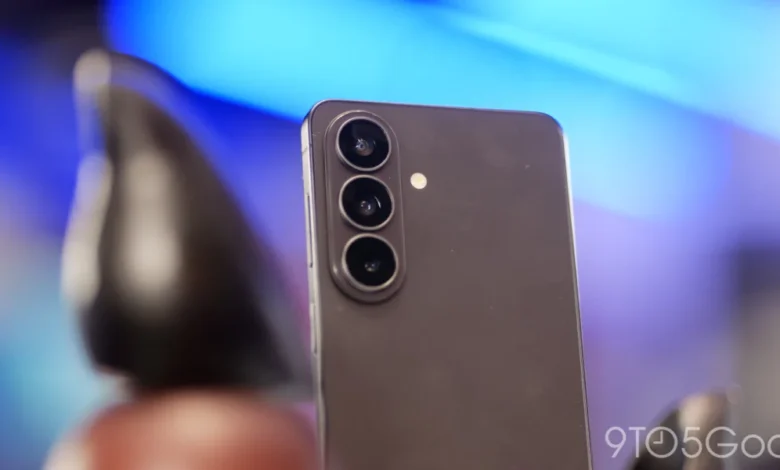
The landscape of mobile photography is bracing for a significant transformation as new technical disclosures regarding the Samsung Galaxy S27 series have surfaced, detailing a hardware strategy that prioritizes consolidation over the iterative expansion of lens arrays. According to reports originating from industry trackers and supply chain leaks, Samsung is currently in the advanced evaluation stages for the camera configurations of the Galaxy S27, S27+, S27 Pro, and S27 Ultra. The emerging data points to a divergent path for the lineup: while the entry-level and mid-tier models appear destined for a cycle of hardware stagnation, the higher-end Pro and Ultra models are set to undergo a fundamental restructuring of their optical systems.
A Chronology of Hardware Stagnation
For the base-tier Galaxy S27 and the S27+ models, the roadmap suggests a conservative approach. Historical data indicates that Samsung has relied on specific sensor architectures for several generations, and the latest leaks suggest this trend is set to continue. The primary imaging sensors for these devices are expected to remain consistent with those found in their predecessors, and the ultrawide hardware—a component that has remained largely unchanged since the Galaxy S23 series—is slated to see its tenure extended yet again.
This strategy of maintaining hardware parity across generations is not unique to the mobile industry, but it stands in stark contrast to the aggressive sensor upgrades often championed by competitors. Over the last three years, Samsung has moved toward a model of "incremental refinement," where software processing—often bolstered by artificial intelligence and neural processing units—is intended to bridge the gap left by static optical hardware. However, as mobile photography enthusiasts and professional reviewers have noted, software-based improvements face physical limitations when paired with aging sensor technology.
The Pro and Ultra Shift: A New Optical Philosophy
The most significant developments concern the Galaxy S27 Pro and the Galaxy S27 Ultra. These models are expected to feature a new 200-megapixel primary sensor, representing a high-resolution milestone for the series. Alongside this, a 50-megapixel ultrawide sensor is projected to replace the lower-resolution counterparts of previous years.
Perhaps the most controversial change is the reduction in telephoto lens count. While the Galaxy S27 Ultra has historically been defined by its multi-stage zoom capabilities—often utilizing two distinct telephoto lenses to bridge the gap between short-range and long-range magnification—the upcoming configuration appears to favor a single, higher-resolution 50-megapixel telephoto sensor.

The S27 Pro is expected to offer a 3x optical zoom, while the Ultra variant is anticipated to reach 5x. By consolidating the telephoto functionality into a single high-resolution lens, Samsung is likely attempting to utilize "in-sensor zoom" technology—a method where the camera crops into a high-resolution output to simulate different focal lengths without a dedicated physical lens. While this reduces the physical footprint of the camera module, it forces the system to rely on computational reconstruction rather than pure optical glass.
Technical Specification Overview
The following data reflects the currently projected sensor configurations for the S27 series, as analyzed from supply chain documentation:
| Model | Main Sensor | Ultrawide | Telephoto | Selfie |
|---|---|---|---|---|
| Galaxy S27 | 50MP (IMX955/S5KGNG) | 12MP (IMX564) | 12MP, 3x (S5K3K1) | 12MP (S5K3LU/IMX874) |
| Galaxy S27+ | 50MP (IMX955/S5KGNG) | 12MP (IMX564) | 12MP, 3x (S5K3K1) | 12MP (S5K3LU/IMX874) |
| Galaxy S27 Pro | 200MP (S5KHP6) | 50MP (S5KJN3/IMX855) | 50MP, 3x (S5KJN3/IMX855) | 16MP (S5K2P5) |
| Galaxy S27 Ultra | 200MP (S5KHP6) | 50MP (S5KJN3/IMX855) | 50MP, 5x (S5KJN3/IMX855) | 16MP (S5K2P5) |
Implications for Market Positioning
The decision to remove secondary telephoto lenses from the Ultra model is a pivotal moment for Samsung’s design philosophy. For years, the "Ultra" branding has been synonymous with total hardware dominance, featuring a "periscope" lens array designed to capture clear imagery at extreme distances. The shift toward a singular, high-resolution telephoto lens suggests that Samsung is pivoting toward a design that prioritizes internal space efficiency and cost management over the inclusion of specialized optical hardware.
Industry analysts suggest this move may be driven by two primary factors: the rising cost of component miniaturization and the necessity of accommodating larger batteries or advanced thermal management systems within the chassis. As smartphones face a plateau in physical thickness, internal space has become the most valuable commodity in the design process. By simplifying the camera module, Samsung gains the flexibility to reallocate space to other subsystems.
However, this comes with a potential trade-off in image fidelity. Optical zoom, by definition, provides an image that is physically magnified by the lens elements. Computational zoom, regardless of sensor resolution, is an interpretive process. For professional photographers and high-end consumers who have relied on the optical consistency of the previous Ultra models, the transition to a single-lens zoom system may be viewed as a regression in capability.
Broader Market Context
The competitive landscape for smartphone cameras has become increasingly aggressive. Companies such as OPPO, Xiaomi, and Vivo have made significant inroads into the premium market by partnering with legacy optics manufacturers and utilizing one-inch type sensors that dwarf the surface area of typical smartphone sensors.

In this context, Samsung’s decision to maintain older hardware in the S27 and S27+ models—and to consolidate the optics of the Ultra—places the company in a precarious position. If the image quality does not see a commensurate boost from the new 200-megapixel primary sensor, the S27 series risks falling behind in a market where "specs" are often used as a proxy for value.
Furthermore, the "RAMageddon" phenomenon—the increasing industry-wide demand for high-capacity memory to facilitate on-device generative AI—has placed a squeeze on profit margins. Manufacturers are faced with a choice: increase the retail price to accommodate both premium camera hardware and advanced AI memory, or compromise on hardware components to keep the price competitive. Samsung’s current strategy appears to lean toward the latter, opting to maintain stable price points by curbing the expansion of its optical hardware portfolio.
Future Outlook and Consumer Response
While official announcements from Samsung are typically reserved for their "Unpacked" events, the consistency of these leaks across multiple industry trackers—including disclosures from notable analysts like Ice Universe—lends a high degree of credibility to the projected specifications.
The reaction from the consumer base remains to be seen. In previous cycles, users have often voiced frustration when hardware upgrades are minimal, particularly in the base models. The S27 series will likely test the limits of consumer loyalty; it will determine whether the brand name and the integration of Samsung’s ecosystem are sufficient to offset a stagnation in physical hardware specifications.
As the release window approaches, the focus will likely shift to Samsung’s proprietary image signal processing (ISP) and the efficacy of their new AI-driven image enhancement algorithms. If Samsung can prove that a single, high-resolution telephoto lens can outperform the previous dual-lens system through advanced software, the strategy may be vindicated. Conversely, if the photographic output fails to show a marked improvement, the company may face significant pressure to revert to a more hardware-heavy configuration in future iterations.
For now, the leaked specifications paint a portrait of a manufacturer at a crossroads: balancing the necessity of innovation with the realities of supply chain economics, all while trying to maintain its standing in a market that is increasingly defined by the capabilities of its sensors and the intelligence of its software. The Galaxy S27 series is set to be a critical test of this new, more disciplined hardware philosophy.