Tesla and SpaceX sue a small Illinois firm after cease and desist letters over Terafab

The legal battle over the naming rights of the ambitious "Terafab" semiconductor facility has escalated into federal litigation, as Tesla, SpaceX, and their AI-focused subsidiary, SpaceXAI, have filed for a declaratory judgment in the U.S. District Court for the Western District of Texas. The move follows months of unsuccessful private negotiations regarding the use of the "Terafab" moniker for what is poised to become one of the most significant manufacturing complexes in the United States.
At the heart of the dispute is a conflict between the massive, $16.8 billion chip manufacturing infrastructure planned by Elon Musk’s companies and a specialized nanotechnology firm, TERA-print LLC, based in Illinois. The litigation marks a rare instance where a high-profile corporate entity has sought proactive judicial intervention to secure its branding rights before a formal trademark infringement lawsuit could be initiated by an opposing party.

The Chronology of a Corporate Clash
The tension surrounding the "Terafab" name began to materialize in the spring of 2026. On May 18, 2026, Tesla filed three distinct U.S. trademark applications for the terms "Terafab" and "Tesla Terafab." These filings explicitly covered the production of semiconductor chips and associated manufacturing services, reflecting the scope of the massive facility slated for construction in Grimes County, Texas.
TERA-print LLC, which has operated in the nanotechnology sector since 2021 and holds a federal trademark for "Tera-Fab," responded swiftly. On May 23, 2026, the company issued a formal cease and desist letter to Tesla. TERA-print contended that the use of a nearly identical name by such high-profile companies would inevitably lead to consumer confusion, particularly given the potential for market crossover in the advanced electronics and sensor research sectors.
The conflict intensified on May 22, when TERA-print submitted an application to the U.S. Patent and Trademark Office to expand its own trademark coverage. This new filing sought to include semiconductor materials, silicon chips, and AI design services—categories that were notably absent from its initial 2021 registration. In their subsequent court filing, Tesla and SpaceX characterized this move as "opportunistic," noting that the expansion application arrived only two months after the public announcement of the Terafab project and a mere four days after Tesla submitted its own filings.
Between June and August 2026, the parties engaged in six separate rounds of negotiations in a bid to resolve the dispute without the need for court intervention. According to the lawsuit, these discussions collapsed in late summer, prompting the filing for a declaratory judgment.
Scale, Scope, and Potential for Confusion
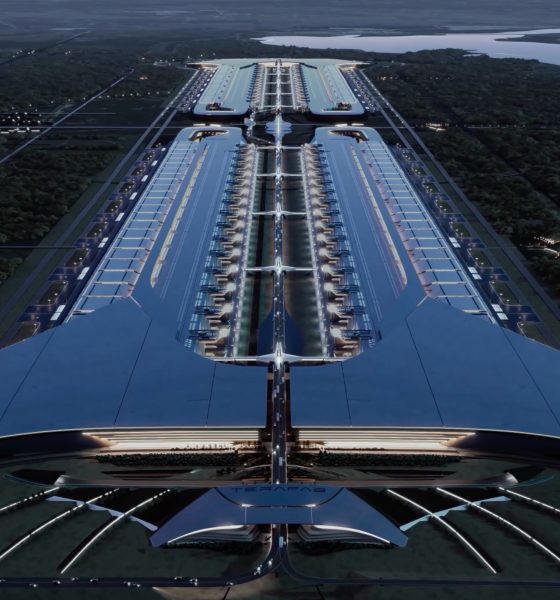
The core of the legal argument presented by Tesla and SpaceX rests on the disparity in the scale and primary purpose of the two entities’ operations. The Terafab project, as outlined in recent development plans, is designed to span approximately 100 million square feet at the Grimes County site. The facility is intended to serve as a massive, high-volume production hub for the next generation of AI-driven computing, including hardware for Tesla’s Optimus humanoid robots and the orbital data center requirements of SpaceX’s satellite network.
Conversely, TERA-print’s established business model centers on the production of desktop photolithography printers. These tools are primarily utilized by academic researchers and specialized labs for bioengineering and sensor development. Counsel for the Musk-led companies argues that no reasonable consumer would confuse the output of a multi-billion-dollar semiconductor mega-factory with the specialized, tabletop instrumentation produced by a niche nanotechnology firm.

However, TERA-print maintains that its rights are significant. Andrey Ivankin, the Chief Technology Officer of TERA-print, has publicly stated that the company holds contracts with the U.S. Department of Defense to fabricate specialized semiconductors. Furthermore, the company claims partial ownership of Mattiq Inc., an AI-integrated firm that utilizes TERA-print technology. Ivankin has asserted that his company intends to defend its intellectual property vigorously, noting that settlement discussions were ongoing as recently as September 2, 2026.
Broader Implications for the Terafab Project
This trademark dispute represents the second major legal hurdle the Terafab project has encountered in a single week. Earlier in September, reports surfaced regarding a separate lawsuit filed by SpaceX aimed at shielding internal company records and sensitive operational data regarding the facility from public disclosure.
The uncertainty surrounding the name comes at a delicate time for the project. The Terafab site is expected to play a foundational role in the vertical integration of Musk’s companies, particularly as the prospect of a formal merger between Tesla and SpaceX continues to circulate in financial markets. Analysts have noted that the naming of such a facility is not merely a branding exercise but a signal of the site’s role as the "brain" for the integrated hardware of the future.

Market Context and Investor Sentiment
The legal friction over Terafab occurs against a backdrop of intense investor interest in Musk’s broader technological ecosystem. Industry analysts, including those from major financial institutions, have been monitoring the integration of xAI, Tesla, and SpaceX with growing scrutiny.
The sentiment among major investors remains polarized. During a recent appearance on CNBC, long-time Tesla supporter and CEO of Baron Capital, Ron Baron, emphasized that the current expansion of Tesla’s software-driven revenue, particularly through Full Self-Driving (FSD) subscriptions, suggests a positive outlook for the company’s long-term valuation. Baron noted that the firm currently holds approximately $25 billion in SpaceX and $5 billion in Tesla, reflecting a deep-seated belief in the synergy between the two companies.
The potential for a corporate restructuring—or a formal merger—between Tesla and SpaceX has been a subject of speculation for months. During the recent All-In Summit in Los Angeles, Elon Musk provided his most candid commentary yet on the possibility of a combined entity. While stopping short of a formal announcement, Musk did not rule out the prospect, highlighting the increasing "deepening collaboration" between the firms. SpaceX President Gwynne Shotwell reinforced this, noting that the integration of personnel and engineering resources between the companies is occurring at an accelerated pace.

The Road Ahead
As the matter now rests with a federal judge in Austin, the outcome could have lasting implications for intellectual property law in the tech sector, particularly regarding how trademark priority is determined in rapidly evolving industries. Should the court rule in favor of Tesla and SpaceX, the "Terafab" name will move forward as the brand identity for one of the largest AI hardware initiatives in history. If the court finds merit in TERA-print’s claims of market confusion, the companies may be forced into a costly and high-profile rebranding of their signature manufacturing initiative.
For now, construction on the Grimes County facility continues, with the legal proceedings running in parallel to the physical development of the site. The case serves as a reminder of the complexities inherent in scaling hyper-growth technology ventures, where the ambition of large-scale industrial projects frequently intersects with the established rights of smaller, specialized firms. With both sides signaling a willingness to litigate, the resolution of the Terafab trademark dispute will likely become a benchmark case for future intellectual property conflicts involving emerging AI and manufacturing technologies.