Rivian Expands Adventure Network Rapidly While Waypoint Chargers Take a Backseat

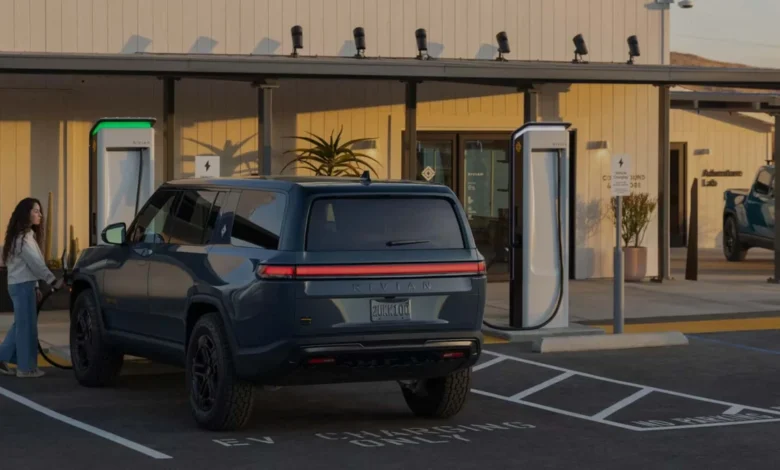
Electric vehicle manufacturer Rivian Automotive continues to aggressively scale out its proprietary charging infrastructure, registering nearly 40% growth across its DC fast-charging footprint over the past year. According to the company’s latest third-quarter financial disclosures, the Rivian Adventure Network (RAN) has officially surpassed 1,100 individual charging ports deployed across more than 150 strategic locations throughout the United States.
Despite broader industry trends moving toward open-network standardization and broad interoperability, the California-based EV startup is clearly committed to maintaining a dedicated, branded ecosystem for its growing customer base. However, a deeper look into the company’s infrastructure strategy reveals a stark contrast in resource allocation, with high-powered direct current (DC) fast chargers receiving the lion’s share of attention, while Level 2 destination charging takes a noticeable back seat.
Rapid Scaling of the Rivian Adventure Network
In its third-quarter earnings report, Rivian highlighted the steady physical expansion of the RAN. The network now encompasses 1,185 active charging ports spread across 165 station sites nationwide. This represents a robust 39% year-over-year increase in available ports compared to the third quarter of the previous year, while overall station locations grew by 26%.
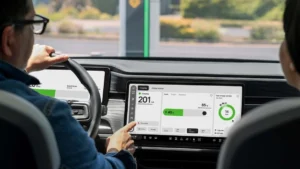
Designed specifically to support Rivian’s adventure-ready passenger vehicles—namely the R1T pickup truck and R1S SUV—these purpose-built stalls are engineered to deliver up to 300 kilowatts of power. This high-capacity output allows drivers to rapidly replenish their battery packs during cross-country road trips or remote excursions, minimizing downtime and alleviating range anxiety in areas where public charging infrastructure has historically been sparse.
A cornerstone of Rivian’s marketing and corporate sustainability ethos is its claim that the RAN is powered entirely by 100% renewable energy. However, the company is transparent about the mechanics of this green power supply. Rather than physically linking every individual charging station exclusively to an on-site solar photovoltaic array or a dedicated wind turbine, Rivian utilizes a system of renewable energy credits and power matching. Every kilowatt-hour consumed by an EV at a RAN station is mathematically matched with an equivalent amount of clean energy generated and fed into the grid, whether that generation occurs locally or in an entirely different state.
The Strategic Value of Proprietary Charging
Rivian’s sustained investment in the Adventure Network might seem counterintuitive to casual observers, given the shifting tides of the North American charging landscape. In recent years, virtually every major legacy automaker and EV startup—including Rivian itself—has committed to adopting the North American Charging Standard (NACS). This industry-wide migration grants Rivian drivers native access to Tesla’s sprawling, highly reliable Supercharger network, which boasts tens of thousands of fast-charging ports across the United States.
Furthermore, the broader ecosystem of public DC fast chargers continues to grow, with independent operators adding thousands of new stalls quarterly. As of late 2026, the United States boasts well over 80,000 public fast-charging ports. In light of these massive third-party networks, maintaining and expanding a proprietary network requires significant capital expenditure and ongoing maintenance costs.
Industry analysts suggest that Rivian’s dedication to the RAN serves multiple strategic purposes. First, it guarantees a standardized, premium charging experience tailored specifically to the unique dimensions and high-capacity battery architectures of the R1 platform. Second, strategically placing fast chargers along scenic byways, national parks, and popular outdoor recreation corridors directly aligns with the brand’s lifestyle identity. By ensuring that owners can access reliable charging in remote areas where third-party operators have been slow to build, Rivian reinforces its value proposition as an authentic adventure brand.
Waypoint Level 2 Chargers Left in the Slow Lane
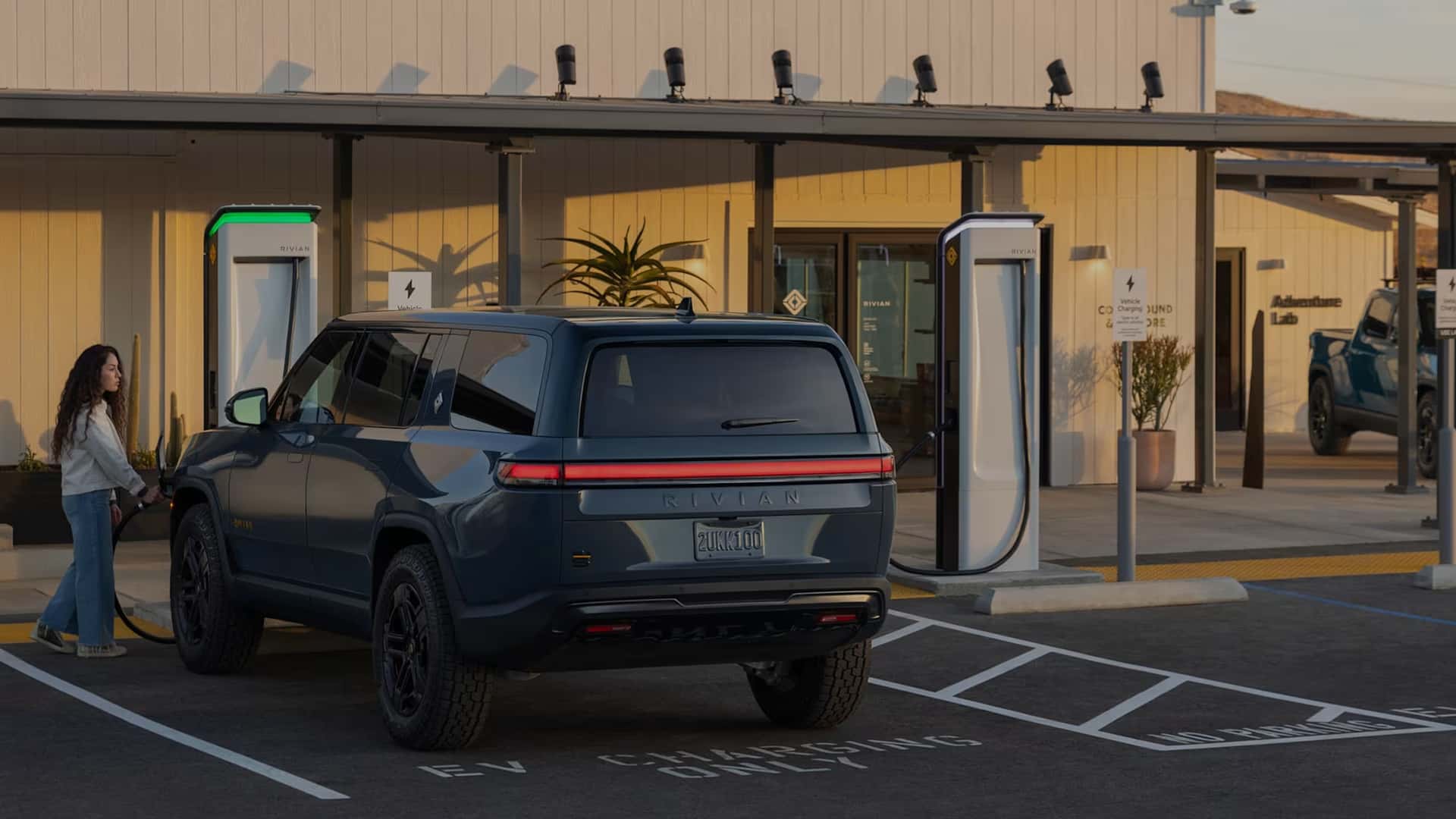
While the high-profile DC fast-charging network commands regular updates and prominent placement in investor presentations, Rivian’s secondary infrastructure project—the Waypoint network of Level 2 destination chargers—has received remarkably little airtime.
In the company’s most recent quarterly reports and shareholder letters, the Waypoint network was omitted entirely. This radio silence has led some industry watchers to wonder if the slower, destination-based chargers have been quietly sidelined. Data from the United States Department of Energy’s Alternative Fuels Data Center (AFDC) provides a clearer picture of this slowdown, revealing a stark deceleration in deployment rates.
Throughout the year, Rivian has installed a mere ten new 11-kilowatt Waypoint chargers nationwide, with the latest pair coming online in October. This brings the cumulative total of Rivian Level 2 chargers to 540 ports distributed across 208 locations in the U.S. While these chargers remain functional and serve a useful purpose at hotels, restaurants, and tourist attractions where vehicles are parked for extended periods, the sluggish pace of expansion highlights a clear corporate pivot toward high-speed corridor charging.
David and Goliath: Rivian’s Place in the Charging Ecosystem
Despite impressive year-over-year growth percentages, Rivian remains a relatively small player in the grand scheme of the American electric vehicle charging market. The infrastructure scale achieved by the startup is vastly overshadowed by industry pioneers, most notably Tesla.
To contextualize the market disparity, Tesla operates more than 40,000 fast-charging ports spanning nearly 3,300 locations across the United States. In addition to its dominant Supercharger footprint, Tesla maintains a massive network of approximately 14,000 Level 2 Destination Chargers spread across nearly 4,000 separate sites. Other major independent operators, such as Electrify America, EVgo, and various regional utilities, further crowd the landscape with tens of thousands of competing plugs.
Rivian’s sub-1,200 fast-charging port count represents a tiny fraction of this national total. However, comparing startup infrastructure directly to Tesla’s multi-decade head start fails to capture the targeted nature of Rivian’s deployment strategy. Rather than attempting to blanket every suburban strip mall or metropolitan highway intersection, Rivian focuses on high-impact routes that cater directly to the travel habits of its core demographic.
Financial Implications and Market Outlook
The continued expansion of the RAN comes at a critical juncture for Rivian. As the company strives to achieve sustainable, long-term profitability amidst fluctuating EV adoption rates and high manufacturing costs, capital allocation is heavily scrutinized by Wall Street. Funding dedicated charging infrastructure requires substantial upfront capital, and management must carefully balance these investments against vehicle production scaling, software development, and the upcoming launch of its smaller, mass-market R2 vehicle platform.
The decision to lean heavily into DC fast-charging expansion while letting Level 2 deployments taper off indicates a rational prioritization of resources. Fast chargers directly address range anxiety on long journeys—a primary psychological barrier for prospective EV buyers—whereas overnight or destination charging can increasingly be handled by a mix of home chargers, Tesla Superchargers, and third-party municipal networks.
Looking ahead, Rivian’s infrastructure footprint will likely continue its measured, strategic growth. As the R2 platform approaches commercial production, bringing with it a significantly broader customer base, the demand on the Adventure Network will inevitably rise. How Rivian scales its charging capacity to meet this impending wave of higher-volume vehicles will serve as a crucial test of the company’s long-term operational maturity and customer satisfaction strategy. For now, the automaker’s steady, double-digit infrastructure growth demonstrates a sustained commitment to supporting its drivers, ensuring that the road less traveled remains fully electrified.