A Rare Glimpse of the Caracal in Kuno National Park: A Sign of Ecological Health or Fleeting Visitor?

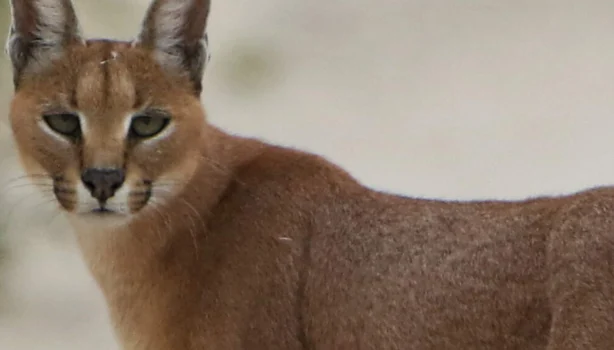
The silent, nocturnal world of Madhya Pradesh’s Kuno National Park has offered a tantalizing glimpse of one of India’s most elusive felines – the caracal. Two camera traps, deployed deep within the sprawling wilderness, have captured definitive images of this lean, long-legged wildcat, its distinctive black-tufted ears a stark silhouette against the darkness. This sighting is particularly significant as it occurs within the same landscape that is currently the focal point of India’s ambitious cheetah reintroduction project, raising pertinent questions about the ecological dynamics at play and the broader implications for wildlife conservation in the region.
The presence of the caracal, a species rarely documented in India, has been confirmed by these camera trap records, as reported by Mongabay India. However, experts are exercising a measured approach, emphasizing that a single photographic encounter, while exciting, cannot definitively establish a resident population. Uttam Kumar Sharma, the Field Director of Kuno National Park, noted that this marks the first confirmed record of the caracal in the four years he has been associated with the park. This has prompted the forest department to embark on a meticulous review of older photographic and observational records, seeking to ascertain whether caracals have ever been documented within Kuno or its adjacent territories in the past.
Understanding the Caracal: An Elusive Predator
The caracal (Caracal caracal) is a medium-sized wild cat native to Africa, the Middle East, Central Asia, and India. Its name is derived from the Turkish word "karakulak," meaning "black ear," a reference to its most distinguishing feature: long, black tufts of fur atop its ears. These tufts are believed to aid in communication, potentially by signaling its mood or intent to other caracals or prey. Known for their incredible leaping ability, caracals can reportedly jump up to 10 feet in the air to catch birds in flight, earning them the moniker "desert lynx" in some regions.
In India, the caracal occupies a precarious position. While listed as "Least Concern" globally by the International Union for Conservation of Nature (IUCN) due to its widespread distribution, its status within India is far more vulnerable. It is classified as "Near Threatened" in the country, and there is no official, scientifically robust population estimate. Widely circulated figures suggesting around 50 individuals are largely unsubstantiated. Compounding these concerns, a 2020 study revealed a dramatic contraction of the caracal’s Indian range, shrinking by approximately 96 percent from pre-1947 levels. Today, its presence is largely confined to fragmented pockets in Rajasthan, Gujarat, and Madhya Pradesh. Recent confirmed sightings outside of these core areas have been infrequent and often serendipitous, such as accidental captures on cameras set for tigers in Rajasthan’s Mukundra Hills or through dedicated radio-collar and camera surveillance near the India-Pakistan border in Jaisalmer.
The Science of Detection: Camera Traps and Nocturnal Wildlife
The caracal’s inherently shy and nocturnal nature makes direct observation exceedingly difficult. These elusive cats are most active during the twilight hours and at night, making them almost invisible to casual observers or even dedicated field patrols during daylight. This is precisely where the indispensable role of motion-triggered camera traps comes into play. These devices, strategically placed and camouflaged, act as silent sentinels, capturing invaluable photographic and video evidence of wildlife without causing any disturbance to their natural behavior.
Shekhar Kolipaka, a seasoned caracal distribution researcher and Senior Landscape Developer at the Commonland Foundation, articulated the scientific prudence required in interpreting such findings. "A single camera-trap photograph confirms the presence of a caracal, but does not indicate the existence of a resident population," Kolipaka stated in a written response. He elaborated on the natural dispersal patterns of young adult cats, particularly males, which are known to undertake extensive journeys in search of new territories. These nomadic journeys can span significant distances, necessitating them to traverse diverse landscapes including rivers, agricultural lands, human settlements, roads, and railway lines. Therefore, Kolipaka stressed that sustained monitoring efforts are crucial to determine whether the caracal captured in Kuno is merely passing through or if it signifies the establishment of a more permanent presence.
The technological advantage offered by camera traps is underscored by the very nature of studying such cryptic species. For animals that are nocturnal, reclusive, and inhabit dense vegetation, years of fieldwork might yield no direct sightings. In such scenarios, camera traps become the primary, and often the only, verifiable proof of a species’ existence within a particular area. This makes the Kuno caracal sighting, however preliminary, a significant event in the ongoing efforts to understand and conserve this vulnerable feline.
Kuno’s Evolving Landscape: Cheetahs and Caracals
The sighting of the caracal in Kuno National Park is intrinsically linked to the ongoing efforts to re-establish cheetahs in India, a project that commenced with the translocation of African cheetahs in 2022. Field Director Uttam Kumar Sharma suggested a potential correlation between the improved ecological conditions in Kuno since the cheetah initiative began and the caracal’s appearance. He noted an increase in water availability and an enhancement of grassland habitats within the park. This habitat recovery, Sharma posited, could be a contributing factor to the caracal being drawn to the area.
This perspective was echoed by Madhya Pradesh Chief Minister Mohan Yadav, who highlighted on social media that the cheetah project’s overarching objective is the conservation of not just cheetahs, but also the entire ecosystem and its diverse wildlife. While this is an optimistic outlook, researchers who are deeply involved in caracal studies advocate for a more cautious interpretation, emphasizing the need for further fieldwork to substantiate these claims.
Next Steps: Diligent Monitoring and Data Collation
The immediate focus for the forest department and conservationists will be on diligent follow-up actions. The priority is to meticulously comb through existing records, both within Kuno and in surrounding protected areas, to unearth any historical evidence of caracal presence. Simultaneously, enhanced monitoring protocols will be implemented around the specific locations where the camera traps yielded the recent images. This will involve deploying additional cameras, increasing patrol intensity, and potentially utilizing other survey techniques to gather more comprehensive data.
The objective is to move beyond a single fleeting image and ascertain whether this caracal represents a transient individual on a dispersal journey or if it is an indicator of a breeding population or a stable presence within Kuno’s revitalized landscape. The outcome of these investigations will be crucial in informing future conservation strategies and understanding the ecological integrity of Kuno National Park as it evolves under the influence of the ambitious cheetah reintroduction program. The caracal’s reappearance, therefore, serves as a potent reminder of the interconnectedness of species within an ecosystem and the critical need for sustained, science-based conservation efforts. The coming months of meticulous data collection and analysis will reveal whether this rare sighting is a mere footnote in the park’s history or a significant chapter in its ongoing ecological narrative.