Establishing a Federal Benchmark for Autonomy
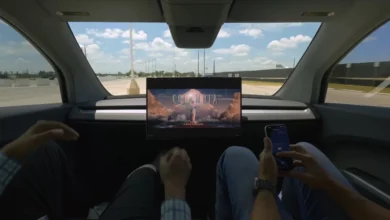
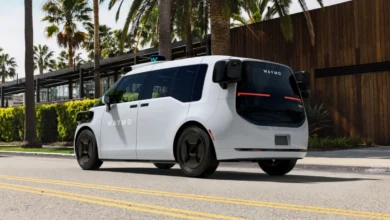
The absence of a standardized, federally mandated "driver’s license" for automated driving systems (ADS) has long been a point of contention among safety advocates and industry developers. While traditional motor vehicles are subject to the Federal Motor Vehicle Safety Standards (FMVSS)—which dictate requirements for everything from seatbelts to rearview mirrors—these rules were drafted in an era of human-operated transportation. They remain inherently ill-suited for modern innovations like the Tesla Cybercab or the purpose-built Zoox robotaxi, which lack traditional controls such as steering wheels or pedals.
To address this, the National Highway Traffic Safety Administration (NHTSA) is partnering with the SAE (Society of Automotive Engineers) to launch ASCEND, a government-industry consortium. The initiative is specifically designed to accelerate the development of standardized performance benchmarks for autonomous systems. By shifting the focus toward "ADS competency," the agency hopes to establish a definitive, objective metric for what constitutes a safe driver in the context of machine learning and artificial intelligence.
Jonathan Morrison, a key official at the NHTSA, emphasized that this move is intended to prevent the agency from having to engage in a continuous game of "whack-a-mole," where regulators struggle to keep pace with rapid technological shifts. The goal is to provide a stable, predictable foundation that encourages innovation while ensuring that the public can trust the safety of autonomous deployments on public roads. While no official timeline for these standards has been released, the creation of the consortium indicates that federal regulators are moving toward a more formal rulemaking process.
The Financial Landscape: Robotaxis and Public Markets
The push for regulation coincides with a critical juncture for the commercial viability of autonomous ride-hailing services. May Mobility, a prominent player in the autonomous space, recently announced plans to go public through a merger with a special purpose acquisition company (SPAC), ACP Holdings Acquisition Corp. The deal, which aims to raise upwards of $300 million at a valuation of $1.4 billion, represents a major test for the industry.

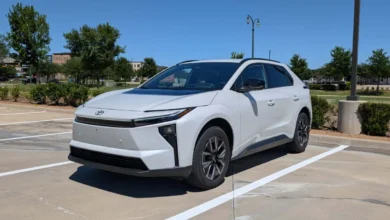
May Mobility’s transition to the public market is notable for its focus on an "asset-light" and "partnership-first" strategy, utilizing autonomous Toyota Siennas to provide transit solutions. Unlike its peers, such as Aurora or Kodiak, which are primarily focused on autonomous trucking, or tech giants like Alphabet (Waymo) and Amazon (Zoox), May Mobility is positioning itself as a pure-play robotaxi operator. The performance of this stock will likely serve as a barometer for investor confidence in the long-term profitability of autonomous passenger services.
The broader market for autonomy is also seeing significant consolidation and strategic movement. Beep, an autonomous transit firm, has recently merged with the Miami-based public transportation provider Freebee. The combined entity will focus on integrated, on-demand mobility solutions. Meanwhile, in the luxury and high-volume sectors, Lucid Motors has formed a partnership with the European mobility platform Bolt to deploy at least 25,000 fully autonomous vehicles. These vehicles will be built on a new, smaller, and more cost-effective EV architecture, signaling a shift toward mass-market accessibility for autonomous transport.
Security, Infrastructure, and Regulatory Challenges
The integration of autonomy into daily life extends beyond the vehicle itself, raising significant concerns regarding cybersecurity and infrastructure. Recent incidents have highlighted the vulnerability of large-scale transport systems to digital threats. Cybersecurity teams from the U.S. Coast Guard and the FBI were recently deployed to board two U.S.-bound oil tankers after hackers successfully compromised the vessels’ navigation and propulsion systems. This incident underscores the systemic risks inherent in increasingly connected and automated transportation networks.
Similarly, data privacy remains a critical concern. The hacking group "ShinyHunters" recently breached a Florida state database, exposing hundreds of thousands of files containing sensitive driver and vehicle information. Such breaches pose a significant challenge to the public’s trust in the government’s ability to manage the massive datasets required for autonomous vehicle operations.
Regulatory scrutiny is also intensifying in other areas of automotive technology. The U.S. House of Representatives recently approved the "AM Radio for Every Vehicle Act," which, if enacted, would mandate that all new vehicles include functional AM radio receivers. This presents a unique challenge for electric vehicle (EV) manufacturers, as the electromagnetic interference generated by electric motors often disrupts AM frequencies. This legislation highlights the ongoing tension between legacy automotive requirements and the rapid evolution of modern, software-defined, and electric vehicles.

Technological Milestones and Future Outlook
Despite these regulatory and security hurdles, the pace of technological development remains aggressive. Joby Aviation, a leader in the electric air-taxi sector, recently completed a 3,100-mile autonomous flight across the United States. The flight was conducted entirely without human intervention, marking a major milestone for autonomous navigation technology. Experts suggest that such achievements are moving beyond the realm of "splashy demos" and into the territory of viable, long-term commercial applications.
Major automakers are also refining the internal user experience to accommodate the shift toward automation. General Motors recently unveiled a new user interface for its heavy-duty trucks, the Chevrolet Silverado and GMC Sierra, featuring advanced picture-in-picture capabilities for Apple CarPlay and Android Automotive. These developments suggest that even as the industry moves toward full autonomy, the focus remains on keeping the human user engaged and informed, or at the very least, seamlessly connected to the vehicle’s operating environment.
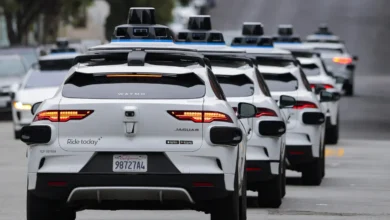
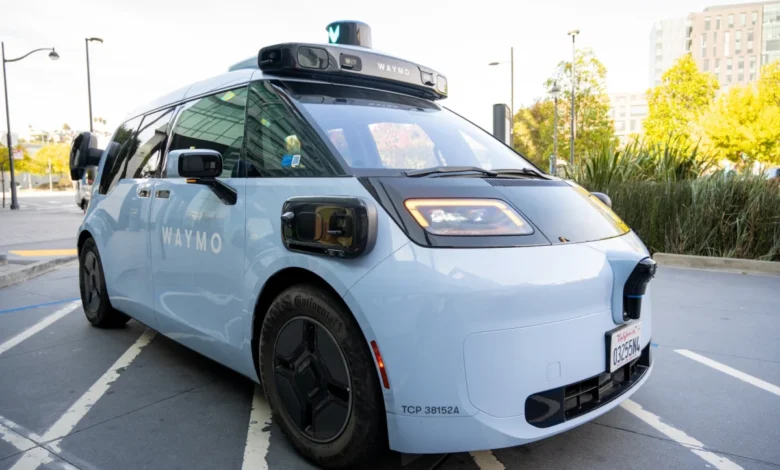
On the commercial front, Waymo is aggressively expanding its footprint. After a five-month hiatus in San Antonio following a flooding-related incident, the company has officially restarted its robotaxi service in the region. Furthermore, Waymo has launched operations in Las Vegas and is currently in the process of mapping Singapore for potential future testing. Meanwhile, Amazon-owned Zoox is preparing for a significant expansion in Nevada, as a regulatory cap on its fleet size—previously limited to 100 vehicles—is set to expire.
Implications for the Future of Transportation
The convergence of these events points to a maturing autonomous vehicle industry. The shift toward federal standard-setting via the ASCEND initiative is perhaps the most significant development, as it suggests that the "Wild West" era of autonomous testing is drawing to a close. By establishing clear, data-driven competency standards, the NHTSA hopes to mitigate the safety risks that have previously led to inconsistent enforcement and public skepticism.
However, the success of these initiatives will depend on the agency’s ability to balance rigorous safety requirements with the need for continued innovation. If the standards are too restrictive, they risk stifling the growth of smaller, agile companies like May Mobility or Beep. If they are too lax, they fail to address the legitimate safety concerns that have plagued the industry’s reputation.

Furthermore, the cybersecurity and data privacy threats mentioned earlier demonstrate that the "autonomous vehicle" is not a siloed technology. It is a node within a larger, interconnected network of infrastructure, software, and public databases. As such, the future of transportation will likely require a multidisciplinary approach that combines vehicle safety engineering, advanced cybersecurity protocols, and comprehensive federal oversight.
The coming months and years will be a definitive period for the sector. As companies like May Mobility test the public markets, and as the NHTSA formalizes its federal framework, the industry will have to prove that it can operate with the same reliability as the legacy transportation systems it aims to replace. The transition is no longer a question of "if," but of "how"—how to safely integrate these systems into the existing urban fabric, how to protect the data that powers them, and how to maintain a competitive, innovative market under a unified regulatory umbrella.