Google Pixel 11 vs Pixel 11 Pro Review: Is the €200 Price Difference Worth It?

The arrival of Google’s latest generation of flagship smartphones has once again sparked a familiar debate among consumers looking for a compact yet high-performance device: should they opt for the standard Google Pixel 11 or stretch their budget for the higher-end Pixel 11 Pro? Retailing at approximately €900, the vanilla Google Pixel 11 presents a compelling package that closely mirrors many of the core specifications found in its €1,100 sibling, the Google Pixel 11 Pro. With a €200 price premium separating the two models, potential buyers are naturally questioning whether the hardware upgrades on the Pro variant justify the additional investment.
A thorough examination of both devices reveals that Google has built them upon a remarkably similar foundation. Both models share identical chassis dimensions, the same proprietary chipset, and comparable everyday endurance. However, a deeper dive into the technical specifications uncovers distinct differences centered around display technology, camera capabilities, and memory configurations. This comprehensive comparative analysis explores how these differences translate into real-world performance, helping consumers determine which handset best suits their specific needs.

Design, Build Quality, and Ergonomics

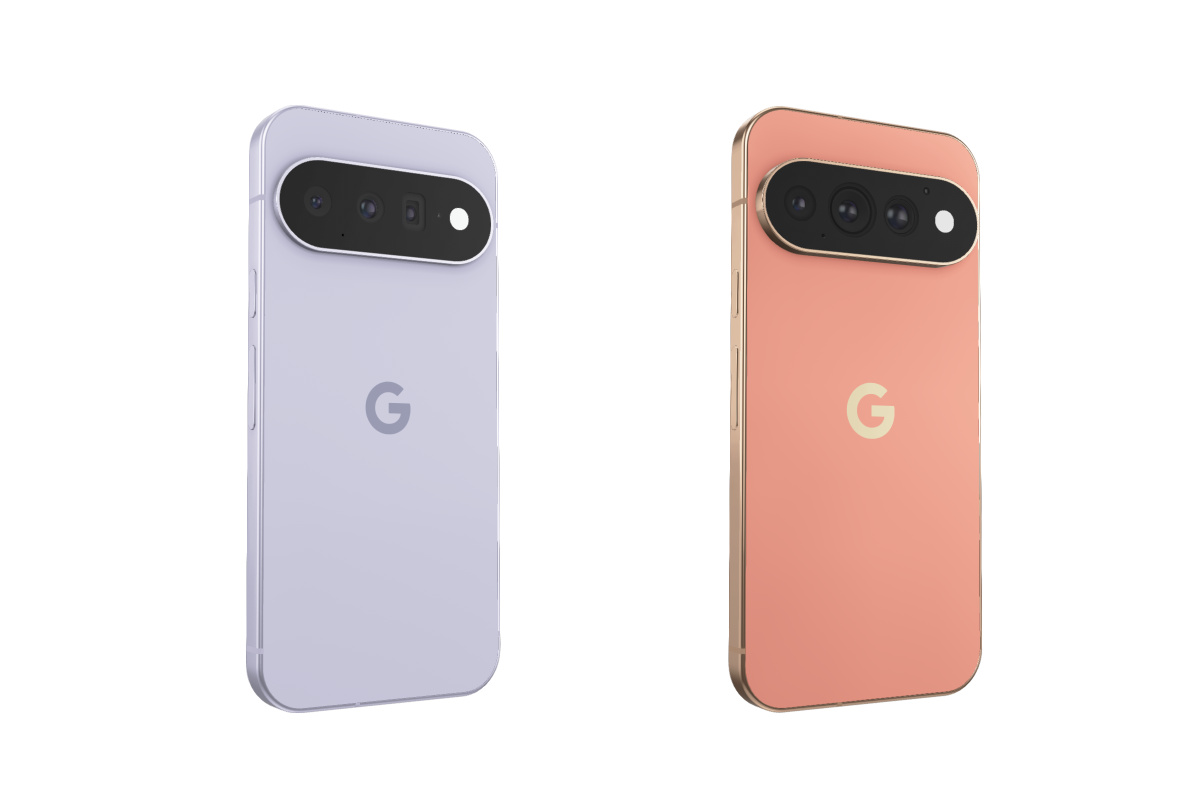
At first glance, telling the Pixel 11 and Pixel 11 Pro apart requires a keen eye. Both smartphones adhere to Google’s refined design language, utilizing robust aluminum frames sandwiched between durable Corning Gorilla Glass Victus 2 panels. Each device carries an IP68 certification for dust and water resistance, ensuring standard flagship-tier durability against the elements.

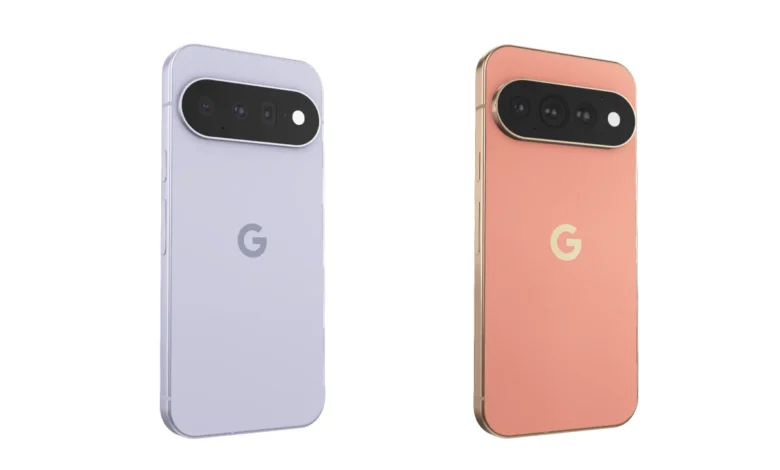
Despite these structural similarities, subtle differences in finish and tactile feel set the two models apart. The standard Google Pixel 11 features a matte-finished aluminum frame paired with a glossy glass rear panel. Conversely, the Pixel 11 Pro adopts a contrasting approach with a glossy frame and a frosted, matte glass back. For users prioritizing ergonomics, the plainer anodized aluminum frame of the vanilla Pixel 11 offers enhanced grip compared to the slicker finish of the Pro model. Furthermore, the standard Pixel 11 benefits from a slightly lighter body and fresher color options, while the Pro model caters to users seeking a more traditional, understated aesthetic.

Display Technology: LTPS versus LTPO

The screen panels represent the first major hardware divergence between the two devices, though both smartphones settle on a compact 6.3-inch form factor. The standard Pixel 11 is equipped with a flat LTPS OLED display boasting a resolution of 1080 x 2424 pixels and HDR10+ support. Its refresh rate operates on a fixed scheme, shifting between 120Hz during active touch interaction and dropping to 60Hz during idle states. Google rates this panel at 2,000 nits of auto-brightness and a peak brightness of 3,000 nits. Independent laboratory testing largely corroborates these claims, measuring 2,134 nits of auto-brightness and a peak output of 2,842 nits.

On the other side of the spectrum, the Pixel 11 Pro utilizes a more advanced 6.3-inch LTPO OLED screen with a higher resolution of 1280 x 2856 pixels, alongside HDR10+ certification. The inclusion of LTPO technology allows the Pro display to dynamically scale its refresh rate from 1Hz all the way up to 120Hz, seamlessly matching the frame rate of active applications to optimize power consumption. Official specifications for the Pro panel cite 2,400 nits of auto-brightness and a peak brightness of 3,600 nits. Real-world testing recorded 2,333 nits for auto-brightness and 3,118 nits at peak levels.

In everyday scenarios, the difference in pixel density and resolution is virtually imperceptible to the naked eye. While the Pixel 11 Pro holds a theoretical advantage in outdoor legibility and power efficiency due to its dynamic refresh rate, both panels deliver exceptional vibrancy, deep blacks, and ample brightness for direct sunlight viewing.

Performance, Processing Power, and Thermal Stability

Beneath the exterior, both the Pixel 11 and Pixel 11 Pro are powered by Google’s latest silicon innovation: the Tensor G6 chipset. Built on the same 3nm manufacturing architecture as its predecessor, the Tensor G5, the new processor focuses heavily on power efficiency and artificial intelligence computations, with Google claiming a 50% increase in AI processing power.

However, a closer look at the CPU architecture reveals a unique configuration. The Tensor G6 employs a 7-core CPU layout, omitting one core compared to traditional multi-core designs. The cluster consists of a single high-performance ARM C1-Ultra core clocked at 4.1 GHz, four ARM C1-Pro cores running at 3.4 GHz, and two additional ARM C1-Pro cores clocked at 2.65 GHz. While the core count is lower, the significantly higher clock speeds ensure swift execution of demanding tasks.

Graphics processing is handled by Imagination’s IMG CXTP-48-1536 GPU. Unlike the modern Series D graphics architecture found in the previous Tensor G5, the Tensor G6 reverts to the older Series C architecture. This choice results in more limited support among mobile game developers and a complete lack of hardware-accelerated ray tracing capabilities.

Memory configurations also serve as a differentiator between the two tiers. The standard Pixel 11 is offered in 256GB and 512GB storage variants, both paired uniformly with 12GB of RAM. The Pixel 11 Pro expands user choices by adding a high-capacity 1TB option. While the entry-level 256GB Pro model includes 12GB of RAM, higher storage tiers step up to 16GB of RAM. Synthetic benchmark testing yields identical scores for both devices, as they share the same primary processing unit. Stress testing further demonstrates consistent thermal behavior, with both phones sustaining approximately 60% of their theoretical CPU performance and 70% of their GPU capabilities under prolonged heavy loads.

Battery Life and Charging Capabilities

Power management is an area where the two smartphones achieve absolute parity, despite housing slightly different physical capacities. The standard Pixel 11 relies on a 4,985 mAh battery, whereas the Pixel 11 Pro integrates a marginally smaller 4,850 mAh cell. Because both models utilize the identical Tensor G6 processor, differences in screen technology serve as the only variable influencing power draw.

In rigorous battery endurance evaluations, both devices yielded an identical and impressive Active Use Score of 15 hours and 40 minutes, posting nearly identical longevity across web browsing, video playback, and gaming simulations.

Charging speeds have seen minor updates across the board. Wireless charging support has been upgraded to 25W for both models, while wired charging remains capped at a maximum of 30W. Google introduced a new "Extreme" wired charging mode designed to accelerate power delivery during the initial low-battery phases; however, independent testing indicates that the resulting speed increase is minimal. In practical terms, both smartphones follow an identical charging curve, replenishing from zero to 30% in 15 minutes, reaching 60% in 30 minutes, and achieving a full charge in approximately 80 minutes. Audio reproduction is similarly matched, with both devices featuring identical hybrid stereo speaker systems that deliver robust and balanced sound quality.

Camera Hardware and Comparative Image Quality

Camera performance has historically been a cornerstone of the Pixel brand, and the 11th-generation lineup continues this tradition while establishing a clear hierarchy between the standard and Pro models. While the Pixel 11 receives a modest hardware refresh exclusively for its primary wide sensor, the Pixel 11 Pro benefits from superior sensor hardware across all rear modules and the front-facing camera.

The primary wide camera on the Pixel 11 utilizes a smaller 1/1.56-inch sensor, compared to the larger 1/1.3-inch sensor on the Pixel 11 Pro. The disparity grows wider when examining the remaining lenses. The Pixel 11 Pro features a high-resolution 50-megapixel telephoto sensor with a larger 1/1.95-inch footprint, replacing the smaller 10.9-megapixel, 1/3.2-inch telephoto imager found on the standard model. Similarly, the ultrawide camera on the Pro model utilizes a 50-megapixel sensor with a 1/2.51-inch size, outclassing the 13-megapixel, 1/3.1-inch ultrawide sensor on the vanilla Pixel 11. For selfies, the Pro relies on a 42-megapixel sensor, whereas the base model features a 10.5-megapixel front-facing unit.

In daylight photography, both smartphones deliver the characteristic "Pixel look," producing images with pleasing dynamic range and vibrant colors. However, pixel-peeping reveals that the Pixel 11 Pro maintains a consistent advantage in edge-to-edge sharpness and fine detail rendering, particularly across zoom ranges. At a 2x zoom level, both phones perform similarly, offering average clarity. At 5x and 10x magnification, the superior telephoto hardware on the Pro model becomes clearly evident, producing sharper, cleaner subjects. Interestingly, the standard Pixel 11 occasionally demonstrates more neutral white balance in challenging street-lighting conditions during low-light testing, though the Pro compensates with superior detail retention.

Ultrawide photography highlights a unique trade-off. The ultrawide lens on the standard Pixel 11 lacks autofocus, making close-up macro shots blurry, but it manages to control noise effectively in low-light distance shots. Conversely, the Pro’s ultrawide lens includes autofocus for close-up versatility. Video recording capabilities also favor the Pro variant, which supports 4K recording at 60 frames per second across all lenses—including the ultrawide—alongside a cloud-based 8K video mode. The standard Pixel 11 maxes out 4K60 on the primary and telephoto cameras, while capping the ultrawide at 4K30.

Market Implications and Final Verdict

The launch of the Google Pixel 11 and Pixel 11 Pro highlights a strategic segmentation within the premium compact smartphone segment. Google has successfully delivered a flagship-tier user experience with the standard Pixel 11, ensuring that buyers who opt for the lower price point do not compromise on essential daily performance, battery life, software support, or build quality.

The Pixel 11 Pro justifies its higher asking price through specific, hardware-driven advantages. Consumers willing to invest the extra €200 receive an advanced LTPO display with dynamic refresh rate scaling, significantly more capable camera hardware across all focal lengths, advanced video recording options, and higher memory and storage tiers.

Ultimately, the purchasing decision rests on individual priorities. For everyday users seeking a reliable, powerful, and exceptionally built compact smartphone, the standard Google Pixel 11 represents a high-value proposition that meets nearly all modern computing and communication needs. For photography enthusiasts, power users, and those demanding the absolute best display and camera hardware Google has to offer, the Pixel 11 Pro remains the definitive choice.